
Close Menu
    Facebook X (Twitter) Instagram
    SciTechDaily
    • Biology
    • Chemistry
    • Earth
    • Health
    • Physics
    • Science
    • Space
    • Technology
    Facebook X (Twitter) Pinterest YouTube RSS
    SciTechDaily
    Home»Biology»Coping With Climate Change: Fairy-Wrens Change Breeding Habits
    Biology

    Coping With Climate Change: Fairy-Wrens Change Breeding Habits

    By Australian National UniversityOctober 11, 2019No Comments2 Mins Read
    Facebook Twitter Pinterest Telegram LinkedIn WhatsApp Email Reddit
    Share
    Facebook Twitter LinkedIn Pinterest Telegram Email Reddit

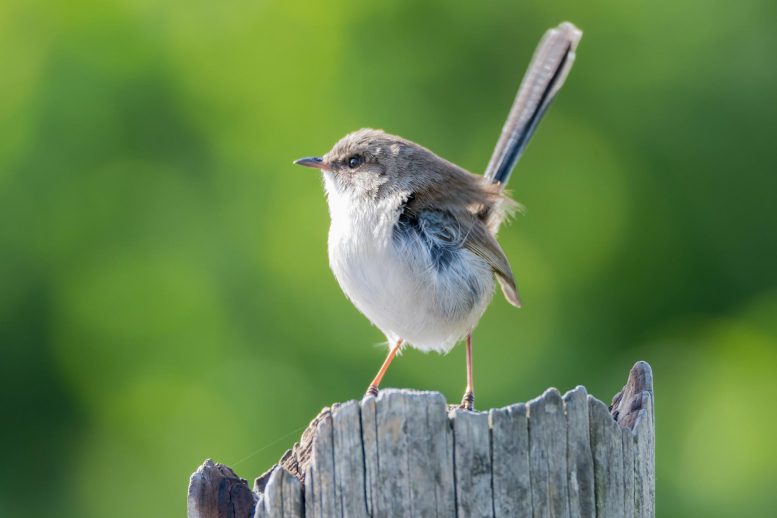
    Fairy Wren

    Warmer temperatures linked to climate change are having a big impact on the breeding habits of one of Australia’s most recognizable bird species, according to researchers at The Australian National University (ANU).

    The study, which has been published in the journal Global Change Biology, looked at the breeding season of superb fairy-wrens living in the Australian National Botanic Gardens in Canberra.

    The research was led by Dr. Lei Lv, who is visiting ANU from Sun Yat-sen University in China.

    Dr. Lv says warmer temperatures in early spring mean the birds will start breeding earlier than they normally would. If temperatures rise too high in mid-summer, they will also finish breeding earlier.

    “Fairy-wrens have a very long breeding season which usually runs from around September through to February,” Dr. Lv said. “The timing varies a lot among individuals and from year to year. We wanted to see if this variation was connected to changes in climate. It turns out that if the minimum night-time temperatures are milder, the birds will start breeding earlier.

    “Also, if it gets really hot and dry towards the end of the breeding season, in late December or early January, the birds stop breeding earlier as well.”

    The researchers also found when a female fairy-wren starts and stops breeding can have an impact on how successful they are.

    “Individuals produced more young if they started breeding earlier,” Dr. Lv said. “However, unsuccessful individuals kept trying until very late in the breeding season, but often to no avail. Thus, they stopped breeding later.”

    The research is part of a long-term study on the fairy-wrens in the Botanic Gardens that has been running for over 30 years, led by Professor Andrew Cockburn at ANU.

    “Every fairy-wren in the Botanic Gardens is marked and monitored, so we have details of their full life history,” study co-author Professor Loeske Kruuk said. “There are very few studies of this length or detail of bird species in the southern hemisphere.”

    It’s hoped this wealth of data could eventually help scientists understand the effects of climate change on wild animal populations across the globe.

    Reference: “When to start and when to stop: Effects of climate on breeding in a multi‐brooded songbird” by Lei Lv, Yang Liu, Helen L. Osmond, Andrew Cockburn and Loeske E. B. Kruuk, 3 October 2019, Global Change Biology.
    DOI: 10.1111/gcb.14831

    Never miss a breakthrough: Join the SciTechDaily newsletter.
    Follow us on Google and Google News.

    Australian National University Birds Climate Change
    Share. Facebook Twitter Pinterest LinkedIn Email Reddit

    Related Articles

    4 Million Dead: “Warm Blob” Disaster Causes Catastrophic Loss

    Hummingbirds May Struggle To Go Any Further Uphill To Evade Climate Change

    Smaller Bodies, Longer Wings, Earlier Migrations: Untangling the Multiple Impacts of Climate Warming on Birds

    Monitoring Species Condemned to Extinction May Help Conservationists Save Others As Global Temperatures Rise

    When Singing the Wrong Song Spells Trouble: Critically Endangered Regent Honeyeater Is Losing Its “Song Culture”

    Higher Elevation Himalayan Songbirds Sport Thicker Down “Jackets” to Survive the Cold

    Climate Change Drives Babbler Birds Into “Ecological Trap”

    Some Birds Live Fast and Die Young – Scientists Study of Thousands of Species to Explain Why

    Using GPS, Researchers Discovered This Small Seabird Can Fly More Than 1,100 Miles Over Ocean Waters to Find Food

    Leave A Reply Cancel Reply

    • Facebook
    • Twitter
    • Pinterest
    • YouTube

    Don't Miss a Discovery

    Subscribe for the Latest in Science & Tech!

    Trending News

    Breakthrough Bowel Cancer Trial Leaves Patients Cancer-Free for Nearly 3 Years

    Natural Compound Shows Powerful Potential Against Rheumatoid Arthritis

    100,000-Year-Old Neanderthal Fossils in Poland Reveal Unexpected Genetic Connections

    Simple “Gut Reset” May Prevent Weight Gain After Ozempic or Wegovy

    2.8 Days to Disaster: Scientists Warn Low Earth Orbit Could Suddenly Collapse

    Common Food Compound Shows Surprising Power Against Superbugs

    5 Simple Ways To Remember More and Forget Less

    The Atomic Gap That Could Cost the Semiconductor Industry Billions

    Follow SciTechDaily
    • Facebook
    • Twitter
    • YouTube
    • Pinterest
    • Newsletter
    • RSS
    SciTech News
    • Biology News
    • Chemistry News
    • Earth News
    • Health News
    • Physics News
    • Science News
    • Space News
    • Technology News
    Recent Posts
    • After 37 Years, the World’s Longest-Running Soil Warming Experiment Uncovers a Startling Climate Secret
    • NASA Satellite Captures First-Ever High-Res View of Massive Pacific Tsunami
    • ADHD Isn’t Just a Deficit: Study Reveals Powerful Hidden Strengths
    • Scientists Uncover “Astonishing” Hidden Property of Light
    • Scientists Discover Stem Cells That Could Regrow Teeth and Bone
    Copyright © 1998 - 2026 SciTechDaily. All Rights Reserved.
    • Science News
    • About
    • Contact
    • Editorial Board
    • Privacy Policy
    • Terms of Use

    Type above and press Enter to search. Press Esc to cancel.