
Close Menu
    Facebook X (Twitter) Instagram
    SciTechDaily
    • Biology
    • Chemistry
    • Earth
    • Health
    • Physics
    • Science
    • Space
    • Technology
    Facebook X (Twitter) Pinterest YouTube RSS
    SciTechDaily
    Home»Biology»Eggs of Superb Fairy-Wren Learn Before Hatching
    Biology

    Eggs of Superb Fairy-Wren Learn Before Hatching

    By SciTechDailyNovember 12, 20121 Comment3 Mins Read
    Facebook Twitter Pinterest Telegram LinkedIn WhatsApp Email Reddit
    Share
    Facebook Twitter LinkedIn Pinterest Telegram Email Reddit
    superb-fairy-wren
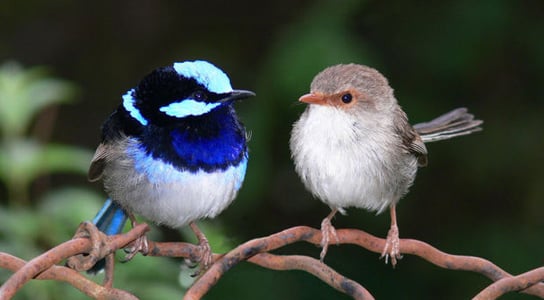
    Splendid fairy-wren (Malurus splendens) left and Superb fairy wren (Malurus cyaneus) right.

    The females of superb fairy-wren (Malurus cyaneus) start singing to their unhatched eggs in order to teach the embryo a “password,” a single unique note, which nestlings must later incorporate into their begging calls in order to get fed.

    The researchers published their findings in the journal Current Biology. This trick allows fairy-wren parents to distinguish between their own offspring and those of cuckoo species that invade their nests. The females also teach the pass-note to their mates.

    It has been shown that fairy-wrens discriminate against cuckoo nestlings on the basis of their foreign begging calls, but it wasn’t known that wren nestlings learned these pass-notes before they actually hatched, states Sonia Kleindorfer, an animal behaviorist, at Flinders University in Adelaide, Australia.
    superb-fairy-wren-nest

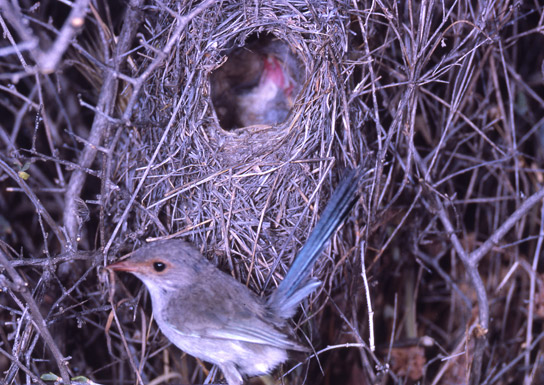
    It has never been shown that there is learning occurring in embryo stages, Kleindorfer continues. This has the potential of opening up new lines of inquiry into prenatal learning systems. The researchers discovered this by accident while recording at the birds’ domed nests in the search of anti-predator calls. They noticed that female fairy-wrens were singing to their eggs.

    The team analyzed the recordings over a full nesting cycle and found that the wren nestlings were given all the same begging call, which was unique to their nest. The call contained a signature element present in the call the mothers had made while incubating and in the call she used to solicit food from the father. When the scientists broadcast a foreign nestling call at the nests, the female and male adult birds refused to feed the chicks.

    The scientists wanted to see if the call was genetic or learned prenatally. Kleindorfer swapped around 22 eggs. When they hatched, the nestlings used the call taught by their foster mother, not their biological one.

    Even though cuckoo eggs get incubated alongside the wren’s eggs, they don’t have enough time to learn the pass-note. The lessons begin 10 days after the eggs are laid, which gives the wren embryos around 5 days to learn the call. Cuckoo eggs only get about 2 days, meaning that fairy-wrens can leave the cuckoos behind.

    Wren’s aren’t perfect at spotting cuckoos; they catch the cuckoos only about 40% of the time. Cuckoo nestlings attempt to guess the pass-note by trying out different calls. This study opens up the possibility that adults can communicate information to their young even before they hatch.

    Reference: “Embryonic Learning of Vocal Passwords in Superb Fairy-Wrens Reveals Intruder Cuckoo Nestlings” by Diane Colombelli-Négrel, Mark E. Hauber, Jeremy Robertson, Frank J. Sulloway, Herbert Hoi, Matteo Griggio and Sonia Kleindorfer, 8 November 2012, Current Biology.
    DOI: 10.1016/j.cub.2012.09.025

    Never miss a breakthrough: Join the SciTechDaily newsletter.
    Follow us on Google and Google News.

    Behavioral Science Birds
    Share. Facebook Twitter Pinterest LinkedIn Email Reddit

    Related Articles

    Deception and Lies: Wild Siberian Jays Use Social Knowledge to Avoid Being Tricked

    Urban Birds Use Cigarette Butts to Get Rid of Pests

    Sex Deprived Fruit Flies Consume More Alcohol

    Hummingbirds Notice Location, Not Flower Color

    Patterns of Flocks of Starlings Mathematically Behave How Magnets Would Move

    Hearing Loss Rapidly Changes Brain Motor Areas That Control Song

    “Area X” of Zebra Finch May Provide Insights to Human Speech Disorders

    Bonobo Great Apes Are Domesticating Themselves

    The Less Birds Know, The Better

    1 Comment

    1. Elenor on March 16, 2021 3:58 am

      Amazing !! Nature sure has a lot to teach us!!

      Reply
    Leave A Reply Cancel Reply

    • Facebook
    • Twitter
    • Pinterest
    • YouTube

    Don't Miss a Discovery

    Subscribe for the Latest in Science & Tech!

    Trending News

    Millions Take These IBS Drugs, But a New Study Finds Serious Risks

    Scientists Unlock Hidden Secrets of 2,300-Year-Old Mummies Using Cutting-Edge CT Scanner

    Bread Might Be Making You Gain Weight Even Without Eating More Calories

    Scientists Discover Massive Magma Reservoir Beneath Tuscany

    Europe’s Most Active Volcano Just Got Stranger – Here’s Why Scientists Are Rethinking It

    Alzheimer’s Symptoms May Start Outside the Brain, Study Finds

    Millions Take This Popular Supplement – Scientists Discover a Concerning Link to Heart Failure

    The Universe Is Expanding Too Fast and Scientists Can’t Explain Why

    Follow SciTechDaily
    • Facebook
    • Twitter
    • YouTube
    • Pinterest
    • Newsletter
    • RSS
    SciTech News
    • Biology News
    • Chemistry News
    • Earth News
    • Health News
    • Physics News
    • Science News
    • Space News
    • Technology News
    Recent Posts
    • Simple Blood Test May Predict Alzheimer’s Years Before Brain Scans Show Signs
    • Scientists Say Adding This Unusual Seafood to Your Diet Could Reverse Signs of Aging
    • U.S. Waste Holds $5.7 Billion Worth of Crop Nutrients
    • Scientists Say a Hidden Structure May Exist Inside Earth’s Core
    • Doctors Surprised by the Power of a Simple Drug Against Colon Cancer
    Copyright © 1998 - 2026 SciTechDaily. All Rights Reserved.
    • Science News
    • About
    • Contact
    • Editorial Board
    • Privacy Policy
    • Terms of Use

    Type above and press Enter to search. Press Esc to cancel.