
Close Menu
    Facebook X (Twitter) Instagram
    SciTechDaily
    • Biology
    • Chemistry
    • Earth
    • Health
    • Physics
    • Science
    • Space
    • Technology
    Facebook X (Twitter) Pinterest YouTube RSS
    SciTechDaily
    Home»Earth»St. Patrick’s Aurora Illuminates the Alaskan Night Sky
    Earth

    St. Patrick’s Aurora Illuminates the Alaskan Night Sky

    By NASAMarch 17, 2024No Comments1 Min Read
    Facebook Twitter Pinterest Telegram LinkedIn WhatsApp Email Reddit
    Share
    Facebook Twitter LinkedIn Pinterest Telegram Email Reddit
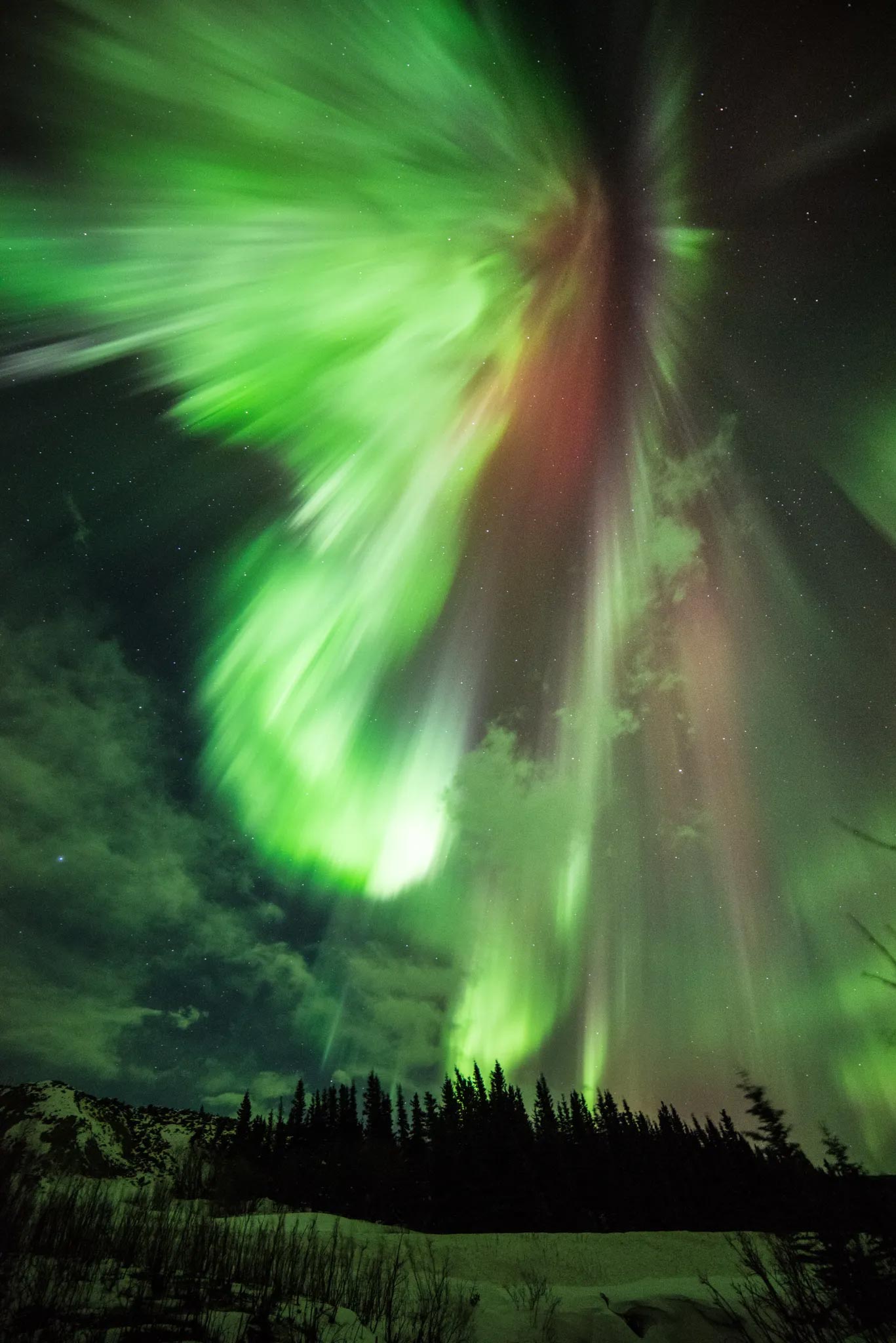
    Aurora Borealis, Donnelly Creek, Alaska
    This captivating image of the aurora borealis in Donnelly Creek, Alaska, highlights the mesmerizing phenomenon of the northern lights. Credit: Sebastian Saarloos

    This majestic image of the dazzling green lights of the aurora borealis was captured on March 17, 2015, around 5:30 a.m. EDT in Donnelly Creek, Alaska.

    The aurora borealis and aurora australis, often called the northern lights and southern lights, are common occurrences at high northern and southern latitudes, less frequent at mid-latitudes, and seldom seen near the equator.

    These colorful ribbons of light are the visible manifestation of the solar wind – the flow of charged particles from the Sun – interacting with the Earth’s magnetosphere. Strong geomagnetic storms stimulate our atmosphere and light up the night sky, creating auroras.

    See how you can help track auroras around the world with the Aurorasaurus project.

    Never miss a breakthrough: Join the SciTechDaily newsletter.
    Follow us on Google and Google News.

    Atmosphere Aurora Borealis NASA Space Weather
    Share. Facebook Twitter Pinterest LinkedIn Email Reddit

    Related Articles

    Astronaut’s Breathtaking View: Moonglint, Volcanic Aleutians, and Aurora Borealis

    Brilliant Borealis: A Blast of High-Speed Solar Wind Provoked Dancing Auroras

    Science Made Simple: Earth’s Upper Atmosphere

    Edge of Space: The Science of NASA’s AIM Spacecraft

    NASA Super Soaker Mission Seeks to Understand Bright Night-Shining Clouds by Creating One

    New NASA Study Shows That Hydrofluorocarbons Contribute to Ozone Depletion

    Fluctuations in Weather Patterns Help Decrease the Antarctic Ozone Hole

    NASA Set to Launch 5 Rockets to Study High-Altitude Jet Stream

    NASA Launched Rocket into Aurora Borealis

    Leave A Reply Cancel Reply

    • Facebook
    • Twitter
    • Pinterest
    • YouTube

    Don't Miss a Discovery

    Subscribe for the Latest in Science & Tech!

    Trending News

    Bone-Strengthening Discovery Could Reverse Osteoporosis

    Scientists Uncover Hidden Trigger Behind Stem Cell Aging

    Scientists Find Way to Reverse Fatty Liver Disease Without Changing Diet

    Could Humans Regrow Limbs? New Study Reveals Promising Genetic Pathway

    Scientists Reveal Eating Fruits and Vegetables May Increase Your Risk of Lung Cancer

    Scientists Reverse Brain Aging With Simple Nasal Spray

    Scientists Uncover Potential Brain Risks of Popular Fish Oil Supplements

    Scientists Discover a Surprising Way To Make Bread Healthier and More Nutritious

    Follow SciTechDaily
    • Facebook
    • Twitter
    • YouTube
    • Pinterest
    • Newsletter
    • RSS
    SciTech News
    • Biology News
    • Chemistry News
    • Earth News
    • Health News
    • Physics News
    • Science News
    • Space News
    • Technology News
    Recent Posts
    • Cancer’s Secret Weapon? Scientists Reveal How Tumors “Learn” To Survive Treatment
    • Millions Take This Popular Supplement – Scientists Discover a Concerning Link to Heart Failure
    • What Makes Rubber So Strong? Scientists Finally Solve 100-Year-Old Mystery
    • Scientists Decode Mysterious Magnetic “Maze Domains” To Boost EV Efficiency
    • Scientists Say This Fungus Could Survive the Trip to Mars
    Copyright © 1998 - 2026 SciTechDaily. All Rights Reserved.
    • Science News
    • About
    • Contact
    • Editorial Board
    • Privacy Policy
    • Terms of Use

    Type above and press Enter to search. Press Esc to cancel.