

New fossil evidence suggests the Cambrian explosion—long hailed as the dramatic birth of complex animal life—may not have been the sudden evolutionary event we thought.
Researchers analyzing ancient trace fossils from 545 million years ago found signs of surprisingly advanced, mobile creatures predating the Cambrian by millions of years. These organisms likely had segmented bodies, muscles, and even primitive sensory systems, leaving behind tracks that speak of movement, adaptation, and complexity.
Rethinking the Cambrian Explosion’s Timeline
The Cambrian explosion marks a remarkable chapter in the history of life on Earth. It was during this time, around 530 million years ago, that many of the major animal groups first appeared and a wide variety of species began to flourish. This event is often seen as a sudden surge in biological diversity. However, new evidence suggests that this evolutionary burst may have begun much earlier than scientists previously believed. A recent study published in the journal Geology supports this idea by analyzing fossil evidence that predates the Cambrian by millions of years.
The researchers focused on fossilized imprints known as trace fossils. These are not the remains of organisms themselves, but the preserved tracks and marks left behind by their movements and activities. By examining these traces, which date back about 545 million years, the team investigated the body features of the organisms that made them, including symmetry, body segmentation, and the presence of exoskeletons.
The study was conducted by Olmo Miguez Salas, from the Faculty of Earth Sciences at the University of Barcelona, and Zekun Wang, of the Natural History Museum in London (United Kingdom).
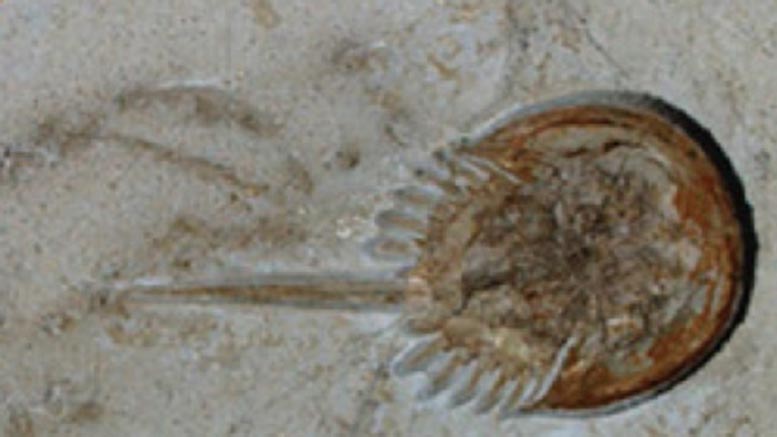
Beyond Bones: What Trace Fossils Reveal
The Cambrian explosion remains one of the most fascinating and puzzling periods in the fossil record. While many paleontological studies have traditionally focused on organisms with hard body parts that fossilize easily, these only tell part of the story. Trace fossils (also known as ichnofossils) offer a different perspective by capturing the behaviors and environmental interactions of organisms, including those with soft bodies or no skeletons at all.
“The trace fossil record provides valuable information about evolutionary periods when soft-bodied fauna were dominant,” says Olmo Miguez Salas, a Beatriu de Pinós postdoctoral researcher at the UB’s Department of Earth and Ocean Dynamics. “Fossil traces reflect the behaviour of the organism that generates them, which is determined by habitat and responses to environmental stimuli. Therefore, they are an indicator of the palaeoecological conditions in which the organisms that generated them lived.”
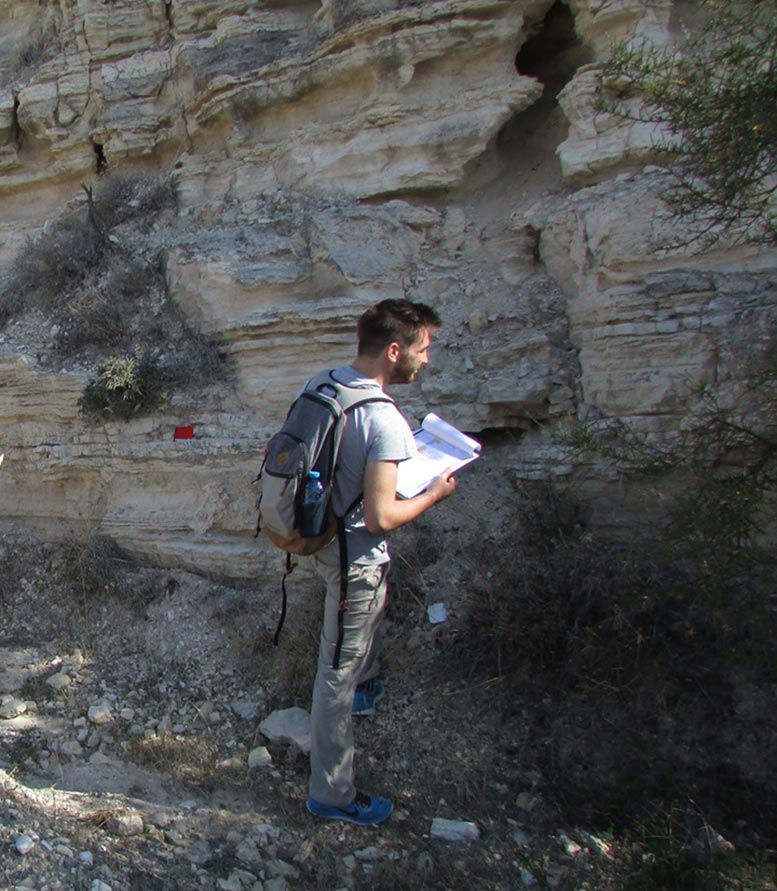
Zooming in on a Turning Point in Evolution
The authors have focused on the study of trace fossils in the Ediacaran-Cambrian transition, “a period of recognized palaeoevolutionary interest that was a turning point in the evolution of complex life on Earth,” says Miguez Salas.
In this transition, there was a radical change in biodiversity and in the structure of organisms and ecosystems. “The Ediacaran fauna was dominated by complex, multicellular soft-bodied organisms. The transition to the Cambrian involved the extinction of much of the Ediacara fauna, and a rapid diversification of complex multicellular life forms with hard parts (e.g., exoskeletons). This is the evolutionary core from which most modern animal phyla emerged: what is known as the Cambrian explosion,” notes the researcher.
Slender Creatures Leave Big Questions
The study published in Geology quantitatively indicates that organisms with slender body profiles thrived around 545 million years ago. “These organisms probably possessed coelomic hydrostatic bodies, with an anteroposterior axis, muscles, and possibly segmentation,” the expert says.
“Furthermore, these organisms could move in a specific direction (directional locomotion) and probably possessed sensory capabilities to move and feed on heterogeneous substrates in a habitat dominated by microbial mats. Therefore, the so-called Cambrian explosion and its evolutionary implications may have occurred much earlier than estimated.”
A New Method to Analyze Ancient Motion
These adaptations in body profile and mobility allowed these early animals to thrive in increasingly dynamic and complex environments, an ecological engineering that could promote evolutionary innovations. The methodology of the study was based on the analysis of the linear proportionality exhibited by the trace trajectories of modern and fossilized animals. Subsequently, this scaling law has been applied to locomotor traces of Ediacaran-Cambrian fossils (e.g., Archaeonassa, Gordia, Helminthopsis, and Parapsammichnites).
Although some previous studies had described trace fossils associated with mobile benthic bilateral organisms in the Ediacara fauna, detailed quantitative approaches were lacking, and there were still many unknowns about the body shape of these organisms (length, width, cephalization, etc.). The findings of the new study establish an innovative quantitative approach to analysing the fossil locomotion traces from ancient times, early animal anatomy, and paleoecological dynamics.
Implications for the Origin of Animal Diversity
“This new discovery opens the door to quantitatively study future Ediacara trace fossils discovered in the coming years and to corroborate that the Cambrian explosion did not happen in the Cambrian, but many millions of years earlier. Moreover, the scaling laws obtained in this study enable the study of the morphological evolution of different faunal phyla generating fossil locomotion traces, not only during this evolutionary period, but also during other evolutionary periods of similar importance, such as the great diversification event of the Ordovician,” concludes Olmo Miguez Salas.
Reference: “Quantitative decoding of Ediacaran locomotory trace fossil morphologies: Evidence for the emergence of slender anterior-posterior body profiles” by Zekun Wang and Olmo Miguez-Salas, 9 June 2025, Geology.
DOI: 10.1130/G53332.1
Never miss a breakthrough: Join the SciTechDaily newsletter.
Follow us on Google and Google News.
7 Comments
Love the articles. Most interesting site I follow these days. Always educational and eye opening.
Who that’s Pokemon It’s a Kabuto 🤣🤣
I search for these articles in the early earth developments caustic depth to quell 3.5 earth developments.
L.A.PORCH PhD.
I rather think that the Shutterstock photograph at the top of the article is not of trace fosils, as the caption bebeith it indicates, but of fossils.
Wbo calculated the millions of years, and how?
How anybody rational can believe such delicate structures could survive even 52,5 ky, let alone 525 my, is beyond me.
Im a National Laboratory decorated PHYSICIST retiree. I always cringe when I read these types of Press Releases. Do you non-technical writers and editors NOT REALIZE that a few million years is less than 1 % of 550 million years? We use radiometric dating and other dating methods and they have large UNCERTAINTIES that are inherent to the dating methods. We don’t know any dates like 547 million years ago as these are 547 my +- 25 million years or more! I realzie you are trying to draw Theological and Philosophical inferences into each new funding science makes, and this is not usually justified by the science. Science will never replace Philosophy and Theology, Einstein understood this!