
Close Menu
    Facebook X (Twitter) Instagram
    SciTechDaily
    • Biology
    • Chemistry
    • Earth
    • Health
    • Physics
    • Science
    • Space
    • Technology
    Facebook X (Twitter) Pinterest YouTube RSS
    SciTechDaily
    Home»Health»New COVID-19 Test Targets Three Viral Genes to Increase Reliability – Could Reduce Virus Spread
    Health

    New COVID-19 Test Targets Three Viral Genes to Increase Reliability – Could Reduce Virus Spread

    By Anglia Ruskin UniversityDecember 17, 2020No Comments3 Mins Read
    Facebook Twitter Pinterest Telegram LinkedIn WhatsApp Email Reddit
    Share
    Facebook Twitter LinkedIn Pinterest Telegram Email Reddit
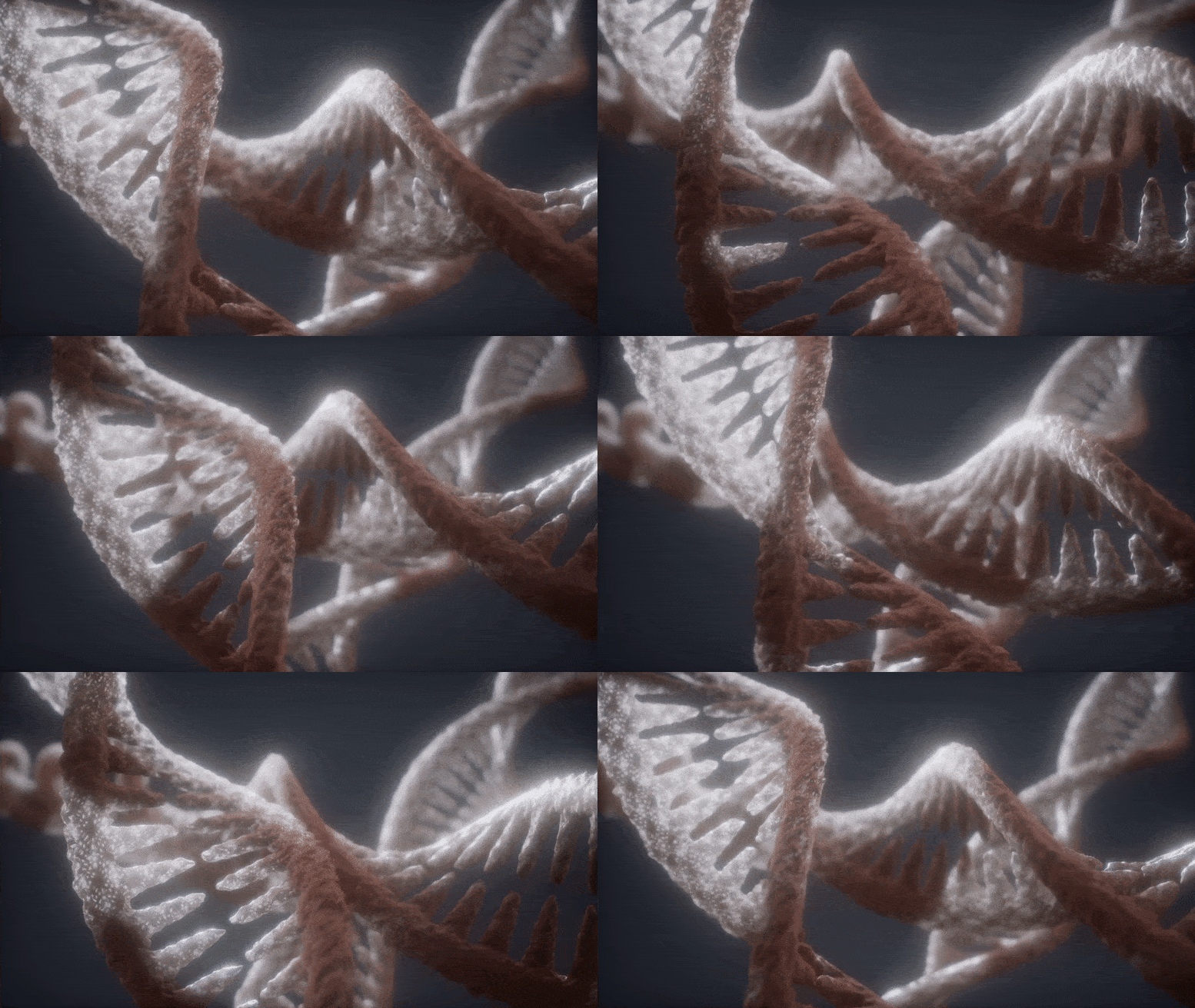
    Genetics DNA Animation
    Expert-developed test targets three viral genes for faster, more reliable COVID-19 detection, potentially in just 20 minutes. It also has the potential to measure viral load.

    New test by ARU professor could cut false negatives and deliver faster results.

    Results of a unique test developed by a world-renowned expert, which targets three viral genes to increase reliability and could cut COVID-19 detection time to 20 minutes, have been peer-reviewed and published in the journal Scientific Reports.

    Stephen Bustin, Professor of Molecular Medicine at Anglia Ruskin University (ARU) and a leading expert in quantitative polymerase chain reaction (qPCR), which is widely used to detect infectious SARS-CoV-2 in cells, has developed the assay, called Cov2-ID, with colleagues at Broomfield Hospital in Chelmsford.

    The test detects three viral targets, making it more reliable than other current tests to identify the virus which target one or two, and was 100% accurate in almost 30 patient samples taken. The test also has the potential to detect viral load, which is the amount of the virus present in each patient.

    While most of the samples were taken in Essex and contained the mutant genotype of the virus, a sample taken from Australia contained a different “wild type” genotype.

    Cov2-ID has been developed using MIQE guidelines, which were developed by Professor Bustin in collaboration with scientists across the world to promote best practice for qPCR assay design and publication, to produce results which are robust, sensitive, and fast. It is also designed to minimize the likelihood of a false negative result which may lead to patients unwittingly infecting others.

    The qPCR tests currently in use in the UK typically return results within between one and two hours. The Cov2-ID testing process is both faster and simple to carry out, and could potentially return results while the person tested waits, helping to reduce the spread of infection.

    Professor Bustin said: “Speed and reliability are vital elements of the testing process. Currently, it is not really feasible for someone to wait where they are for the results of their test. They might go to the shops, have some lunch, and only then get a positive result, risking community spread of the virus. We have developed a test that can deliver a result in just 20 minutes.

    “Targeting three viral genes is unique, with most real-time qPCR assays currently only targeting two, This has led to some reports of false negative rates, again risking community spread. Our assay returned 100% accurate results from the samples collected.”

    Reference: “CoV2-ID, a MIQE-compliant sub-20-min 5-plex RT-PCR assay targeting SARS-CoV-2 for the diagnosis of COVID-19” by Stephen Bustin, Amy Coward, Garry Sadler, Louise Teare and Tania Nolan, 17 December 2020, Scientific Reports.
    DOI: 10.1038/s41598-020-79233-x

    Never miss a breakthrough: Join the SciTechDaily newsletter.
    Follow us on Google and Google News.

    Anglia Ruskin University COVID-19 Genetics Infectious Diseases Molecular Biology Public Health
    Share. Facebook Twitter Pinterest LinkedIn Email Reddit

    Related Articles

    Structural Changes Identified in COVID Alpha and Beta Variants – Suggests Need for Updated Vaccine Booster

    Genetic Sequencing Shows Coronavirus Variation Drives Pandemic Surges

    Breaking COVID-19’s “Clutch” to Stop Its Spread: Small Molecule Targets SARS-CoV-2 RNA for Destruction

    Development of an Effective COVID-19 Vaccine Through Comprehensive Analysis of Antibody Responses in Patients

    Researchers Identify 21 Existing Drugs That Could Treat COVID-19

    Scientists Warn That More Bat Research Is Critical to Preventing Next Pandemic

    New Genetic Identification of COVID-19 Susceptibility Will Aid Treatment

    Vitamin D Linked to Low Coronavirus Death Rate

    COVID-19 Treatment May Lie in Pangolin Genetics – May Possess Evolutionary Advantage Against Coronavirus

    Leave A Reply Cancel Reply

    • Facebook
    • Twitter
    • Pinterest
    • YouTube

    Don't Miss a Discovery

    Subscribe for the Latest in Science & Tech!

    Trending News

    Wasp Colonies Explode Into Violence After Losing Their Queen

    Scientists Create “Living Plastic” That Self-Destructs in Just Six Days

    Your Blood May Carry a 700-Million-Year-Old Secret

    Scientists Discover Some “Zombie Cells” May Actually Help You Live Longer

    Earth May Be Seeding Venus With Life, According to New Research

    What Scientists Found Inside a 117-Year-Old Woman Reveals New Clues to Long Life

    Scientists Discover Mysterious Creature Living in the Great Salt Lake – and It Exists Nowhere Else on Earth

    It’s Alive? Surprising Discovery Changes What We Know About Fog

    Follow SciTechDaily
    • Facebook
    • Twitter
    • YouTube
    • Pinterest
    • Newsletter
    • RSS
    SciTech News
    • Biology News
    • Chemistry News
    • Earth News
    • Health News
    • Physics News
    • Science News
    • Space News
    • Technology News
    Recent Posts
    • Mystery Solved: The Decades-Old Secret Lurking Beneath North Carolina’s Blueberry Farms
    • Surprising New Study Challenges a Century-Old Theory of Habit Formation
    • Scientists Turn Seawater Into Drinking Water Without Toxic Brine
    • A Psychologist Explains Why 40% of People Are Avoiding the News
    • Scientists Discover Alzheimer’s-Linked Proteion’s Surprising Role in Making Memories Last
    Copyright © 1998 - 2026 SciTechDaily. All Rights Reserved.
    • Science News
    • About
    • Contact
    • Editorial Board
    • Privacy Policy
    • Terms of Use

    Type above and press Enter to search. Press Esc to cancel.