
Close Menu
    Facebook X (Twitter) Instagram
    SciTechDaily
    • Biology
    • Chemistry
    • Earth
    • Health
    • Physics
    • Science
    • Space
    • Technology
    Facebook X (Twitter) Pinterest YouTube RSS
    SciTechDaily
    Home»Biology»Animals Fake Death for Long Periods of Time to Escape Predators
    Biology

    Animals Fake Death for Long Periods of Time to Escape Predators

    By University of BristolMarch 6, 2021No Comments3 Mins Read
    Facebook Twitter Pinterest Telegram LinkedIn WhatsApp Email Reddit
    Share
    Facebook Twitter LinkedIn Pinterest Telegram Email Reddit
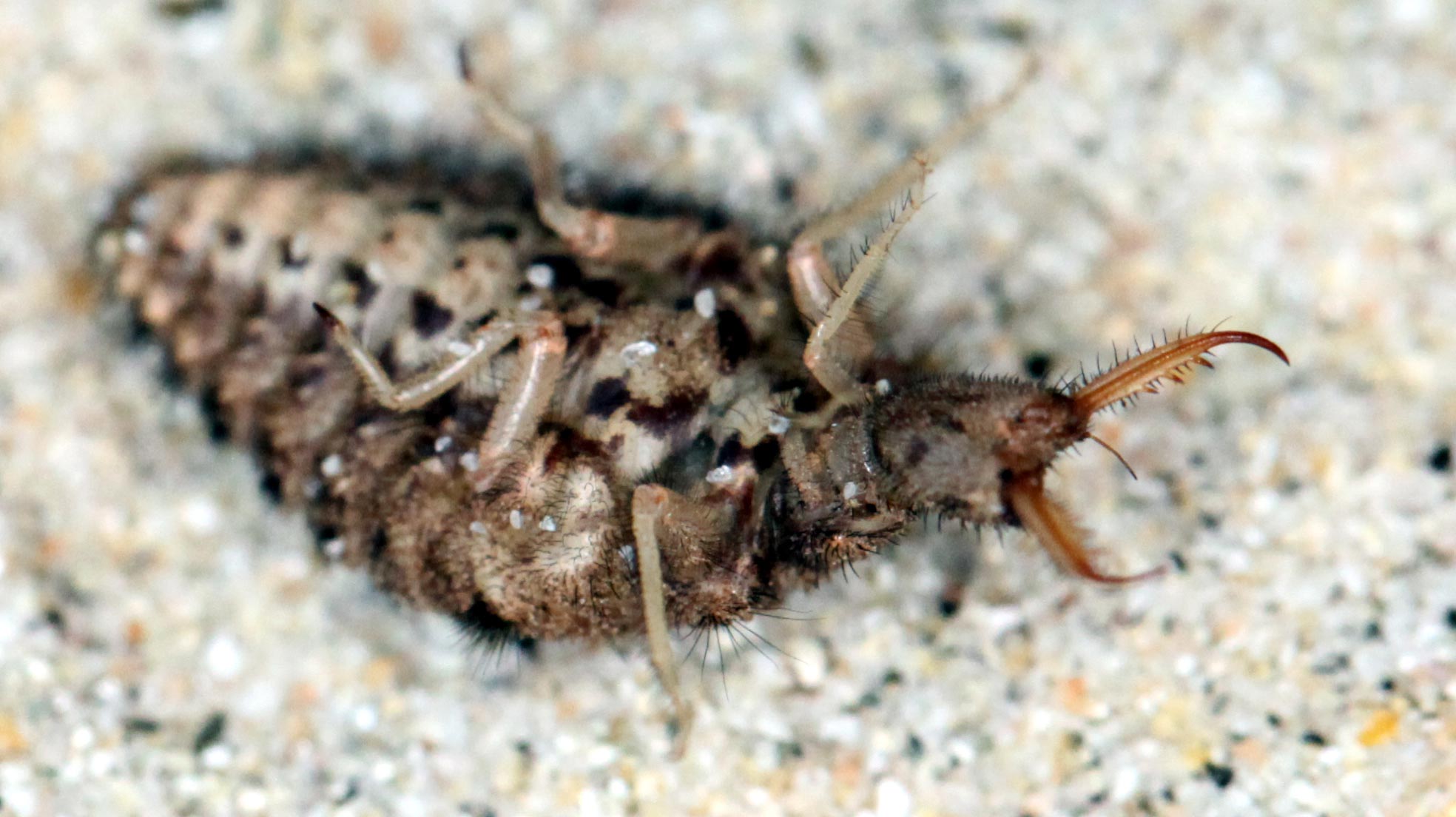
    Belly-Up Antlion Larva
    European antlion (Euroleon nostras) on its dorsal side playing dead. Credit: Professor Nigel R. Franks, University of Bristol

    Many animals feign death to try to escape their predators, with some individuals in prey species remaining motionless, if in danger, for extended lengths of time.

    Charles Darwin recorded a beetle that remained stationary for 23 minutes – however the University of Bristol has documented an individual antlion larvae pretending to be dead for an astonishing 61 minutes. Of equal importance, the amount of time that an individual remains motionless is not only long but unpredictable. This means that a predator will be unable to predict when a potential prey item will move again, attract attention, and become a meal.

    Predators are hungry and cannot wait indefinitely. Similarly, prey may be losing opportunities to get on with their lives if they remain motionless for too long. Thus, death-feigning might best be thought of as part of a deadly game of hide and seek in which prey might gain most by feigning death if alternative victims are readily available.

    The study, published on March 3, 2021, in the science journal Biology Letters, involved evaluating the benefits of death-feigning in terms of a predator visiting small populations of conspicuous prey. Researchers used computer simulations that utilize the marginal value theorem, a classical model in optimization.

    Lead author of the paper Professor Nigel R. Franks from the University of Bristol’s School of Biological Sciences, said: “Imagine you are in a garden full of identical soft fruit bushes. You go to the first bush. Initially collecting and consuming fruit is fast and easy, but as you strip the bush finding more fruit gets harder and harder and more time-consuming.

    “At some stage, you should decide to go to another bush and begin again. You are greedy and you want to eat as many fruits as quickly as possible. The marginal value theorem would tell you how long to spend at each bush given that time will also be lost moving to the next bush.

    The Art of Wasting Time

    “We use this approach to consider a small bird visiting patches of conspicuous antlion pits and show that antlion larvae that waste some of the predator’s time, by ‘playing dead’ if they are dropped, change the game significantly. In a sense, they encourage the predator to search elsewhere.”

    The modeling suggests that antlion larvae would not gain significantly if they remained motionless for even longer than they actually do. This suggests that in this arms race between predators and prey, death-feigning has been prolonged to such an extent that it can hardly be bettered.

    Professor Franks added: “Thus, playing dead is rather like a conjuring trick. Magicians distract an audience from seeing their sleights of hand by encouraging them to look elsewhere. Just so with the antlion larvae playing dead – the predator looks elsewhere. Playing dead seems to be a very good way to stay alive.”

    Reference: “Hide-and-seek strategies and post-contact immobility’ by Nigel R. Franks, Alan Worley and Ana B. Sendova-Franks, 3 March 2021, Biology Letters.
    DOI: 10.1098/rsbl.2020.0892

    Never miss a breakthrough: Join the SciTechDaily newsletter.
    Follow us on Google and Google News.

    Entomology Insect University of Bristol
    Share. Facebook Twitter Pinterest LinkedIn Email Reddit

    Related Articles

    Common Pesticides Stop Bees and Flies From Getting a Good Night’s Sleep and Disrupts Their Memories

    Study of More Than 1,400 Protein-Coding Genes Resolves Long Standing Mystery in the Evolution of Insects

    How Long to Play Dead in Order to Stay Alive? The Answer Is “Highly Strategic”

    Crickets Eavesdrop on Bat Echolocation Calls and Drop From the Sky to Evade Capture

    Deaf Moths Evolved Noise-Cancelling Scales to Evade Prey – More Efficient Than Current Sound Engineering Technology

    New Species of Flea Beetle Discovered, Burumoseria Yuae

    Katydid Ears Have Structures Similar to Mammalian Ones

    Haemaphysalis Flava Hardy Enough to Survive Vacuum and Electron Beam

    Researchers Recreate the Song of 165 Million Year Old Katydid

    Leave A Reply Cancel Reply

    • Facebook
    • Twitter
    • Pinterest
    • YouTube

    Don't Miss a Discovery

    Subscribe for the Latest in Science & Tech!

    Trending News

    Mezcal “Worm” in a Bottle Mystery: DNA Testing Reveals a Surprise

    New Research Reveals That Your Morning Coffee Activates an Ancient Longevity Switch

    This Is What Makes You Irresistible to Mosquitoes

    Shockingly Powerful Giant Octopuses Ruled the Seas 100 Million Years Ago

    Scientists Stunned by New Organic Molecules Found on Mars

    Rewriting Dinosaur Evolution: Scientists Unearth Remarkable 150-Million-Year-Old Stegosaur Skull

    Omega-3 Supplements Linked to Cognitive Decline in Surprising New Study

    First-of-Its-Kind Discovery: Homer’s Iliad Found Embedded in a 1,600-Year-Old Egyptian Mummy

    Follow SciTechDaily
    • Facebook
    • Twitter
    • YouTube
    • Pinterest
    • Newsletter
    • RSS
    SciTech News
    • Biology News
    • Chemistry News
    • Earth News
    • Health News
    • Physics News
    • Science News
    • Space News
    • Technology News
    Recent Posts
    • NASA’s Webb Space Telescope Reveals a Dark Airless Super-Earth That Looks Like Mercury
    • These Simple Daily Habits Can Quickly Improve Blood Pressure and Heart Risk Factors
    • A Common Nutrient May Play a Surprising Role in Anxiety
    • Doing This After 9 p.m. Could Double Your Risk of Gut Issues
    • New Research Challenges Long-Held Beliefs About How the Brain Makes Decisions
    Copyright © 1998 - 2026 SciTechDaily. All Rights Reserved.
    • Science News
    • About
    • Contact
    • Editorial Board
    • Privacy Policy
    • Terms of Use

    Type above and press Enter to search. Press Esc to cancel.