
Close Menu
    Facebook X (Twitter) Instagram
    SciTechDaily
    • Biology
    • Chemistry
    • Earth
    • Health
    • Physics
    • Science
    • Space
    • Technology
    Facebook X (Twitter) Pinterest YouTube RSS
    SciTechDaily
    Home»Space»NASA’s OSIRIS-REx Completes Final Tour of Asteroid Bennu Before Its 180,000,000 Mile Trip Back to Earth
    Space

    NASA’s OSIRIS-REx Completes Final Tour of Asteroid Bennu Before Its 180,000,000 Mile Trip Back to Earth

    By Rani Gran, NASA's Goddard Space Flight CenterApril 8, 20211 Comment4 Mins Read
    Facebook Twitter Pinterest Telegram LinkedIn WhatsApp Email Reddit
    Share
    Facebook Twitter LinkedIn Pinterest Telegram Email Reddit
    NASA OSIRIS-REx's Final Asteroid Observation Run
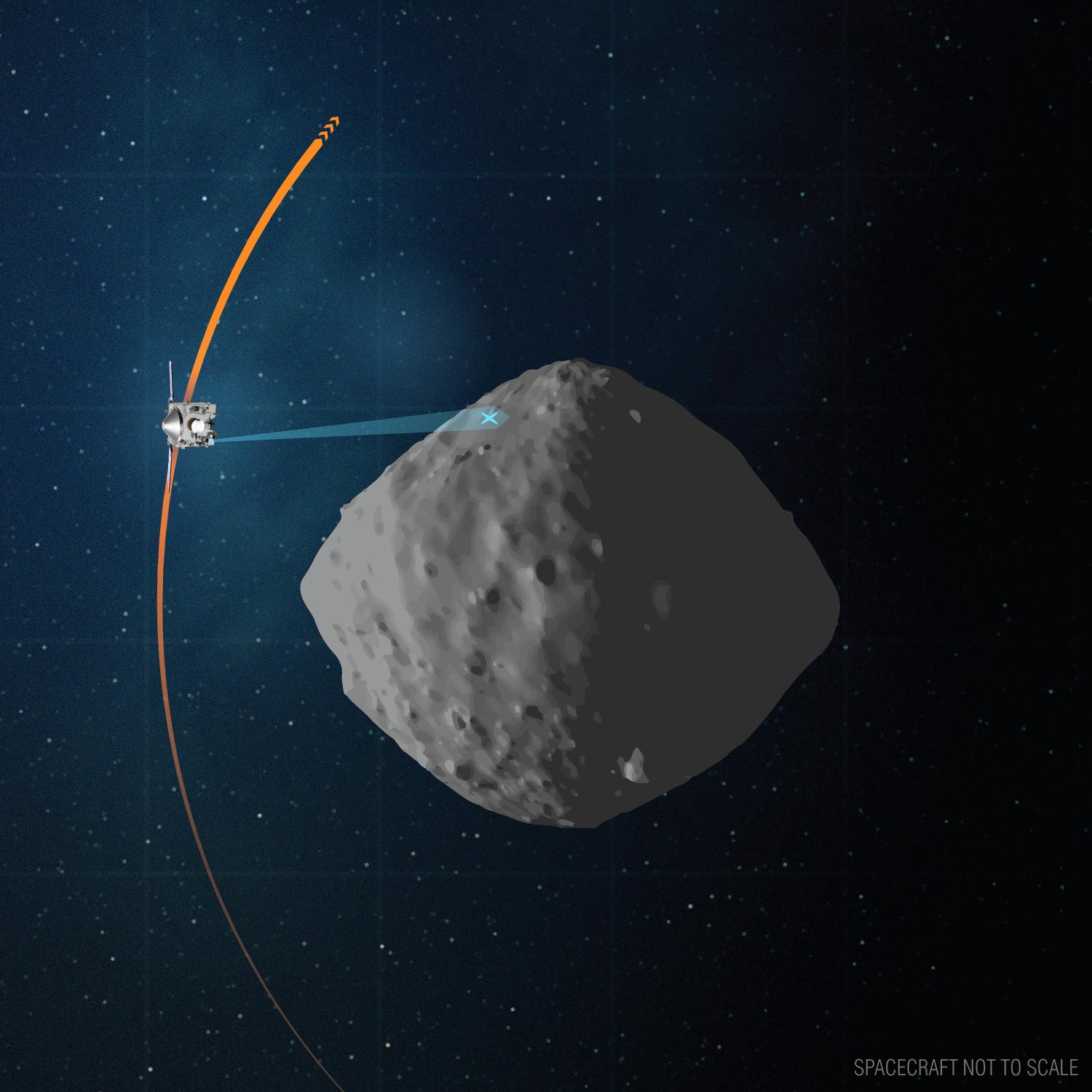
    This artist’s concept shows the planned flight path of NASA’s OSIRIS-REx spacecraft during its final flyby of asteroid Bennu, which is scheduled for April 7. Credit: ASA/Goddard/University of Arizona

    NASA’s OSIRIS-REx has completed its final Bennu flyby and begins its journey home, bringing asteroid samples back to Earth.

    NASA’s OSIRIS-REx completed its last flyover of Bennu around 6 a.m. EDT (4 a.m. MDT) April 7 and is now slowly drifting away from the asteroid; however, the mission team will have to wait a few more days to find out how the spacecraft changed the surface of Bennu when it grabbed a sample of the asteroid.

    The OSIRIS-REx team added this flyby to document surface changes resulting from the Touch and Go (TAG) sample collection maneuver on October 20, 2020. “By surveying the distribution of the excavated material around the TAG site, we will learn more about the nature of the surface and subsurface materials along with the mechanical properties of the asteroid,” said Dr. Dante Lauretta, principal investigator for OSIRIS-REx at the University of Arizona.

    Top-Down View of Asteroid Bennu
    This image shows a top-down view of asteroid Bennu, with a portion of the asteroid’s equatorial ridge and northern hemisphere illuminated. It was taken by the PolyCam camera on NASA’s OSIRIS-REx spacecraft on March 4, 2021, from a distance of about 186 miles (300 km). The spacecraft’s cameras are pointed directly at Bennu’s north pole. Two large equatorial craters are visible on the asteroid’s edge (center and center left). The image was obtained during the mission’s Post-TAG Operations phase, as the spacecraft slowly approached Bennu in preparation for a final observational flyby on April 7. Credit: NASA/Goddard/University of Arizona

    During the flyby, OSIRIS-REx imaged Bennu for 5.9 hours, covering more than a full rotation of the asteroid. It flew within 2.1 miles (3.5 kilometers) distance to the surface of Bennu – the closest it’s been since the TAG sample collection event.

    It will take until at least April 13 for OSIRIS-REx to downlink all of the data and new pictures of Bennu’s surface recorded during the flyby. It shares the Deep Space Network antennas with other missions like Mars Perseverance, and typically gets 4–6 hours of downlink time per day. “We collected about 4,000 megabytes of data during the flyby,” said Mike Moreau, deputy project manager of OSIRIS-REx at NASA’s Goddard Space Flight Center in Greenbelt, Maryland. “Bennu is approximately 185 million miles from Earth right now, which means we can only achieve a downlink data-rate of 412 kilobits per second, so it will take several days to download all of the flyby data.”
    OSIRIS-REx Bennu Departure
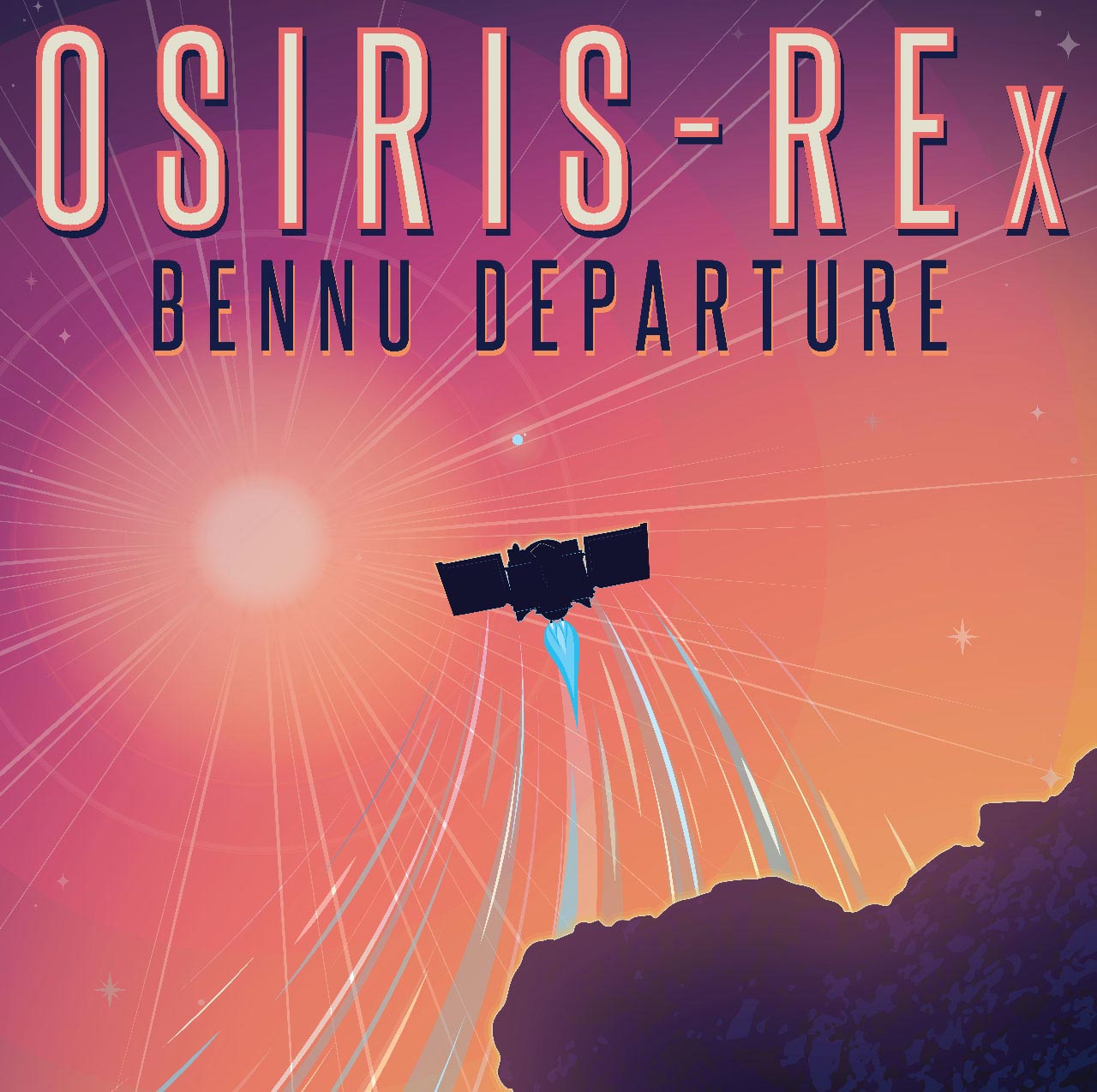
    NASA invites the public to watch OSIRIS-REx depart from Bennu on NASA.gov and NASA TV, May 10, 2021, at 4 p.m. EDT.

    Once the mission team receives the images and other instrument data, they will study how OSIRIS-REx jumbled up Bennu’s surface. During touchdown, the spacecraft’s sampling head sunk 1.6 feet (48.8 centimeters) into the asteroid’s surface and simultaneously fired a pressurized charge of nitrogen gas. The spacecraft’s thrusters kicked up a large amount of surface material during the back-away burn – launching rocks and dust in the process.

    OSIRIS-REx, with its pristine and precious asteroid cargo, will remain in the vicinity of Bennu until May 10 when it will fire its thrusters and begin its two-year cruise home. The mission will deliver the asteroid sample to Earth on September 24, 2023.

    KinetX Flight Navigator Leilah McCarthy
    KinetX Flight Navigator Leilah McCarthy processes navigation images to help target NASA’s OSIRIS-REx final flyby of near-Earth asteroid Bennu. Credit: KinetX Inc./Coralie Adam

    NASA’s Goddard Space Flight Center in Greenbelt, Maryland, provides overall mission management, systems engineering, and the safety and mission assurance for OSIRIS-REx (Origins Spectral Interpretation Resource Identification Security – Regolith Explorer). Dante Lauretta of the University of Arizona, Tucson, is the principal investigator, and the University of Arizona also leads the science team and the mission’s science observation planning and data processing. Lockheed Martin Space in Denver built the spacecraft and provides flight operations. Goddard and KinetX Aerospace are responsible for navigating the OSIRIS-REx spacecraft. OSIRIS-REx is the third mission in NASA’s New Frontiers Program, which is managed by NASA’s Marshall Space Flight Center in Huntsville, Alabama, for the agency’s Science Mission Directorate in Washington.

    Never miss a breakthrough: Join the SciTechDaily newsletter.
    Follow us on Google and Google News.

    Asteroid Bennu NASA NASA Goddard Space Flight Center OSIRIS-REx Popular
    Share. Facebook Twitter Pinterest LinkedIn Email Reddit

    Related Articles

    NASA Uncovers Life’s Building Blocks in Asteroid Bennu’s Pristine Sample

    Countdown to History: NASA’s OSIRIS-REx Preps for Epic Asteroid Delivery

    A Race Against Time: NASA Readies for Historic Asteroid Sample Delivery

    NASA Finds Some Asteroids Aged Early by Sun – “We Were Surprised”

    Surprise – Again! NASA Spacecraft Reveals Asteroid Bennu Is Not What It Seemed

    NASA’s OSIRIS-REx Spacecraft Observes Asteroid Bennu’s Boulder “Body Armor”

    NASA’s OSIRIS-REx Spacecraft Discovers Sunlight Cracking Rocks on Asteroid Bennu

    NASA Selects Nightingale Crater on Bennu for Asteroid Sample Collection

    Daring Rescue of Monumental Asteroid Mission – Here’s How Engineers Pulled It Off

    1 Comment

    1. Bonnie Davis on April 8, 2021 2:12 pm

      When I was growing up after WWII we all read Science Fiction. It pales in comparison with what is actually done today. Keep up the good work people of the scientific world. There is more to life than baseball and pizza.

      Reply
    Leave A Reply Cancel Reply

    • Facebook
    • Twitter
    • Pinterest
    • YouTube

    Don't Miss a Discovery

    Subscribe for the Latest in Science & Tech!

    Trending News

    Mezcal “Worm” in a Bottle Mystery: DNA Testing Reveals a Surprise

    New Research Reveals That Your Morning Coffee Activates an Ancient Longevity Switch

    This Is What Makes You Irresistible to Mosquitoes

    Shockingly Powerful Giant Octopuses Ruled the Seas 100 Million Years Ago

    Scientists Stunned by New Organic Molecules Found on Mars

    Rewriting Dinosaur Evolution: Scientists Unearth Remarkable 150-Million-Year-Old Stegosaur Skull

    Omega-3 Supplements Linked to Cognitive Decline in Surprising New Study

    First-of-Its-Kind Discovery: Homer’s Iliad Found Embedded in a 1,600-Year-Old Egyptian Mummy

    Follow SciTechDaily
    • Facebook
    • Twitter
    • YouTube
    • Pinterest
    • Newsletter
    • RSS
    SciTech News
    • Biology News
    • Chemistry News
    • Earth News
    • Health News
    • Physics News
    • Science News
    • Space News
    • Technology News
    Recent Posts
    • This Simple Movement Could Be Secretly Cleaning Your Brain
    • Male Birth Control Breakthrough: Scientists Find Way To Turn Sperm Production Off and Back On
    • A Common Vitamin Could Hold the Key to Treating Fatty Liver Disease
    • New Research Shows Vitamin B12 May Hold the Key to Healthy Aging
    • Scientists Map Thousands of Brain Connections With RNA Barcodes
    Copyright © 1998 - 2026 SciTechDaily. All Rights Reserved.
    • Science News
    • About
    • Contact
    • Editorial Board
    • Privacy Policy
    • Terms of Use

    Type above and press Enter to search. Press Esc to cancel.