
Close Menu
    Facebook X (Twitter) Instagram
    SciTechDaily
    • Biology
    • Chemistry
    • Earth
    • Health
    • Physics
    • Science
    • Space
    • Technology
    Facebook X (Twitter) Pinterest YouTube RSS
    SciTechDaily
    Home»Chemistry»Skid Mark Clues: Forensic Scientists Classify Unique Chemical Signatures in Tires
    Chemistry

    Skid Mark Clues: Forensic Scientists Classify Unique Chemical Signatures in Tires

    By University of Central FloridaApril 28, 2021No Comments4 Mins Read
    Facebook Twitter Pinterest Telegram LinkedIn WhatsApp Email Reddit
    Share
    Facebook Twitter LinkedIn Pinterest Telegram Email Reddit
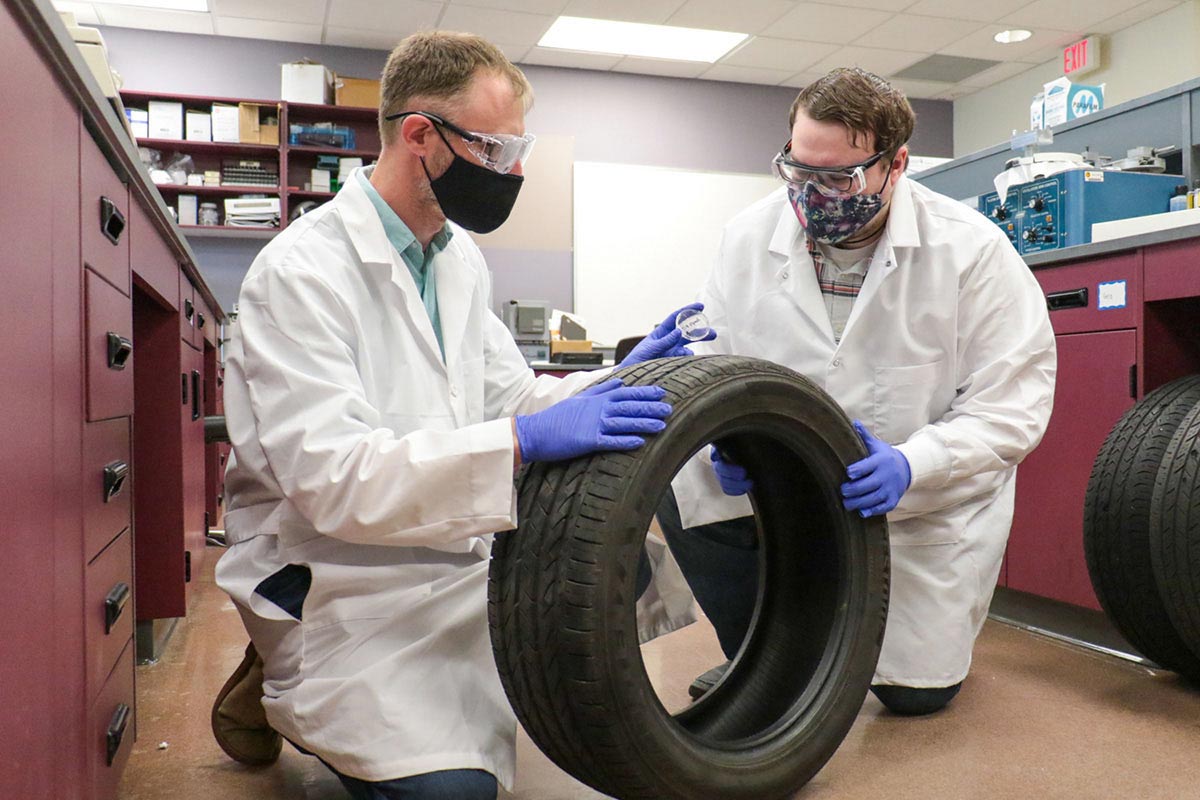
    Unique Chemical Signatures In Tires
    The University of Central Florida team used laser-induced breakdown spectroscopy (LIBS) on each sample. The technique focuses a laser onto the tire sample, which creates a microscopic plasma that emits light according to the chemical elements present. The spectroscopy comes in because it analyzes this light and matches it to the corresponding chemicals. It’s the same technique that instruments aboard the Mars rovers (Curiosity and Perseverance) use to determine what kinds of elements are found within the rocks of Mars. Credit: University of Central Florida/Karen Norum

    New approach could provide law enforcement additional tools to track down those who flee a crime scene.

    Skid marks left by cars are often analyzed for their impression patterns, but they often don’t provide enough information to identify a specific vehicle. UCF Chemistry Associate Professor Matthieu Baudelet and his forensics team at the National Center for Forensic Science, which was established at UCF in 1997, may have just unlocked a new way to collect evidence from those skid marks.

    The team recently published a study in the journal Applied Spectroscopy that details how they are classifying the chemical profile of tires to link vehicles back to potential crime scenes.

    “Tire evidence is often overlooked in forensics,” says Baudelet. “In cases of hit and runs or accidents involving multiple cars, the chemical signature of the tires have the potential to be integral information to the investigation.”

    LIBS Technology Brings New Insight to Forensics

    The team used laser-induced breakdown spectroscopy (LIBS) on each sample. The technique focuses a laser onto the tire sample, which creates a microscopic plasma that emits light according to the chemical elements present. The spectroscopy comes in because it analyzes this light and matches it to the corresponding chemicals. It’s the same technique that instruments aboard the Mars rovers (Curiosity and Perseverance) use to determine what kinds of elements are found within the rocks of Mars.
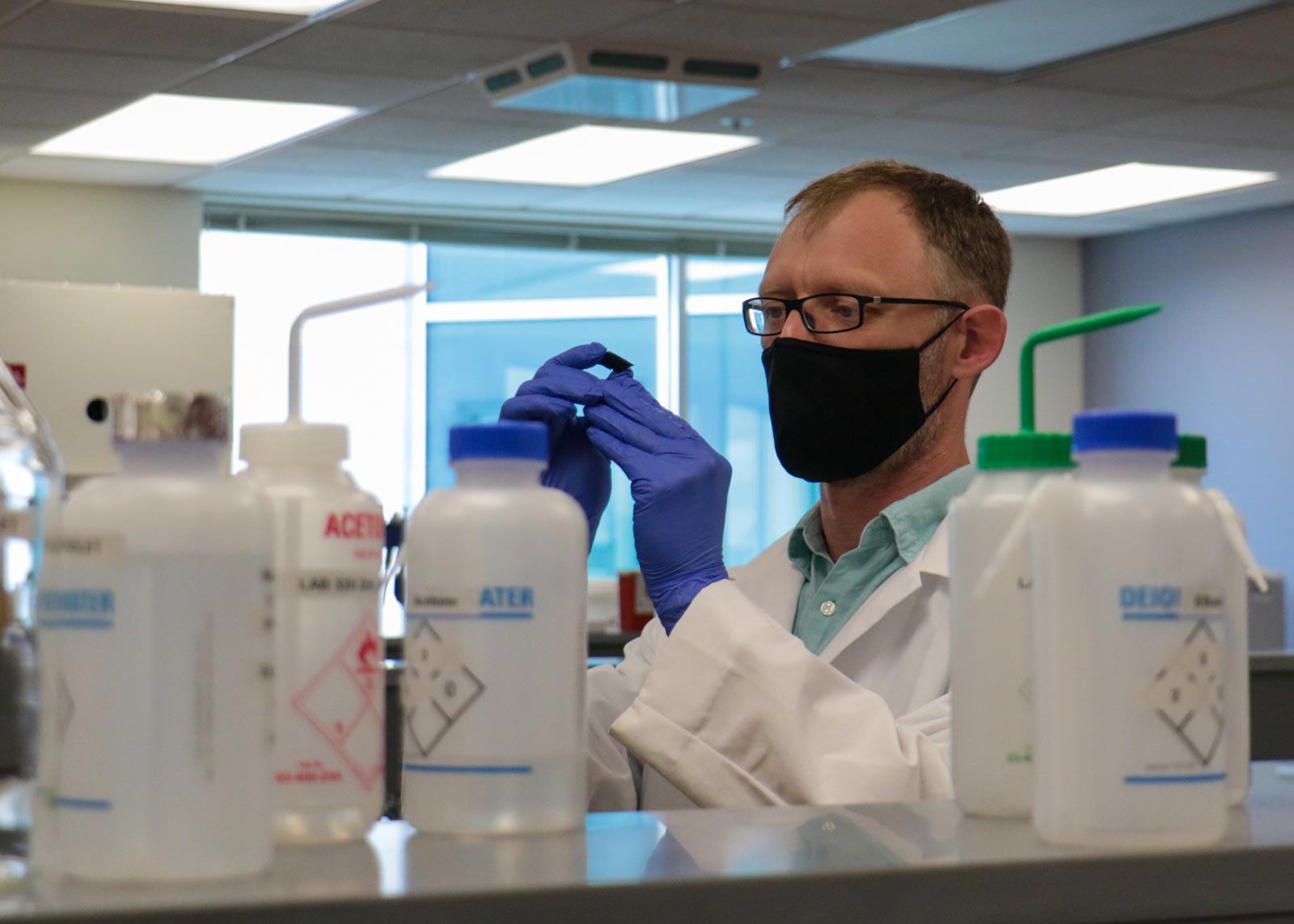
    Matthieu Baudelet
    Matthieu Baudelet and his forensics team work out of UCF’s National Center for Forensic Science. Credit: University of Central Florida/Karen Norum

    “The process is as complicated as it is fun,” says Baudelet. “The whole idea is that tire evidence holds a lot of data. They have patterns, but these pattern impressions do not give all the answers. It became a question of ‘Can we use their chemical composition to obtain information from the tires?'”

    Baudelet and his graduate student, John Lucchi, started testing their idea by recreating skid marks in the laboratory using road materials like concrete and asphalt. By pressing a tire into the surface at the same velocity as a moving vehicle, a braking impression is made on the laboratory-controlled “road” from the tire. This in turn gives the team a chance to analyze the chemical composition of the tire and the road material and make chemical comparisons.

    Unique Tire Signatures and Environmental Challenges

    Every tire is expected to have its own chemical signature and, as such, a unique, corresponding skid mark. One current challenge is identifying how elements on the road like oil, rainwater, and other cars interfere with and change that signature. Baudelet says the National Center for Forensic Science has been working on overcoming these interference challenges with other evidence for years.

    Now that the process shows promise, the team will focus on establishing statistical reliability. Standards for police evidence are justifiably high, so next steps involve reproducible, dependable protocols, Baudelet says. Ultimately, he would like to know his team’s work provided justice and closure to cases of hit-and-run and vehicle violence.

    “We’re still working but so far we’ve made a lot of progress,” Baudelet says. “I feel that this can be a great supplementation to the methods currently being used in forensics and law enforcement.”

    Reference: “Tire Classification by Elemental Signatures Using Laser-Induced Breakdown Spectroscopy” by John Lucchi, Dan Gluck, Sidney Rials, Larry Tang and Matthieu Baudelet, 24 February 2021, Applied Spectroscopy.
    DOI: 10.1177/0003702821995585

    Never miss a breakthrough: Join the SciTechDaily newsletter.
    Follow us on Google and Google News.

    Biochemistry Forensics Materials Science Popular University of Central Florida
    Share. Facebook Twitter Pinterest LinkedIn Email Reddit

    Related Articles

    Plant-Based “Vegan Spider Silk” Provides Sustainable Alternative to Single-Use Plastics

    New Forensic DNA Technology to Combat Terrorism – Dust on Boots, Baggage Can Track Down Suspects

    Battling COVID-19: Researchers Discover Materials – Activated With UV Light – That Can Kill Coronavirus and Other Viruses

    ‘Eco’ Super-Glue Made From Plant-Based Particles and Water – Single Drop Can Hold 200 Pounds

    Scientists Identify Specific Enzyme Related to Colon Cancer

    Chemists Reveal New Theory For How Life On Earth May Have Begun

    Scientists Synthesize an Entirely New Form of Silicon

    Working to Recycle Greenhouse Gases

    Chemists Work on Synthetic Cell Creation

    Leave A Reply Cancel Reply

    • Facebook
    • Twitter
    • Pinterest
    • YouTube

    Don't Miss a Discovery

    Subscribe for the Latest in Science & Tech!

    Trending News

    Scientists Warn That This Common Pet Fish Can Wreck Entire Ecosystems

    Scientists Make Breakthrough in Turning Plastic Trash Into Clean Fuel Using Sunlight

    This Popular Supplement May Interfere With Cancer Treatment, Scientists Warn

    Scientists Finally Solved One of Water’s Biggest Mysteries

    Could This New Weight-Loss Pill Disrupt the Entire Market? Here’s What You Should Know About Orforglipron

    Earth’s Crust Is Tearing Open in Africa, and It Could Form a New Ocean

    Breakthrough Bowel Cancer Trial Leaves Patients Cancer-Free for Nearly 3 Years

    Natural Compound Shows Powerful Potential Against Rheumatoid Arthritis

    Follow SciTechDaily
    • Facebook
    • Twitter
    • YouTube
    • Pinterest
    • Newsletter
    • RSS
    SciTech News
    • Biology News
    • Chemistry News
    • Earth News
    • Health News
    • Physics News
    • Science News
    • Space News
    • Technology News
    Recent Posts
    • The Most Effective Knee Arthritis Treatments Aren’t What You Expect
    • Scientists Develop Bioengineered Chewing Gum That Could Help Fight Oral Cancer
    • Popular Weight-Loss Drugs Found To Cut Heart Attack and Stroke Risk
    • After 37 Years, the World’s Longest-Running Soil Warming Experiment Uncovers a Startling Climate Secret
    • NASA Satellite Captures First-Ever High-Res View of Massive Pacific Tsunami
    Copyright © 1998 - 2026 SciTechDaily. All Rights Reserved.
    • Science News
    • About
    • Contact
    • Editorial Board
    • Privacy Policy
    • Terms of Use

    Type above and press Enter to search. Press Esc to cancel.