
Close Menu
    Facebook X (Twitter) Instagram
    SciTechDaily
    • Biology
    • Chemistry
    • Earth
    • Health
    • Physics
    • Science
    • Space
    • Technology
    Facebook X (Twitter) Pinterest YouTube RSS
    SciTechDaily
    Home»Space»NASA Ingenuity Helicopter’s Fifth Flight on Mars Will Be Different – Here’s Why
    Space

    NASA Ingenuity Helicopter’s Fifth Flight on Mars Will Be Different – Here’s Why

    By Josh Ravich, NASA's Jet Propulsion LaboratoryMay 7, 20211 Comment6 Mins Read
    Facebook Twitter Pinterest Telegram LinkedIn WhatsApp Email Reddit
    Share
    Facebook Twitter LinkedIn Pinterest Telegram Email Reddit
    Ingenuity's Color Camera Spies Helicopter's New Airfield
    NASA’s Ingenuity Mars Helicopter took this color image during its fourth flight on April 30, 2021. “Airfield B,” it’s new landing site, can be seen below; it will seek to set down there on its fifth flight attempt. Credit: NASA/JPL-Caltech

    Like the Wright brothers, Ingenuity evolves quickly—its fifth flight begins a new phase, showcasing how aerial tech can support Martian missions.

    Around the time of our first flight, we talked a lot about having our “Wright brothers moment” at Mars. And that makes a lot of sense, since those two mechanically-minded bicycle builders executed the first powered, controlled flight on Earth, and we were fortunate enough to do the same 117 years later – on another planet.

    But the comparisons shouldn’t stop with a first flight. Ingenuity’s fifth flight is scheduled for Friday, May 7. As always (at least so far), our targeted takeoff time is 12:33 p.m. local Mars time (3:26 p.m. EDT, or 12:26 p.m. PDT), with data coming down at 7:31 p.m. EDT (4:31 p.m. PDT). Ingenuity will take off at Wright Brothers Field – the same spot where the helicopter took off and touched back down on all the other flights – but it will land elsewhere, which is another first for our rotorcraft. Ingenuity will climb to 16 feet (5 meters), then retrace its course from flight four, heading south 423 feet (129 meters).
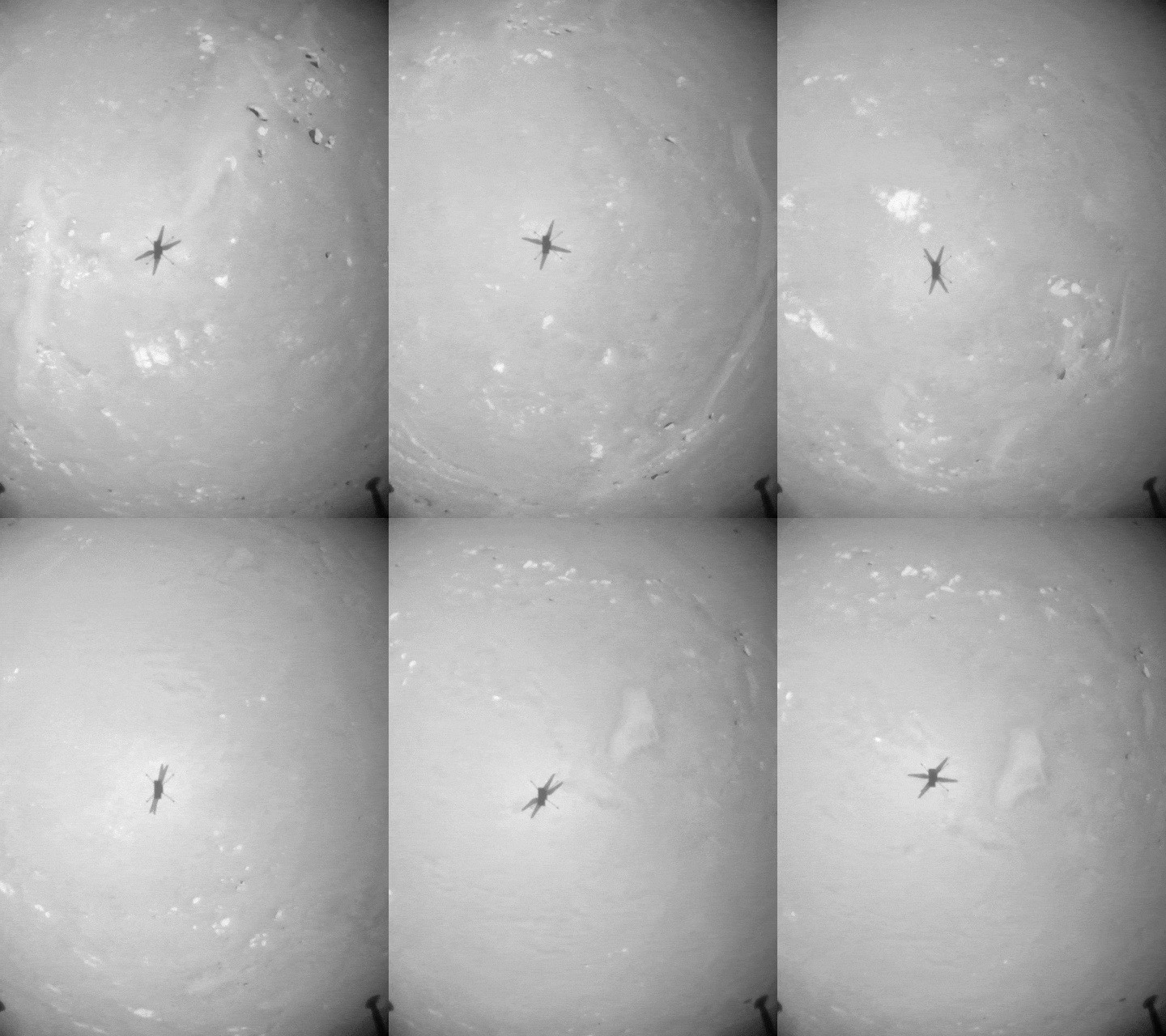
    Ingenuity's Fourth Flight
    NASA’s Ingenuity Mars Helicopter took these images on its fourth flight, on April 30, 2021, using its navigation camera. The camera, which tracks surface features below the helicopter, takes images at a rate at which the helicopter’s blades appear frozen in place. Credit: NASA/JPL-Caltech

    Breaking New Ground with Flight Five

    But instead of turning around and heading back, we’ll actually climb to a new height record of 33 feet (10 meters), where we can take some color (as well as black-and-white) images of the area. After a total flight time of about 110 seconds, Ingenuity will land, completing its first one-way trip. When it touches down at its new location, we will embark on a new demonstration phase – one where we exhibit what this new technology can do to assist other missions down the road.

    The Wrights did that, too. They didn’t quit after one successful flight with Flyer I, or even the other three flights they did on that historic December day in 1903. They flew higher and farther in an upgraded Flyer II in 1904, and even higher and farther with 1905’s Flyer III. By 1908, the Wrights felt they had conquered the air (at least enough) to begin looking at what kind of practical applications an airplane could be used for. That year they flew the first air passenger (Charles Furnas, their mechanic) and began demonstrating how scouting from an aerial perspective could become a thing.

    So in a sense, over the course of three weeks and four flights, the Ingenuity team has gone from the Wright brothers of 1903 to the Wright brothers of 1908, but in weeks rather than years. We’ve been able to do this because the rover, which carries the helicopter’s communications base station, will remain in the general vicinity for many sols (Martian days) and because on the fourth flight, we actually scouted for a landing zone over 100 meters (328 feet) away. The digital elevation maps put together by the Ingenuity team gave us confidence that our new airfield is flat as a pancake – a good thing when you have to land on it.
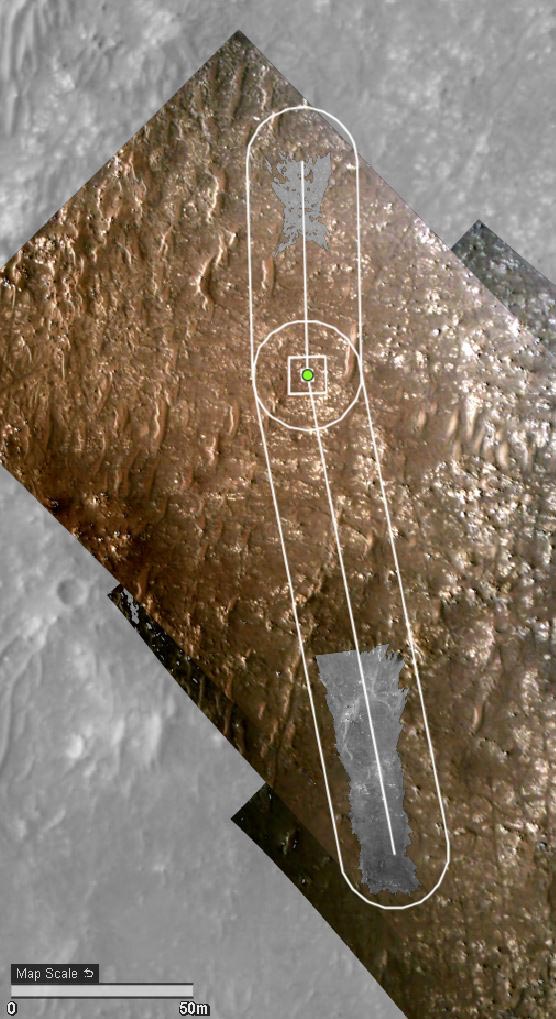
    HiRISE View of Ingenuity's Fourth Flight Path
    NASA’s Ingenuity Mars Helicopter’s fourth flight path is superimposed here atop terrain imaged by the HiRISE camera aboard the agency’s Mars Reconnaissance Orbiter. Credit: NASA/JPL-Caltech/University of Arizona

    Engineering Triumphs on the Red Planet

    There is one other significant factor in Ingenuity’s continued operations: Our helicopter is even more robust than we had hoped. The power system that we fretted over for years is providing more than enough energy to keep our heaters going at night and to fly during the day. The off-the-shelf components for our guidance and navigation systems are also doing great, as is our rotor system. You name it, and it’s doing just fine or better.

    Which leads me back to our fifth flight. We are traveling to a new base because this is the direction Perseverance is going, and if we want to continue to demonstrate what can be done from an aerial perspective, we have to go where the rover goes. The Wrights did the same in 1908 – even traveling all the way to LeMans, France, to demonstrate the capabilities of their aircraft.
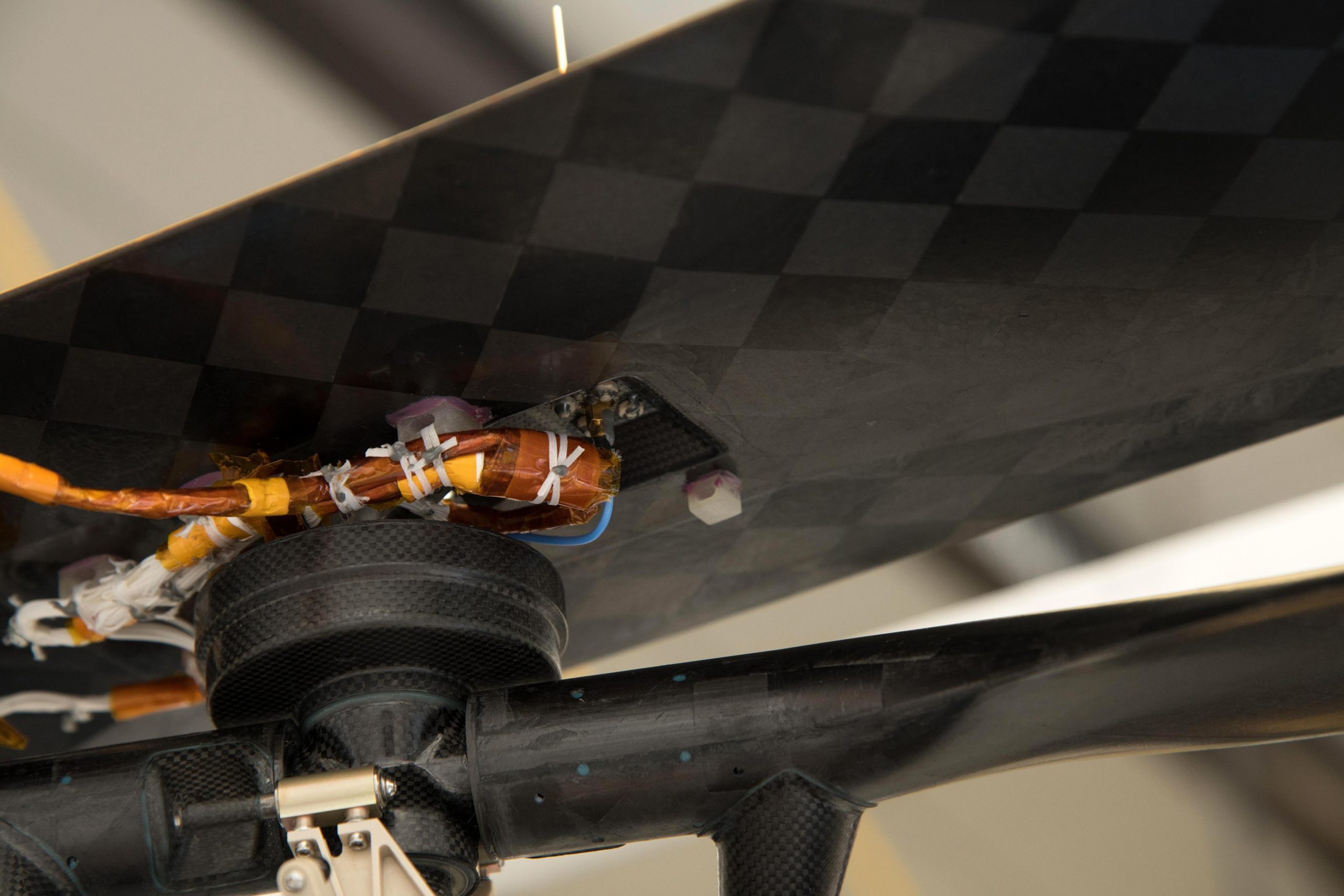
    Swatch of Wright Brothers Flyer 1 Attached to Mars Helicopter
    NASA’s Ingenuity Mars Helicopter carries a small swatch of muslin material from the lower-left wing of the Wright Brothers Flyer 1. Located on the underside of the helicopter’s solar panel (the dark rectangle), the swatch is attached with dark orange polymide tape to a cable extending from the panel, and then further secured in place with white polyester cord used to bind cables together. A gray dot of epoxy at the intersection of the three wraps of cord prevents the lacing from loosening as the rotor blades (upper pair seen at bottom of image) rotate at up to 2,400 rpm. The swatch of material from the Wright brothers’ first airplane was obtained from the Carillon Historical Park, in Dayton, Ohio — home to the Wright Brothers National Museum. The image was taken in a clean room at NASA’s Jet Propulsion Laboratory in Southern California on January 15, 2020. Credit: NASA/JPL-Caltech

    Spirit of Innovation: Then and Now

    I think a lot about the Wrights during our flights. I’m sure part of the reason is that I (along with teammate Chris Lefler) had the honor of attaching the small swatch of material from the lower left wing of Flyer I to Ingenuity. But it’s more than that. The Wrights showed what could be accomplished with a combination of teamwork, creativity, and tenacity – and a bit of ingenuity and perseverance.

    On flight day, when I look around the room and online at our team, I see a lot of the same sort of vision and tenacity/spirit that made the Wright brothers who they were. Together, we are continuing our Wright brothers moments on Mars.

    Written by Josh Ravich, Ingenuity Mars Helicopter Mechanical Engineering Lead at NASA’s Jet Propulsion Laboratory.

    Never miss a breakthrough: Join the SciTechDaily newsletter.
    Follow us on Google and Google News.

    Ingenuity Mars Helicopter JPL Mars NASA
    Share. Facebook Twitter Pinterest LinkedIn Email Reddit

    Related Articles

    The Mars Helicopter That Survived 72 Flights and Changed Planetary Exploration

    Charting the Red Planet: How Open Science Fuels Mars Exploration

    Epic Mars Selfie: NASA’s Perseverance Rover With the Ingenuity Helicopter

    NASA’s Ingenuity Mars Helicopter Survives First Frigid Martian Night on Its Own

    NASA’s Ingenuity Mars Helicopter Prepares for Takeoff

    It’s Cold on Mars – What Temperatures As Low as -130°F Mean for NASA’s Ingenuity Helicopter

    NASA Ingenuity Mars Helicopter – With a Piece of the Wright Brothers’ Plane – Prepares for First Flight on Another Planet

    NASA’s Ingenuity Helicopter Reports In From Mars

    NASA’s Mars Helicopter Gets an Ingenious Name From Alabama High School Student

    1 Comment

    1. Peter Vermeeren on May 8, 2021 11:12 am

      Het hele team gefeliciteerd, het is zeer vernieuwend om het zo te programmeren dat de mars ingenutty marshelikoper geheel zelfstandig deze actie uit kan voeren. zodat wij op onze wereld mee kunnen genieten van deze historische beelden.

      Reply
    Leave A Reply Cancel Reply

    • Facebook
    • Twitter
    • Pinterest
    • YouTube

    Don't Miss a Discovery

    Subscribe for the Latest in Science & Tech!

    Trending News

    Largest-Ever Study Finds Medicinal Cannabis Ineffective for Anxiety, Depression, PTSD

    250-Million-Year-Old Egg Solves One of Evolution’s Biggest Mysteries

    Living With Roommates Might Be Changing Your Gut Microbiome Without You Knowing

    Century-Old Cleaning Chemical Linked to 500% Increased Risk of Parkinson’s Disease

    What if Your Memories Never Happened? Physicists Take a New Look at the Boltzmann Brain Paradox

    One of the Universe’s Largest Stars May Be Getting Ready To Explode

    Scientists Discover Enzyme That Could Supercharge Ozempic-Like Weight Loss Drugs

    Popular Sweetener Linked to DNA Damage – “It’s Something You Should Not Be Eating”

    Follow SciTechDaily
    • Facebook
    • Twitter
    • YouTube
    • Pinterest
    • Newsletter
    • RSS
    SciTech News
    • Biology News
    • Chemistry News
    • Earth News
    • Health News
    • Physics News
    • Science News
    • Space News
    • Technology News
    Recent Posts
    • Want Less Stress? Landmark Study Points to a Simple Habit
    • Scientists Reveal Eating Fruits and Vegetables May Increase Your Risk of Lung Cancer
    • AI Reveals Explosive Growth of Floating Algae Across the World’s Oceans
    • 5.5 Million Bees Discovered Living Beneath a New York Cemetery
    • Scientists Reverse Brain Aging With Simple Nasal Spray
    Copyright © 1998 - 2026 SciTechDaily. All Rights Reserved.
    • Science News
    • About
    • Contact
    • Editorial Board
    • Privacy Policy
    • Terms of Use

    Type above and press Enter to search. Press Esc to cancel.