
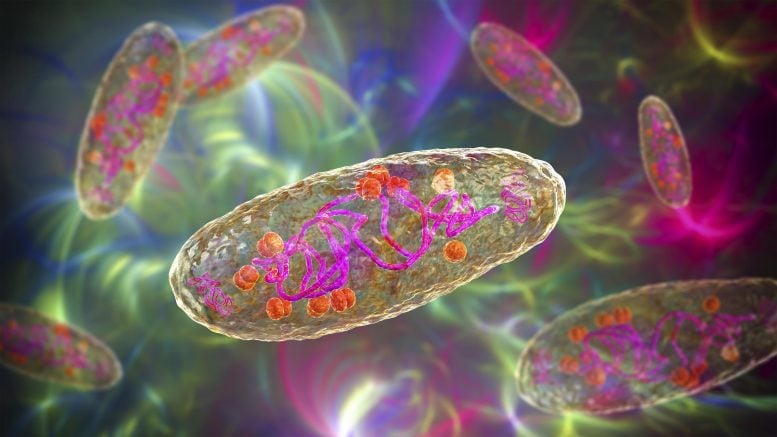
Scientists examined DNA from mass grave of plague victims in Germany.
While examining DNA from bones of 16th-century bubonic plague victims in the German town of Ellwangen, scientists discovered the first evidence that evolution may have driven immunity to the disease among later inhabitants of the city.
Scientists examining the remains of 36 bubonic plague victims from a 16th-century mass grave in Germany have found the first evidence that evolutionary adaptive processes, driven by the disease, may have conferred immunity on later generations from the region.
“We found that innate immune markers increased in frequency in modern people from the town compared to plague victims,” said the study’s joint-senior author Paul Norman, PhD, associate professor in the Division of Biomedical Informatics & Personalized Medicine at the University of Colorado School of Medicine. “This suggests these markers might have evolved to resist the plague.”
The study, done in conjunction with the Max Planck Institute in Germany, was published online today in the journal Molecular Biology and Evolution.
The researchers collected DNA samples from the inner ear bones of individuals in a mass grave in the southern German city of Ellwangen, which experienced bubonic plague outbreaks in the 16th and 17th centuries. Then they took DNA samples from 50 current residents of the town.
They compared their frequency spectra – the distribution of gene variants in a given sample – for a large panel of immunity-related genes.
Immunity-Relevant Genes Shed Light
Among the current inhabitants, the team found evidence that a pathogen, likely Yersinia pestis, which causes bubonic plague, prompted changes in the allele distribution for two innate pattern-recognition receptors and four Human Leukocyte Antigen molecules, which help initiate and direct immune response to infection. An allele is a variant form of a gene.
“We propose that these frequency changes could have resulted from Y.pestis plague exposure during the 16th century,” Norman said.
The findings are the first evidence that evolutionary processes, prompted by Y. pestis, may have been shaping certain human immunity-relevant genes in Ellwangen and possibly throughout Europe for generations.
And since the plague tormented Europe for nearly 5,000 years, the study suggests that these immunity genes may have been pre-selected in the population long ago but recently became selected through epidemic events.
“Although the lethality of the plague is very high without treatment, it remains likely that specific individuals are protected from, or more susceptible to, severe disease through polymorphism in the determinants of natural immunity,” the study said. “In this case, any change in allele frequencies that occurred during a given epidemic crisis could be evident as genetic adaptation and detectable in modern day individuals.”
‘Survival of the Fittest’ Underscored
Later simulations showed that natural selection likely drove these allele frequency changes.
“I think this study shows that we can focus on these same families of genes in looking at immunity in modern pandemics,” Norman said. “We know these genes were heavily involved in driving resistance to infections.”
The study also demonstrates that, so far, no matter how deadly a pandemic, there are always survivors.
“It sheds light on our own evolution,” Norman said. “There will always be people who have some resistance. They just don’t get sick and die, and the human population bounces back.”
Still, he doesn’t want people to get the wrong message, especially in the era of COVID-19.
“I wouldn’t want to discourage anyone from taking a vaccine for the current pandemic,” Norman said. “It’s a much safer bet than counting on your genes to save you.”
Reference: “Analysis of genomic DNA from medieval plague victims suggests long-term effect of Yersinia pestis on human immunity genes” by Alexander Immel, Felix M Key, András Szolek, Rodrigo Barquera, Madeline K Robinson, Genelle F Harrison, William H Palmer, Maria A Spyrou, Julian Susat, Ben Krause-Kyora, Kirsten I Bos, Stephen Forrest, Diana I Hernández-Zaragoza, Jürgen Sauter, Ute Solloch, Alexander H Schmidt, Verena J Schuenemann, Ella Reiter, Madita S Kairies, Rainer Weiß, Susanne Arnold, Joachim Wahl, Jill A Hollenbach, Oliver Kohlbacher, Alexander Herbig, Paul J Norman and Johannes Krause, 18 May 2021, Molecular Biology and Evolution.
DOI: 10.1093/molbev/msab147
Never miss a breakthrough: Join the SciTechDaily newsletter.
Follow us on Google and Google News.