
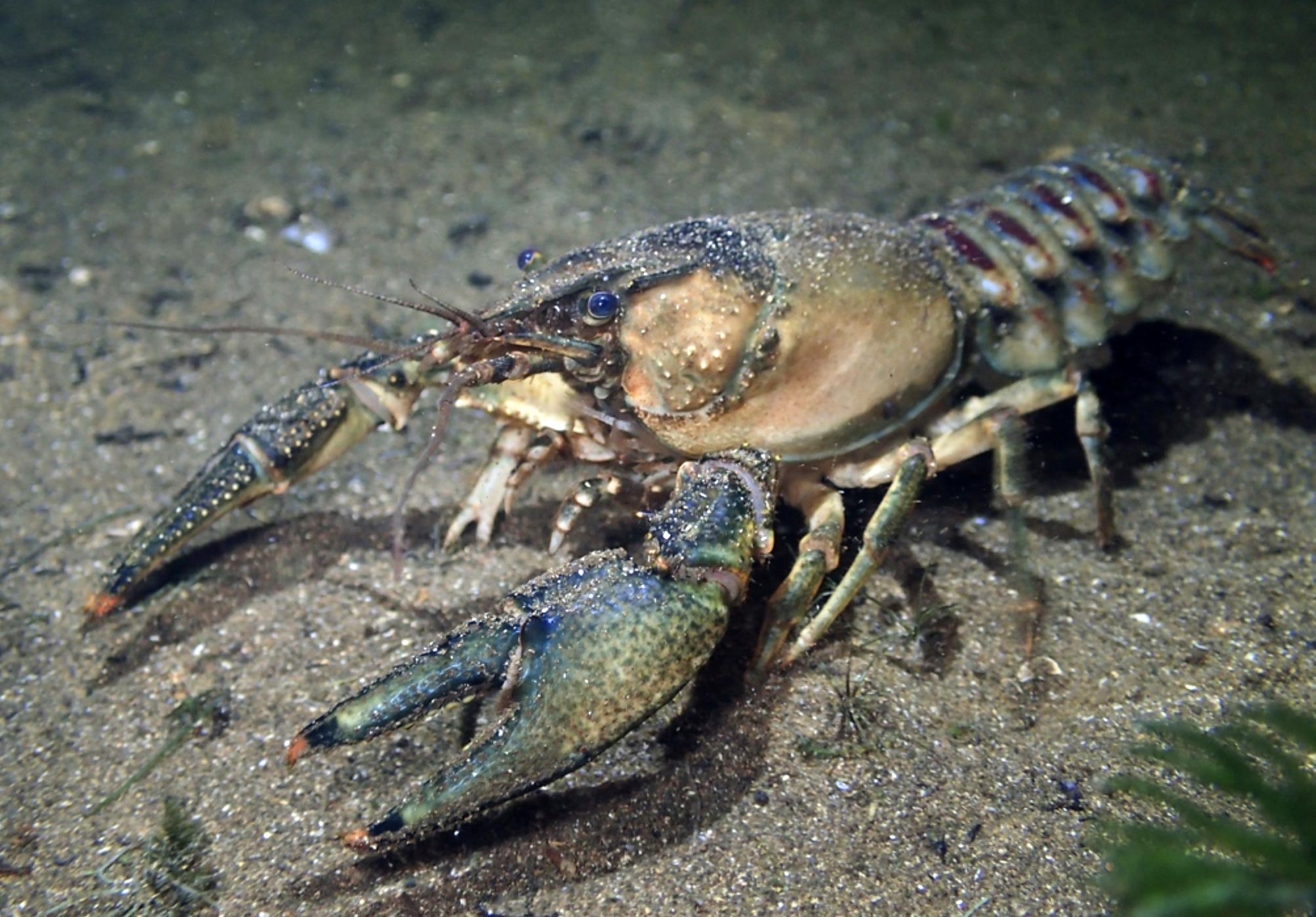
Increased foraging and reduced aggression have the potential to alter stream functioning.
Pharmaceutical pollution is found in streams and rivers globally, but little is known about its effects on animals and ecosystems. A new study, published in the journal Ecosphere, investigated the effects of antidepressant pollution on crayfish. Just two weeks of citalopram exposure caused changes in crayfish behavior, with the potential to disrupt stream ecosystem processes like nutrient cycling, oxygen levels, and algal growth.
Coauthor Emma Rosi, a freshwater ecologist at Cary Institute of Ecosystem Studies, says, “Animals living in streams and rivers are exposed to a chronic mix of pharmaceutical pollution as a result of wastewater contamination. Our study explored how antidepressant levels commonly found in streams impact crayfish, and how these changes reverberate through stream ecosystems.”
Urban Waterways Are Hotspots for Drug Contamination
Crayfish are a keystone species in streams, where they eat invertebrates, break down leaf litter, and cycle nutrients. They are stress-tolerant and can become abundant in urban waterways. These freshwaters are prone to receiving pharmaceutical pollution from sewer overflows, leaky septic tanks, and treated wastewater effluent that contains pharmaceuticals.
Lead author Alexander Reisinger, an Assistant Professor at University of Florida, Gainesville, says, “Previous research via direct injection found that antidepressants alter serotonin and aggression in crustaceans. Our study found that exposure to low doses of citalopram — at levels currently found in urban streams as a result of pollution — is enough to alter crayfish behaviors like foraging, aggression, and shelter use.”
Cary Institute’s artificial stream facility was used to test effects of citalopram on crayfish and stream ecosystems. Twenty stream habitats were created with low-nutrient groundwater and quartz rocks and red maple leaf packs that had been colonized with microbes, invertebrates, and algae. Streams were randomly selected to receive one of four treatments: no citalopram + no crayfish, citalopram + no crayfish, crayfish + no citalopram, and citalopram + crayfish. Each treatment was applied to five streams. Three male crayfish were added to each of the ‘crayfish’ streams.
For two weeks, the team dosed the 10 streams receiving citalopram every other day to mimic low, persistent pharmaceutical pollution found in urban streams. Over the course of the experiment, they monitored indicators that would reveal changes in stream ecosystem functioning, such as dissolved oxygen, temperature, light penetration, and algae. At the end of the two weeks, the behavior of exposed and non-exposed crayfish was tested.
To do this, the team tapped into crayfish’s keen sense of smell. They used a tank containing a shelter at one end and a divider down the middle. One side of the tank contained water that had passed by sardine gelatin; the other contained water that had passed by another male crayfish. One at a time, they placed the crayfish in the shelter, then recorded the amount of time it took for each to peek out of the shelter and emerge completely. They also recorded the amount of time spent in the sardine and crayfish signal sides of the tank.
Citalopram Drives Risky and Disruptive Behaviors
Crayfish exposed to citalopram emerged from the shelter sooner, indicating increased ‘boldness’. Exposed crayfish were also more interested in food, lingering in the food-scented area over 3x longer than the crayfish-scented area. Crayfish that were not exposed to citalopram took longer to emerge and divided their time equally between the food and crayfish areas, showing no preference.
Reisinger explains, “Citalopram-exposed crayfish are more attracted to food, and less interested in other crayfish. Less time spent hiding and more time foraging could make crayfish more vulnerable to predators, meaning more get eaten. We would expect increased crayfish foraging to lead to higher rates of leaf litter decomposition and biofilm turnover, altering in-steam nutrient flows. Either of these changes could have cascading effects.”
In people, ‘metabolism’ refers to a collection of chemical processes that regulate bodily functions essential to health like breathing, digestion, and temperature regulation. Stream ‘metabolism’ includes a variety of indicators like oxygen levels, light penetration, and nutrient cycling, which together shape stream health.
The team used their two-week record of stream indicators to assess changes in the metabolism of each stream. They found that crayfish presence versus absence significantly affects stream metabolism. Effects of citalopram alone were not significant, but results suggest that changes in stream functioning would likely occur over time due to citalopram’s effects on crayfish behavior.
Subtle Pollution, Major Long-Term Risks
Reisinger explains, “With just two weeks of citalopram exposure, we saw marked changes in crayfish behavior. Over months to years, we would expect these changes to magnify. Fewer crayfish could reduce populations of the fish that eat them like trout, bass, and catfish. Changes in algal growth or turnover would alter oxygen levels and nutrient dynamics — key aspects of stream functioning that could cause harmful imbalances in the system.”
Rosi concludes, “Toxicity assessments of pharmaceuticals often focus on lethal effects, but it is clear that these drugs can affect non-target organisms without killing them and behavioral changes can have ecological consequences. More work is needed to understand how pharmaceutical pollution impacts stream life at chronic, sublethal levels, and what these changes mean for freshwater quality, ecosystem health, and foodwebs — in streams and beyond.”
Reference: “Exposure to a common antidepressant alters crayfish behavior and has potential subsequent ecosystem impacts” by Alexander J. Reisinger, Lindsey S. Reisinger, Erinn K. Richmond and Emma J. Rosi15 June 2021, Ecosphere.
DOI: 10.1002/ecs2.3527
Never miss a breakthrough: Join the SciTechDaily newsletter.
Follow us on Google and Google News.
4 Comments
Rivers and streams are the arteries to our oceans and are causing their death. Trash washes into them begins to get pulverized as it becomes a lifeboat for toxins. It becomes homogenized in the oceans impossible to remove and has killed half the phytoplankton in 50 years. Plankton is the carbon cycle engine, creates most of our oxygen and is the beginning of the oceans food chain. Essentially we’re eating this mess and dying too from it, but worse as plankton goes all life will soon follow.
And everyone laughed at Alex Jones about the frogs.
Pharmaceutical pollutants increase subjects apatite and decrease socializing. Sounds familiar. Diet and exercise should be prescribed to these craw fish more often.
So what should we do to slove depression besides anti depressions let all go to the clouds how should we fix this so less antidepressants cant be used without removing everyone using them