
Close Menu
    Facebook X (Twitter) Instagram
    SciTechDaily
    • Biology
    • Chemistry
    • Earth
    • Health
    • Physics
    • Science
    • Space
    • Technology
    Facebook X (Twitter) Pinterest YouTube RSS
    SciTechDaily
    Home»Space»Globular Cluster in the Scorpion: Rediscovered, Renamed, Reclassified
    Space

    Globular Cluster in the Scorpion: Rediscovered, Renamed, Reclassified

    By ESA/HubbleJuly 11, 2021No Comments2 Mins Read
    Facebook Twitter Pinterest Telegram LinkedIn WhatsApp Email Reddit
    Share
    Facebook Twitter LinkedIn Pinterest Telegram Email Reddit
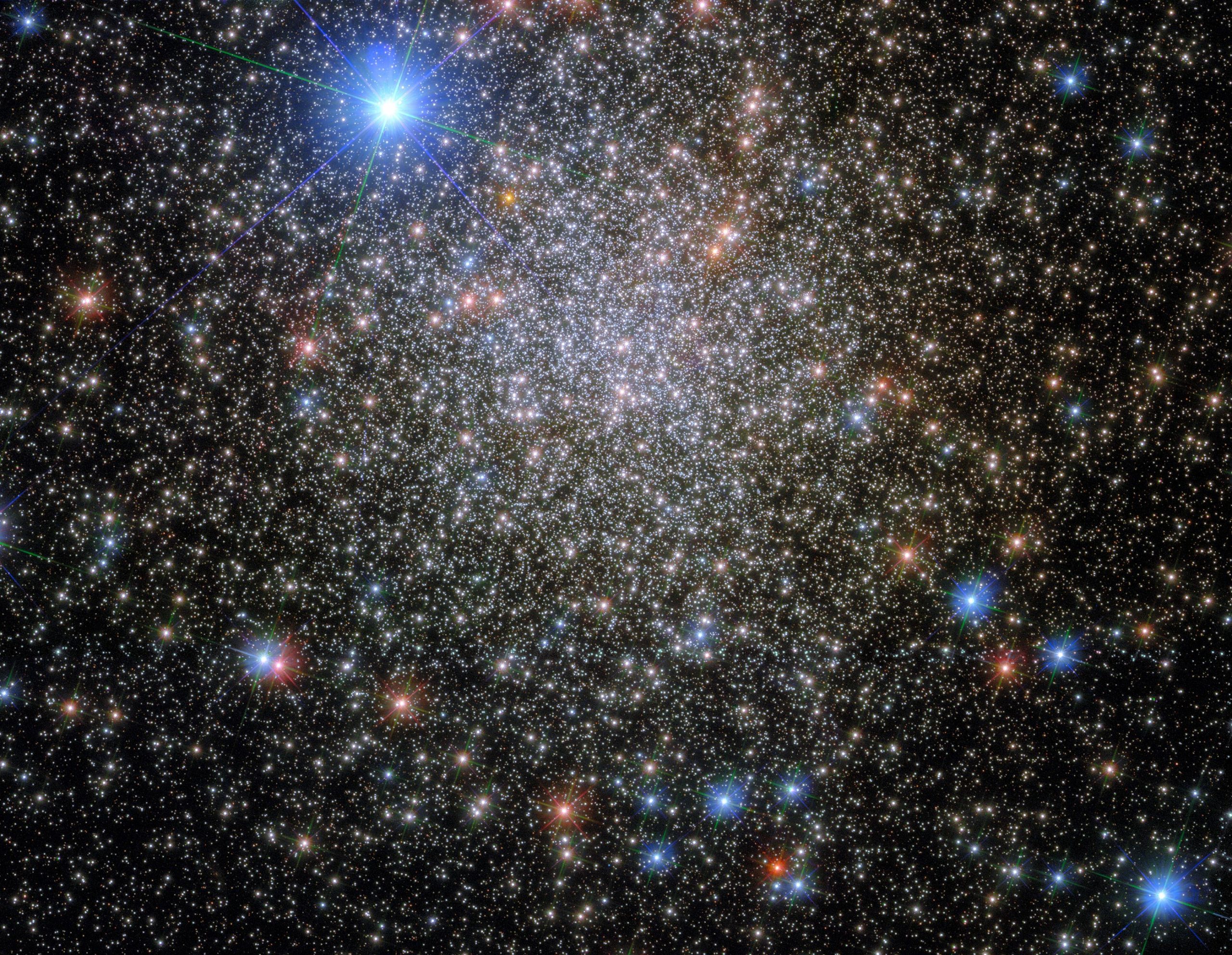
    Globular Cluster NGC 6380
    NGC 6380 is located approximately 35,000 light-years away from Earth in the constellation Scorpio (The Scorpion). Credit: ESA/Hubble & NASA, E. Noyola

    This image shows the globular cluster NGC 6380, which lies around 35,000 light-years from Earth, in the constellation Scorpio (The Scorpion). The very bright star at the top of the image is HD 159073, which is only around 4000 light-years from Earth, making it a much nearer neighbor to Earth than NGC 6380. This image was taken with Hubble’s Wide Field Camera 3 (WFC3), which, as its name suggests, has a wide field of view, meaning that it can image relatively large areas of the sky in enormous detail.

    NGC 6380 is not a particularly exciting name, but it indicates that this cluster is cataloged in the New General Catalogue (NGC), which was originally compiled in 1888. This cluster has, however, been known by many other names. It was originally discovered by James Dunlop in 1826, and he rather immodestly named it Dun 538. Eight years later, in 1834, it was independently rediscovered by John Herschel and he (similarly immodestly) went on to name it H 3688. The cluster was re-rediscovered in 1959 in Paris by Pişmiş, who cataloged it as Tonantzintla 1 — and who, to continue the pattern, also referred to it as Pişmiş 25. In addition to its colorful history of rediscovery, up until the 1950s NGC 6380 was thought to be an open cluster. It was A. D. Thackeray who realized that it was in fact a globular cluster. Nowadays, this cluster is reliably recognized in widely available catalogs as a globular cluster, and referred to simply as NGC 6380.

    Never miss a breakthrough: Join the SciTechDaily newsletter.
    Follow us on Google and Google News.

    Astronomy European Space Agency Hubble Space Telescope NASA
    Share. Facebook Twitter Pinterest LinkedIn Email Reddit

    Related Articles

    Hubble’s Newest Discovery Isn’t a Star, It’s a Window Into the Dark Universe

    This Nearby Galaxy Shows How Frozen Clouds Ignite Into Stars

    This Chaotic Spiral Galaxy Is Still Recovering From a Cosmic Collision

    This Strange Spiral Galaxy Is Hiding a Massive Black Hole

    Hubble Zooms In on a Galaxy That Maps the Universe’s Expansion

    Hubble Captures a Dazzling Spiral Galaxy Alive With Birth and Destruction

    Hubble Spots a Glowing “Ring of Fire” in a Distant Spiral Galaxy

    Dust, Light & Ancient Collisions: The Sombrero Galaxy Like You’ve Never Seen It

    Star Formation in Motion: Hubble Reveals Spiraling Stars and Sculpted Nebulae

    Leave A Reply Cancel Reply

    • Facebook
    • Twitter
    • Pinterest
    • YouTube

    Don't Miss a Discovery

    Subscribe for the Latest in Science & Tech!

    Trending News

    This Deadly Disease Was Wiping Out Humans 5,500 Years Ago

    Beyond DNA: Scientists Discover Inheritance That Breaks the Rules of Genetics

    Scientists Just Discovered the Eye Defies a Long-Held Rule of Vision

    What if Time Isn’t Fundamental? Physicists Just Tested the Idea in the Lab

    Scientists Say We’ve Been Wrong About the Aging Brain

    68 Quadrillion Miles: Scientists Map Earth’s Vast Hidden Fungal Network for the First Time

    Hidden Damage From Youth May Explode Into Disease Later in Life

    Climate Models May Be Wrong About How Trees Store Carbon

    Follow SciTechDaily
    • Facebook
    • Twitter
    • YouTube
    • Pinterest
    • Newsletter
    • RSS
    SciTech News
    • Biology News
    • Chemistry News
    • Earth News
    • Health News
    • Physics News
    • Science News
    • Space News
    • Technology News
    Recent Posts
    • Scientists Rediscover Rare Island Fox Not Seen for More Than 20 Years
    • The Amazon’s Mysterious “Ghost Dog” Has Been Hiding a Big Secret
    • Scientists Say Frequent Ejaculation May Improve Sperm Quality and Fertility
    • Antarctica’s Future May Be More Predictable Than Scientists Thought
    • Sea Level Rise Is Swallowing Farmland at Alarming Rates
    Copyright © 1998 - 2026 SciTechDaily. All Rights Reserved.
    • Science News
    • About
    • Contact
    • Editorial Board
    • Privacy Policy
    • Terms of Use

    Type above and press Enter to search. Press Esc to cancel.