
Scientists have engineered frog embryos so that blue light can precisely control the Wnt pathway, a key regulator in development and cancer. This breakthrough allows researchers to study and potentially manipulate biological processes with high accuracy.
Blue light is illuminating new understanding of a key signaling pathway in embryo development, tissue maintenance, and cancer genesis.
Researchers at the University of Illinois Urbana-Champaign developed an approach using blue light to activate the Wnt (pronounced “wint”) signaling pathway in frog embryos. The pathway plays a wide variety of roles in animal and human development, and the ability to regulate it with light will allow researchers to better study its assorted functions, the team says.
Led by Kai Zhang, a professor of biochemistry, and Jing Yang, a professor of comparative biosciences, the research team published its work in the Journal of Molecular Biology, where it was chosen as a featured communication, representing the top 1% of papers.
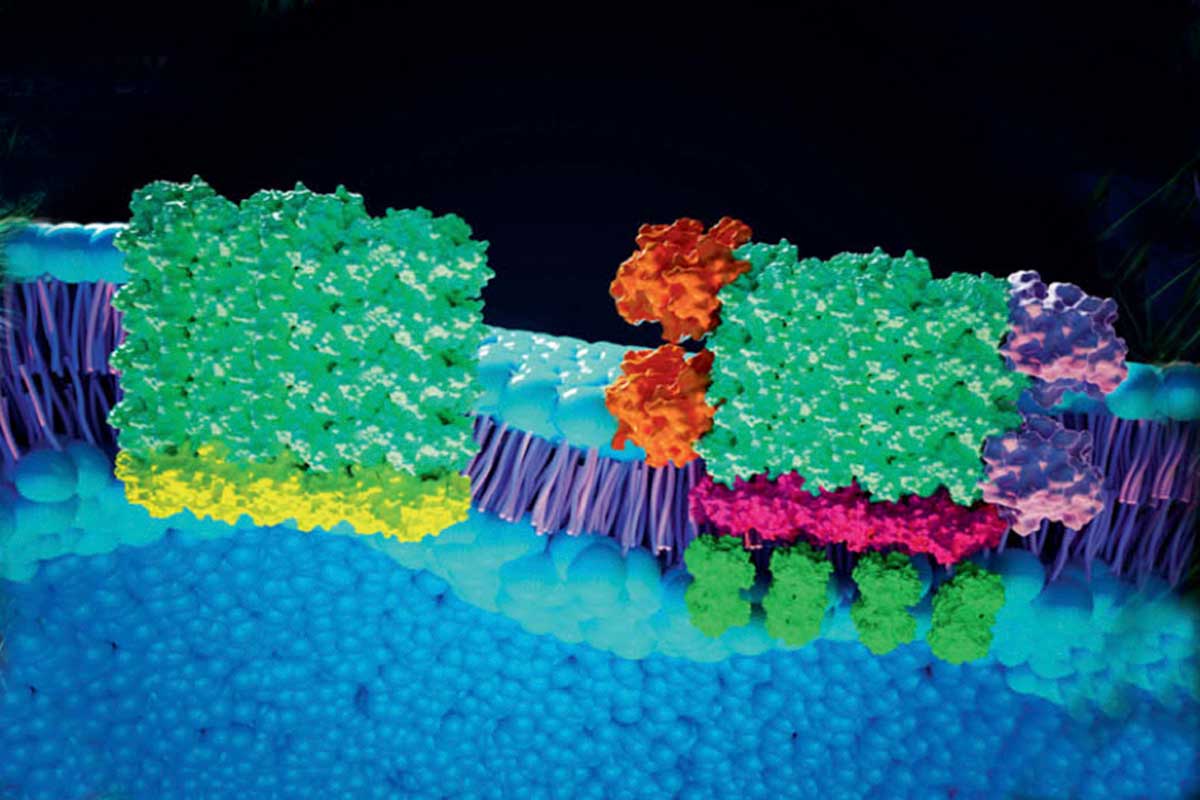
The Wnt pathway is activated by a receptor on the cell surface that triggers a cascade response within the cell. Too much or too little signal can be disastrous, Zhang said, making it very difficult to study the pathway using standard techniques for stimulating cell-surface receptors.
“During embryonic development, Wnt regulates the development of many organs such as the head, spinal cord, and eyes. It also maintains stem cells in many tissues in adults: While insufficient Wnt signaling leads to the failure of tissue repair, elevated Wnt signaling may result in cancer,” Yang said.
Spatial and Temporal Precision: Advantages of Light Activation
It is very difficult to achieve the necessary balance with standard approaches to regulating such pathways, such as chemical stimulation, Zhang said. To address this, the researchers engineered the receptor protein to respond to blue light. With this approach, they can fine-tune the Wnt level by modulating the intensity and duration of the light.
“Light as a treatment strategy has been used in photodynamic therapy, with the advantages of biocompatibility and no residual effect in the exposed area. However, most photodynamic therapy typically uses light to generate high-energy chemicals – for example, reactive oxygen species – without differentiating between normal and diseased tissues, making it impossible to target treatment,” Zhang said. “In our work, we have demonstrated that blue light can activate a signaling pathway within different body compartments of frog embryos. We envision that a spatially defined stimulation of cell functions could mitigate the challenges of off-target toxicity.”
The researchers demonstrated their technique and verified its tunableness and sensitivity by prompting spinal cord and head development in frog embryos. They hypothesize their technique also could be applied to other membrane-bound receptors that have proved difficult to target, as well as other animals who share the Wnt pathway, allowing a greater understanding of how these pathways regulate development – and what happens when they are over- or under-stimulated.
From Basic Biology to Regenerative Medicine
“As we continue expanding our light-sensitive systems to cover other essential signaling pathways underlying embryonic development, we will provide the developmental biology community with a valuable set of tools that can help them determine the signaling outcomes underlying many developmental processes,” Yang said.
The researchers also hope their light-based technique for studying Wnt can illuminate tissue repair and cancer research in human tissues.
“Because cancers often involve overactivated signaling, we envision that a light-sensitive Wnt activator could be used to study cancer progression in live cells,” Zhang said. “In combination with live-cell imaging, we would be able to quantitatively determine the signaling threshold that could transform a normal cell into a cancerous one, therefore providing primary data for target-specific therapeutic development in future precision medicine.”
Reference: “Optogenetic Control of the Canonical Wnt Signaling Pathway During Xenopus laevis Embryonic Development” by Vishnu V. Krishnamurthy, Hyojeong Hwang, Jia Fu, Jing Yang and Kai Zhang, 19 May 2021, Journal of Molecular Biology.
DOI: 10.1016/j.jmb.2021.167050
The National Institute of General Medical Sciences and the National Institute of Environmental Health Sciences within the National Institutes of Health supported this work.
Never miss a breakthrough: Join the SciTechDaily newsletter.
Follow us on Google and Google News.