

Geochemical evidence from Lake Magadi shows repeated droughts and environmental variability tied to orbital cycles, impacting early human evolution.
Rift Valley lakes within eastern Africa range from freshwater to highly alkaline systems and are homes to diverse ecosystems. These Rift Valley lakes are also sedimentary repositories, yielding a high-resolution environmental record that can be targeted to better understand the environmental and climatic context of human evolution over the past few million years in eastern Africa.
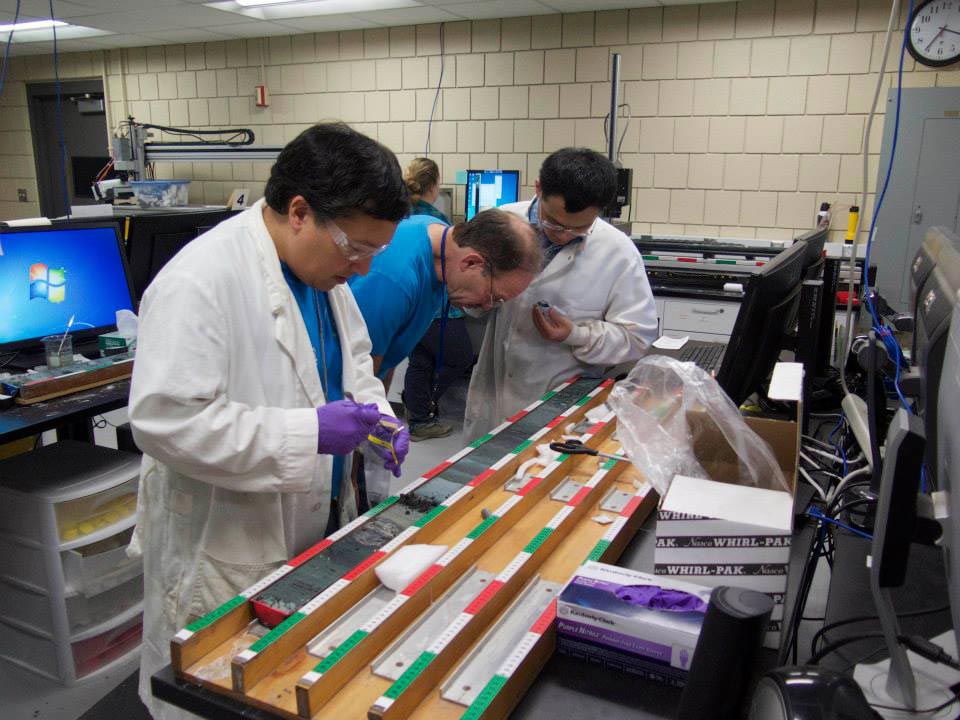
A new study published recently in Geology examines the geochemical record of drill core sediments collected from Lake Magadi—a saline, alkaline lake in the southern Kenya Rift—that provides a nearly one-million-year paleoenvironmental record from an unusual Rift Valley lake system.
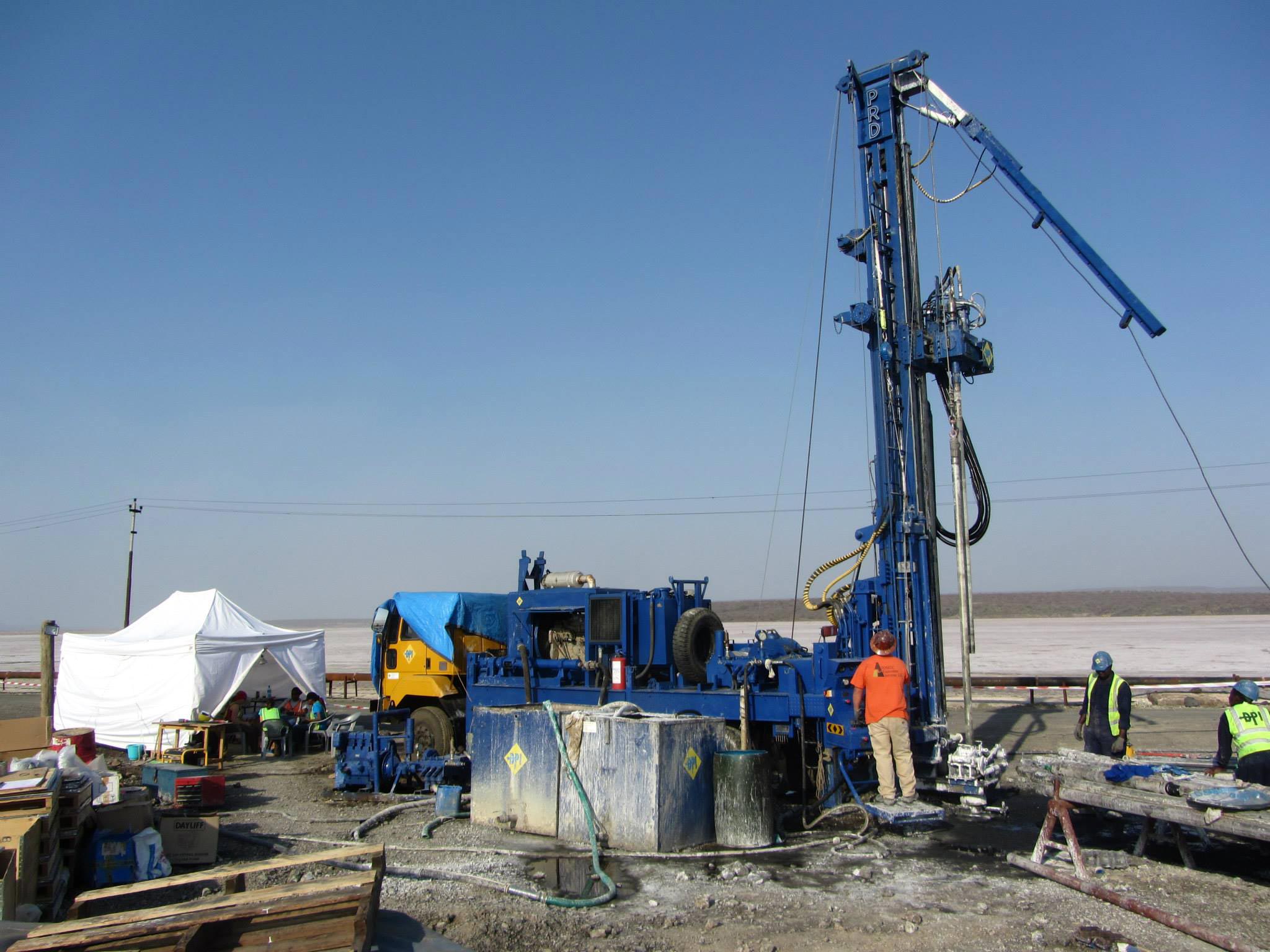
Lead author Dan Deocampo of Georgia State University and a group of international co-authors drilled Lake Magadi as part of the Hominin Sites and Paleolakes Drilling Project (HSPDP), which collected deep sediment cores from lake basins in the East African Rift.
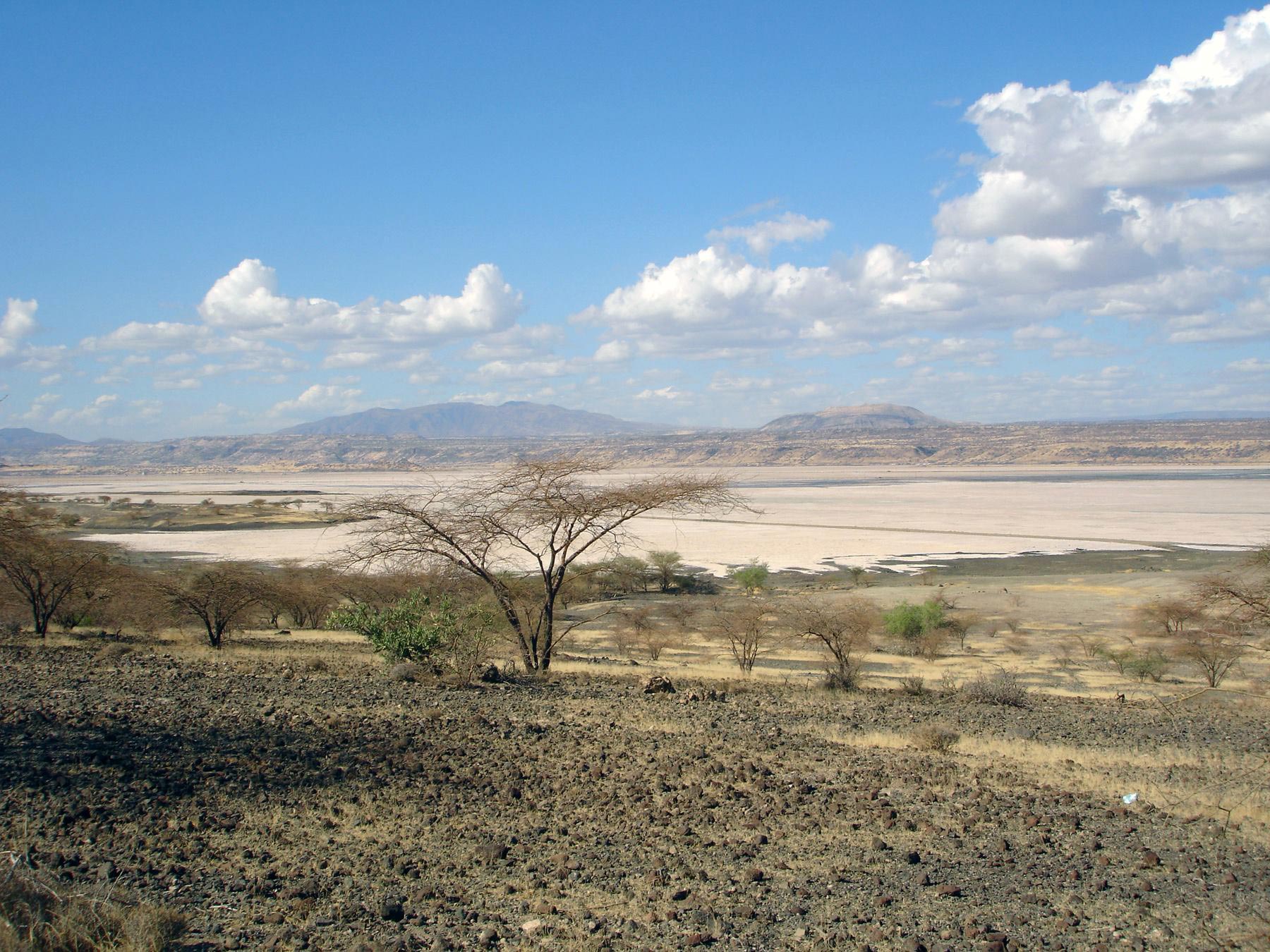
“We’re trying to understand how the Earth’s surface environment has changed over the last several million years and how that has impacted early hominin habitats,” said Deocampo. “We are using many different proxies of the ancient environments to understand how the environment has changed, how habitats have changed, and therefore how the hazards and resources for early hominins changed through time.”
Unique Chemical Signatures Reveal Euxinic Episodes
The geochemical analysis of the Lake Magadi samples showed some of the highest concentrations of elements like molybdenum, arsenic, and vanadium ever reported in lake sediments. Hyperaccumulation of these elements has not previously been observed in other East African lakes and generally requires euxinic conditions. Euxinic conditions occur when the lake water is both anoxic and sulfidic, typically triggered during negative water balance episodes like droughts.
“The amount of molybdenum accumulated in a sulfide-rich sediment in the lake is not going to tell us habitat structure, where the hominins were living, but fluctuations between those euxinic conditions and fresher water conditions, that can tell us something about the pace of environmental change,” said Deocampo.
Deocampo and co-authors found that euxinia became common after about 700,000 years ago and subsequently tended to occur during intervals when Earth’s orbit was more elliptical, which occurs over a 100,000-year cycle. As Earth’s orbit becomes more elliptical, Earth can become farther away from the sun, which causes greater variations in seasonal climate. The episodes of euxinia provide an important indicator of intense droughts in the region during periods of extensive glaciations.
Environmental Fluctuations and Their Evolutionary Impact
These high-amplitude environmental fluctuations driving shifts between euxinic and well-mixed lake conditions would have profoundly affected moisture availability and vegetation over evolutionary timescales.
The environmental variability suggested by the geochemical record of Lake Magadi is associated in time with mammal species turnover and the first appearance of Middle Stone Age technology in the southern Kenya Rift between 500,000 and 320,000 years ago.
“Now that is kind of a touching point with the paleoanthropologists who are thinking about changes in the amplitude of environmental change and how that relates to gene pool modifications and changes in habitat structure, first appearances, and last appearances,” said Deocampo.
Reference: “Orbital control of Pleistocene euxinia in Lake Magadi, Kenya” by D.M. Deocampo, R.B. Owen, T.K. Lowenstein, R.W. Renaut, N.M. Rabideaux, A. Billingsley, A. Cohen, A.L. Deino, M.J. Sier, S. Luo, C.-C. Shen, D. Gebregiorgis, C. Campisano and A. Mbuthia, 20 September 2021, Geology.
DOI: 10.1130/G49140.1
Never miss a breakthrough: Join the SciTechDaily newsletter.
Follow us on Google and Google News.
3 Comments
Further corroboration of the importance of the Milankovitch Cycles, particularly eccentricity, in controlling the climate of Earth.
It’s important for the far past, but for 100 year projections, delta-e is 1/1000th of a cycle and is safe to exclude from equations.
“… and is safe to exclude from equations.”
Whether or not it is “safe” depends on how sensitive the climate is to the eccentricity forcing, and where we are currently in the cycles, with concern for the constructive interference of the different astronomical influences. Do you have a citation to support your claim?
What I’m suggesting is an alternative hypothesis to help explain the current trend of temperature, not a warning about any impending, imminent catastrophe. Therefore, ‘safety’ may not be the best choice of words.