
Close Menu
    Facebook X (Twitter) Instagram
    SciTechDaily
    • Biology
    • Chemistry
    • Earth
    • Health
    • Physics
    • Science
    • Space
    • Technology
    Facebook X (Twitter) Pinterest YouTube RSS
    SciTechDaily
    Home»Earth»Microplastics in the Great Lakes: 1,941 Particles Per Pound of Sediment
    Earth

    Microplastics in the Great Lakes: 1,941 Particles Per Pound of Sediment

    By Geological Society of AmericaSeptember 29, 20191 Comment3 Mins Read
    Facebook Twitter Pinterest Telegram LinkedIn WhatsApp Email Reddit
    Share
    Facebook Twitter LinkedIn Pinterest Telegram Email Reddit
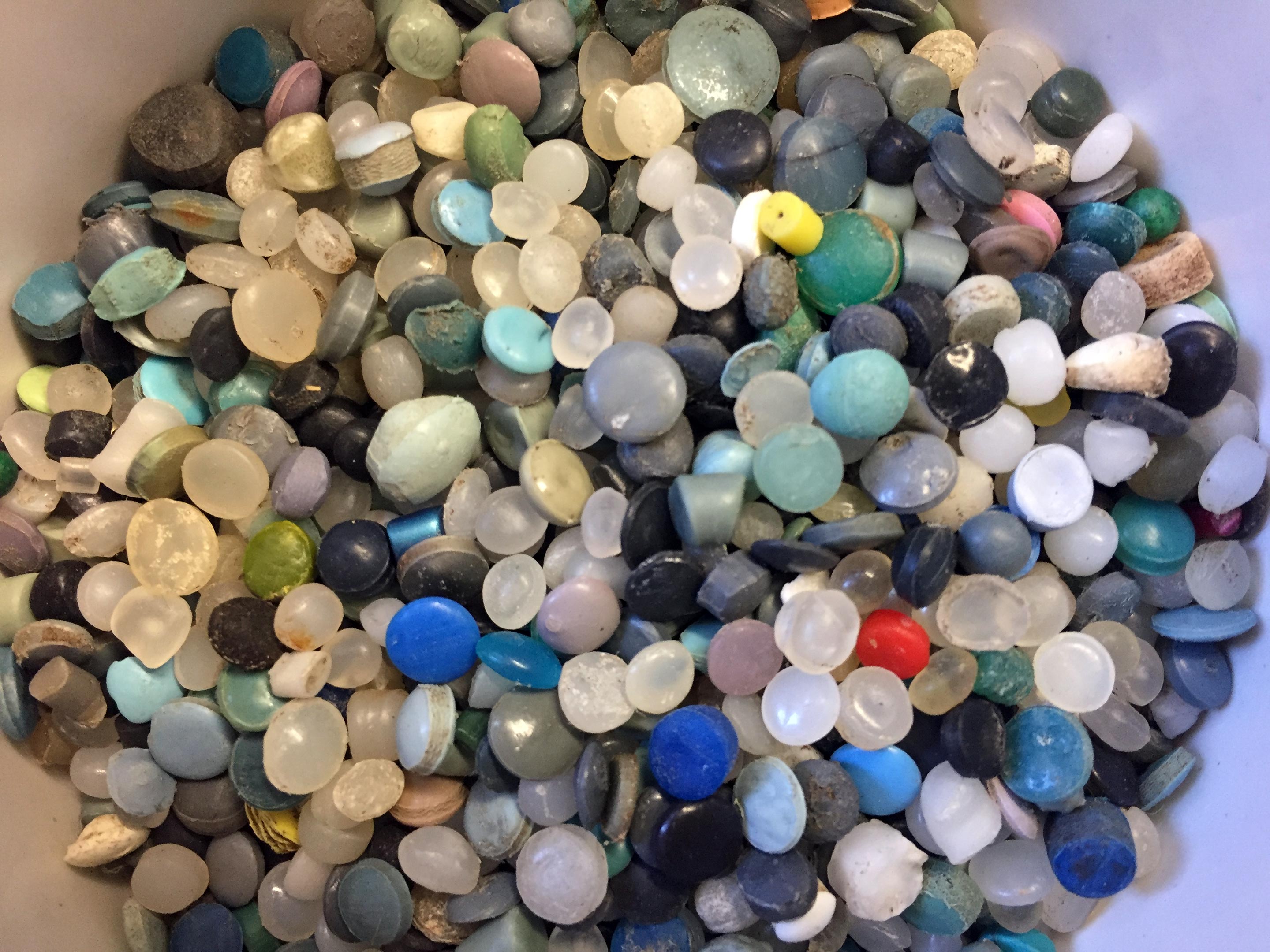
    Microplastic Pellets from the Great Lakes Study
    Microplastic pellets from the Great Lakes study. The pellet study involved sampling of 66 beaches on each Great Lake over a two-week period in October 2018, with a total of 12,974 pellets on 660 square meters of beach. Credit: Patricia Corcoran

    From the Great Pacific garbage patch to inland rivers, plastics are among the most widespread contaminants on Earth. Microplastics—particles of plastic smaller than five millimeters—are especially pervasive. As they build up in Earth’s waters, microplastics are also becoming a permanent part of the planet’s sedimentary layers.

    Now, using the Great Lakes as a laboratory, sedimentary petrologist Patricia Corcoran and her students at the University of Western Ontario are studying the behavior of microplastics as a geologic phenomenon.

    What are the main sources of microplastics to Great Lakes sediment? What factors influence their distribution, and where do they concentrate? To explore these questions, and shed light on implications such as which animals may be at risk from microplastics, Corcoran’s team has analyzed offshore and nearshore sediment samples from Lakes Huron, Ontario, Erie, and St. Clair, and their tributaries. Abundances were as high as 4270 microplastics particles per kilogram of dry-weight sediment in lake sediment, and up to 2444 microplastic particles per kilogram in river sediment.

    Microplastics Analyzed
    Microplastics analyzed from nearshore and offshore benthic sediment samples in lakes, benthic sediment samples in rivers, and water samples in lakes and rivers. Credit: Patricia Corcoran

    The team found that the more organic debris in the sample, the more microplastics. Benthic microplastics—those incorporated into lake bottom sediments—were also more abundant near high-population areas, which are also associated with plastics industry locations.

    Surprisingly, not all fibers found in benthic samples were plastic after all. “When we chemically analyzed fibers only 33% were plastic. The other materials [included] dyed cotton or cellulose,” Corcoran says. “So we can’t assume that every fiber we see under the microscope is plastic.”

    Corcoran’s team also sampled pellets (microplastics about the size of a lentil) from 66 beaches across all five Great Lakes. They found a total of 12, 974 pellets over 660 square meters (7,100 ft²) of beach, about equivalent to an eighth of the area of an American football field.

    Except for the two beaches containing the most pellets, they found little relationship between population density or industry and the number of pellets, says Corcoran. Instead, pellets were most concentrated near tributaries. “In other words,” she says, “rivers and creeks are the main pathways used by pellets to reach the lakes.”

    The burial of microplastics in lake and river sediment is just one way Corcoran has explored how plastics are becoming part of Earth’s future rock record. She’s also investigated anthropogenic stones on a Hawaiian beach, which she and colleagues called “plastiglomerate.”

    The Great Lakes study will be presented by Sara Belontz of the University of Western Ontario, on Tuesday, September 24, at 2:30 p.m., in Room 224A, North Building of the Phoenix Convention Center.

    Reference: “Anthropogenic Grains: Microplastics in Benthic Compartments of the Great Lakes Watershed” by Sara Belontz, Patricia Corcoran, Anika Ballent and Bethany Dean, 24 September 2019, Conference: GSA Annual Meeting in Phoenix Arizona, USA – 2019.
    DOI: 10.1130/abs/2019AM-333149

    Never miss a breakthrough: Join the SciTechDaily newsletter.
    Follow us on Google and Google News.

    Geological Society of America Geology Microplastics Plastic
    Share. Facebook Twitter Pinterest LinkedIn Email Reddit

    Related Articles

    Plastic Pollution in the Deep Sea: A Geological Perspective on a Global Problem

    Plastic Pollution Is Everywhere: Research Reveals How It Travels

    The Missing 99%? Highest Ever Level of Microplastics Found on Seafloor

    How Late Cretaceous Dinosaur-Dominated Ecosystems Were Structured

    Microplastic Pollution May Be Generated Simply by Opening Plastic Bags and Bottles

    The Giant Geode of Pulpí – Unlocking the Mystery of the Giant Crystals

    Help Save the Oceans by Ditching the Delicate Wash Cycle

    Four Billion Microplastic Particles Discovered in the Waters of Tampa Bay

    Major Environmental Challenge As Microplastics Harm Our Drinking Water

    1 Comment

    1. Bob Adams on January 8, 2023 6:36 am

      What was the weight of the microparticles in the one pound sample?

      Reply
    Leave A Reply Cancel Reply

    • Facebook
    • Twitter
    • Pinterest
    • YouTube

    Don't Miss a Discovery

    Subscribe for the Latest in Science & Tech!

    Trending News

    First-of-Its-Kind Discovery: Homer’s Iliad Found Embedded in a 1,600-Year-Old Egyptian Mummy

    Beyond Inflammation: Scientists Uncover New Cause of Persistent Rheumatoid Arthritis

    A Simple Molecule Could Unlock Safer, Easier Weight Loss

    Scientists Just Built a Quantum Battery That Charges Almost Instantly

    Researchers Unveil Groundbreaking Sustainable Solution to Vitamin B12 Deficiency

    Millions of People Have Osteopenia Without Realizing It – Here’s What You Need To Know

    Researchers Discover Boosting a Single Protein Helps the Brain Fight Alzheimer’s

    World-First Study Reveals Human Hearts Can Regenerate After a Heart Attack

    Follow SciTechDaily
    • Facebook
    • Twitter
    • YouTube
    • Pinterest
    • Newsletter
    • RSS
    SciTech News
    • Biology News
    • Chemistry News
    • Earth News
    • Health News
    • Physics News
    • Science News
    • Space News
    • Technology News
    Recent Posts
    • Scientists Discover New Way To Make Drug-Resistant Cancer Treatable Again
    • This Simple Exercise Trick Builds Muscle With Less Effort, Study Finds
    • Middle Age Is Becoming a Breaking Point in America, Study Reveals
    • Scientists Discover How Coffee Impacts Memory, Mood, and Gut Health
    • How Cells Copy DNA Might Matter More Than We Ever Realized
    Copyright © 1998 - 2026 SciTechDaily. All Rights Reserved.
    • Science News
    • About
    • Contact
    • Editorial Board
    • Privacy Policy
    • Terms of Use

    Type above and press Enter to search. Press Esc to cancel.