
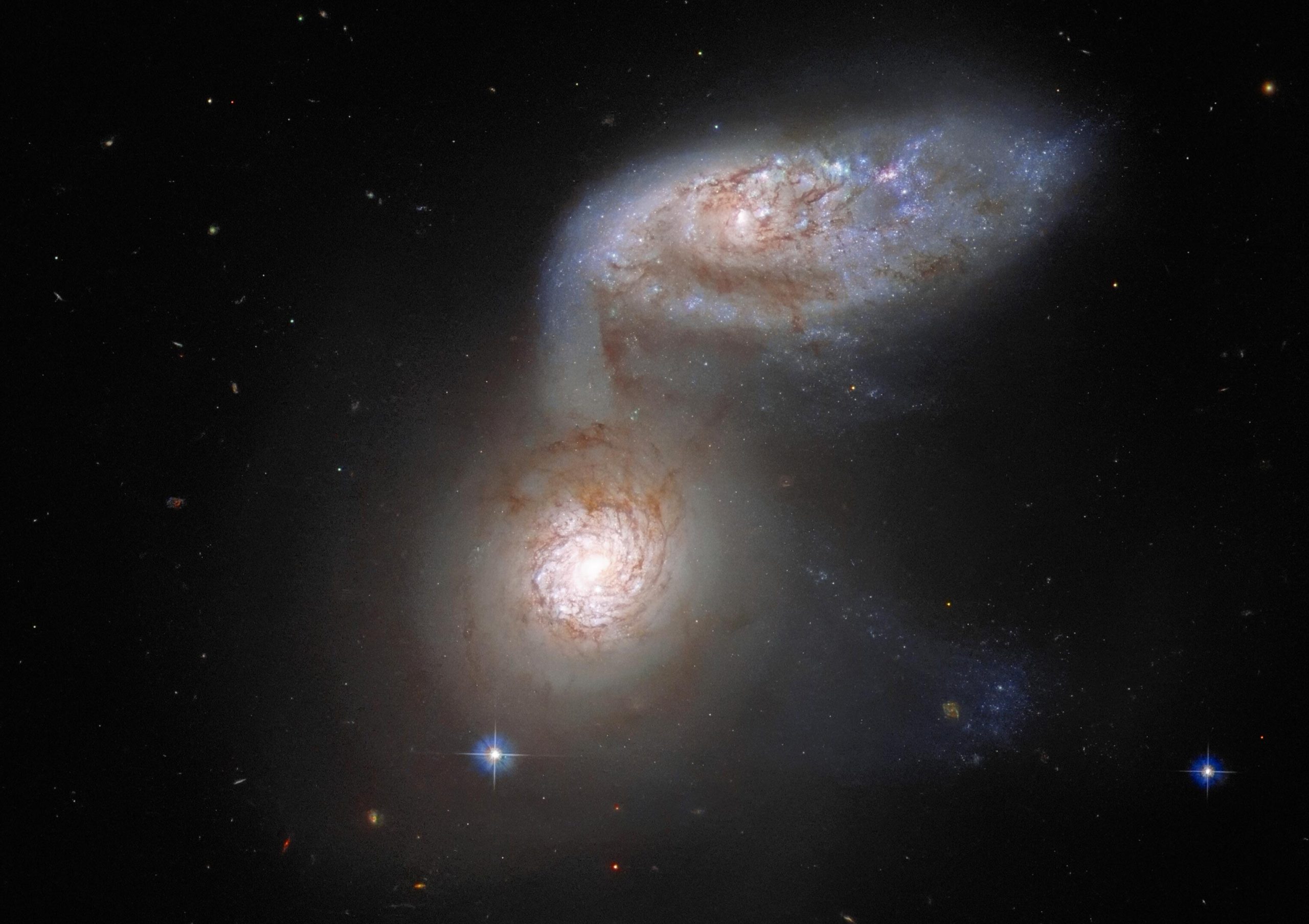
Hubble Detects a Dangerous Dance
This NASA/ESA Hubble Space Telescope image features two interacting galaxies that are so intertwined, they have a collective name – Arp 91. Their delicate galactic dance takes place more than 100 million light-years from Earth. The two galaxies comprising Arp 91 have their own names: the lower galaxy, which looks like a bright spot, is NGC 5953, and the oval-shaped galaxy to the upper right is NGC 5954. In reality, both of them are spiral galaxies, but their shapes appear very different because of their orientation with respect to Earth.
Arp 91 provides a particularly vivid example of galactic interaction. NGC 5953 is clearly tugging at NGC 5954, which looks like it is extending one spiral arm downward. The immense gravitational attraction of the two galaxies is causing them to interact. Such gravitational interactions are common and an important part of galactic evolution. Most astronomers think that collisions between spiral galaxies lead to the formation of another type of galaxy, known as elliptical galaxies. These extremely energetic and massive collisions, however, happen on timescales that dwarf a human lifetime. They take place over hundreds of millions of years, so we should not expect Arp 91 to look any different over the course of our lifetimes!
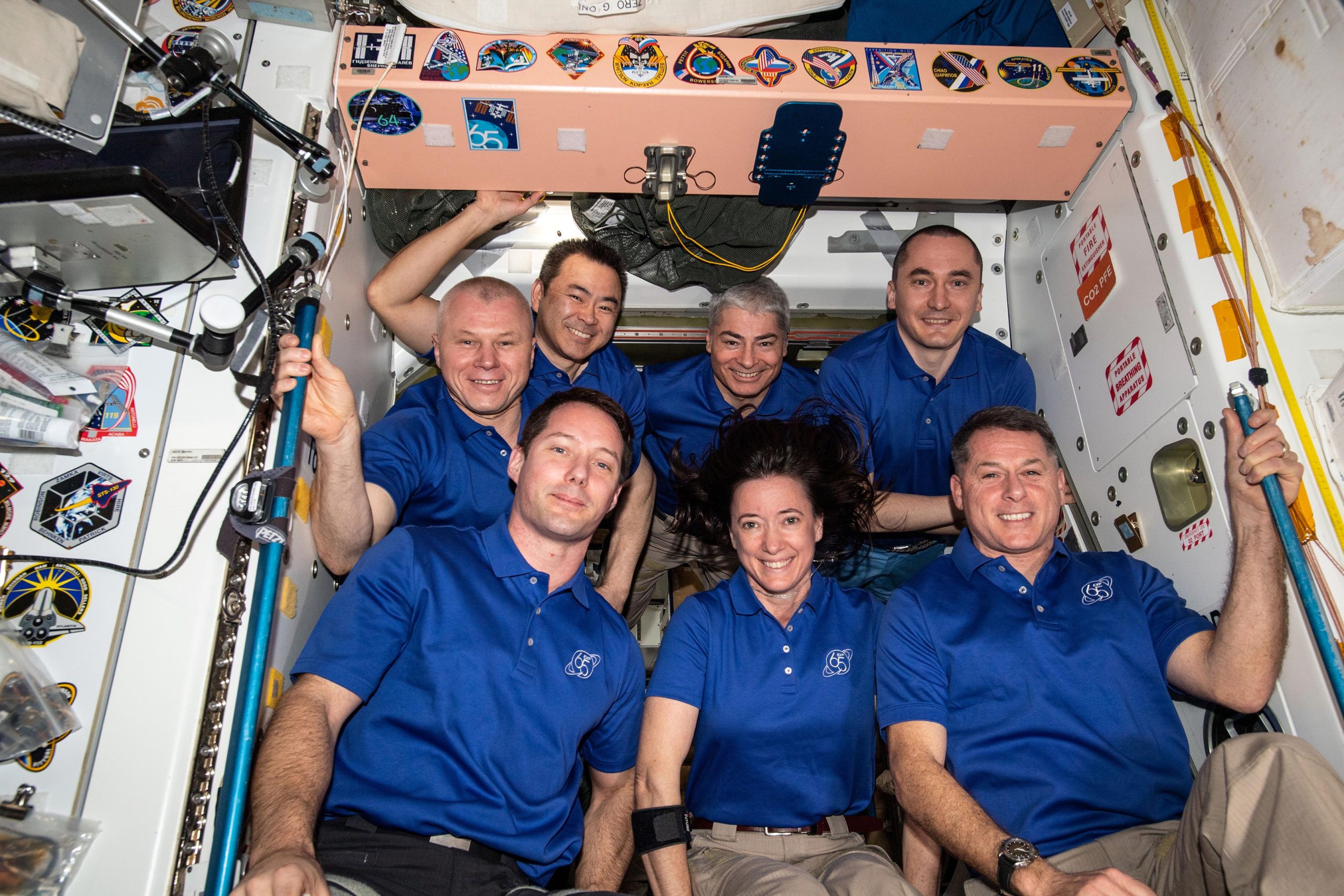
Smile! You’re on the International Space Station
On October 4, 2021, the seven-member Expedition 65 crew gathered for a portrait inside the vestibule in between the International Space Station’s Unity module and Tranquility module. In the front row from left are; Commander Thomas Pesquet of the European Space Agency; and NASA astronauts Megan McArthur and Shane Kimbrough. In the back are: Roscosmos cosmonaut Oleg Novitskiy; astronaut Akihiko Hoshide of the Japan Aerospace Exploration Agency; NASA astronaut Mark Vande Hei; and Roscosmos cosmonaut Pyotr Dubrov.
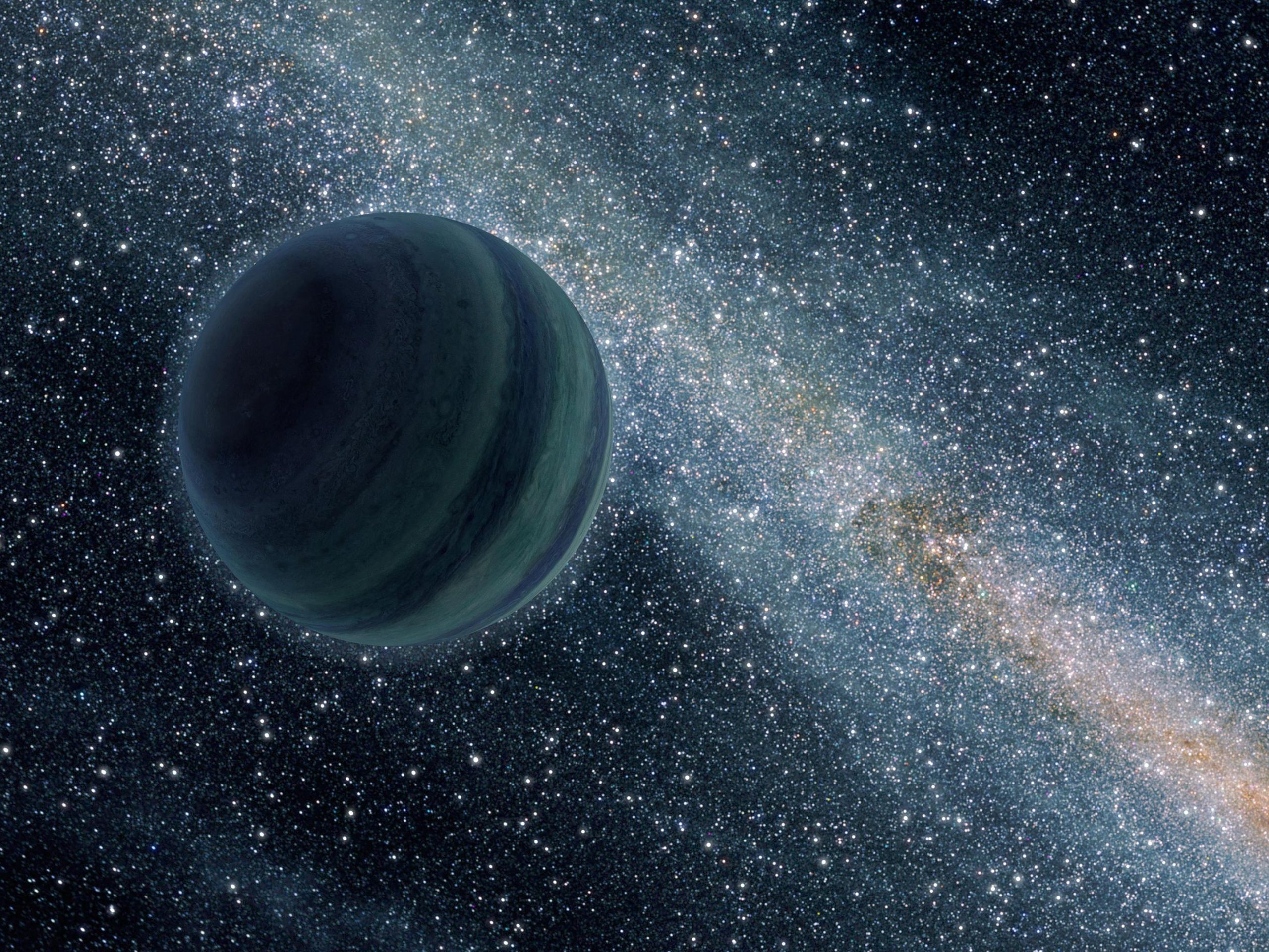
A Jupiter-Like Rogue Planet Wanders Alone in Space
This artist’s conception illustrates a Jupiter-like planet alone in the dark of space, floating freely without a parent star.
Exoplanet hunters have found thousands of planets, most orbiting close to their host stars, but relatively few alien worlds have been detected that float freely through the galaxy as so-called rogue planets, not bound to any star. Many astronomers believe that these planets are more common than we know, but that our planet-finding techniques haven’t been up to the task of locating them.
A planet survey, called the Microlensing Observations in Astrophysics (MOA), scanned the central bulge of our Milky Way galaxy from 2006 to 2007. It used a 5.9-foot (1.8-meter) telescope at Mount John University Observatory in New Zealand, and a technique called gravitational microlensing. In this method, a planet-sized body is identified indirectly as it just happens to pass in front of a more distant star, causing the star to brighten. The effect is like a cosmic funhouse mirror, or magnifying lens – light from the background star is warped and amplified, becoming brighter.
Using the latest technology, NASA’s Nancy Grace Roman Space Telescope will conduct a survey to discover many more exoplanets using powerful techniques available to a wide-field telescope.
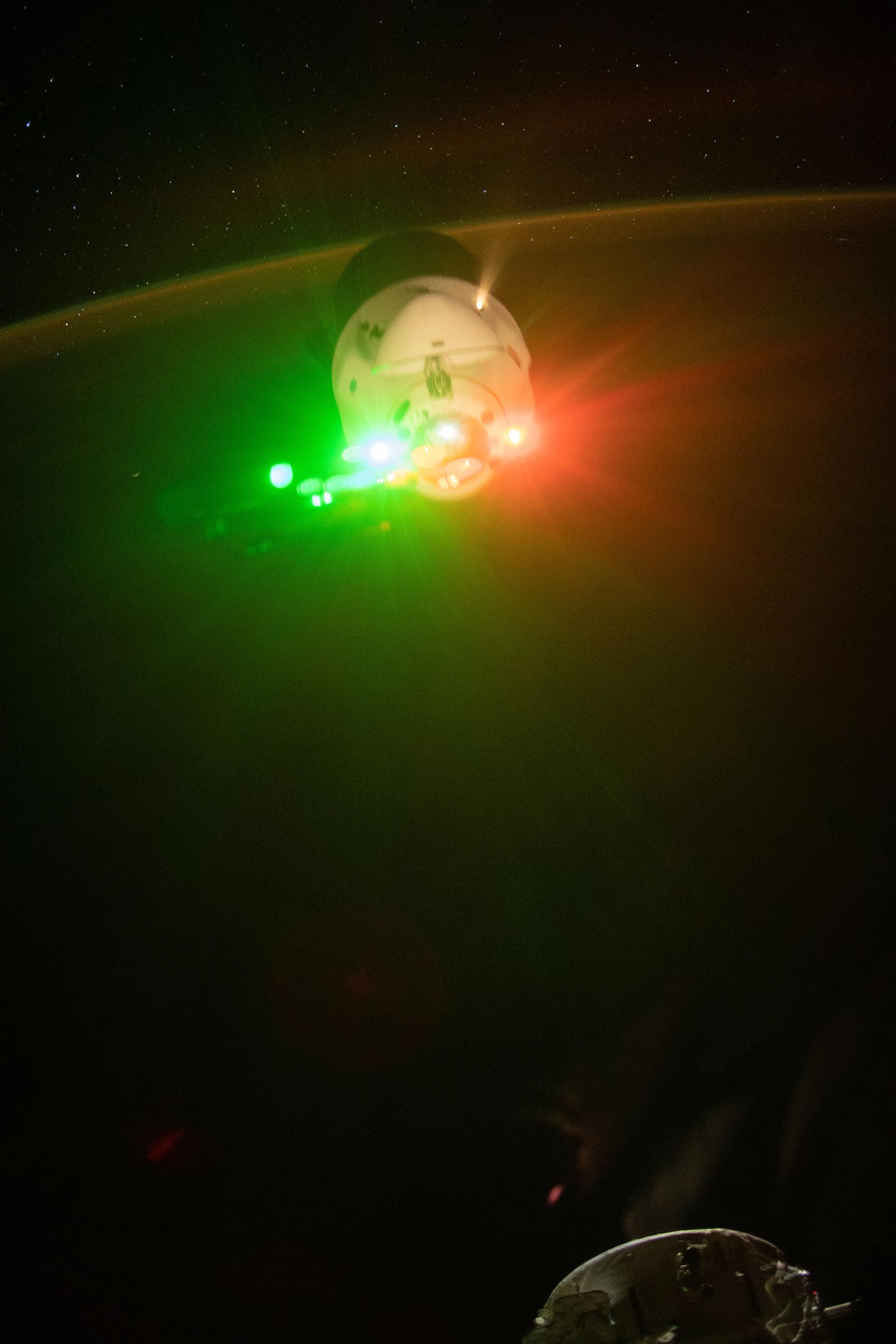
A Colorful Departure From the Space Station
In this image from September 30, 2021, the SpaceX Cargo Dragon resupply ship is pictured as it backs away from the International Space Station’s forward-facing international docking adapter. The Cargo Dragon’s beacon lights and a plume from one of its engines during its departure burn made for a colorful show.
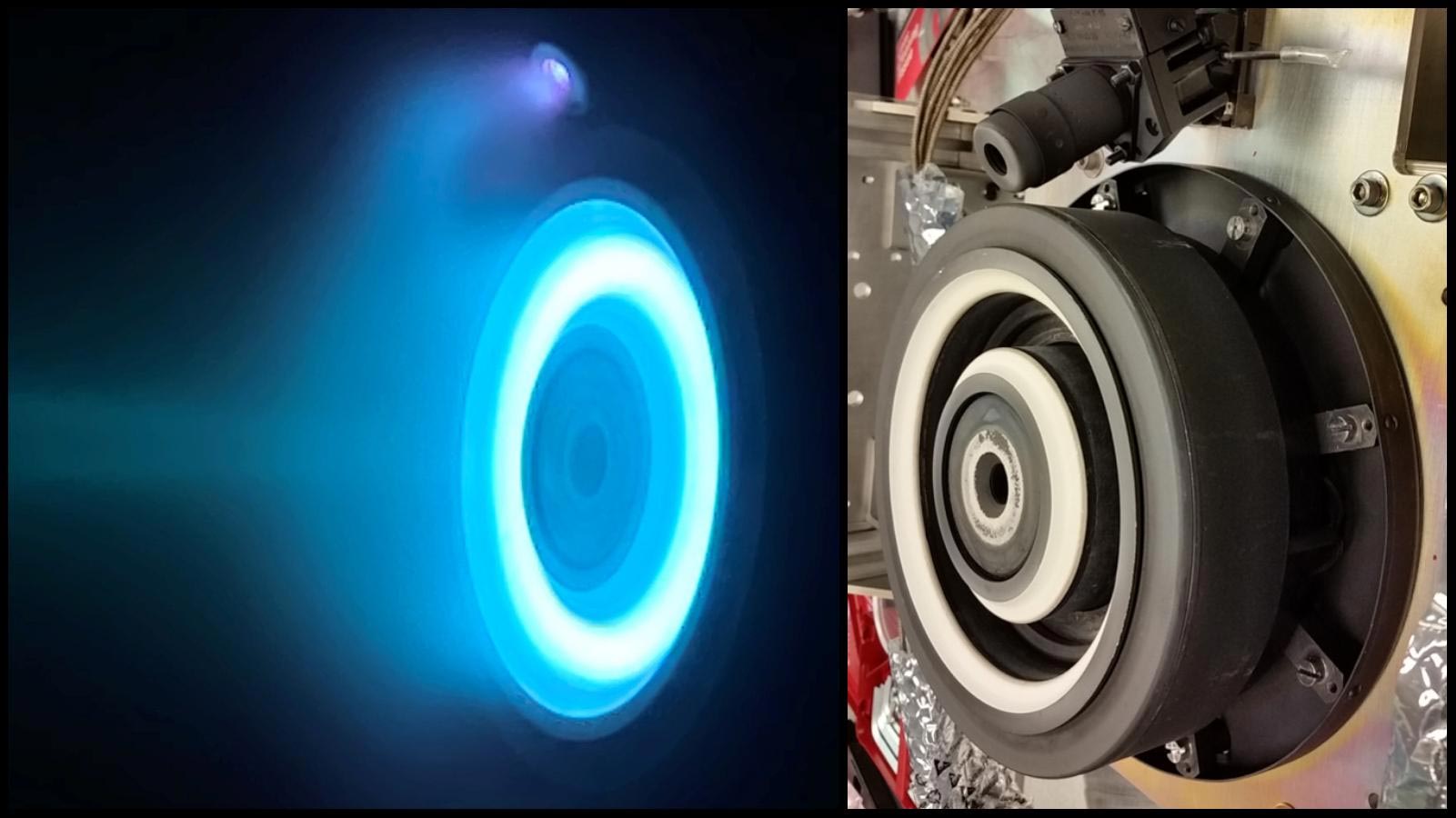
Psyche Mission to an Asteroid: Electric Propulsion Comes of Age
When it comes time for NASA’s Psyche spacecraft to power itself through deep space, it’ll be more brain than brawn that does the work. Once the stuff of science fiction, the efficient and quiet power of electric propulsion will provide the force that propels the Psyche spacecraft all the way to the main asteroid belt between Mars and Jupiter. The orbiter’s target is a metal-rich asteroid also called Psyche.
The photo on the left captures an operating electric Hall thruster identical to those that will propel NASA’s Psyche spacecraft, which is set to launch in August 2022 and travel to the main asteroid belt between Mars and Jupiter. The xenon plasma emits a blue glow as the thruster operates. The photo on the right shows a similar non-operating Hall thruster. The photo on the left was taken at NASA’s Jet Propulsion Laboratory; the photo on the right was taken at NASA’s Glenn Research Center.
Psyche’s Hall thrusters will be the first to be used beyond lunar orbit, demonstrating that they could play a role in supporting future missions to deep space. The spacecraft is set to launch in August 2022 and its super-efficient mode of propulsion uses solar arrays to capture sunlight that is converted into electricity to power the spacecraft’s thrusters. The thrusters work by turning xenon gas, a neutral gas used in car headlights and plasma TVs, into xenon ions. As the xenon ions are accelerated out of the thruster, they create the thrust that will propel the spacecraft.
Never miss a breakthrough: Join the SciTechDaily newsletter.
Follow us on Google and Google News.
2 Comments
Bonjour…..merci….
You have an add asking if Biden should resign?!!! WTAFF!!!!
I used to love your site!!!