
Close Menu
    Facebook X (Twitter) Instagram
    SciTechDaily
    • Biology
    • Chemistry
    • Earth
    • Health
    • Physics
    • Science
    • Space
    • Technology
    Facebook X (Twitter) Pinterest YouTube RSS
    SciTechDaily
    Home»Health»New Type of Cholera Vaccine May Offer Much Longer-Lasting Protection
    Health

    New Type of Cholera Vaccine May Offer Much Longer-Lasting Protection

    By American Chemical SocietyFebruary 16, 2022No Comments3 Mins Read
    Facebook Twitter Pinterest Telegram LinkedIn WhatsApp Email Reddit
    Share
    Facebook Twitter LinkedIn Pinterest Telegram Email Reddit
    Potentially Longer-Lasting Cholera Vaccine
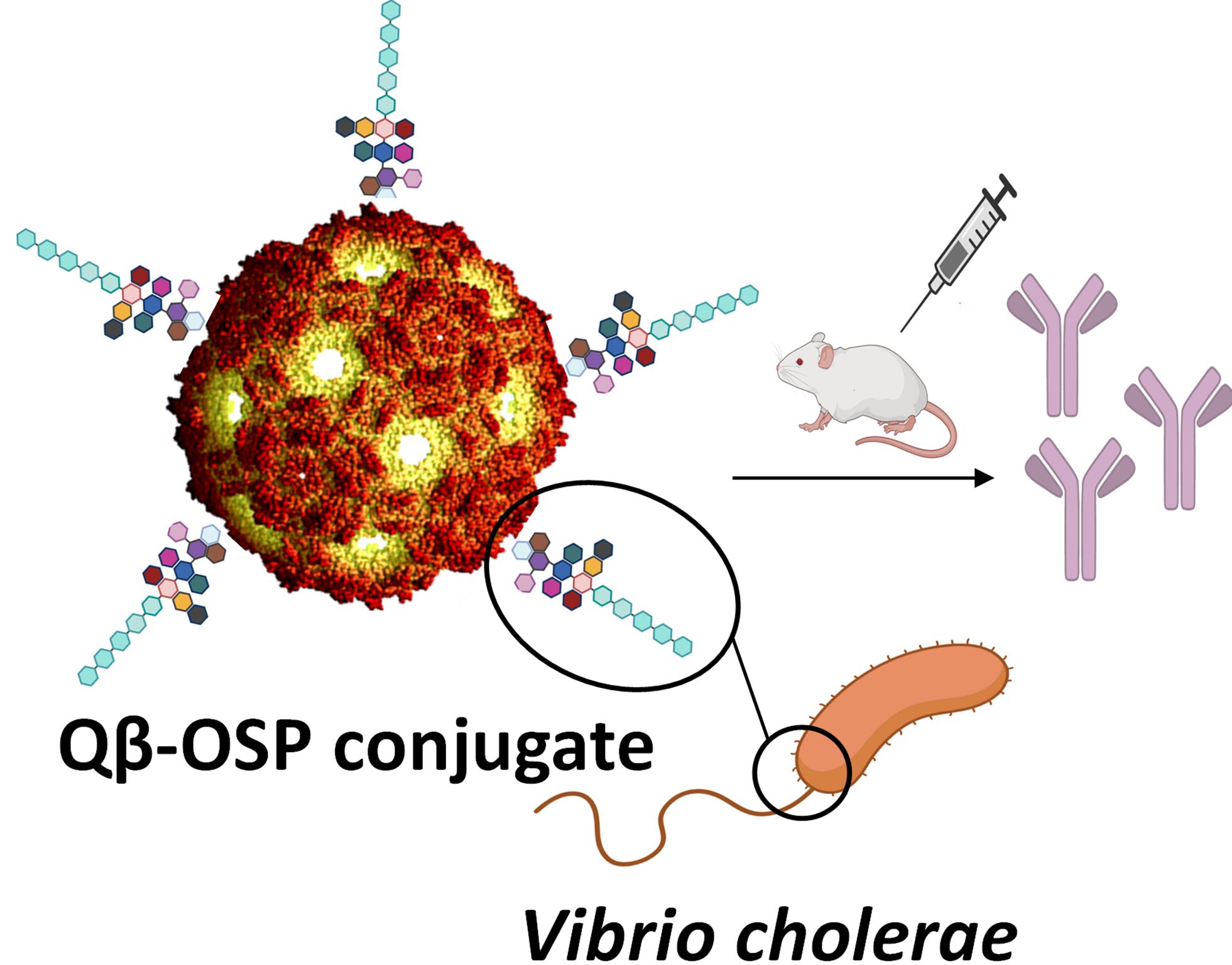
    A virus-like particle (Qβ-OSP conjugate) displaying a polysaccharide from Vibrio cholerae bacteria generates a strong, long-lasting immune response in mice. Credit: Adapted from ACS Infectious Diseases 2022, DOI: 10.1021/acsinfecdis.1c00585

    A new cholera vaccine using virus-like particles showed stronger, longer-lasting immune responses in mice compared to existing vaccines.

    Cholera, a diarrheal disease caused by the highly transmissible bacteria Vibrio cholerae, kills tens of thousands of people each year worldwide. Current vaccines last only 2–5 years, and they don’t work very well in young children. Now, researchers reporting in ACS Infectious Diseases have developed a new type of cholera vaccine consisting of polysaccharides displayed on virus-like particles. The vaccine generated long-lasting antibody responses against V. cholerae in mice.

    Current cholera vaccines contain killed or weakened V. cholerae bacteria and are administered orally. They offer the lowest level and duration of protection in young children, who are commonly affected by cholera in endemic countries. The immune system produces antibodies against the O-specific polysaccharide (OSP) on the surface of V. cholerae, but this polysaccharide in isolation does not generate a strong, long-lasting immune response. Peng Xu, Edward Ryan, Xuefei Huang and colleagues wondered if attaching OSP to virus-like particles could induce stronger, longer-lasting immunity.

    So the researchers developed a method to efficiently link multiple copies of OSP to Qβ, a virus-like particle that infects bacteria. The modified virus-like particles were recognized by antibodies in blood taken from recovering cholera patients, but not from patients with typhoid, another bacterial disease. Next, the team immunized mice with Qβ-OSP, observing that three doses caused a strong antibody response that persisted at least 265 days after the first dose. The immunized mice had antibodies that recognized the OSP from the natural lipopolysaccharide of V. cholerae. When the researchers mixed serum antibodies from the mice with other immune system proteins that kill bacteria and with live V. cholerae, antibodies from two of the five mice triggered more bacterial death than those from mice immunized with Qβ alone. The virus-like particle could mimic natural bacteria by presenting multiple copies of OSP on its surface, the researchers say, and it warrants further evaluation as a next-generation cholera vaccine.

    Reference: “Virus-like Particle Display of Vibrio cholerae O-specific Polysaccharide as a Potential Vaccine against Cholera” by Zahra Rashidijahanabad, Meagan Kelly and Mohammad Kamruzzaman, 16 February 2022, ACS Infectious Diseases.
    DOI: 10.1021/acsinfecdis.1c00585

    The authors acknowledge funding from the National Institutes of Health, the Fogarty International Center and Michigan State University. Xuefei Huang is the founder of Iaso Therapeutics Inc.

    Never miss a breakthrough: Join the SciTechDaily newsletter.
    Follow us on Google and Google News.

    American Chemical Society Bacteria Cholera Infectious Diseases Public Health Vaccine
    Share. Facebook Twitter Pinterest LinkedIn Email Reddit

    Related Articles

    Staph Vaccines Keep Failing and Scientists Finally Know Why

    COVID, One Year Later: What Do We Know Now? [Video]

    Not Sure if You’ve Already Had Coronavirus? This Test Might Tell You (Video)

    A Polio Vaccine That Hasn’t Been Used in the U.S. for Two Decades Might Protect Against Coronavirus [Video]

    Russia Creates Custom “Humanized” Mice to Test COVID-19 Drugs and Vaccines

    Bat ‘Super Immunity’ May Explain How Bats Carry Coronaviruses Without Getting Sick

    How Effective Are Cloth Masks Against Coronavirus? [Video]

    New Clues on How to Treat COVID-19 From T Cell Counts and Cytokine Storms

    Where Are We on a Coronavirus Vaccine: And What’s Next? [Video]

    Leave A Reply Cancel Reply

    • Facebook
    • Twitter
    • Pinterest
    • YouTube

    Don't Miss a Discovery

    Subscribe for the Latest in Science & Tech!

    Trending News

    New Molecule Restores the Brain’s Natural Defenses Against Alzheimer’s

    Could Creatine Boost More Than Muscles? It May Also Help Depression

    Scientists Discover a Natural Molecule That Could Help Prevent Vision Loss

    Scientists Thought Royal Jelly Made Queen Bees. They Were Wrong

    One Tiny Change May Explain How Viruses Jump From Bats to Humans

    The Secret to Healthy Aging May Be More Protein and More Exercise

    These 567-Million-Year-Old Fossils Are Rewriting the Story of Life on Earth

    The Spider-Like Creatures Helping Scientists Decode the Origins of Fatherhood

    Follow SciTechDaily
    • Facebook
    • Twitter
    • YouTube
    • Pinterest
    • Newsletter
    • RSS
    SciTech News
    • Biology News
    • Chemistry News
    • Earth News
    • Health News
    • Physics News
    • Science News
    • Space News
    • Technology News
    Recent Posts
    • Rethinking Movement Disorders: Scientists Uncover a Surprising Disconnect Deep Inside the Brain
    • Groundbreaking Study Challenges 40 Years of Beliefs About Mad Cow Disease
    • One Sugar Tells Your Brain You’re Full. Another Barely Does
    • One of Arizona’s Largest Reservoirs Is Less Than 1% Full After Snowpack Collapse
    • Scientists Detect Hundreds of Iceberg Earthquakes at Antarctica’s Crumbling Doomsday Glacier
    Copyright © 1998 - 2026 SciTechDaily. All Rights Reserved.
    • Science News
    • About
    • Contact
    • Editorial Board
    • Privacy Policy
    • Terms of Use

    Type above and press Enter to search. Press Esc to cancel.