
Close Menu
    Facebook X (Twitter) Instagram
    SciTechDaily
    • Biology
    • Chemistry
    • Earth
    • Health
    • Physics
    • Science
    • Space
    • Technology
    Facebook X (Twitter) Pinterest YouTube RSS
    SciTechDaily
    Home»Space»GOES-T Satellite Separates From Spacecraft, Continues on Journey To Save Lives
    Space

    GOES-T Satellite Separates From Spacecraft, Continues on Journey To Save Lives

    By NASAMarch 2, 2022No Comments2 Mins Read
    Facebook Twitter Pinterest Telegram LinkedIn WhatsApp Email Reddit
    Share
    Facebook Twitter LinkedIn Pinterest Telegram Email Reddit
    GOES-T Launch ULA Rocket
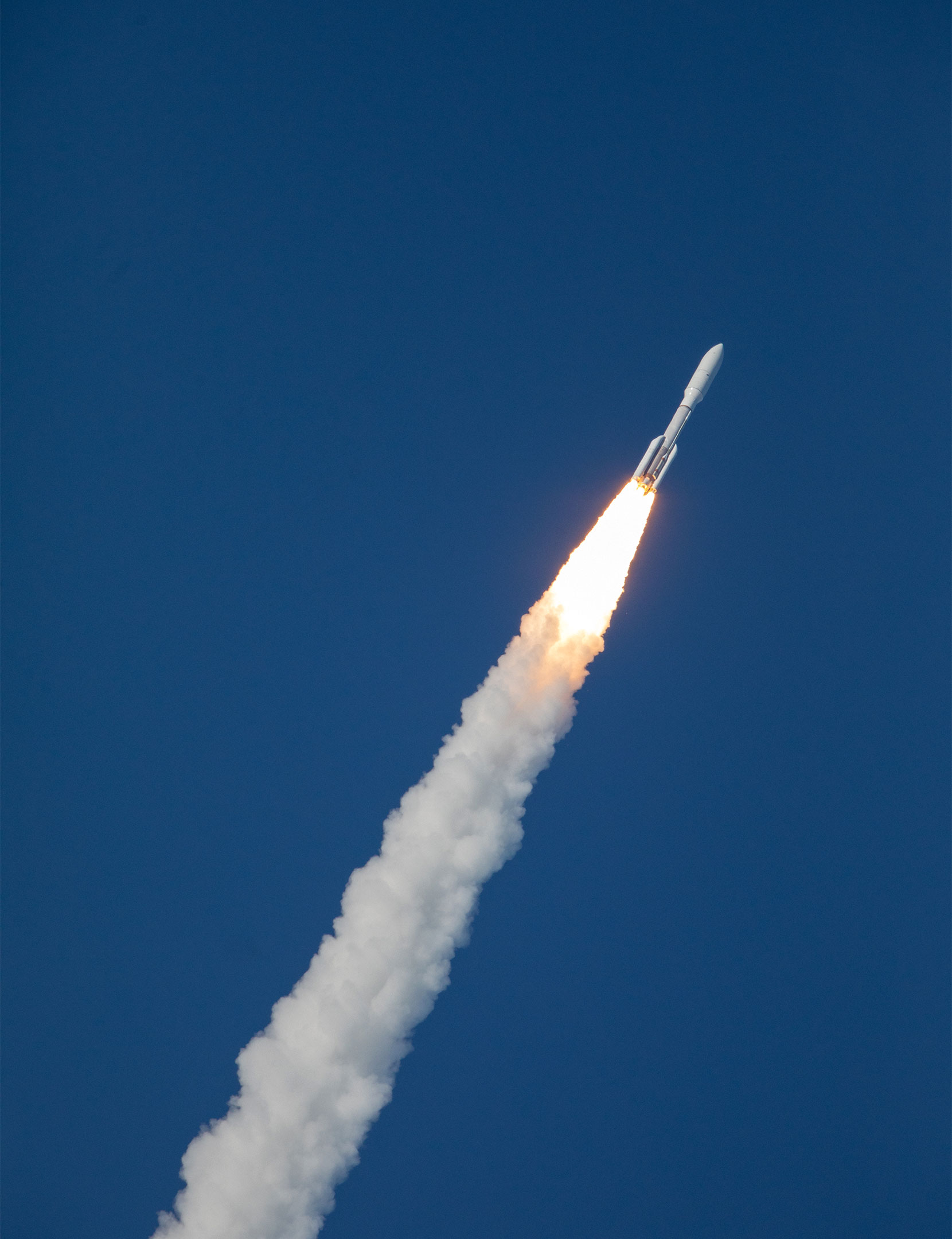
    A joint effort between NASA and the National Oceanic and Atmospheric Administration (NOAA), the GOES-T satellite will be positioned to watch over the western contiguous United States, Alaska, Hawaii, Mexico, Central America, and the Pacific Ocean. Credit: NASA/Kim Shiflett

    Following completion of a third planned start and then cutoff of the United Launch Alliance Atlas V 541 Centaur main engine, the National Oceanic and Atmospheric Administration’s (NOAA) Geostationary Operational Environmental Satellite-T (GOES-T) satellite separated from the spacecraft and is continuing on its journey to help meteorologists observe and predict local weather events, including thunderstorms, tornadoes, fog, hurricanes, flash floods, and other severe weather.

    In addition, GOES observations have proven helpful in monitoring dust storms, volcanic eruptions, and forest fires.

    “That is what it’s all about – when we get to the spacecraft separation. It’s years of work going into that one event,” said NASA Launch Director Tim Dunn. “Today, we were blessed with a smooth and successful countdown.”

    A joint effort between NASA and NOAA, GOES-T will be renamed GOES-18 once it reaches geostationary orbit, replacing GOES-17 as GOES West. It will be positioned to watch over the western contiguous United States, Alaska, Hawaii, Mexico, Central America, and the Pacific Ocean. The satellite will be ideally located to monitor weather systems and hazards that most affect this region of the Western Hemisphere.

    GOES-T is about the size of a small school bus and weighs more than 6,000 pounds. Liftoff, aboard a United Launch Alliance Atlas V 541 rocket from Cape Canaveral Space Force Station’s Space Launch Complex 41 in Florida, occurred right at the top of the two-hour launch window at 4:38 p.m. EST. The launch was managed by NASA’s Launch Services Program, based at NASA’s Kennedy Space Center in Florida.

    Never miss a breakthrough: Join the SciTechDaily newsletter.
    Follow us on Google and Google News.

    NASA NOAA United Launch Alliance
    Share. Facebook Twitter Pinterest LinkedIn Email Reddit

    Related Articles

    NASA, ULA Launch GOES-T: NOAA’s Newest Earth Observing Satellite

    NOAA’s GOES-T Rolled Out to the Pad for Today’s Launch

    This Is Real: NASA Camera – A Million Miles Away – Shows Moon Crossing Face of Earth

    NOAA’s GOES-T “Earth in High Definition” Satellite Preparing for Liftoff From Cape Canaveral Space Force Station

    Geomagnetic Storm: Solar Eruption Arrives at Earth

    NASA Lucy Launched on Atlas V Rocket – Asteroid Mission to “Fossils” of Planet Formation

    Solar Cycle 25 Has Begun. Experts From NASA and NOAA Explain What It Means

    NOAA’s GOES-S Satellite is Ready for Today’s Launch, Watch It Live

    NOAA Solar Eruption Classifications

    Leave A Reply Cancel Reply

    • Facebook
    • Twitter
    • Pinterest
    • YouTube

    Don't Miss a Discovery

    Subscribe for the Latest in Science & Tech!

    Trending News

    125-Million-Year-Old Crocodile Fossil Reveals Astonishing New Secrets

    Scientists Discover an “Impossible” Way Muscle Filaments Can Grow

    A Star’s Spin Could Solve a Longstanding Black Hole Mystery

    NASA Finds Earth Microbes Could Hide in the Moon’s Deep Shadows

    New Study: Intermittent Fasting Lowers Blood Sugar in Type 1 Diabetes

    Alzheimer’s Brain Changes May Begin 7 Years Earlier Than Scientists Thought

    This New Molecule Could Transform How We Recover Gold From Electronic Waste

    A Billion Years Before the Grand Canyon, a Giant Cliff May Have Stretched Across America

    Follow SciTechDaily
    • Facebook
    • Twitter
    • YouTube
    • Pinterest
    • Newsletter
    • RSS
    SciTech News
    • Biology News
    • Chemistry News
    • Earth News
    • Health News
    • Physics News
    • Science News
    • Space News
    • Technology News
    Recent Posts
    • How Insects Conquered Land Was Stranger Than Scientists Thought
    • A 250-Year-Old Heat Mystery Leads to a Surprising Discovery About Human Sweat
    • Thousands of Giant Whales Are Suddenly Flooding Into an Arctic “Feeding Frenzy”
    • AI Searched 150 Million Materials – and Found Two Promising Candidates for Future Electronics
    • A Major Quantum Computing Problem May Finally Have an Answer: Can We Trust the Results?
    Copyright © 1998 - 2026 SciTechDaily. All Rights Reserved.
    • Science News
    • About
    • Contact
    • Editorial Board
    • Privacy Policy
    • Terms of Use

    Type above and press Enter to search. Press Esc to cancel.