
Close Menu
    Facebook X (Twitter) Instagram
    SciTechDaily
    • Biology
    • Chemistry
    • Earth
    • Health
    • Physics
    • Science
    • Space
    • Technology
    Facebook X (Twitter) Pinterest YouTube RSS
    SciTechDaily
    Home»Space»Geomagnetic Storm: Solar Eruption Arrives at Earth
    Space

    Geomagnetic Storm: Solar Eruption Arrives at Earth

    By NASAOctober 16, 20211 Comment3 Mins Read
    Facebook Twitter Pinterest Telegram LinkedIn WhatsApp Email Reddit
    Share
    Facebook Twitter LinkedIn Pinterest Telegram Email Reddit
    Geomagnetic Storm NOAA
    The CME associated with the October 9, 2021, M1 flare arrived as anticipated early on October 12, UTC-day. The CME shock front arrived at the DSCOVR spacecraft (1 million miles from Earth) at 12/0147 UTC (Oct 11 / 9:47 pm EDT) as solar wind speed increased by nearly 100 km/s and total interplanetary magnetic field (IMF) strength quickly elevated to over 15 nT. Geomagnetic activity increased as expected with the CME arrival and G1-G2 (Minor-Moderate) storm conditions were met. The CME progression remains fluid at this time and a G2 Watch is still in effect for the remainder of October 12 and a G1 Warning continues until 12/2200 UTC (6:00 pm EDT). Continue to visit our SWPC webpage for the latest updates, warnings & alerts, and forecasts. Credit: NOAA

    A solar flare-driven CME from October 9 struck Earth on October 12, creating a moderate geomagnetic storm with Kp index 6.

    A mass of solar material that erupted from the Sun on October 9, 2021, reached Earth on October 12. The Earth-directed coronal mass ejection, or CME, elevated the Kp index, a measure of disturbance to Earth’s magnetic field, to 6 (moderate level). Kp index levels range from 0 (quiet) to 9 (intense).

    The CME was associated with an M1.6 class solar flare from Active Region 2882 on that peaked on October 9 at 6:38 UTC (2:38 a.m. EDT). M-class flares are a tenth the size of the most intense flares, the X-class flares. The number provides more information about its strength. An M2 is twice as intense as an M1, an M3 is three times as intense, etc. The flare also generated a solar energetic particle eruption that was detected by NASA’s Solar Terrestrial Relations Observatory-Ahead, or STEREO-A spacecraft, at 7:51 UTC (3:51 a.m. EDT).
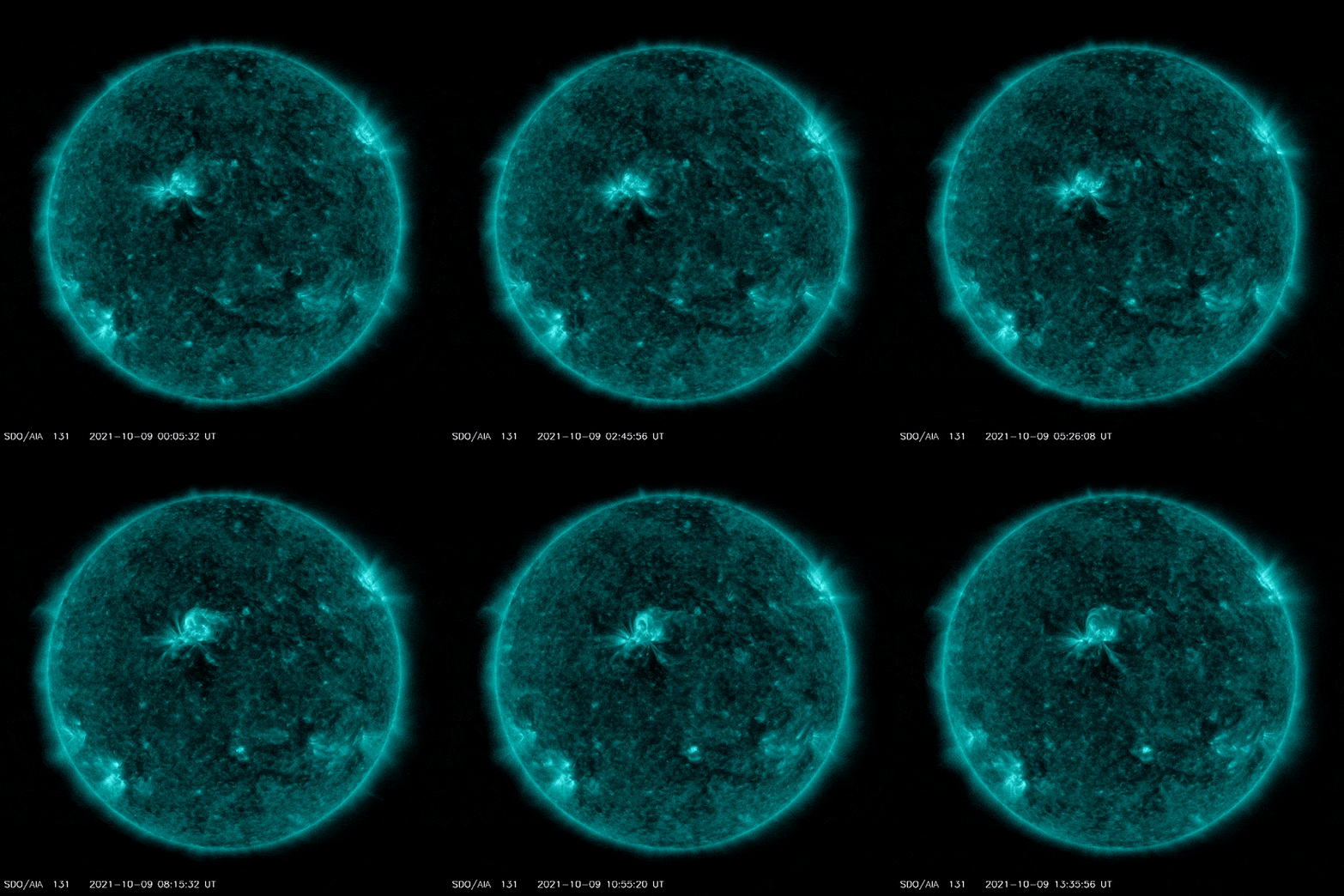
    SDO 131 October, 9 2021 flare
    Active Region 2882, shown here near the middle of the Sun’s disk, erupted with a moderate level solar flare on October 9, 2021. This animated gif shows images from the 131 Angstrom channel of NASA’s Solar Dynamics Observatory spacecraft/Atmospheric Imaging Assembly instrument. Credit: NASA/SDO

    STEREO-A also detected the CME from its vantage point away from Earth. The CME’s initial speed was estimated by NASA’s Moon to Mars Space Weather Operations Office to be approximately 983 kilometers per second (610 miles per second). This and other information about the event is reported in the Space Weather Database Of Notifications, Knowledge, Information (DONKI) catalog.
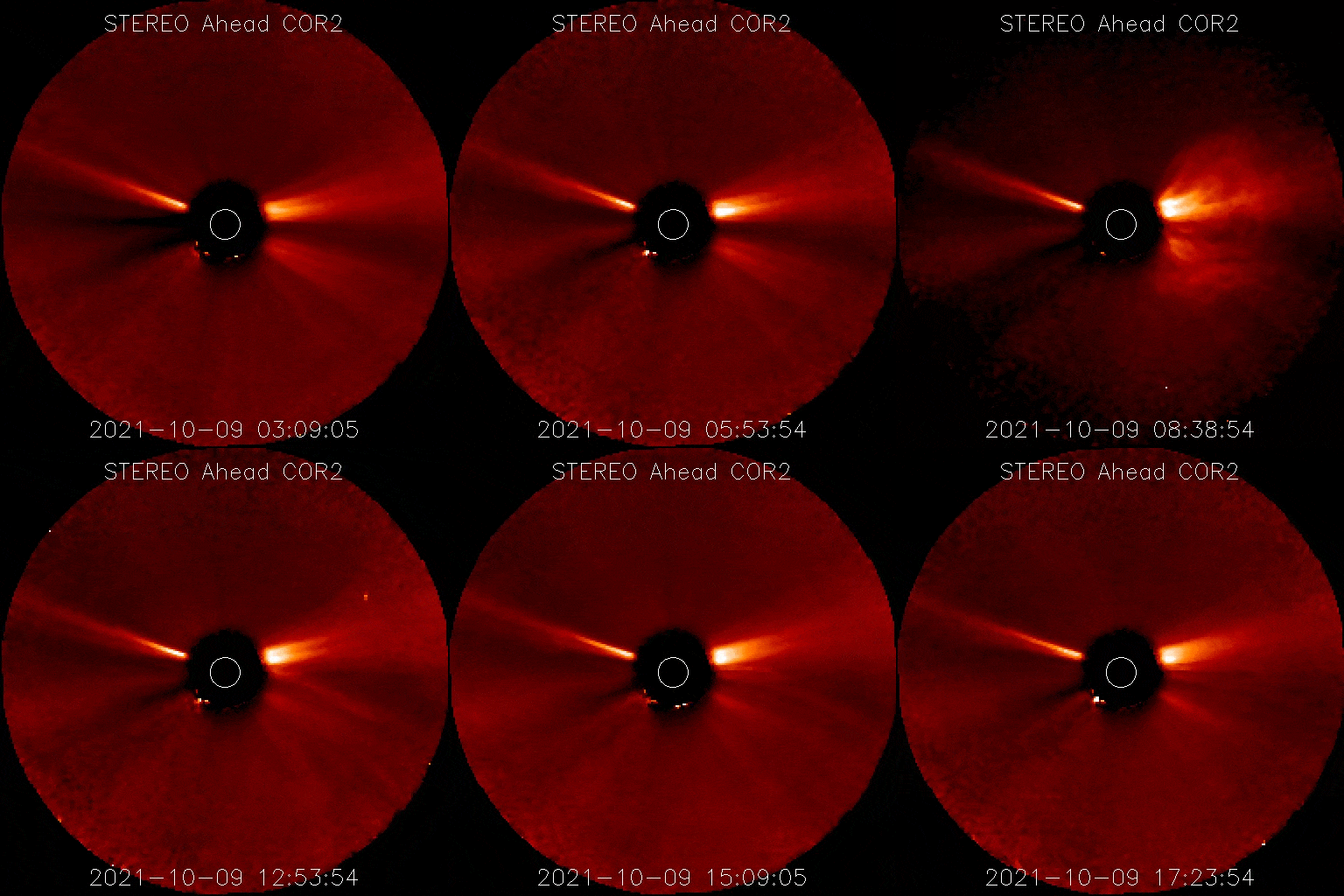
    STEREO A COR2 October 9, 2021 CME
    The COR2 coronagraph on NASA’s Solar Terrestrial Relations Observatory-A spacecraft, which views the Sun’s corona by occluding its bright surface, detected this Earth-directed CME on October 9, 2021. Credit: NASA/STEREO

    NOAA’s Space Weather Prediction Center is the official source for space weather forecasts, watches, warnings, and alerts. Visit http://spaceweather.gov for information about potential impacts from this event.

    Never miss a breakthrough: Join the SciTechDaily newsletter.
    Follow us on Google and Google News.

    Coronal Mass Ejections NASA NOAA Popular Space Weather Sun
    Share. Facebook Twitter Pinterest LinkedIn Email Reddit

    Related Articles

    Massive Solar Storm Sparks Rare G4 Alert: What It Means for Earth

    NASA’s ACE Mission: Total Solar Eclipses Shine a Light on the Solar Wind

    Solar Orbiter Images First Coronal Mass Ejections – See the Stunning Videos From Multiple Instruments

    Solar Cycle 25 Has Begun. Experts From NASA and NOAA Explain What It Means

    NASA Captures Image of an M6.5 Class Flare

    NASA’s Solar Dynamics Observatory Captures Filament Explosion

    New Light Shed on the Origins of Extreme Space Storms

    NASA Solar Dynamics Observatory Captures Eruption in Extreme UV

    NASA Continues to Monitor Solar Flares

    1 Comment

    1. Larry Butler W4CSC on October 20, 2021 3:53 am

      But, how can we justify the billions wasted and find a way to blame consumer internal combustion weed eaters for this event so we can ban all ICEs by 2025 to boost EV sales?

      Reply
    Leave A Reply Cancel Reply

    • Facebook
    • Twitter
    • Pinterest
    • YouTube

    Don't Miss a Discovery

    Subscribe for the Latest in Science & Tech!

    Trending News

    Scientists Uncover Potential Brain Risks of Popular Fish Oil Supplements

    Scientists Discover a Surprising Way To Make Bread Healthier and More Nutritious

    After 60 Years, Scientists Uncover Unexpected Brain Effects of Popular Diabetes Drug Metformin

    New Research Uncovers Hidden Side Effects of Popular Weight-Loss Drugs

    Scientists Rethink Extreme Warming After Surprising Ocean Discovery

    Landmark Study Links Never Marrying to Significantly Higher Cancer Risk

    Researchers Discover Unknown Beetle Species Just Steps From Their Lab

    Largest-Ever Study Finds Medicinal Cannabis Ineffective for Anxiety, Depression, PTSD

    Follow SciTechDaily
    • Facebook
    • Twitter
    • YouTube
    • Pinterest
    • Newsletter
    • RSS
    SciTech News
    • Biology News
    • Chemistry News
    • Earth News
    • Health News
    • Physics News
    • Science News
    • Space News
    • Technology News
    Recent Posts
    • Powerful Lasers Reveal How Matter Becomes Plasma in Trillionths of a Second
    • A Simpler Path to Super-Resolution: Scientists Reinvent Microscopy
    • Scientists Uncover Hidden Genetic Cause of Diabetes in Babies
    • Amazonian Chocolate Could Become the Next Superfood, Scientists Say
    • Challenging the Narrative: New Study Shows U.S. Life Expectancy Is Rising Across All States
    Copyright © 1998 - 2026 SciTechDaily. All Rights Reserved.
    • Science News
    • About
    • Contact
    • Editorial Board
    • Privacy Policy
    • Terms of Use

    Type above and press Enter to search. Press Esc to cancel.