

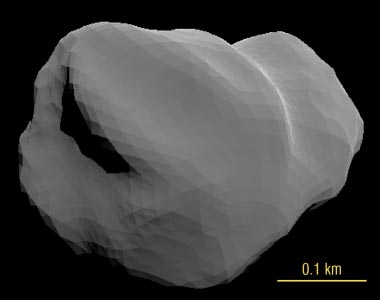
The extended mission, dubbed OSIRIS-APEX, will study the near-Earth asteroid Apophis, which will have a close encounter with Earth in 2029.
On September 24, 2023, NASA’s OSIRIS-REx mission will fly by Earth to deliver a sample from the asteroid Bennu. However, it will not clock out after that.
NASA has extended the University of Arizona-led mission, which will be renamed OSIRIS-APEX, to examine the near-Earth asteroid Apophis for 18 months. Apophis will make a close approach to Earth in 2029.
The mission will be led by the University of Arizona, and it will make its first move toward Apophis 30 days after the OSIRIS-REx spacecraft delivers the sample it collected from Bennu in October 2020. The original mission team will split at that point, with the sample analysis team analyzing the Bennu sample and the spacecraft and instrument team transitioning to OSIRIS-APEX, which stands for OSIRIS-Apophis Explorer.
Regents Professor of Planetary Sciences Dante Lauretta will remain the principal investigator of OSIRIS-REx through the remaining two-year sample return phase of the mission. Planetary sciences assistant professor and OSIRIS-REx deputy principal investigator Dani DellaGiustina will then become the principal investigator of OSIRIS-APEX. The extension adds another $200 million to the mission cost cap.
The mission team conducted a thorough search for potential asteroid targets. The OSIRIS-REx spacecraft was built for what’s called a rendezvous mission, meaning instead of making a single flyby of an object and quickly snapping images and collecting data, it was designed to “get up close and personal with the object.” DellaGiustina said. “Our spacecraft is really phenomenal at that.”
“Apophis is one of the most infamous asteroids,” DellaGiustina said. “When it was first discovered in 2004, there was concern that it would impact the Earth in 2029 during its close approach. That risk was retired after subsequent observations, but it will be the closest an asteroid of this size has gotten in the 50 or so years asteroids have been closely tracked, or for the next 100 years of asteroids we have discovered so far. It gets within one-tenth the distance between the Earth and moon during the 2029 encounter. People in Europe and Africa will be able to see it with the naked eye, that’s how close it will get. We were stoked to find out the mission was extended.”
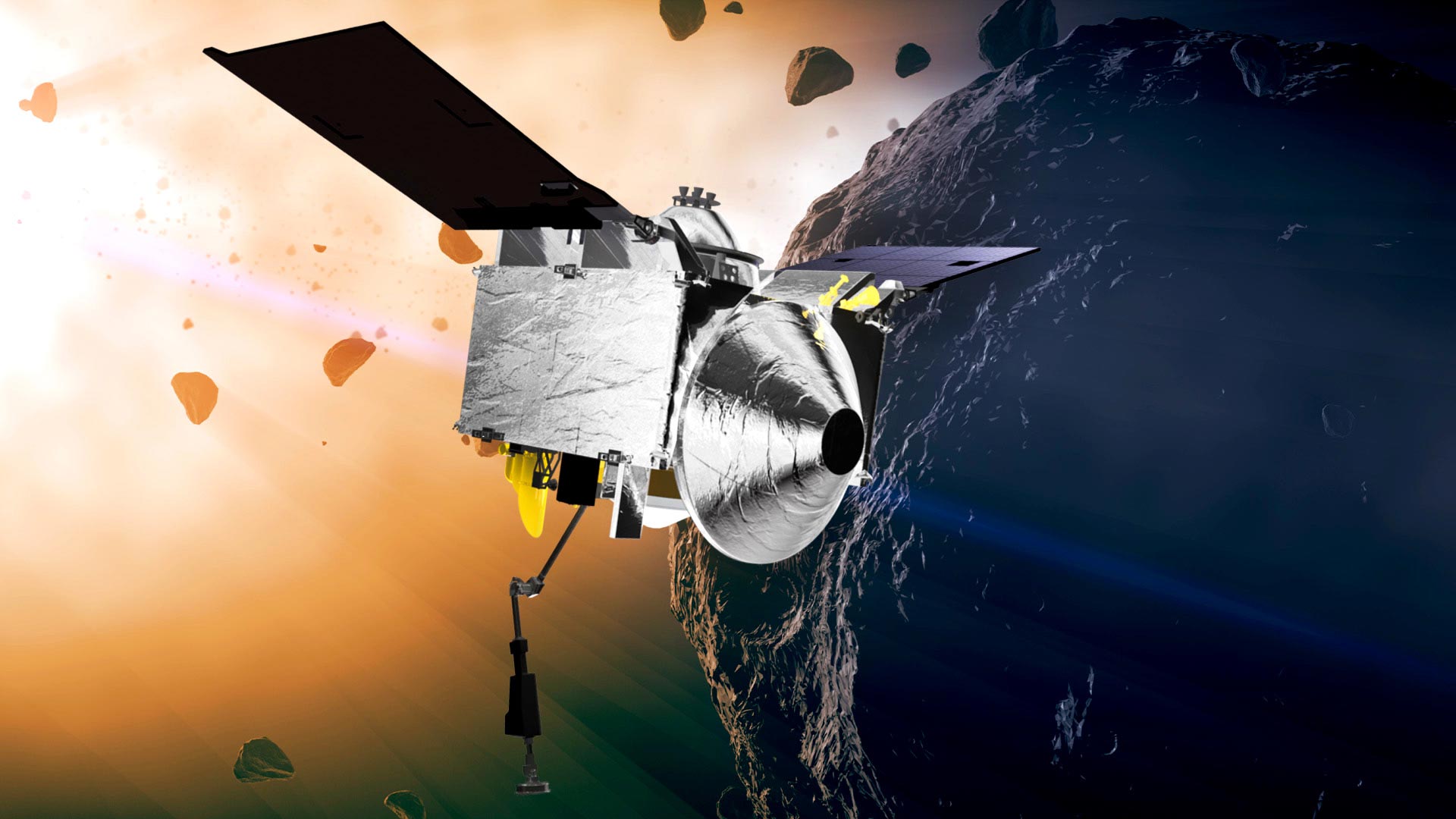
OSIRIS-REx was launched in 2016 to collect a sample from Bennu that will help scientists learn about the formation of the solar system and Earth as a habitable planet. OSIRIS-REx is the first NASA mission to collect and return a sample from a near-Earth asteroid.
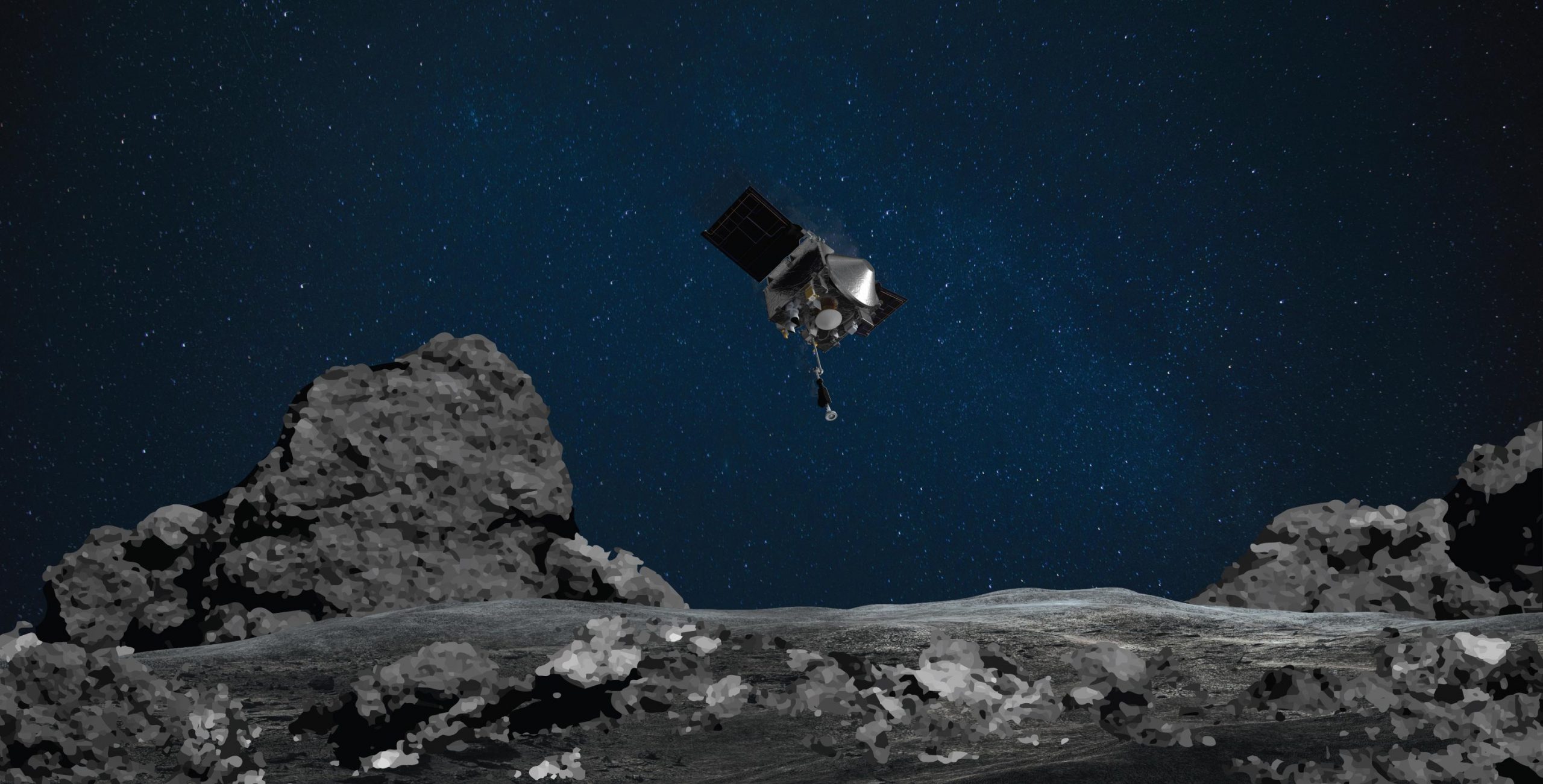
OSIRIS-APEX will not collect a sample, but when it reaches Apophis, it will study the asteroid for 18 months and collect data along the way. It also will make a maneuver similar to the one it made during sample collection at Bennu, by approaching the surface and firing its thrusters. This event will expose the asteroid’s subsurface, to allow mission scientists to learn more about the asteroid’s material properties.
The scientists also want to investigate how the asteroid will be physically affected by Earth’s gravitational pull during its close approach in 2029.
They also want to learn more about the composition of the asteroid. Apophis is about the same size as Bennu – nearly 1000 feet at its longest point – but it differs in what’s called its spectral type. Bennu is a B-type asteroid linked to carbonaceous chondrite meteorites, whereas Apophis is an S-type asteroid linked to ordinary chondrite meteorites.
“The OSIRIS-REx mission has already achieved so many firsts and I am proud it will continue to teach us about the origins of our solar system,” said University of Arizona President Robert C. Robbins. “The OSIRIS-APEX mission extension keeps the University of Arizona in the lead as one of the premier institutions in the world to study small bodies with spacecraft and demonstrates again our incredible capacity in space sciences.”
DellaGiustina is also excited that the mission provides an excellent opportunity for early-career scientists to gain professional development. OSIRIS-REx veterans will work closely with these early career scientists as mentors in the early mission phases. By the time the spacecraft arrives at Apophis, the next generation will step into leadership roles on OSIRIS-APEX.
“OSIRIS-APEX is a manifestation of a core objective of our mission to enable the next generation of leadership in space exploration. I couldn’t be prouder of Dani and the APEX team,” Lauretta said. “Dani first started working with us in 2005 as an undergraduate student. To see her take on the leadership of the mission to asteroid Apophis demonstrates the outstanding educational opportunities at the University of Arizona.”
Never miss a breakthrough: Join the SciTechDaily newsletter.
Follow us on Google and Google News.