
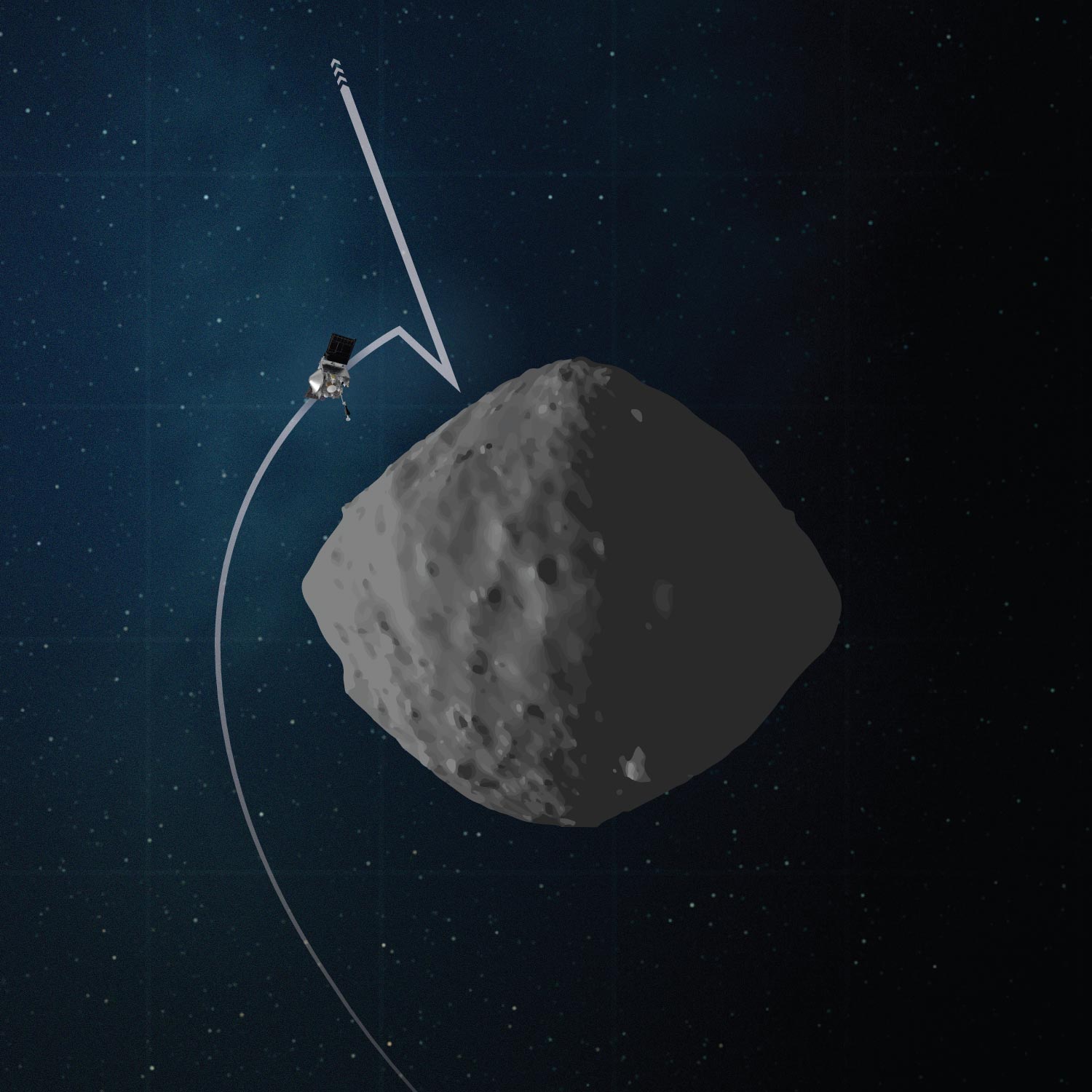
In August, a robotic spacecraft will make NASA’s first-ever attempt to descend to the surface of an asteroid, collect a sample, and ultimately bring it safely back to Earth. In order to achieve this challenging feat, the OSIRIS-REx mission team devised new techniques to operate in asteroid Bennu’s microgravity environment – but they still need experience flying the spacecraft in close proximity to the asteroid in order to test them. So, before touching down at sample site Nightingale this summer, OSIRIS-REx will first rehearse the activities leading up to the event.
On April 14, the mission will pursue its first practice run – officially known as “Checkpoint” rehearsal – which will also place the spacecraft the closest it’s ever been to Bennu. This rehearsal is a chance for the OSIRIS-REx team and spacecraft to test the first steps of the robotic sample collection event.
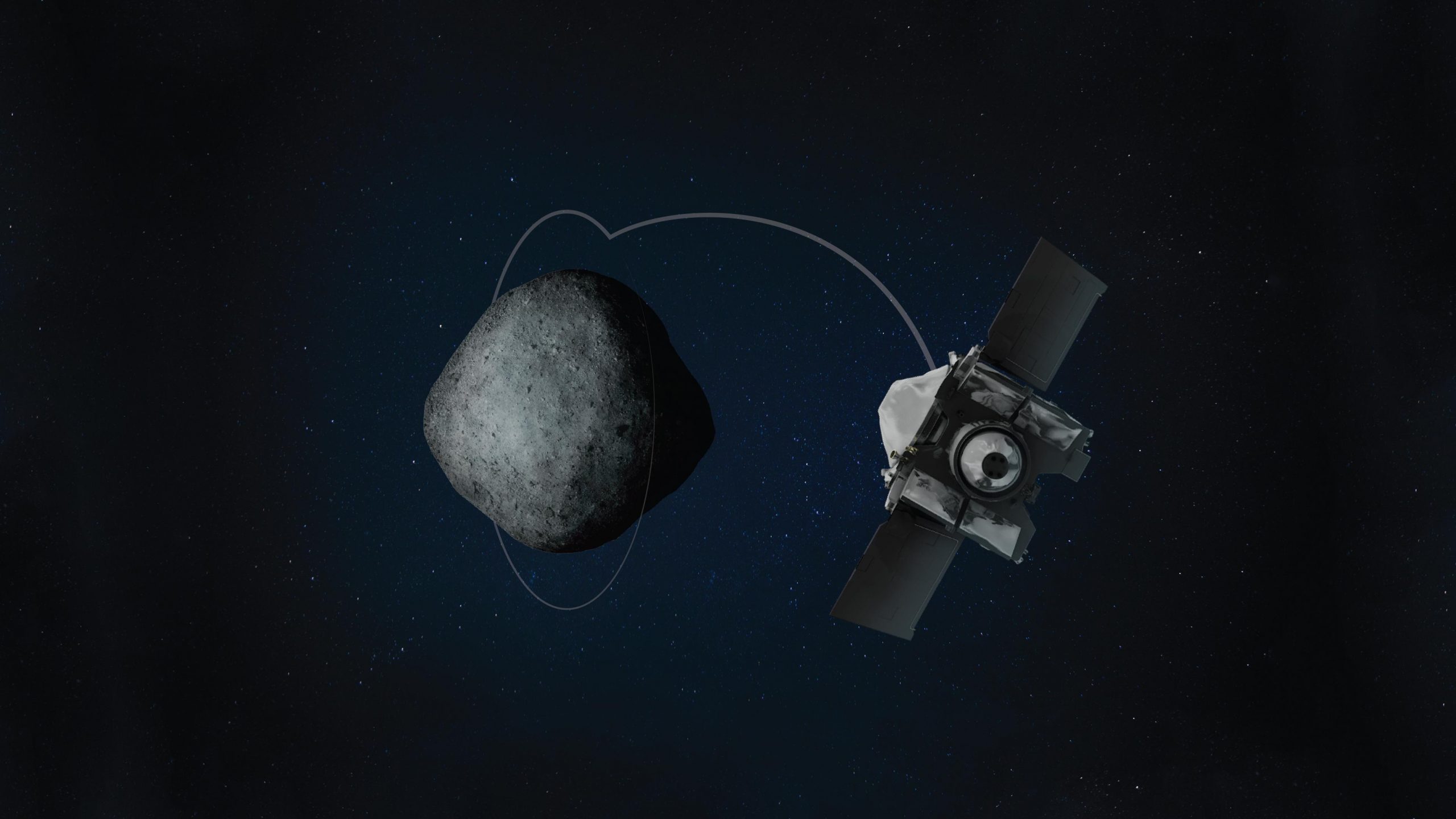
During the full touchdown sequence, the spacecraft uses three separate thruster firings to make its way to the asteroid’s surface. After an orbit departure burn, the spacecraft executes the Checkpoint maneuver at 410 ft (125 m) above Bennu, which adjusts the spacecraft’s position and speed down toward the point of the third burn. This third maneuver, called “Matchpoint,” occurs at approximately 164 ft (50 m) from the asteroid’s surface and places the spacecraft on a trajectory that matches the rotation of Bennu as it further descends toward the targeted touchdown spot.
The Checkpoint rehearsal allows the team to practice navigating the spacecraft through both the orbit departure and Checkpoint maneuvers, and ensures that the spacecraft’s imaging, navigation and ranging systems operate as expected during the first part of the descent sequence. Checkpoint rehearsal also gives the team a chance to confirm that OSIRIS-REx’s Natural Feature Tracking (NFT) guidance system accurately updates the spacecraft’s position and velocity relative to Bennu as it descends towards the surface.
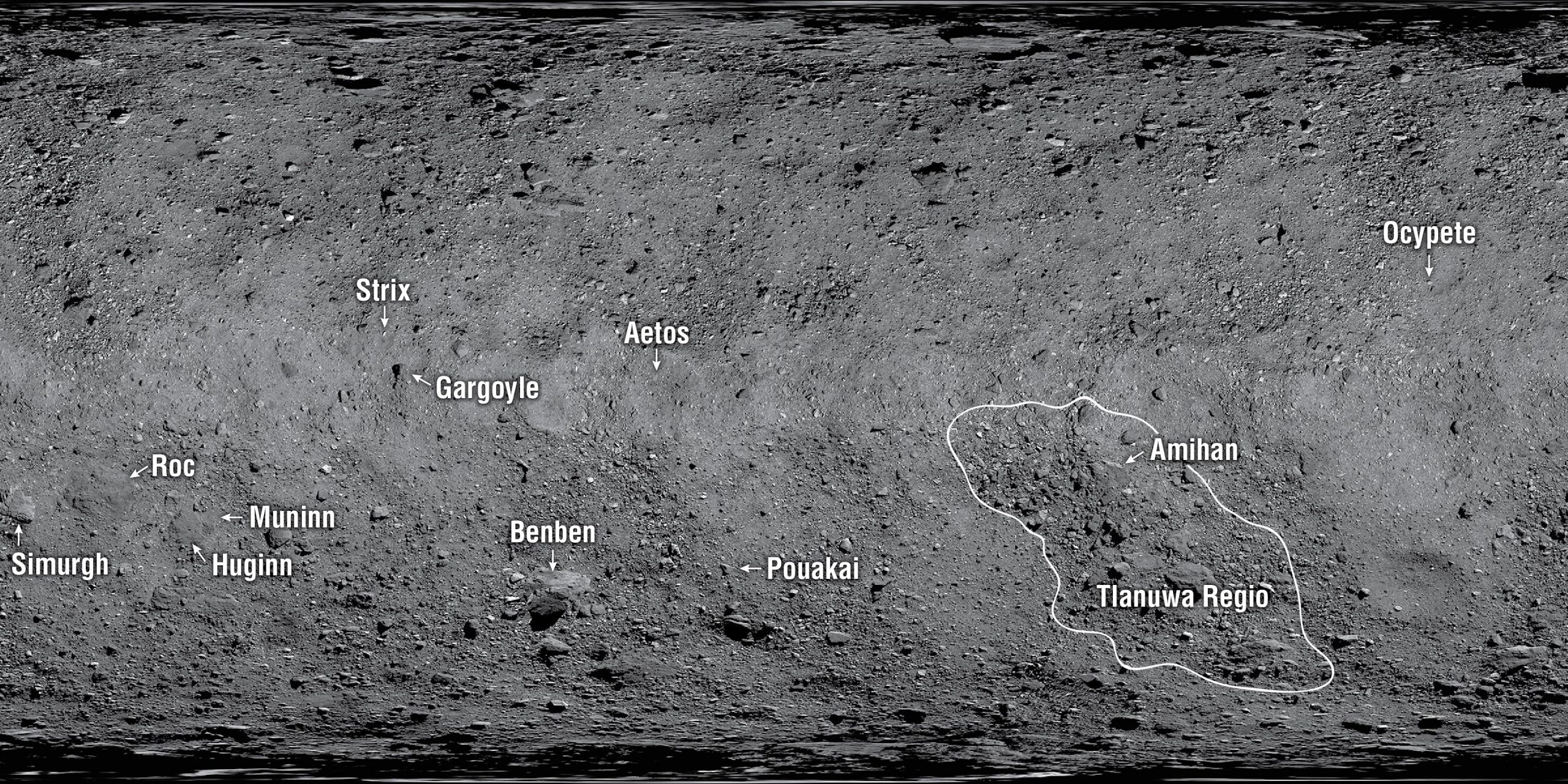
Checkpoint rehearsal, a four-hour event, begins with the spacecraft leaving its safe-home orbit, 0.6 miles (1 km) above the asteroid. The spacecraft then extends its robotic sampling arm – the Touch-And-Go Sample Acquisition Mechanism (TAGSAM) – from its folded, parked position out to the sample collection configuration. Immediately following, the spacecraft slews, or rotates, into position to begin collecting navigation images for NFT guidance. NFT allows the spacecraft to autonomously guide itself to Bennu’s surface by comparing an onboard image catalog with the real-time navigation images taken during descent. As the spacecraft descends to the surface, the NFT system updates the spacecraft’s predicted point of contact depending on OSIRIS-REx’s position in relation to Bennu’s landmarks.
Before reaching the 410-ft (125-m) Checkpoint altitude, the spacecraft’s solar arrays move into a “Y-wing” configuration that safely positions them away from the asteroid’s surface. This configuration also places the spacecraft’s center of gravity directly over the TAGSAM collector head, which is the only part of the spacecraft that will contact Bennu’s surface during the sample collection event.
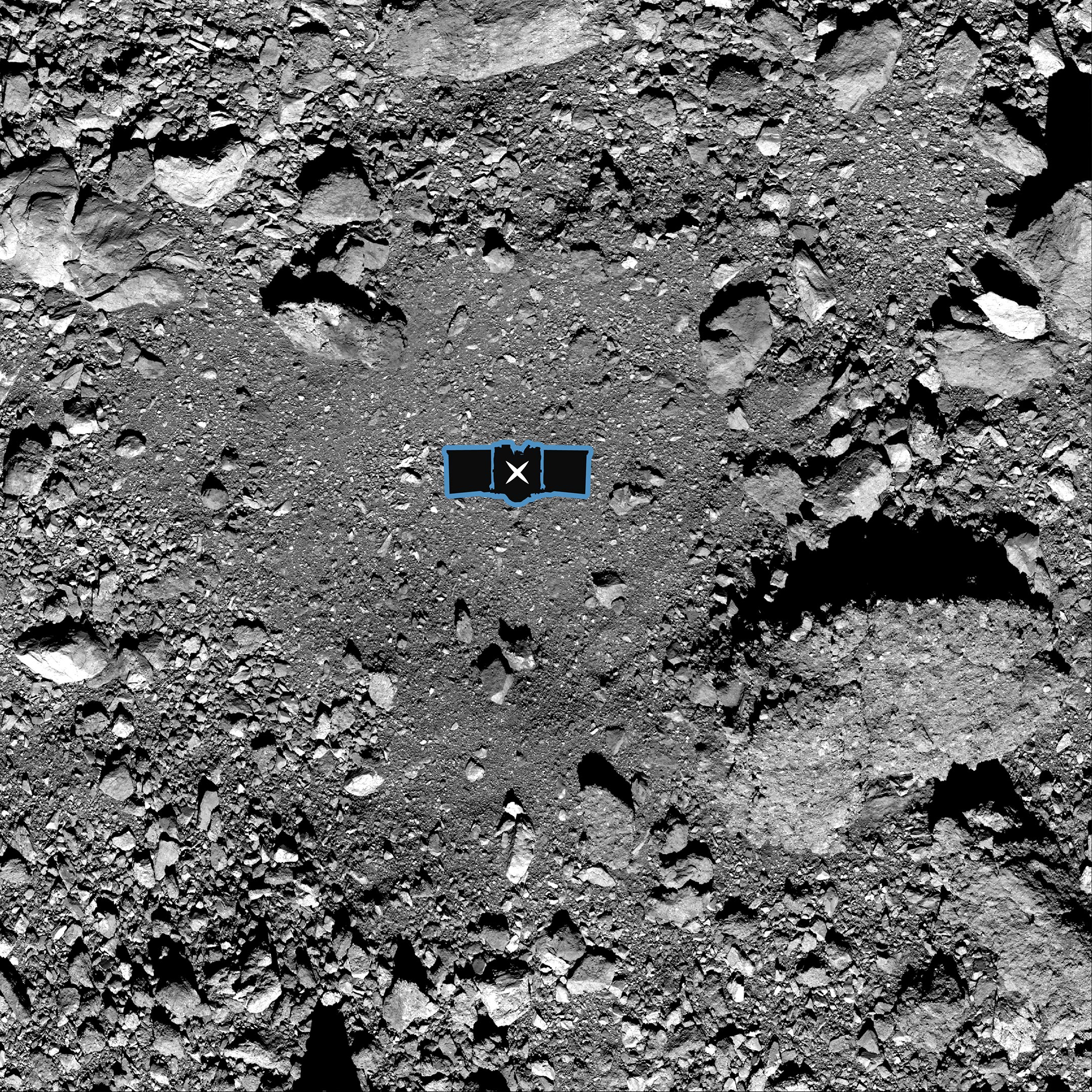
In the midst of these activities, the spacecraft continues capturing images of Bennu’s surface for the NFT navigation system. The spacecraft will then perform the Checkpoint burn and descend toward Bennu’s surface for another nine minutes, placing the spacecraft around 243 ft (75 m) from the asteroid – the closest it has ever been.
Upon reaching this targeted point, the spacecraft will execute a back-away burn, then return its solar arrays to their original position and reconfigure the TAGSAM arm back to the parked position. Once the mission team determines that the spacecraft successfully completed the entire rehearsal sequence, they will command the spacecraft to return to its safe-home orbit around Bennu.
Following the Checkpoint rehearsal, the team will verify the flight system’s performance during the descent, and that the Checkpoint burn accurately adjusted the descent trajectory for the subsequent Matchpoint burn.
The mission team has maximized remote work over the last month of preparations for the checkpoint rehearsal, as part of the COVID-19 response. On the day of rehearsal, a limited number of personnel will command the spacecraft from Lockheed Martin Space’s facility, taking appropriate safety precautions, while the rest of the team performs their roles remotely.
The mission is scheduled to perform a second rehearsal on June 23, taking the spacecraft through the Matchpoint burn and down to an approximate altitude of 82 ft (25 m). OSIRIS-REx’s first sample collection attempt is scheduled for August 25.
NASA’s Goddard Space Flight Center in Greenbelt, Maryland provides overall mission management, systems engineering, and the safety and mission assurance for OSIRIS-REx. Dante Lauretta of the University of Arizona, Tucson, is the principal investigator, and the University of Arizona also leads the science team and the mission’s science observation planning and data processing. Lockheed Martin Space in Denver built the spacecraft and is providing flight operations. Goddard and KinetX Aerospace are responsible for navigating the OSIRIS-REx spacecraft. OSIRIS-REx is the third mission in NASA’s New Frontiers Program, which is managed by NASA’s Marshall Space Flight Center in Huntsville, Alabama, for the agency’s Science Mission Directorate in Washington.
Never miss a breakthrough: Join the SciTechDaily newsletter.
Follow us on Google and Google News.