
An international team of researchers has now succeeded in detecting hydrotrioxides (ROOOH) under atmospheric conditions for the first time.
Until now, the existence of these organic compounds with the unusual OOOH group was purely speculative. In laboratory experiments, their formation during the oxidation of important hydrocarbons, such as isoprene and alpha-pinene, has been clearly demonstrated.
Important data on this novel class of compounds have been calculated using quantum chemical computations and model calculations. Isoprene oxidation produces around 10 million metric tons of them every year in the Earth’s atmosphere. The lifetime of ROOOHs is estimated to be minutes to hours.
Hydrotrioxides represent a previously unnoticed class of substances in the atmosphere whose effects on health and the environment need to be investigated, write the researchers led by the Leibniz Institute for Tropospheric Research (TROPOS) in the current issue of the renowned scientific journal Science.
The lower layer of our planet’s atmosphere acts as a vast chemical reactor in which 100s of millions of metric tons of hydrocarbons are converted each year, which ultimately leads to the formation of carbon dioxide and water. These hydrocarbons are emitted by forests or anthropogenic sources. A wide variety of oxidation processes occur, but only some of them are well understood. One recent focus of atmospheric research is on hydrotrioxides (ROOOH). These are gaseous substances with a group consisting of three consecutive oxygen atoms “O” and a hydrogen atom “H,” which is bonded to an organic rest (R). Hydroperoxides (ROOH) with two oxygen atoms have long been known and proven.
Discovery of Hydrotrioxides (ROOOH)
In the literature, it has previously been speculated that there could be substances in the atmosphere carrying not only two oxygen atoms (ROOH) but also three oxygen atoms (ROOOH). In organic synthesis, hydrotrioxides are used to form special oxidation products in the reaction with alkenes. However, these reactive and thermally unstable hydrotrioxides are produced there in organic solvents at very low temperatures around -80°C (-112°F) and further react. Whether this substance class also exists as a gas in the atmosphere at significantly higher temperatures was unknown until now.
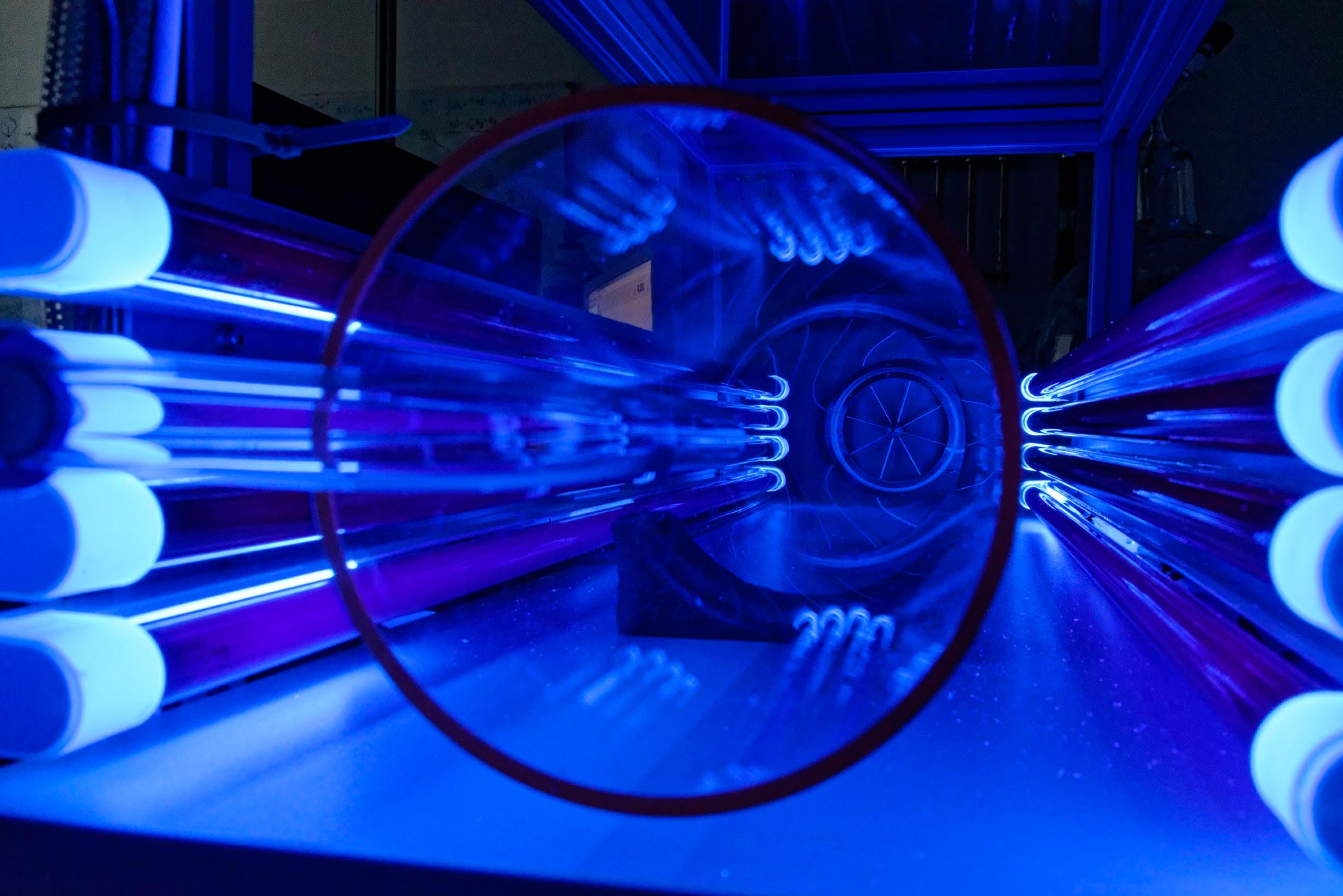
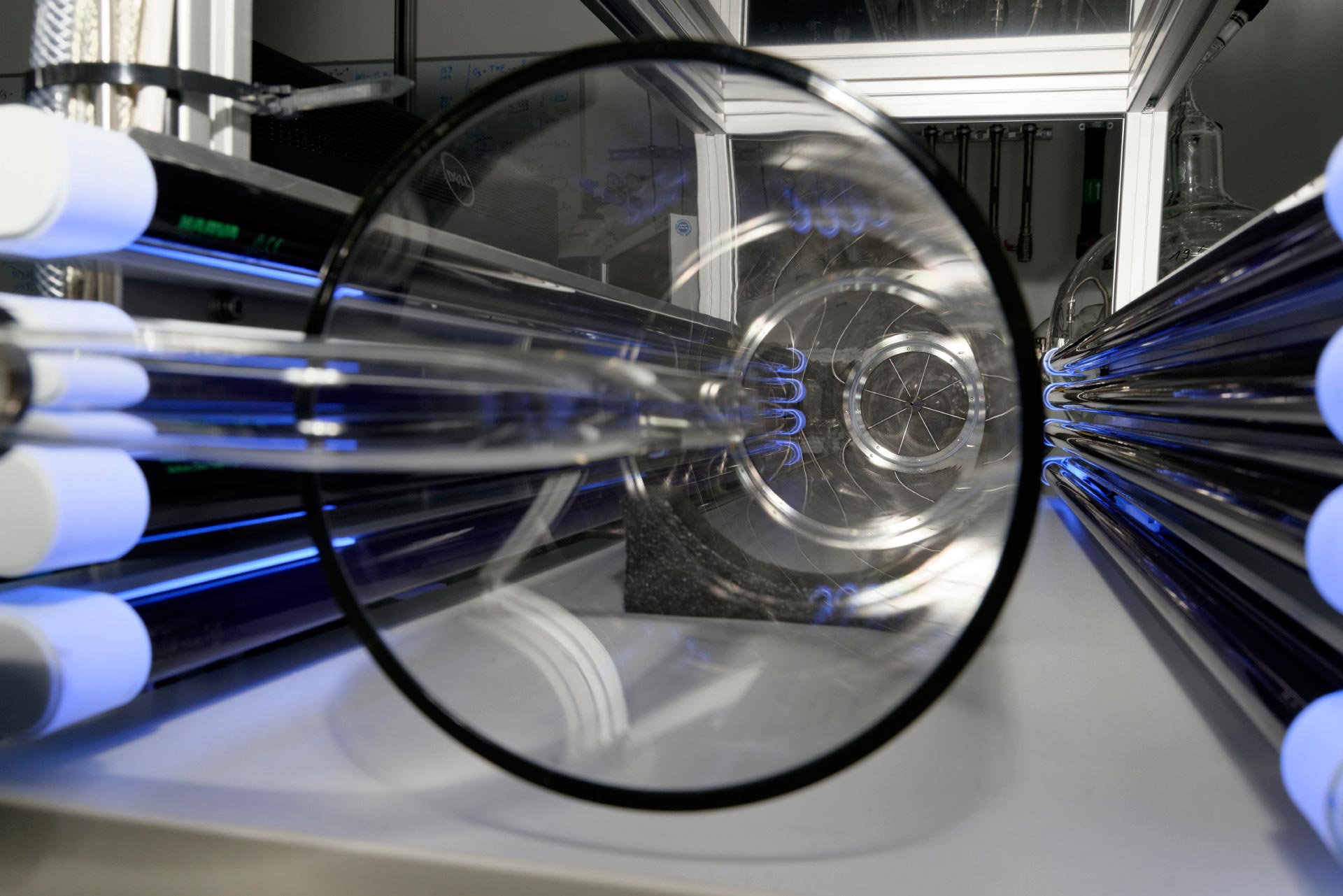
In their study, researchers from the Leibniz Institute for Tropospheric Research (TROPOS), the University of Copenhagen, and the California Institute of Technology (Caltech) have now been able to provide direct evidence for the first time that the formation of hydrotrioxides also takes place under atmospheric conditions from the reaction of peroxy radicals (RO2) with hydroxyl radicals (OH). The laboratory investigations were mainly performed at TROPOS in Leipzig in a free-jet flow tube at room temperature and a pressure of 1 bar air — combined with the use of very sensitive mass spectrometers. Additional experimental information, especially on the stability of the hydrotrioxides, was provided by the investigations at Caltech. Quantum chemical calculations were performed by the University of Copenhagen to describe the reaction mechanisms as well as the temperature- and photostability of hydrotrioxides. Global simulations from TROPOS with the chemistry-climate model ECHAM-HAMMOZ enabled an initial assessment of the effects on the Earth’s atmosphere.
Stability and Implications of Hydrotrioxides
“It is really exciting to show the existence of a universal new class of compounds formed from atmospherically prevalent precursors (RO2 and OH radicals),” reports Prof. Henrik G. Kjærgaard from the University of Copenhagen.
“It is very surprising that these interesting molecules are so stable with such a high oxygen content. Further research is needed to determine the role of hydrotrioxides for health and the environment,” emphasizes Dr. Torsten Berndt from TROPOS.
“Our study has shown that direct observation of hydrotrioxides using mass spectrometry is feasible. This means that it is now possible to further investigate these compounds in different systems including, perhaps, the quantification of their abundance in the environment,” explains Prof. Paul O. Wennberg from Caltech.
The significance of the first successful detection of this new substance class “hydrotrioxides” will only become clear in the next few years. However, with the experimental proof and the current knowledge, the research study by Berndt et al. has laid the first groundwork that should also awaken the interest of other research groups.
For more on this research, see New Type of Extremely Reactive Substance in the Atmosphere.
Reference: “Hydrotrioxide (ROOOH) formation in the atmosphere” by Torsten Berndt, Jing Chen, Eva R. Kjærgaard, Kristian H. Møller, Andreas Tilgner, Erik H. Hoffmann, Hartmut Herrmann, John D. Crounse, Paul O. Wennberg and Henrik G. Kjaergaard, 26 May 2022, Science.
DOI: 10.1126/science.abn6012
Never miss a breakthrough: Join the SciTechDaily newsletter.
Follow us on Google and Google News.