

Close Menu
    Facebook X (Twitter) Instagram
    SciTechDaily
    • Biology
    • Chemistry
    • Earth
    • Health
    • Physics
    • Science
    • Space
    • Technology
    Facebook X (Twitter) Pinterest YouTube RSS
    SciTechDaily
    Home»Health»Engineering an Enzyme To Treat Anthrax Without Antibiotics
    Health

    Engineering an Enzyme To Treat Anthrax Without Antibiotics

    By American Chemical SocietySeptember 14, 2022No Comments3 Mins Read
    Facebook Twitter Pinterest Telegram LinkedIn WhatsApp Email Reddit
    Share
    Facebook Twitter LinkedIn Pinterest Telegram Email Reddit
    Anthrax Sign
    Researchers have taken a step toward the development of a therapeutic that can treat infection of antibiotic-resistant strains of anthrax in mice without antibiotics.

    A new therapy against antibiotic-resistant anthrax is being developed by modifying the CapD enzyme to target the bacteria’s protective capsule.

    Anthrax-causing spores were mailed to news organizations and members of Congress during the “Amerithrax” attacks of 2001, sickening at least 22 people and killing five. Researchers are gearing up to combat the bacteria’s antibiotic-resistant variants, which are a rising source of concern. Now, a team has made progress toward the creation of a therapy that may treat the infection in mice without the use of antibiotics, as reported today (September 14, 2022) in the journal ACS Infectious Diseases.

    Bacillus anthracis is a type of gram-positive, rod-shaped bacteria that can lead to anthrax infection through exposure to its spores, either by ingestion, inhalation, or a cut in the skin. Anthrax infection can lead to difficulty breathing, skin ulcers, or even death. Although antibiotics against anthrax exist, resistance to these drugs can occur over time.
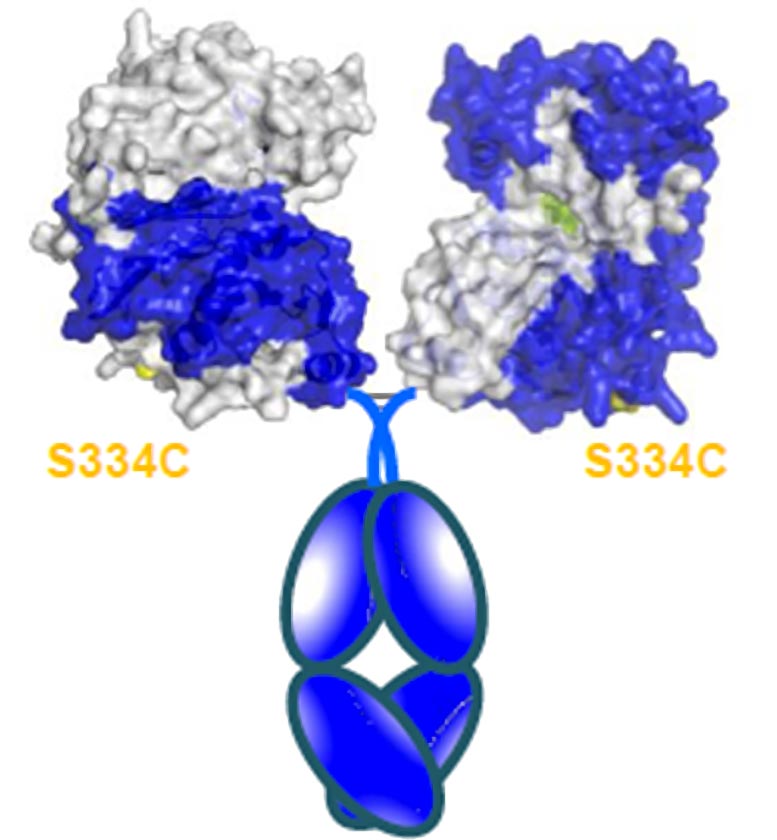
    Engineered Enzyme Against Antibiotic-Resistant Anthrax
    This engineered enzyme with bits of antibody stuck to it can break apart the capsule of B. anthracis bacteria, allowing the immune system to fight back. Credit: Adapted from ACS Infectious Diseases, DOI: 10.1021/acsinfecdis.2c00227

    Engineering the CapD Enzyme to Combat Anthrax

    One type of B. anthracis, called the Ames strain, is particularly virulent because the bacteria can wrap itself in a protective capsule of poly-D-glutamic acid. This acts like a cloak of invisibility, which helps the bacteria evade the human immune system. A B. anthracis enzyme called CapD anchors the capsule material to the bacteria. However, previous studies have reported that the enzyme can be engineered to degrade the capsule instead, making the bacteria susceptible to the immune system.

    Studies have also demonstrated that providing mice with the engineered CapD can help treat an Ames-strain anthrax infection without the use of antibiotics. Additionally, Patricia Legler and colleagues have demonstrated that adding polyethylene glycol (PEG) to this version of CapD can help the enzyme last longer, increasing mouse survival. In this new study, the research team wanted to optimize the treatment even further.

    To improve the re-engineered enzyme’s lifetime in the body and deliver a bigger punch, the scientists added PEG and fused the CapD protein with part of a mouse antibody. This resulted in two CapD enzymes bound together, which would essentially double its capsule-binding power. The research team created several versions of the enzyme and subjected them to many rounds of optimization, deleting and inserting different segments until they achieved a sequence that both held its 3D shape and performed as expected in a range of pH values.

    Future Steps Toward Anthrax Treatment Without Antibiotics

    When tested in a mouse model, this construct lasted longer than the previous version without the fused antibody, though it had reduced activity. The scientists say that more research is needed to produce the ideal construct, but the results are an important step toward a better treatment against antibiotic-resistant B. anthracis strains.

    Reference: “Engineering an Fc-fusion of a Capsule Degrading Enzyme for Treatment of Anthrax” by Khushie Matharoo, Jennifer Chua, Junyoung R. Park, Susham Ingavale, Tanya M. Jelacic, Kayla M. Jurkouich, Jaimee R. Compton, J. Matthew Meinig, Donald Chabot, Arthur M. Friedlander and Patricia M. Legler, 14 September 2022, ACS Infectious Diseases.
    DOI: 10.1021/acsinfecdis.2c00227

    The authors acknowledge funding from the Defense Threat Reduction Agency.

    Never miss a breakthrough: Join the SciTechDaily newsletter.
    Follow us on Google and Google News.

    American Chemical Society Infectious Diseases
    Share. Facebook Twitter Pinterest LinkedIn Email Reddit

    Related Articles

    Increased Infectivity Drives COVID Evolution – Mutations That Allow the Virus To Escape Vaccines Become Dominant

    New Type of Cholera Vaccine May Offer Much Longer-Lasting Protection

    Wearable Air Sampler Measures Personal COVID Virus Exposure

    Synthetic Peptide Mimics: Possible New Antivirals Against COVID-19 and Herpes

    Ending the COVID-19 Pandemic: Progress Toward One Drug To Treat All Coronaviruses

    COVID-19: Sneeze Cam Reveals Best Fabric Combos for Cloth Masks

    COVID, One Year Later: What Do We Know Now? [Video]

    Not Sure if You’ve Already Had Coronavirus? This Test Might Tell You (Video)

    How Effective Are Cloth Masks Against Coronavirus? [Video]

    Leave A Reply Cancel Reply

    • Facebook
    • Twitter
    • Pinterest
    • YouTube

    Don't Miss a Discovery

    Subscribe for the Latest in Science & Tech!

    Trending News

    First-of-Its-Kind Discovery: Homer’s Iliad Found Embedded in a 1,600-Year-Old Egyptian Mummy

    Beyond Inflammation: Scientists Uncover New Cause of Persistent Rheumatoid Arthritis

    A Simple Molecule Could Unlock Safer, Easier Weight Loss

    Scientists Just Built a Quantum Battery That Charges Almost Instantly

    Researchers Unveil Groundbreaking Sustainable Solution to Vitamin B12 Deficiency

    Millions of People Have Osteopenia Without Realizing It – Here’s What You Need To Know

    Researchers Discover Boosting a Single Protein Helps the Brain Fight Alzheimer’s

    World-First Study Reveals Human Hearts Can Regenerate After a Heart Attack

    Follow SciTechDaily
    • Facebook
    • Twitter
    • YouTube
    • Pinterest
    • Newsletter
    • RSS
    SciTech News
    • Biology News
    • Chemistry News
    • Earth News
    • Health News
    • Physics News
    • Science News
    • Space News
    • Technology News
    Recent Posts
    • After Decades, MIT Researchers Capture the First 3D Atomic View of a Mysterious Material
    • Your Favorite Fishing Spot Is Turning Brown – and the Fish Are Changing
    • 380-Million-Year-Old Fish Fossil Reveals Secrets of Life’s First Steps Onto Land
    • Mezcal “Worm” in a Bottle Mystery: DNA Testing Reveals a Surprise
    • Scientists Turn Red Lettuce Green, Unlocking Hidden Nutrients
    Copyright © 1998 - 2026 SciTechDaily. All Rights Reserved.
    • Science News
    • About
    • Contact
    • Editorial Board
    • Privacy Policy
    • Terms of Use

    Type above and press Enter to search. Press Esc to cancel.