
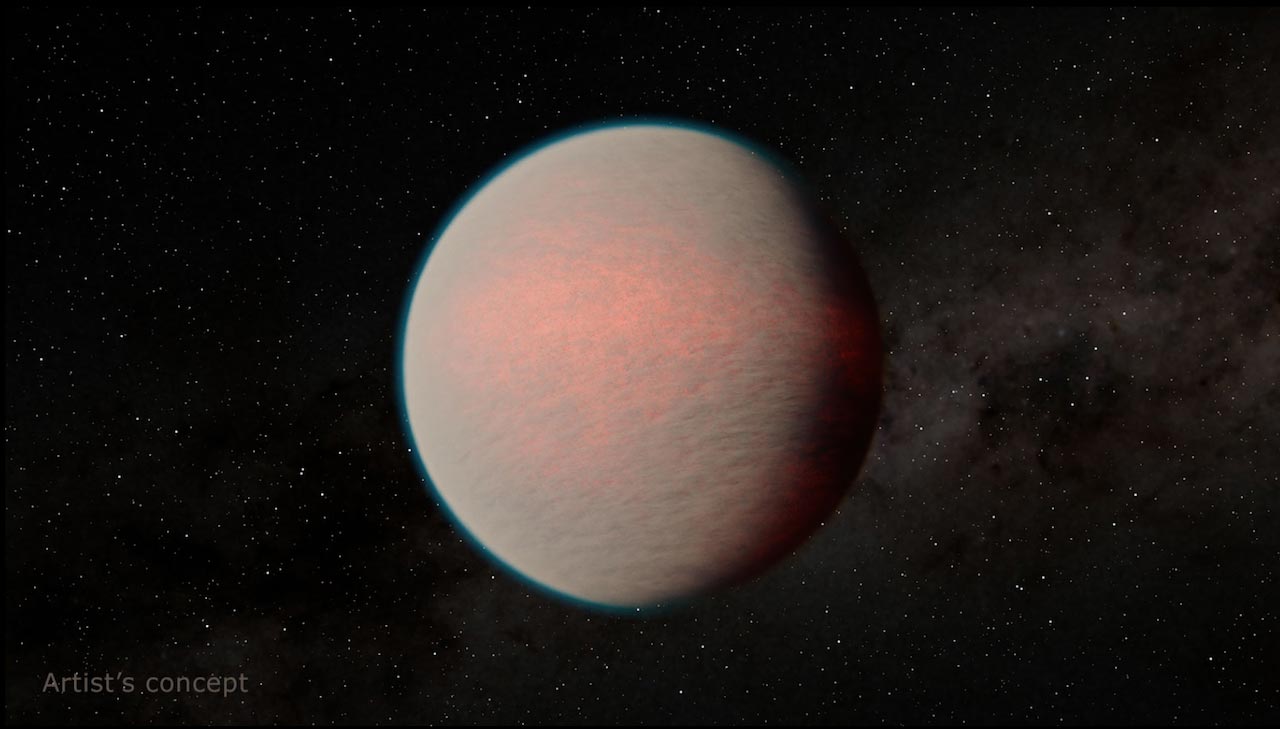
NASA’s James Webb Space Telescope has observed a steamy, highly reflective mini-Neptune exoplanet, GJ 1214 b, using its Mid-Infrared Instrument (MIRI) to reveal details about its atmosphere. The watery atmosphere suggests that the planet formed farther from its star before spiraling inward, but more observations are needed to understand mini-Neptune formation.
NASA’s James Webb Space Telescope has observed a distant planet outside our solar system – and unlike anything in it – to reveal what is likely a highly reflective world with a steamy atmosphere. It’s the closest look yet at the mysterious world, a “mini-Neptune” that was largely impenetrable to previous observations.
And while the planet, called GJ 1214 b, is too hot to harbor liquid-water oceans, water in vaporized form still could be a major part of its atmosphere.
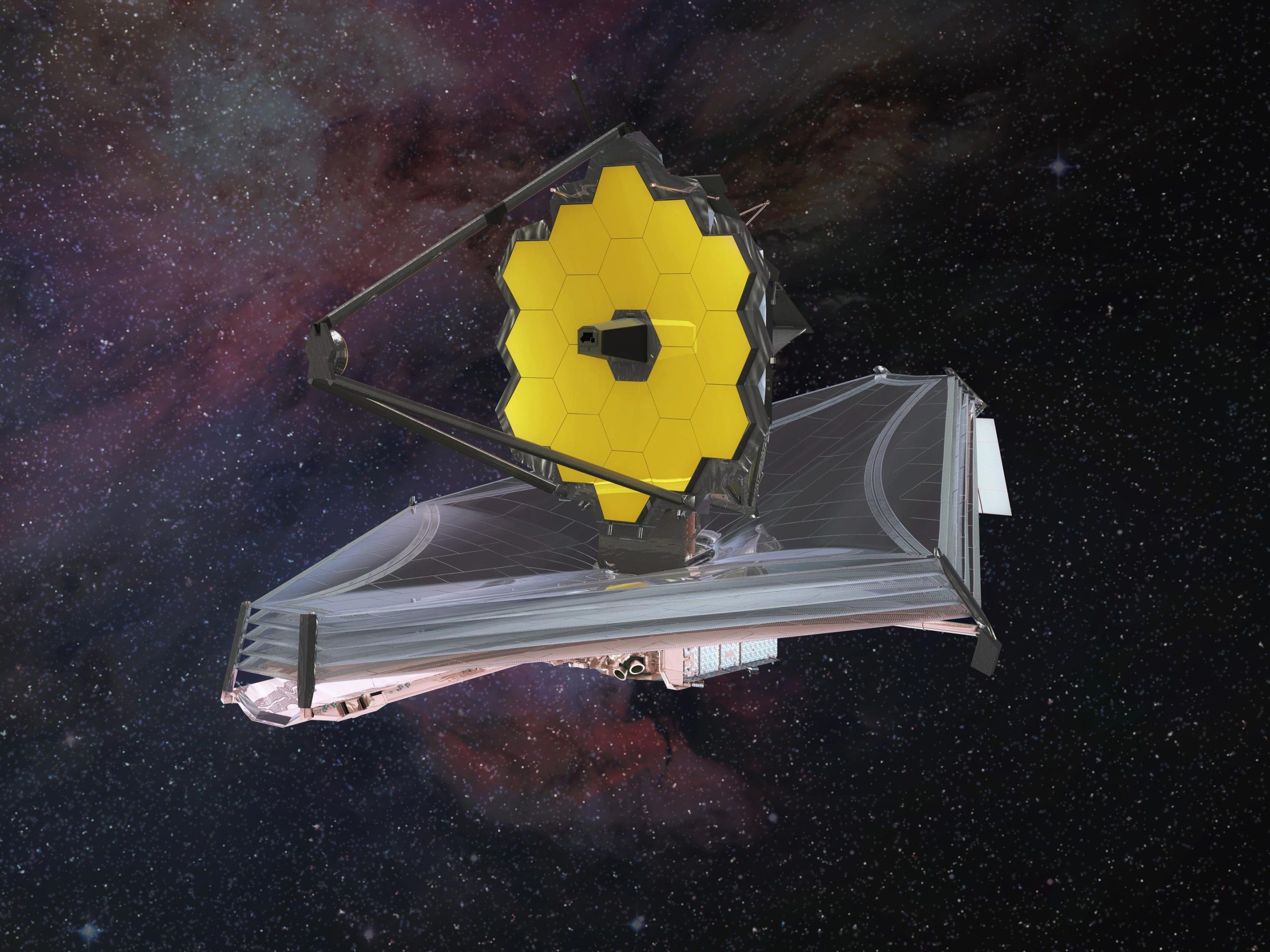
The Mid-Infrared Instrument (MIRI) has both a camera and a spectrograph that sees light in the mid-infrared region of the electromagnetic spectrum, with wavelengths that are longer than our eyes see.
“The planet is totally blanketed by some sort of haze or cloud layer,” said Eliza Kempton, a researcher at the University of Maryland and lead author of a new paper, published in Nature, on the planet. “The atmosphere just remained totally hidden from us until this observation.” She noted that, if indeed water-rich, the planet could have been a “water world,” with large amounts of watery and icy material at the time of its formation.
To penetrate such a thick barrier, the research team took a chance on a novel approach: In addition to making the standard observation – capturing the host star’s light that has filtered through the planet’s atmosphere – they tracked GJ 1214 b through nearly its entire orbit around the star.
The observation demonstrates the power of Webb’s Mid-Infrared Instrument (MIRI), which views wavelengths of light outside the part of the electromagnetic spectrum that human eyes can see. Using MIRI, the research team was able to create a kind of “heat map” of the planet as it orbited the star. The heat map revealed – just before the planet’s orbit carried it behind the star, and as it emerged on the other side – both its day and night sides, unveiling details of the atmosphere’s composition.
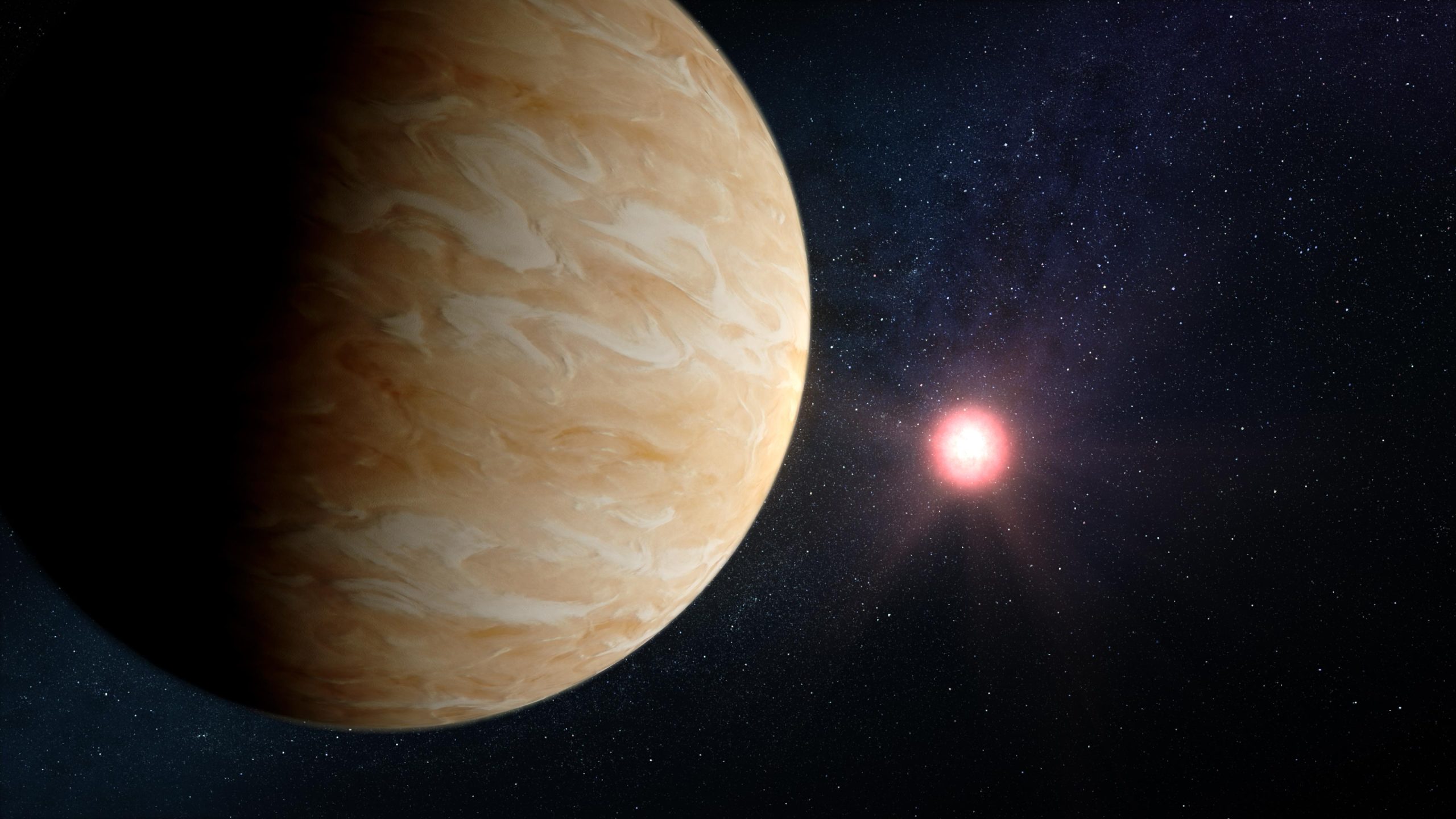
“The ability to get a full orbit was really critical to understand how the planet distributes heat from the day side to the night side,” Kempton said. “There’s a lot of contrast between day and night. The night side is colder than the day side.” In fact, the temperatures shifted from 535 to 326 degrees Fahrenheit (from 279 to 165 degrees Celsius).
Such a big shift is only possible in an atmosphere made up of heavier molecules, such as water or methane, which appear similar when observed by MIRI. That means the atmosphere of GJ 1214 b is not composed mainly of lighter hydrogen molecules, Kempton said, which is a potentially important clue to the planet’s history and formation – and perhaps its watery start.
“This is not a primordial atmosphere,” she said. “It does not reflect the composition of the host star it formed around. Instead, it either lost a lot of hydrogen, if it started with a hydrogen-rich atmosphere, or it was formed from heavier elements to begin with – more icy, water-rich material.”
Cooler Than Expected
And while the planet is hot by human standards, it is much cooler than expected, Kempton noted. That’s because its unusually shiny atmosphere, which came as a surprise to the researchers, reflects a large fraction of the light from its parent star rather than absorbing it and growing hotter.
The new observations could open the door to deeper knowledge of a planet type shrouded in uncertainty. Mini-Neptunes – or sub-Neptunes as they’re called in the paper – are the most common type of planet in the galaxy, but mysterious to us because they don’t occur in our solar system. Measurements so far show they are broadly similar to, say, a downsized version of our own Neptune. Beyond that, little is known.
“For the last almost decade, the only thing we really knew about this planet was that the atmosphere was cloudy or hazy,” said Rob Zellem, an exoplanet researcher who works with co-author and fellow exoplanet researcher Tiffany Kataria at NASA’s Jet Propulsion Laboratory in Southern California. “This paper has really cool implications for additional detailed climate interpretations – to look at the detailed physics happening inside this planet’s atmosphere.”
The new work suggests the planet might have formed farther from its star, a type known as a red dwarf, then spiraled gradually inward to its present, close orbit. The planet’s year – one orbit around the star – takes only 1.6 Earth days.
“The simplest explanation, if you find a very water-rich planet, is that it formed farther away from the host star,” Kempton said.
Further observations will be needed to pin down more details about GJ 1214 b as well as the formation histories of other planets in the mini-Neptune class. While a watery atmosphere seems likely for this planet, a significant methane component also is possible. And drawing broader conclusions about how mini-Neptunes form will require more of them to be observed in depth.
“By observing a whole population of objects like this, hopefully we can build up a consistent story,” Kempton said.
Reference: “A reflective, metal-rich atmosphere for GJ 1214b from its JWST phase curve” by Eliza M.-R. Kempton, Michael Zhang, Jacob L. Bean, Maria E. Steinrueck, Anjali A. A. Piette, Vivien Parmentier, Isaac Malsky, Michael T. Roman, Emily Rauscher, Peter Gao, Taylor J. Bell, Qiao Xue, Jake Taylor, Arjun B. Savel, Kenneth E. Arnold, Matthew C. Nixon, Kevin B. Stevenson, Megan Mansfield, Sarah Kendrew, Sebastian Zieba, Elsa Ducrot, Achrène Dyrek, Pierre-Olivier Lagage, Keivan G. Stassun, Gregory W. Henry, Travis Barman, Roxana Lupu, Matej Malik, Tiffany Kataria, Jegug Ih, Guangwei Fu, Luis Welbanks and Peter McGill, 10 May 2023, Nature.
DOI: 10.1038/s41586-023-06159-5
More About the Mission
The James Webb Space Telescope stands as the foremost space science observatory in the world. Tasked with unraveling enigmas within our solar system, exploring remote worlds orbiting other stars, and investigating the perplexing structures and origins of our universe, Webb serves as a pivotal tool in understanding our place in the cosmos. This international endeavor is led by NASA, in partnership with the European Space Agency (ESA) and the Canadian Space Agency (CSA).
MIRI’s development was made possible through a joint effort between NASA and ESA. The U.S. side of the MIRI project was led by NASA’s Jet Propulsion Laboratory, while a diverse group of European astronomical institutes supported ESA’s involvement. George Rieke from the University of Arizona heads the MIRI science team, with Gillian Wright serving as the European principal investigator. Alistair Glasse from the UK ATC acts as the MIRI instrument scientist, while Michael Ressler is the U.S. project scientist at JPL. Laszlo Tamas, also from the UK ATC, oversees the European Consortium. The MIRI cryocooler development was managed and spearheaded by JPL, in collaboration with Northrop Grumman in Redondo Beach, California, and NASA’s Goddard Space Flight Center in Greenbelt, Maryland. Caltech is responsible for managing JPL on behalf of NASA.
Never miss a breakthrough: Join the SciTechDaily newsletter.
Follow us on Google and Google News.