

Close Menu
    Facebook X (Twitter) Instagram
    SciTechDaily
    • Biology
    • Chemistry
    • Earth
    • Health
    • Physics
    • Science
    • Space
    • Technology
    Facebook X (Twitter) Pinterest YouTube RSS
    SciTechDaily
    Home»Technology»This One Weird Trick by NASA Is Saving Billions of Gallons of Fuel
    Technology

    This One Weird Trick by NASA Is Saving Billions of Gallons of Fuel

    By Jim Skeen, NASAJuly 20, 20231 Comment2 Mins Read
    Facebook Twitter Pinterest Telegram LinkedIn WhatsApp Email Reddit
    Share
    Facebook Twitter LinkedIn Pinterest Telegram Email Reddit
    Airplane Winglet Illustration
    NASA began testing winglets, upturned ends of airplane wings, in July 1979, resulting in a 6-7% fuel efficiency increase by reducing wingtip drag. Now a common feature on around 10,000 jets, winglets have saved over 10 billion gallons of fuel and reduced CO2 emissions by more than 130 million tons since the 1990s.

    NASA-developed winglets reduce drag, improve fuel efficiency, and have saved billions of gallons of fuel since their adoption in commercial aviation.

    Forty-four years ago this July, NASA began testing a technology that would become one of the agency’s most visible and beneficial contributions to commercial aviation – winglets, the upturned ends of airplane wings.

    Inspired by the way birds curl their wingtip feathers upward, this innovation was developed by NASA’s Langley Research Center in Langley, Virginia. After testing this design in wind tunnels there, winglets proved to be effective in flight tests at what is now NASA’s Armstrong Flight Research Center in Edwards, California.
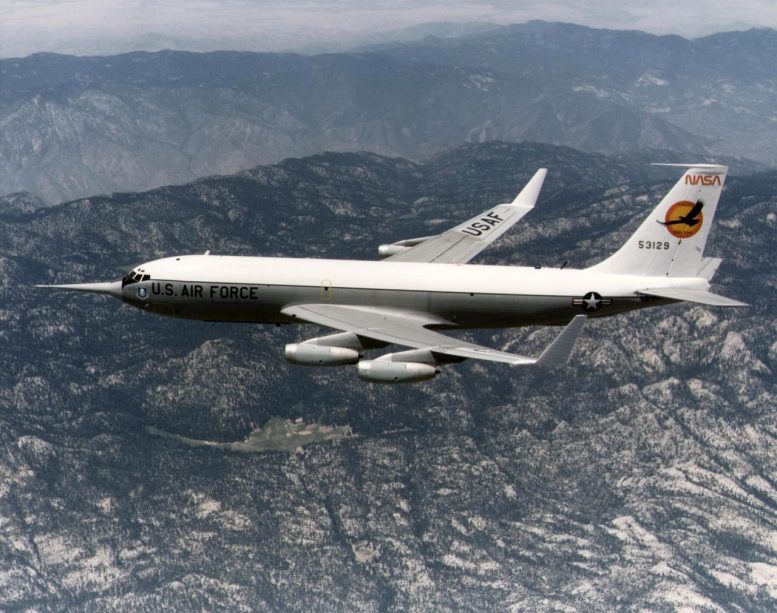
    NASA KC-135 With Winglets
    The KC-135 with the winglets in flight over the San Gabriel mountains, south of Edwards AFB. Flight tests showed drag in flight was reduced by as much as 7 percent. Credit: NASA

    Winglets are designed to operate in the wingtip “vortex,” a whirlpool of air that occurs at an airplane’s wingtips. This whirlpool of air spirals back behind an airplane, resulting in drag. Winglets reduce that energy loss by stemming airflow down the wing and decreasing those wingtip whirlpools. By reducing wingtip drag, fuel consumption goes down and the range is extended.

    On July 24, 1979, the first winglet test flight took off from NASA Dryden Flight Research Center, which is now NASA Armstrong. The test program was a joint effort between NASA and the Air Force, which supplied the KC-135 Stratotanker aircraft, a modified version of the Boeing 707 jetliner. Over the course of 48 test flights, winglets proved to reduce wingtip drag, increasing fuel efficiency by 6% to 7%.

    Winglets began appearing on commercial and business jets in the early 1990s. Since then, winglets, seen on roughly 10,000 jets, have saved over 10 billion gallons of fuel, and have reduced CO2 emissions by over 130 million tons.

    Never miss a breakthrough: Join the SciTechDaily newsletter.
    Follow us on Google and Google News.

    NASA Plane Transportation
    Share. Facebook Twitter Pinterest LinkedIn Email Reddit

    Related Articles

    Will Ice Ground the Future of Flight? Inside NASA’s Chilling Wing Trials

    On the Brink of Revolution: NASA’s Quiet Supersonic X-59 Moves Toward Maiden Flight

    Silencing Sonic Booms: NASA’s X-59 Quiet Supersonic Aircraft Passes Critical Milestone

    High Flyers Go Green: NASA’s Trailblazing Study on Aircraft Contrails and Sustainable Fuel

    NASA’s Newest X-Plane: Next Generation Experimental Aircraft X-66A “Will Help Shape the Future of Aviation”

    Jet Engine Installed on NASA’s X-59 QueSST Quiet Supersonic Aircraft

    Major Milestone As NASA’s X-59 QueSST Quiet SuperSonic Technology Aircraft Comes Together

    NASA to Test Jet Engine With a Helping of Cereal and Crayons

    NASA Reviews Ideas for Greener Aircraft

    1 Comment

    1. John Mott on July 26, 2023 7:01 am

      Where is the mention of Dick Whitcomb?

      Reply
    Leave A Reply Cancel Reply

    • Facebook
    • Twitter
    • Pinterest
    • YouTube

    Don't Miss a Discovery

    Subscribe for the Latest in Science & Tech!

    Trending News

    Popular Weight-Loss Drugs Like Ozempic Linked to Lower Breast Cancer Risk

    AI Learned the Rules of the Universe and That Became a Problem

    Scientists Found a Hidden Brain Signal That Predicts Social Behavior

    Even GPT-5 Failed This Human Attention Test

    Scientists Discover a Biological Clock Unlike Anything Seen Before

    The Brain May Not Need Full Sleep To Recover, New Research Finds

    Your Gut Microbes May Decide How Many Calories You Really Absorb

    Millions Take This Joint Supplement but Scientists Found a Concerning Alzheimer’s Link

    Follow SciTechDaily
    • Facebook
    • Twitter
    • YouTube
    • Pinterest
    • Newsletter
    • RSS
    SciTech News
    • Biology News
    • Chemistry News
    • Earth News
    • Health News
    • Physics News
    • Science News
    • Space News
    • Technology News
    Recent Posts
    • Scientists Discovered a Fly That Sheds Its Wings and Sacrifices Its Sight
    • Researchers Capture the First Atomic-Level Images of a Critical Human DNA Repair Enzyme
    • Scientists Just Discovered a Cellular Survival System That Was Never Supposed To Exist
    • Scientists Discover Brain-Protecting Peptide That Could Change Parkinson’s Treatment
    • This Copper Drug Clears Alzheimer’s Brain Toxins and Boosts Memory
    Copyright © 1998 - 2026 SciTechDaily. All Rights Reserved.
    • Science News
    • About
    • Contact
    • Editorial Board
    • Privacy Policy
    • Terms of Use

    Type above and press Enter to search. Press Esc to cancel.