
The fusion of 2D semiconductors and ferroelectric materials could lead to joint digital and analog information processing, with significant improvement in energy consumption, electronic device performance, and lead to novel functionalities.
We live in an analog world of continuous information flow that is both processed and stored by our brains at the same time, but our devices process information digitally in the form of discrete binary code, breaking the information into little bits (or bites). Researchers at EPFL have revealed a pioneering technology that combines the potential of continuous analog processing with the precision of digital devices.
By seamlessly integrating ultra-thin, two-dimensional semiconductors with ferroelectric materials, the research, published in the journal Nature Electronics, unveils a novel way to improve energy efficiency and add new functionalities in computing. The new configuration merges traditional digital logic with brain-like analog operations.
Faster and More Efficient Electronics
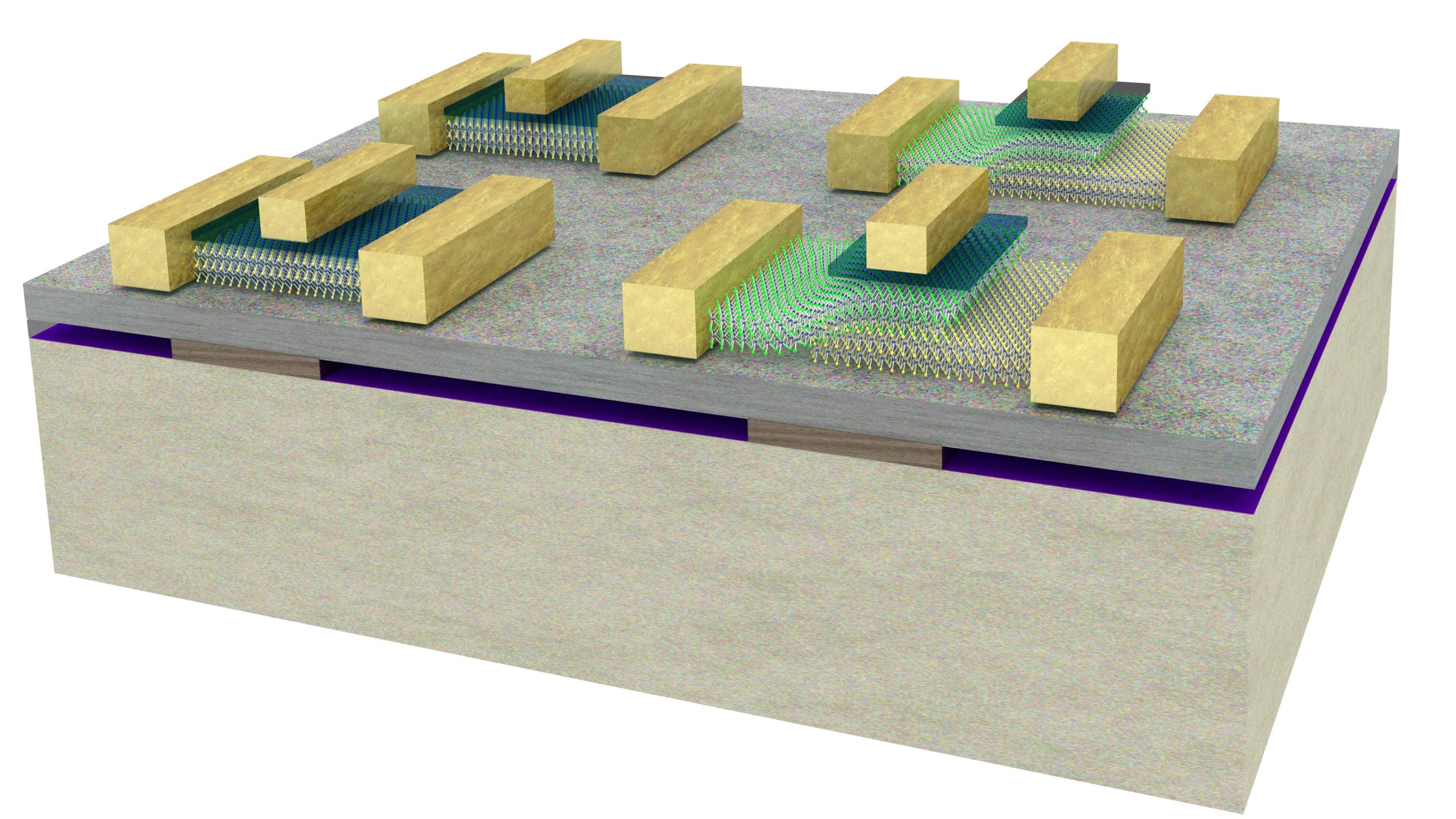
The innovation from the Nanoelectronics Device Laboratory (Nanolab), in collaboration with Microsystems Laboratory, revolves around a unique combination of materials leading to brain-inspired functions and advanced electronic switches, including the standout negative capacitance Tunnel Field-Effect Transistor (TFET).
In the world of electronics, a transistor or “switch” can be likened to a light switch, determining whether current flows (on) or doesn’t (off). These are the famous 1s and 0s of binary computer language, and this simple action of turning on and off is integral to nearly every function of our electronic devices, from processing information to storing memory.
The TFET is a special type of switch designed with an energy-conscious future in mind. Unlike conventional transistors that require a certain minimum voltage to turn on, TFETs can operate at significantly lower voltages. This optimized design means they consume considerably less energy when switching, thus significantly reducing the overall power consumption of devices they are integrated into.
According to Professor Adrian Ionescu, head of Nanolab, “Our endeavors represent a significant leap forward in the domain of electronics, having shattered previous performance benchmarks, and is exemplified by the outstanding capabilities of the negative-capacitance tungsten diselenide/tin diselenide TFET and the possibility to create synaptic neuron function within the same technology.”
Sadegh Kamaei, a PhD candidate at EPFL, has harnessed the potential of 2D semiconductors and ferroelectric materials within a fully co-integrated electronic system for the first time. The 2D semiconductions can be used for ultra-efficient digital processors whereas the ferroelectric material provides the possibility to continuously process and store memory at the same time. Combining the two materials creates the opportunity to harness the best of the digital and analog capacities of each. Now the light switch from our above analogy is not only more energy efficient, but the light it turns on can burn even brighter.
Kamaei added, “Working with 2D semiconductors and integrating them with ferroelectric materials has been challenging yet immensely rewarding. The potential applications of our findings could redefine how we view and interact with electronic devices in the future.”
Blending Traditional Logic With Neuromorphic Circuits
Furthermore, the research delves into creating switches similar to biological synapses – the intricate connectors between brain cells – for neuromorphic computing. “The research marks the first-ever co-integration of von Neumann logic circuits and neuromorphic functionalities, charting an exciting course toward the creation of innovative computing architectures characterized by exceptionally low power consumption and hitherto unexplored capabilities of building neuromorphic functions combined with digital information processing,” adds Ionescu.
Such advances hint at electronic devices that operate in ways parallel to the human brain, marrying computational speed with processing information in a way that is more in line with human cognition. For instance, neuromorphic systems might excel at tasks that traditional computers struggle with, such as pattern recognition, sensory data processing, or even certain types of learning. This blend of traditional logic with neuromorphic circuits indicates a transformative change with far-reaching implications. The future may well see devices that are not just smarter and faster but exponentially more energy-efficient.
Reference: “Ferroelectric gating of two-dimensional semiconductors for the integration of steep-slope logic and neuromorphic devices” by Sadegh Kamaei, Xia Liu, Ali Saeidi, Yingfen Wei, Carlotta Gastaldi, Juergen Brugger and Adrian M. Ionescu, 31 August 2023, Nature Electronics.
DOI: 10.1038/s41928-023-01018-7
Never miss a breakthrough: Join the SciTechDaily newsletter.
Follow us on Google and Google News.