
Close Menu
    Facebook X (Twitter) Instagram
    SciTechDaily
    • Biology
    • Chemistry
    • Earth
    • Health
    • Physics
    • Science
    • Space
    • Technology
    Facebook X (Twitter) Pinterest YouTube RSS
    SciTechDaily
    Home»Technology»Next-Generation Computer Chip With Two Heads Combines Logic Operations and Data Storage
    Technology

    Next-Generation Computer Chip With Two Heads Combines Logic Operations and Data Storage

    By Ecole Polytechnique Fédérale de LausanneNovember 10, 2020No Comments3 Mins Read
    Facebook Twitter Pinterest Telegram LinkedIn WhatsApp Email Reddit
    Share
    Facebook Twitter LinkedIn Pinterest Telegram Email Reddit
    EPFL Next Generation Computer Chip
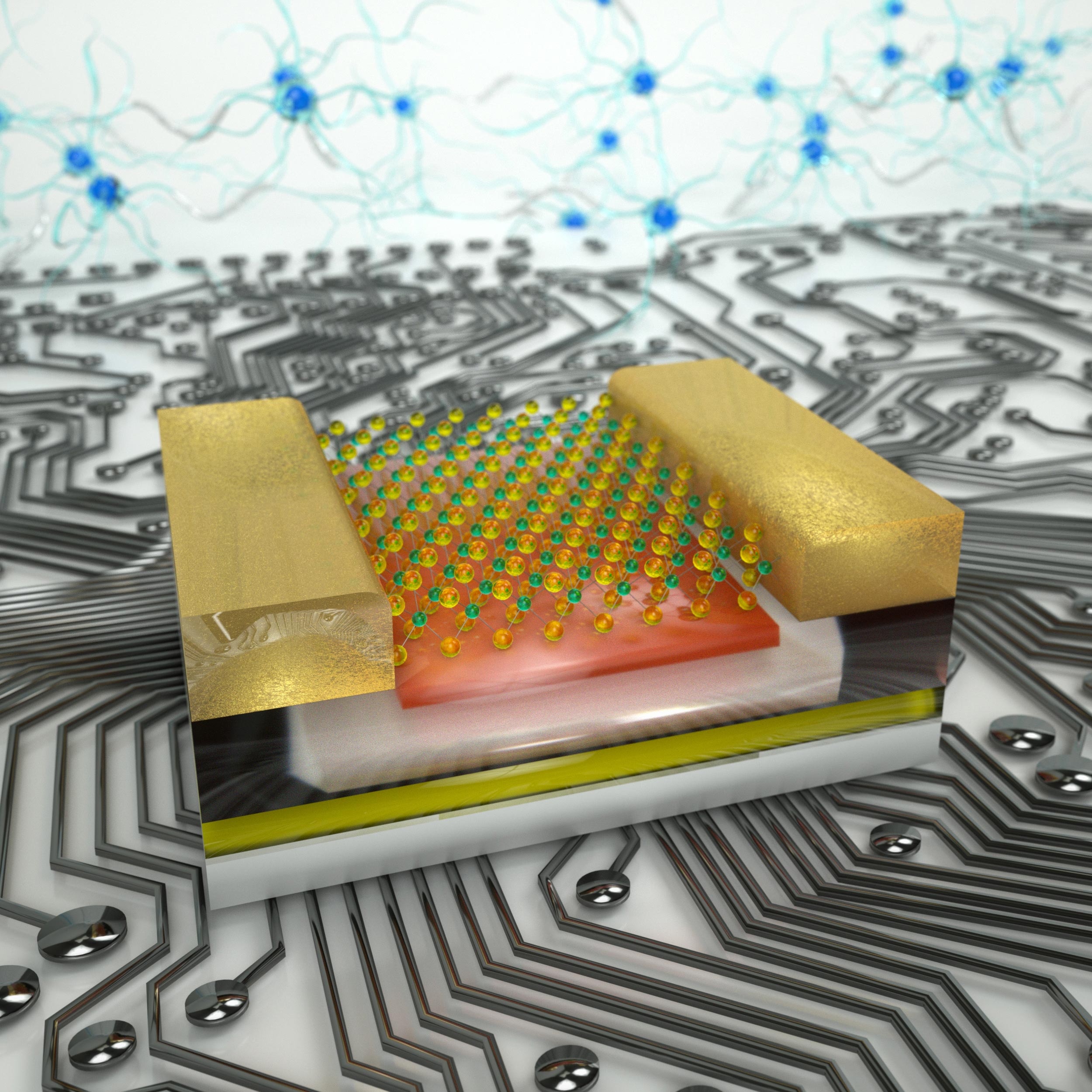
    Next-generation computer chip with two heads EPFL engineers have developed a computer chip that combines two functions — logic operations and data storage — into a single architecture, paving the way to more efficient devices. Their technology is particularly promising for applications relying on artificial intelligence. Credit: EPFL /LANES 2020

    EPFL engineers have developed a computer chip that combines two functions — logic operations and data storage — into a single architecture, paving the way to more efficient devices.

    It’s a major breakthrough in the field of electronics. Engineers at EPFL’s Laboratory of Nanoscale Electronics and Structures (LANES) have developed a next-generation circuit that allows for smaller, faster, and more energy-efficient devices – which would have major benefits for artificial-intelligence systems. Their revolutionary technology is the first to use a 2D material for what’s called a logic-in-memory architecture, or a single architecture that combines logic operations with a memory function. The research team’s findings were published on November 4, 2020, in Nature.

    Until now, the energy efficiency of computer chips has been limited by the von Neumann architecture they currently use, where data processing and data storage take place in two separate units. That means data must constantly be transferred between the two units, using up a considerable amount of time and energy.

    By combining the two units into a single structure, engineers can reduce these losses. That’s the idea behind the new chip developed at EPFL, although it goes one step beyond existing logic-in-memory devices. The EPFL chip is made from MoS2, which is a 2D material consisting of a single layer that’s only three atoms thick. It’s also an excellent semi-conductor. LANES engineers had already studied the specific properties of MoS2 a few years ago, finding that it is particularly well-suited to electronics applications. Now the team has taken that initial research further to create their next-generation technology.

    The EPFL chip is based on floating-gate field-effect transistors (FGFETs). The advantage of these transistors is that they can hold electric charges for long periods; they are typically used in flash memory systems for cameras, smartphones and computers. The unique electrical proprieties of MoS2 make it particularly sensitive to charges stored in FGFETs, which is what enabled the LANES engineers to develop circuits that work as both memory storage units and programmable transistors. By using MoS2, they were able to incorporate numerous processing functions into a single circuit and then change them as desired.

    In-depth expertise

    “This ability for circuits to perform two functions is similar to how the human brain works, where neurons are involved in both storing memories and conducting mental calculations,” says Andras Kis, the head of LANES. “Our circuit design has several advantages. It can reduce the energy loss associated with transferring data between memory units and processors, cut the amount of time needed for computing operations, and shrink the amount of space required. That opens the door to devices that are smaller, more powerful, and more energy efficient.”

    The LANES research team has also acquired in-depth expertise in fabricating circuits out of 2D materials. “We made our first chip ten years ago by hand,” says Kis. “But we have since developed an advanced fabrication process that lets us make 80 or more chips in a single run, with well-controlled properties.”

    Reference: “Logic-in-memory based on an atomically thin semiconductor” by Guilherme Migliato Marega, Yanfei Zhao, Ahmet Avsar, Zhenyu Wang, Mukesh Tripathi, Aleksandra Radenovic and Andras Kis, 4 November 2020, Nature.
    DOI: 10.1038/s41586-020-2861-0

    Never miss a breakthrough: Join the SciTechDaily newsletter.
    Follow us on Google and Google News.

    Electrical Engineering EPFL Nanotechnology Semiconductors
    Share. Facebook Twitter Pinterest LinkedIn Email Reddit

    Related Articles

    A Milestone in Computing: 2D In-Memory Processor With Over 1000 Transistors

    MIT Discovery Offers New Promise for Nonsilicon Computer Transistors

    Smarter Artificial Intelligence Technology in a New Light-Powered Chip

    Liquid Metals Come to the Rescue of Semiconductors: Overcoming Moore’s Law With Fast-Switching, Ultra-Low Energy Electronics

    Transistor-Integrated Microfluidic Cooling for More Powerful Electronic Chips

    Order From Disorder: Harnessing Turbulence in Light to Create a High-Precision Laser

    Surpassing Silicon: Paper-Thin Gallium Oxide Transistor Handles More Than 8,000 Volts

    Revolutionary Light-Emitting Silicon – “Holy Grail” Breakthrough After 50 Years of Work

    Nanoscale Device Generates High-Power THz Waves That Can See Through Walls

    Leave A Reply Cancel Reply

    • Facebook
    • Twitter
    • Pinterest
    • YouTube

    Don't Miss a Discovery

    Subscribe for the Latest in Science & Tech!

    Trending News

    Breakthrough Bowel Cancer Trial Leaves Patients Cancer-Free for Nearly 3 Years

    Natural Compound Shows Powerful Potential Against Rheumatoid Arthritis

    100,000-Year-Old Neanderthal Fossils in Poland Reveal Unexpected Genetic Connections

    Simple “Gut Reset” May Prevent Weight Gain After Ozempic or Wegovy

    2.8 Days to Disaster: Scientists Warn Low Earth Orbit Could Suddenly Collapse

    Common Food Compound Shows Surprising Power Against Superbugs

    5 Simple Ways To Remember More and Forget Less

    The Atomic Gap That Could Cost the Semiconductor Industry Billions

    Follow SciTechDaily
    • Facebook
    • Twitter
    • YouTube
    • Pinterest
    • Newsletter
    • RSS
    SciTech News
    • Biology News
    • Chemistry News
    • Earth News
    • Health News
    • Physics News
    • Science News
    • Space News
    • Technology News
    Recent Posts
    • Scientists Discover Natural Molecule That Stops Alzheimer’s Protein Clumps From Forming
    • Early Cannabis Use May Stall Key Brain Skills in Teens
    • Popular Vitamin D Supplement Has “Previously Unknown” Negative Effect, Study Finds
    • Powerful Antioxidant Found To Play a Key Role in Proper Protein Folding
    • MIT Laser Breakthrough Lets Scientists Watch Drugs Enter the Brain in Real Time
    Copyright © 1998 - 2026 SciTechDaily. All Rights Reserved.
    • Science News
    • About
    • Contact
    • Editorial Board
    • Privacy Policy
    • Terms of Use

    Type above and press Enter to search. Press Esc to cancel.