
Close Menu
    Facebook X (Twitter) Instagram
    SciTechDaily
    • Biology
    • Chemistry
    • Earth
    • Health
    • Physics
    • Science
    • Space
    • Technology
    Facebook X (Twitter) Pinterest YouTube RSS
    SciTechDaily
    Home»Biology»Yale Scientists Uncover How the Immune System Can Alter Our Behavior
    Biology

    Yale Scientists Uncover How the Immune System Can Alter Our Behavior

    By Yale UniversitySeptember 13, 2023No Comments3 Mins Read
    Facebook Twitter Pinterest Telegram LinkedIn WhatsApp Email Reddit
    Share
    Facebook Twitter LinkedIn Pinterest Telegram Email Reddit
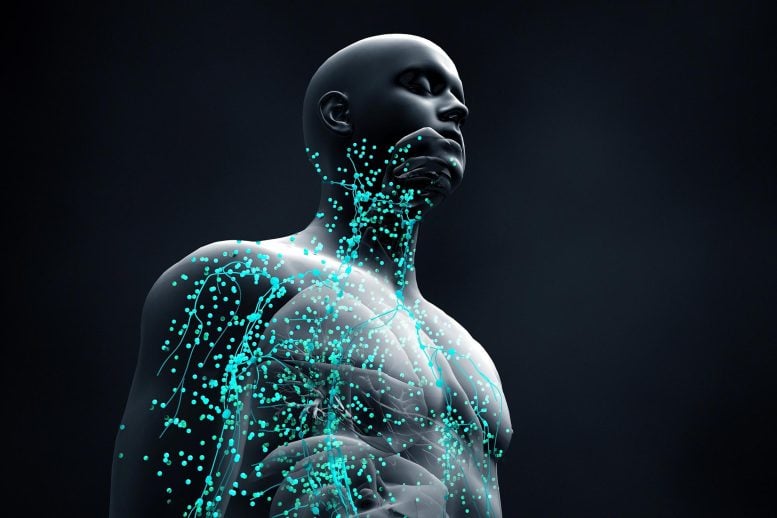
    Illustration of Human Immune System
    New research has discovered that the immune system plays a vital role in altering behaviors, using immune recognition to prompt defensive behaviors against toxins via communication from antibodies to the brain. In a study with mice, when IgE antibodies (responsible for triggering mast cells that communicate aversion behavior to the brain) were blocked, the sensitized mice no longer avoided allergens, illustrating the immune system’s role in helping animals steer clear of environmental hazards.

    A Yale study finds that the immune system drives avoidance behavior by signaling the brain through antibodies.

    The mere scent of seafood can severely sicken those allergic to it — and therefore they are more likely to avoid it. Similarly, individuals who experience food poisoning from a specific dish tend to avoid it afterward.

    For a long time, researchers have understood that our immune system plays a key role in our reactions to allergens and pathogens in the environment. However, it was unclear whether it played any role in prompting these types of behaviors toward allergic triggers.

    According to Yale-led research recently published in the journal Nature, it turns out that the immune system plays a crucial role in changing our behaviors.

    How the Brain and Immune System Communicate

    “We find immune recognition controls behavior, specifically defensive behaviors against toxins that are communicated first through antibodies and then to our brains,” said Ruslan Medzhitov, Sterling Professor of Immunobiology at Yale School of Medicine, investigator for the Howard Hughes Medical Institute, and senior author of the study.

    Without immune system communication, the brain does not warn the body about potential dangers in the environment and does not try to avoid those threats, the study shows.

    A team in the Medzhitov lab, led by Esther Florsheim, at the time a postdoctoral researcher at Yale and now an assistant professor at Arizona State University, and Nathaniel Bachtel, a graduate student at the School of Medicine, studied mice that had been sensitized to have allergic reactions to ova, a protein found in chicken eggs. As expected, these mice tended to avoid water laced with ova, while control mice tended to prefer ova-laced water sources. The aversion to ova-laced water sources in sensitized mice lasted for months, they found.

    The team then examined whether they could alter the behavior of sensitized mice by manipulating immune system variables. They found, for instance, that mice allergic to ova lost their aversion to the protein in their water if Immunoglobulin E (IgE) antibodies, produced by the immune system, were blocked. IgE antibodies trigger the release of mast cells, a type of white blood cell that, along with other immune system proteins, plays a crucial role in communicating to areas of the brain that control aversion behavior. Without IgE as an initiator, the transmission of information was interrupted, so that mice no longer avoided the allergen.

    Medzhitov said that the findings illustrate how the immune system evolved to help animals avoid dangerous ecological niches. Understanding how the immune system memorizes potential dangers, he added, could one day help suppress excessive reactions to many allergens and other pathogens.

    Reference: “Immune sensing of food allergens promotes avoidance behaviour” by Esther B. Florsheim, Nathaniel D. Bachtel, Jaime L. Cullen, Bruna G. C. Lima, Mahdieh Godazgar, Fernando Carvalho, Carolina P. Chatain, Marcelo R. Zimmer, Cuiling Zhang, Gregory Gautier, Pierre Launay, Andrew Wang, Marcelo O. Dietrich and Ruslan Medzhitov, 12 July 2023, Nature.
    DOI: 10.1038/s41586-023-06362-4

    Never miss a breakthrough: Join the SciTechDaily newsletter.
    Follow us on Google and Google News.

    Immune System Immunobiology Pathogens Popular Yale University
    Share. Facebook Twitter Pinterest LinkedIn Email Reddit

    Related Articles

    Scientists Reveal How An Immune System Protein Helps Suppress HIV

    Why Older Adults Fail to Burn Stored Belly Fat

    Life-Extending Hormone FGF21 Also Protects Against the Loss of Immune Function

    TH17 Cells Convert From Pro-Inflammatory to Anti-Inflammatory

    Yale Biologists Show Cold Virus Replicates Better at Cooler Temperatures

    Microbial Life Lining Our GI Tracts Has Coevolved With Us

    Immune System May Trigger Melanoma Growth

    HIV Vaccine Approved for Human Clinical Trials

    Altered Microbes that Cause Obesity & Chronic Liver Disease May be Infectious

    Leave A Reply Cancel Reply

    • Facebook
    • Twitter
    • Pinterest
    • YouTube

    Don't Miss a Discovery

    Subscribe for the Latest in Science & Tech!

    Trending News

    The Secret to Healthy Aging May Be More Protein and More Exercise

    These 567-Million-Year-Old Fossils Are Rewriting the Story of Life on Earth

    The Spider-Like Creatures Helping Scientists Decode the Origins of Fatherhood

    Scientists Baffled by a Sudden Reversal Deep Inside Earth’s Core

    This Strange Sea Creature Can Survive Five Years Without Food – Scientists Finally Know Why

    New Quantum Sensor Opens a Window Into the Invisible Universe

    Stanford Scientists Reverse Age-Related Memory Loss by Targeting the Gut

    James Webb Uncovers the Atmosphere of a Hellish Lava World 41 Light-Years Away

    Follow SciTechDaily
    • Facebook
    • Twitter
    • YouTube
    • Pinterest
    • Newsletter
    • RSS
    SciTech News
    • Biology News
    • Chemistry News
    • Earth News
    • Health News
    • Physics News
    • Science News
    • Space News
    • Technology News
    Recent Posts
    • New Research Could Help Break China’s Rare Earth Magnet Monopoly
    • The Milky Way’s Black Hole Isn’t Tearing Everything Apart – New Observations Reveal a Surprise
    • Black Hole Shredded a Massive Star in the Most Powerful Stellar Explosion Ever Seen
    • Building the Brain Requires Millions of Dangerous DNA Breaks
    • The Future of Obesity Care Goes Far Beyond Ozempic, Wegovy, and Zepbound
    Copyright © 1998 - 2026 SciTechDaily. All Rights Reserved.
    • Science News
    • About
    • Contact
    • Editorial Board
    • Privacy Policy
    • Terms of Use

    Type above and press Enter to search. Press Esc to cancel.