
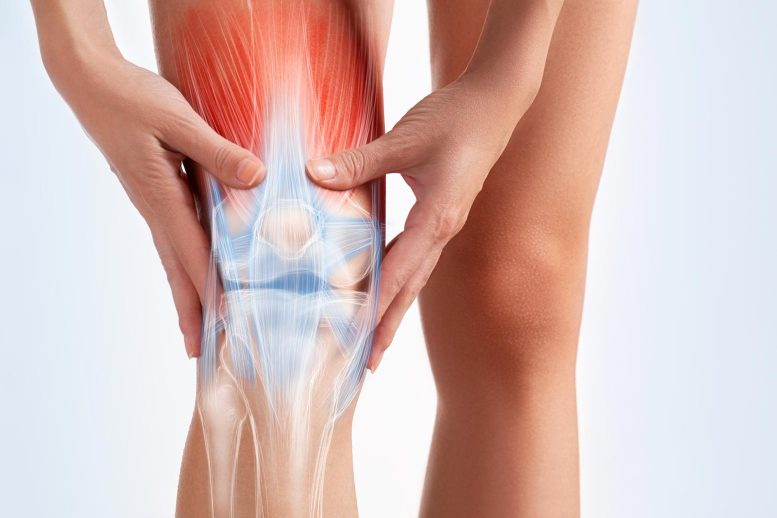
The new study finds personalized rehabilitation may be needed to effectively address chronic knee pain.
Neal Glaviano, assistant professor of kinesiology in the University of Connecticut’s College of Agriculture, Health and Natural Resources, has discovered that rehabilitation to address chronic knee pain may not be targeting all the right muscles.
Glaviano and Sungwan Kim ‘25 (CAHNR), a Ph.D. student in his lab, recently published their findings in the journal Physical Therapy in Sport.
Understanding Patellofemoral Pain
Glaviano has been studying patellofemoral pain, sometimes called “runner’s knee” for years. Approximately 23% of the global population suffer from this kind of pain, which affects the area around the kneecap. While present in the general population, this condition is especially common for runners and those in the military.
“Across the board it’s a pretty significant impairment in [people’s] ability to lead happy and healthy lives,” Glaviano says.
Researchers know that in patients with chronic patellofemoral pain, some muscles in their legs and hips are weaker in terms of strength and endurance, in addition to a decreased ability to generating their maximal muscle contraction.
“It all comes back to there being some potential deficit in the muscle for some reason,” Glaviano says.
The Research Approach
Glaviano hypothesized that these deficits may be related to the size of certain muscles around the knee. Specifically, he was interested in the glute and quad muscles.
“A lot of the research shows consistent evidence that there’s weakness in those muscles,” Glaviano says. “So, I expected those are the four muscles that we would discover are smaller in size compared to the healthy database.”
Glaviano and Kim worked with the Brain Imaging Research Center (BIRC) at UConn to conduct MRI scans of 13 female patients with patellofemoral pain. The researchers then worked with Springbok, a company developed by researchers at the University of Virginia, to analyze individual muscle volumes.
They focused on female patients because women are 2.2 times more likely to experience this kind of pain than men, though researchers do not know why.
“We thought trying to control for [sex] would allow us to answer our question a little more straightforwardly rather than having to worry about known differences in muscle size between males and females,” Glaviano says.
Unexpected Findings
While Glaviano and Kim expected to see differences in muscle size in the quads and glutes, that’s not what they found. There were no significant differences in the size of these muscles in patients with patellofemoral pain compared to the healthy samples.
Instead, the muscles at the front of patients’ hips, their deep external hip rotators, and hamstrings were smaller. Additionally, not all patients had impairments in the same muscles.
“The four main muscles that a lot of the research prioritizes as the target for rehabilitation were not actually smaller in size,” Glaviano says. “I think it demonstrates the need to individualize patients’ treatment. We as clinicians and researchers need to quantify which muscles have impairment and target those in a patient’s treatment.”
Towards Better Rehabilitation
Glaviano intends to pursue these findings to investigate if rehabilitation interventions for patellofemoral pain can be better tailored and individualized.
Most patients who receive rehabilitation for patellofemoral pain do not experience long-term pain relief. These findings may be a key to addressing this shortcoming and improving their quality of life.
“There’s very little work on the muscles that were identified as being smaller, so that might explain why there are such poor long-term outcomes in these patients,” Glaviano says. “While we’re targeting their quads and their hip muscles, we might be missing other muscles that might also be important.”
Glaviano also plans to look at muscle inhibition, where a muscle is unable to perform optimally because not all the connected nerves are firing. In his previous work, Glaviano found that patients with patellofemoral pain experience inhibition in their glute and quad muscles.
“Maybe it’s not that the muscle is smaller,” Glaviano says. “It’s that the muscle isn’t able to recruit all the motor units available to be able to produce that force, and that’s why the weakness is present, not purely from a volumetric standpoint. We’ll have to continue to work to find out.”
Reference: “Lower extremity muscle volume in females with patellofemoral pain and its relationships to hip and knee torque: A cross-sectional study” by Neal R. Glaviano and Sungwan Kim, 23 July 2023, Physical Therapy in Sport.
DOI: 10.1016/j.ptsp.2023.07.003
Never miss a breakthrough: Join the SciTechDaily newsletter.
Follow us on Google and Google News.
2 Comments
Most runners/bikers move in only one direction – forward. This causes imbalance in the development of their leg muscles, which are trained to move in only one direction. Free weights and weight machines won’t fix this problem.
People need to do backward walking or use the treadmill/elliptical/stair machines in the gym moving backward to balance their muscle development.
Check out the difference in knee problems between people that use foot orthotics and those that don’t.