

New study reveals role of frontal and parietal cortex in economic decisions under risk in rats.
Neuroscientists have uncovered a key brain area in rats that encodes the value of economic choices when faced with the uncertainty of a lottery. This is the first time the causal role of frontal and parietal cortex has been tested in economic decision-making. The findings provide a foundation for understanding the neurobiology of risky decisions.
The Importance of Financial Decisions
“We live in a world where financial decisions have a huge impact, and our economic choices are typically associated with uncertainty. For example, right now the cost of living is rising and savers may be choosing whether or not to invest in the stock market to try to avoid their savings being diminished by high inflation. We wanted to develop a rodent model of economic decision-making that is similar to the kinds of problems humans encounter, so that we can understand how the brain makes choices when faced with uncertainty,” said Jeffrey Erlich, Group Leader at the Sainsbury Wellcome Centre and corresponding author on the paper.
The Experiment Details
The researchers at the Sainsbury Wellcome Centre at UCL and NYU Shanghai presented rats with the choice of a ‘surebet’ (a small but guaranteed reward), or a lottery with a fixed probability. In each trial, a sound was played to the rats to indicate the magnitude of the potential lottery reward.
“We presented six sounds which each mapped to a different lottery offer. The worst offer was zero, so in that case the rats should never choose to play the lottery. This gave us a baseline, as there’s no reward-maximizing strategy that would ever choose zero. We were therefore able to quantify the offer-independent biases, which helped us get a better estimate of the true risk tolerance of the rats,” explained Erlich.
Brain Areas’ Influence on Decision Making
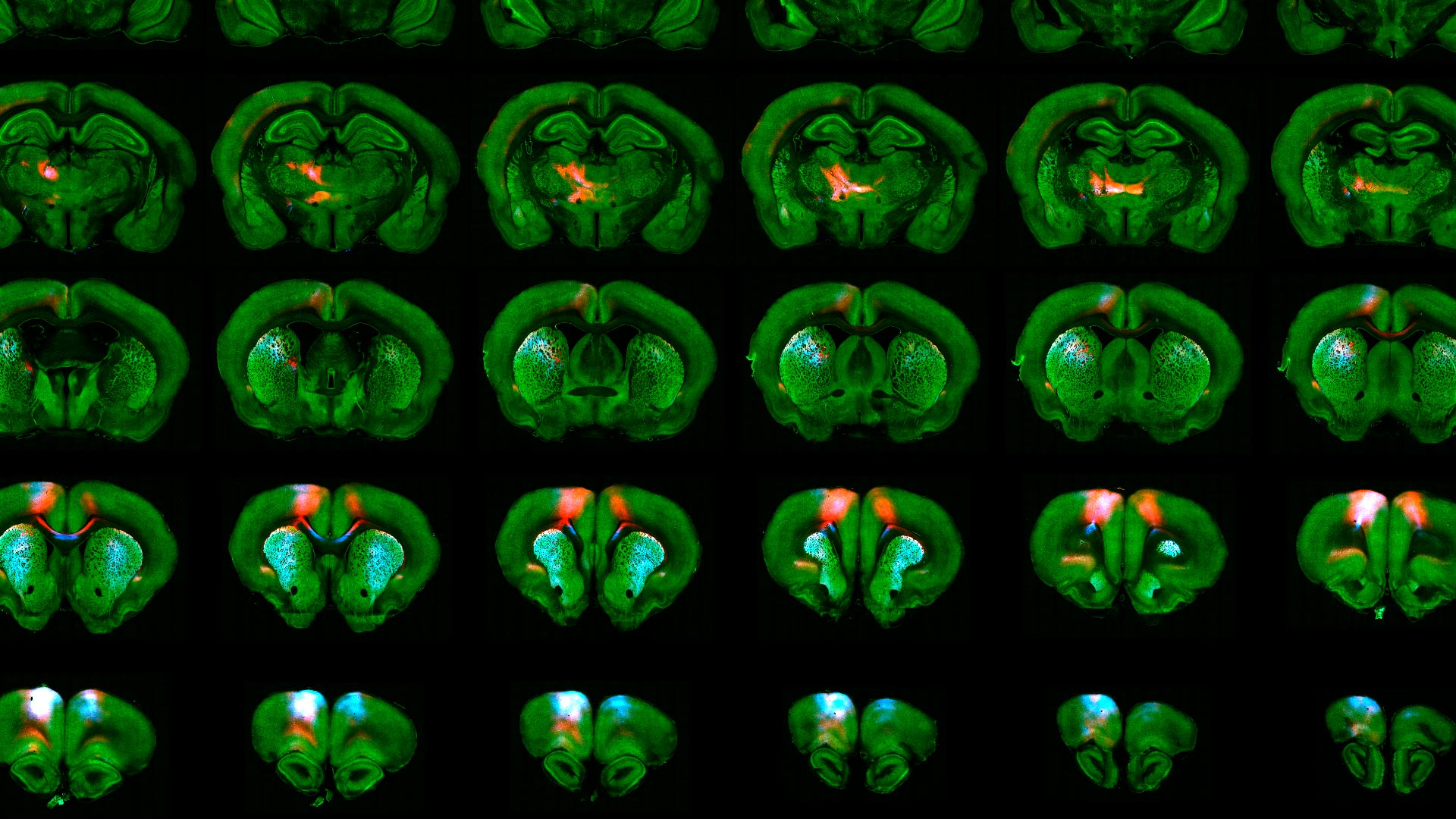
To test the causal role of the frontal and parietal cortex in the rats’ decisions of whether to play the lottery, the researchers temporarily silenced two specific brain areas: the frontal orienting field (FOF) and the posterior parietal cortex (PPC). The team used pharmacological and optogenetic silencing to confirm the results.
The researchers found that the animals were less willing to take risks when FOF was silenced (with either pharmacological or optogenetic silencing), whereas there was a smaller, short-lived, effect when PPC was silenced. Using a Bayesian hierarchical model, the team found that FOF was affecting risk tolerance rather than a choice bias, as the rats were still willing to play the lottery when the potential reward was very high, but they became less likely to play when the lottery had an intermediate potential value. As expected, their behavior was unchanged when the potential lottery value was low.
Insights from the Study
To understand this behavior, the researchers developed a dynamical model of FOF silencing. The model suggests that the FOF is coding the value of the lottery and comparing it with the remembered value of the surebet, which did not change from trial to trial. And so, when FOF is silenced, the value of the lottery (which is dynamic as it is encoded on a trial-by-trial basis) shrinks, but the surebet value remains stable. This results in the rats shifting their choices to the surebet.
The researchers found that this shift to the surebet occurred mostly for the choices near the boundary where the expected value of the lottery was only slightly higher than the value of the surebet. This is because the expected value of the lotteries that had much higher potential values than the surebet were still higher even after the negative shift from the FOF silencing.
“Behaviourally we found that the effect of FOF silencing caused a change in risk preference. The way we think this can be explained is that the FOF is tracking the value of the lottery and comparing it to the value of the surebet. Therefore, silencing the FOF diminishes the animal’s estimate of the value of the lottery. Our simulation validated this hypothesis and when we recorded from neurons in FOF we found that they encoded the value of the lottery,” explained Erlich.
Future Directions
The next steps for the researchers are to explore the inputs and outputs to FOF to understand the complete neural circuit. The team is also developing a new version of the task that allows multistage decision-making through a second cue in addition to the sound. This will allow them delve into how decisions are transformed into actions.
Reference: “The rat frontal orienting field dynamically encodes value for economic decisions under risk” by Chaofei Bao, Xiaoyue Zhu, Joshua Mōller-Mara, Jingjie Li, Sylvain Dubroqua and Jeffrey C. Erlich, 19 October 2023, Nature Neuroscience.
DOI: 10.1038/s41593-023-01461-x
This research was supported by the 111 project (Base B16018), the National Natural Science Foundation of China (NSFC), the NYU-ECNU Institute of Brain and Cognitive Science at NYU Shanghai and by the funders of the Sainsbury Wellcome Centre: Gatsby Charitable Foundation and Wellcome.
Never miss a breakthrough: Join the SciTechDaily newsletter.
Follow us on Google and Google News.