
Close Menu
    Facebook X (Twitter) Instagram
    SciTechDaily
    • Biology
    • Chemistry
    • Earth
    • Health
    • Physics
    • Science
    • Space
    • Technology
    Facebook X (Twitter) Pinterest YouTube RSS
    SciTechDaily
    Home»Earth»Science Made Simple: What Is Earth’s Magnetosphere?
    Earth

    Science Made Simple: What Is Earth’s Magnetosphere?

    By NASADecember 19, 2023No Comments4 Mins Read
    Facebook Twitter Pinterest Telegram LinkedIn WhatsApp Email Reddit
    Share
    Facebook Twitter LinkedIn Pinterest Telegram Email Reddit
    Sun Earth Space Weather Magnetosphere
    Earth’s magnetosphere, essential for protecting us from solar radiation, contrasts sharply with Mars, which lost its protective field. Studying this shield, especially through NASA’s missions like the Magnetospheric Multiscale Mission, is crucial for understanding space weather and its impact on Earth.

    What Is Earth’s Magnetosphere?

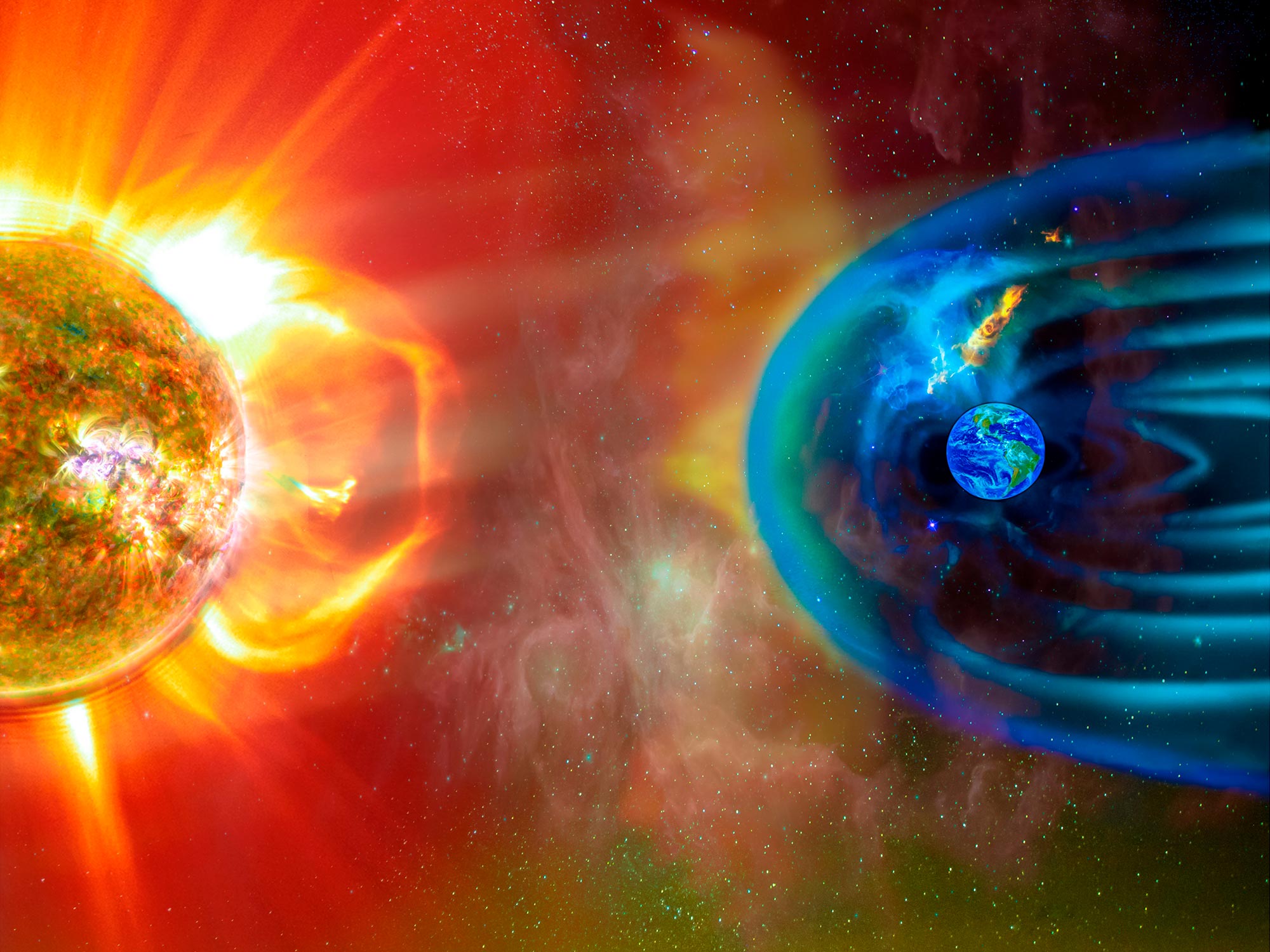
    Enveloping our planet and protecting us from the fury of the Sun is a giant bubble of magnetism called the magnetosphere. It deflects most of the solar material sweeping towards us from our star at 1 million miles per hour or more. Without the magnetosphere, the relentless action of these solar particles could strip the Earth of its protective layers, which shield us from the Sun’s ultraviolet radiation. It’s clear that this magnetic bubble was key to helping Earth develop into a habitable planet.


    Enveloping our planet and protecting us from the fury of the Sun is the magnetosphere, a key to helping Earth develop into a habitable planet. Credit: NASA

    Earth vs Mars: The Role of the Magnetosphere

    Compare Earth to Mars – a planet that lost its magnetosphere about 4.2 billion years ago. The Solar wind is thought to have stripped away most of Mars’ atmosphere, possibly after the red planet’s magnetic field dissipated. This has left Mars as the stark, barren world we see today through the ‘eyes’ of NASA orbiters and rovers. By contrast, Earth’s magnetosphere seems to have kept our atmosphere protected.

    Eftyhia Zesta of the Geospace Physics Laboratory at NASA’s Goddard Space Flight Center notes, “If there were no magnetic field, we might have a very different atmosphere left without life as we know it.”
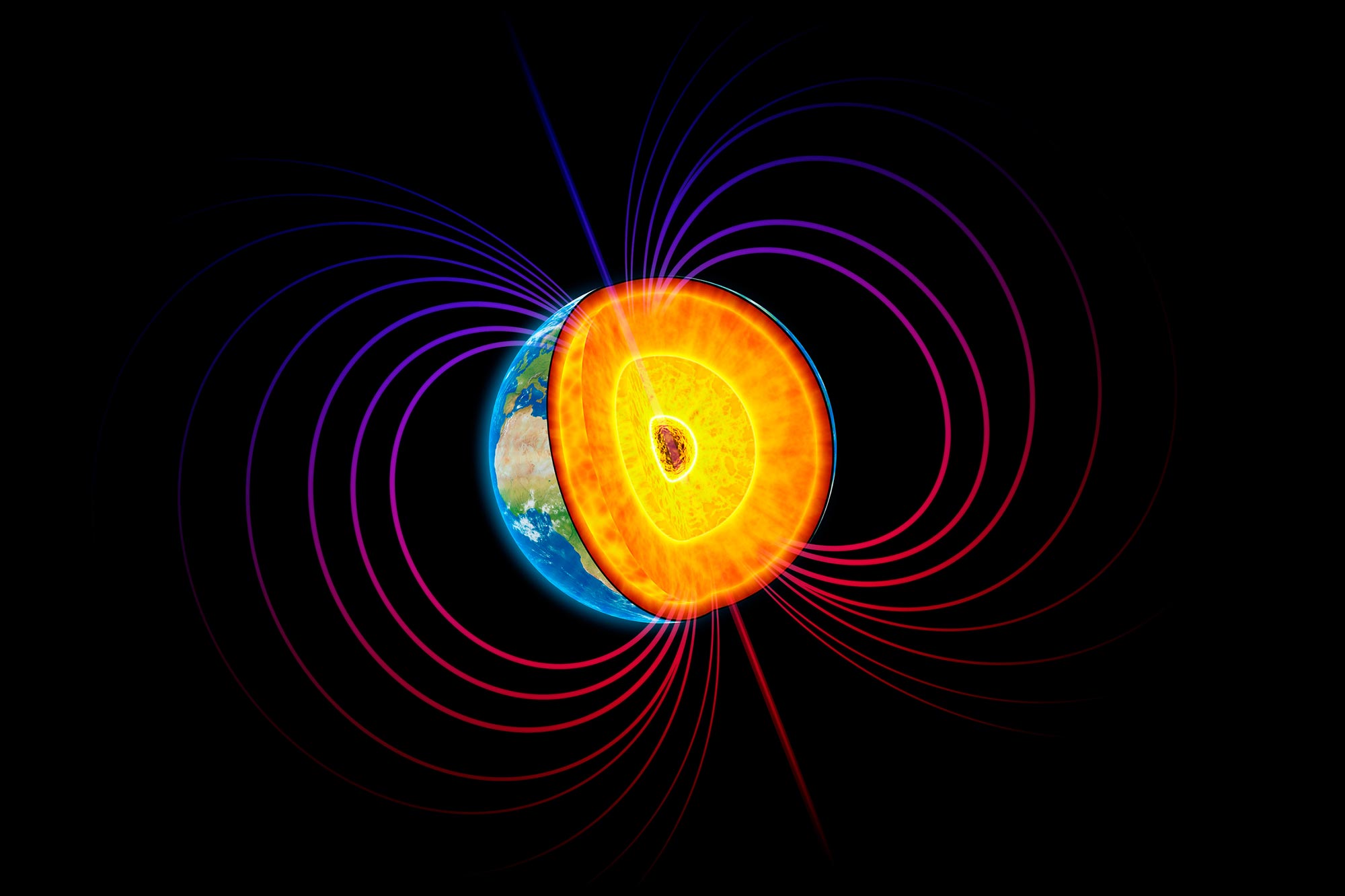
    Earths Core Magnetosphere
    The magnetosphere is a result of Earth’s internal magnetic field, produced by the rotation and convection of conductive materials in its core. This magnetic field extends into space, acting as a shield against the solar wind, thereby forming the magnetosphere.

    Understanding and Studying the Magnetosphere

    Understanding our magnetosphere is a key element to helping scientists someday forecast space weather that can affect Earth’s technology. Extreme space weather events can disrupt communications networks, GPS navigation, and electrical power grids.

    The magnetosphere is a permeable shield. The solar wind will periodically connect to the magnetosphere forcing it to reconfigure. This can create a rift, allowing energy to pour into our safe haven. These rifts open and close many times daily or even many times hourly. Most of them are small and short-lived; others are vast and sustained. With the Sun’s magnetic field connecting to Earth’s in this way, the fireworks start.

    Zesta says, “The Earth’s magnetosphere absorbs the incoming energy from the solar wind, and explosively releases that energy in the form of geomagnetic storms and substorms.”

    Magnetospheric Multiscale Mission
    Illustration of the four MMS spacecraft in orbit in Earth’s magnetic field. Credit: NASA

    Magnetic Reconnection and the MMS Mission

    How does this happen? Magnetic lines of force converge and reconfigure, resulting in magnetic energy and charged-particles flying off at intense speeds. Scientists have been trying to learn why this crisscrossing of magnetic field lines – called magnetic reconnection – triggers such a violent explosion, opening the rifts into the magnetosphere.

    NASA’s Magnetospheric Multiscale Mission, or MMS, was launched in March 2015 to observe the electron physics of magnetic reconnection for the first time. Bristling with energetic particle detectors and magnetic sensors, the four MMS spacecraft flew in close formation to areas on the front side of Earth’s magnetosphere where magnetic reconnection occurs. MMS has since been conducting a similar hunt in the magnetosphere’s tail.

    MMS complements missions from NASA and partner agencies, such as THEMIS, Cluster, and Geotail, contributing critical new details to the ongoing study of Earth’s magnetosphere. Together, data from these investigations not only help unravel the fundamental physics of space, but also help improve space weather forecasting.

    Never miss a breakthrough: Join the SciTechDaily newsletter.
    Follow us on Google and Google News.

    Atmospheric Science Magnetosphere NASA Space Weather
    Share. Facebook Twitter Pinterest LinkedIn Email Reddit

    Related Articles

    NASA Uncovers a 540-Million-Year Magnetic Rhythm Steering Earth’s Oxygen

    NASA’s AWE Mission Launching to Space Station To Study Atmospheric Gravity Waves via Airglow

    Auroras Unplugged: NASA’s EZIE To Unveil the Charged Link Between Earth and Space

    Strange Things Happening in Earth’s Atmosphere: NASA Launches Rocket To Investigate Mysterious Area Above the North Pole

    Earth’s Magnetosphere: Protecting Our Planet From Harmful Space Radiation

    Surprising Standing Waves at Edge of Earth’s Magnetic Bubble Found in NASA Data

    NASA GOLD’s Bird’s-Eye Reveals Mysterious Dynamics in Earth’s Interface to Space

    Edge of Space: The Science of NASA’s AIM Spacecraft

    NASA’s TWINS Provide Continuous Coverage of the Ring Current

    Leave A Reply Cancel Reply

    • Facebook
    • Twitter
    • Pinterest
    • YouTube

    Don't Miss a Discovery

    Subscribe for the Latest in Science & Tech!

    Trending News

    The Universe Is Expanding Too Fast and Scientists Can’t Explain Why

    “Like Liquid Metal”: Scientists Create Strange Shape-Shifting Material

    Early Warning Signals of Esophageal Cancer May Be Hiding in Plain Sight

    Common Blood Pressure Drug Shows Surprising Power Against Deadly Antibiotic-Resistant Superbug

    Scientists Uncover Dangerous Connection Between Serotonin and Heart Valve Disease

    Scientists Discover a “Protector” Protein That Could Help Reverse Hair Loss

    Bone-Strengthening Discovery Could Reverse Osteoporosis

    Scientists Uncover Hidden Trigger Behind Stem Cell Aging

    Follow SciTechDaily
    • Facebook
    • Twitter
    • YouTube
    • Pinterest
    • Newsletter
    • RSS
    SciTech News
    • Biology News
    • Chemistry News
    • Earth News
    • Health News
    • Physics News
    • Science News
    • Space News
    • Technology News
    Recent Posts
    • A Common Diabetes Drug May Hold the Key to Stopping HIV From Coming Back
    • Ancient “Syphilis-Like” Disease in Vietnam Challenges Key Scientific Assumptions
    • Drinking Alcohol To Cope in Your 20s Could Damage Your Brain for Life
    • Scientists Crack Alfalfa’s Chromosome Mystery After Decades of Debate
    • Ancient Ant-Plant Alliance Collapses As Predatory Wasps Move In
    Copyright © 1998 - 2026 SciTechDaily. All Rights Reserved.
    • Science News
    • About
    • Contact
    • Editorial Board
    • Privacy Policy
    • Terms of Use

    Type above and press Enter to search. Press Esc to cancel.