
Close Menu
    Facebook X (Twitter) Instagram
    SciTechDaily
    • Biology
    • Chemistry
    • Earth
    • Health
    • Physics
    • Science
    • Space
    • Technology
    Facebook X (Twitter) Pinterest YouTube RSS
    SciTechDaily
    Home»Space»Supernova Forensics: Unraveling N132D’s Spectral Mysteries With XRISM
    Space

    Supernova Forensics: Unraveling N132D’s Spectral Mysteries With XRISM

    By European Space Agency (ESA)January 18, 2024No Comments3 Mins Read
    Facebook Twitter Pinterest Telegram LinkedIn WhatsApp Email Reddit
    Share
    Facebook Twitter LinkedIn Pinterest Telegram Email Reddit
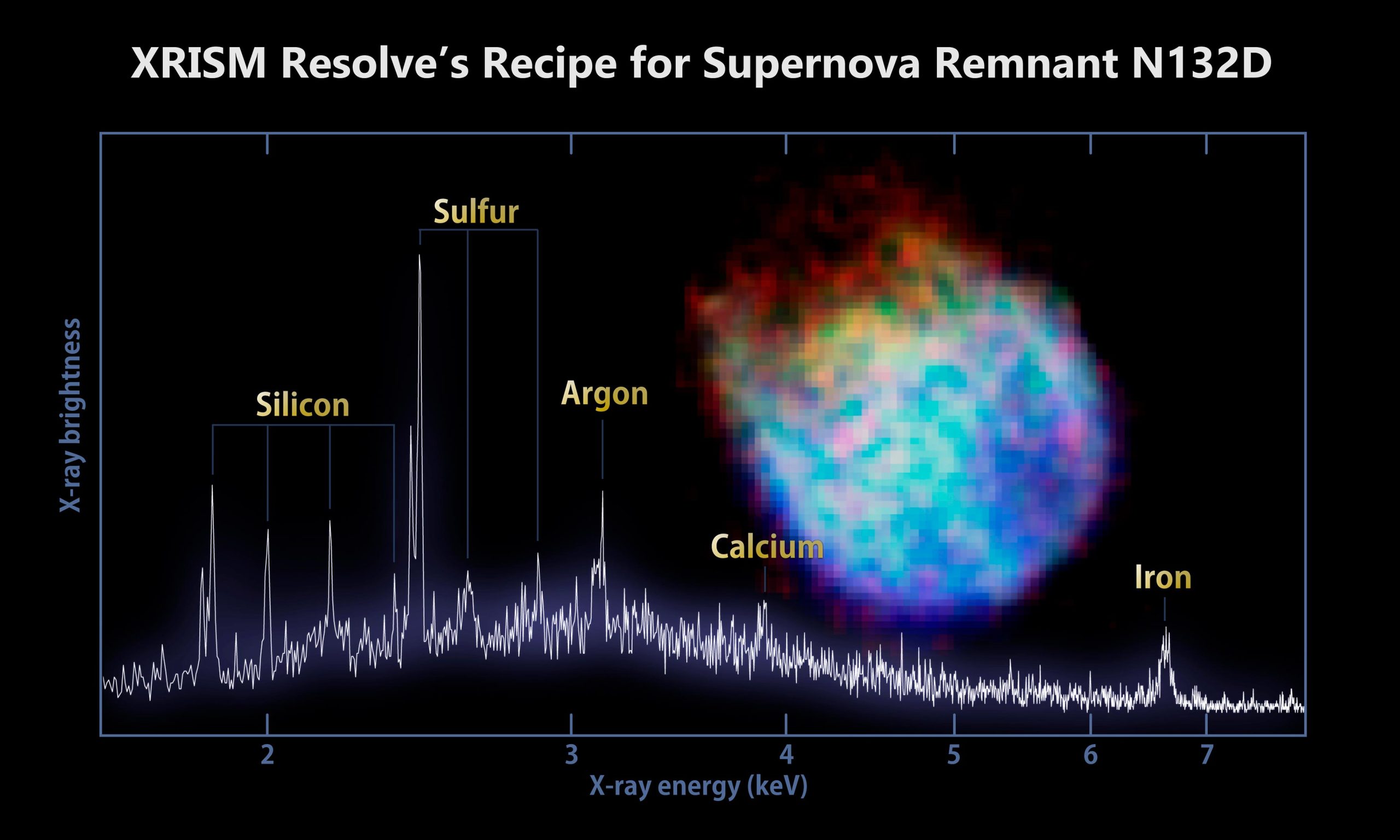
    XRISM Resolve Supernova Remnant N132D
    XRISM’s Resolve instrument captured data from supernova remnant N132D in the Large Magellanic Cloud to create the most detailed X-ray spectrum of the object ever made. The spectrum reveals peaks associated with silicon, sulfur, argon, calcium, and iron. Inset at right is an image of N132D captured by XRISM’s Xtend instrument. Credit: JAXA/NASA/XRISM Resolve and Xtend

    XRISM’s first high-resolution spectrum of supernova remnant N132D offers unprecedented insights into the chemical and physical properties of the aftermath of a star’s explosion, enhancing our understanding of the universe’s elemental composition.

    This image is the first high-resolution energy spectrum from the Resolve instrument on JAXA’s XRISM mission. It shows the energy of X-rays being produced within the remains of a massive star exploding in the nearby Large Magellanic Cloud, creating a ‘supernova remnant’ known as N132D. Spectra such as this one will enable scientists to measure the temperature and motion of X-ray emitting gas with unprecedented sensitivity and accuracy.

    The spectrum indicates which chemical elements exist in N132D. XRISM can identify each element by measuring the specific energy of X-ray light that it emits (the label ‘keV’ on the x axis of the graph refers to kiloelectronvolts, a unit of energy). The ‘energy resolution’ of XRISM (its capability to distinguish X-ray light arriving with different amounts of energy) is incredible. The faint grey line shows the same spectrum from the XIS instrument on JAXA’s Suzaku X-ray telescope (source). The energy resolution from XRISM is more than 40 times better over the energy range shown in this spectrum.
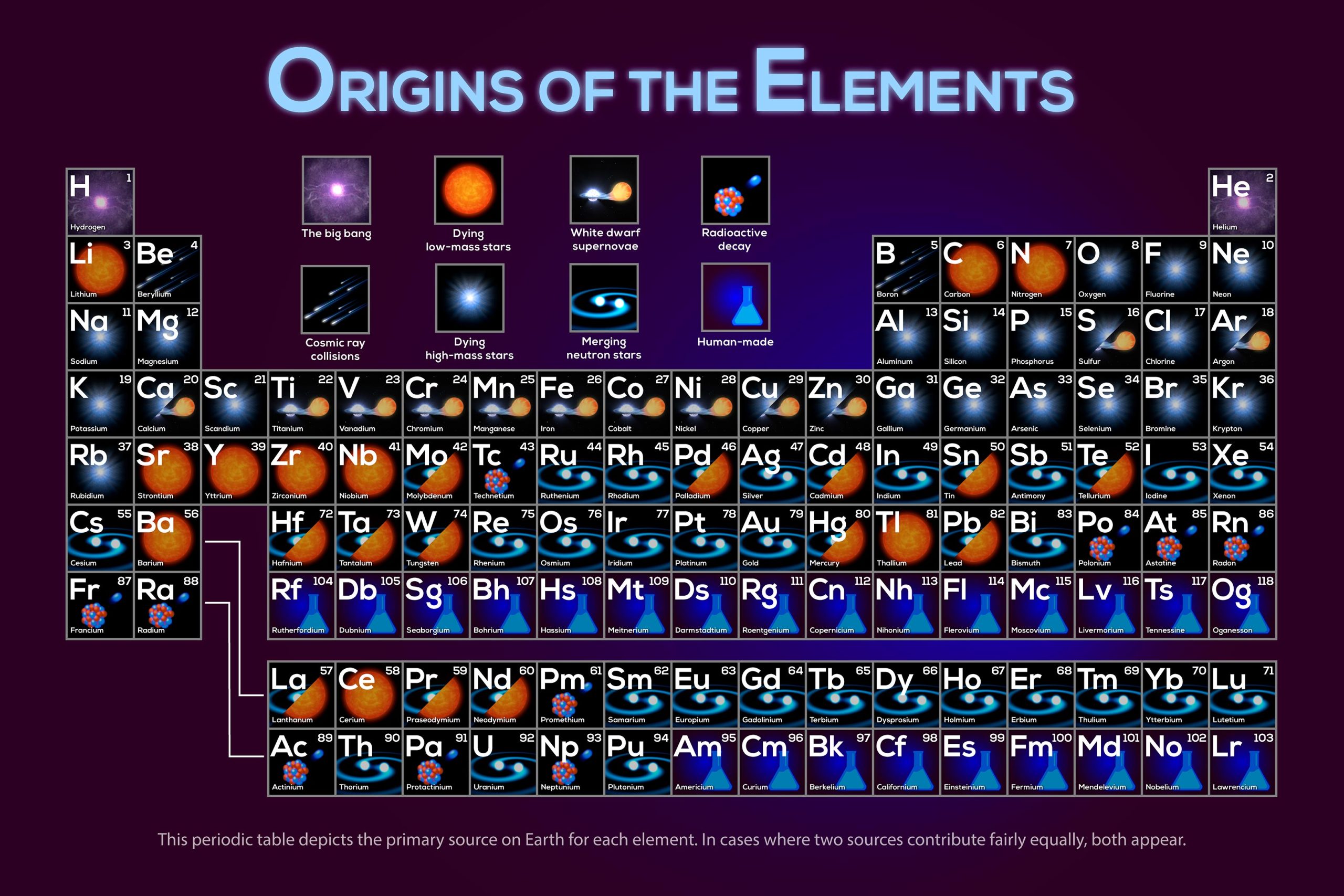
    Periodic Table of the Elements: Origins of the Elements
    This periodic table depicts the primary source on Earth for each element. In cases where two sources contribute fairly equally, both appear. Credit: NASA’s Goddard Space Flight Center

    This energy range enables scientists to distinguish the elements Silicon (Si), Sulphur (S), Argon (Ar), Calcium (Ca), and Iron (Fe) – elements that are made only in supernova explosions (see graphic above). XRISM helps us measure their abundances and velocities. It also lets us put together a 3D map of the motion and distribution of the chemical elements as a result of the interaction between the supernova remnant and its surroundings. This provides clues on the nature of the explosion that created the supernova remnant, as well as on the distribution of elements that, ultimately, constitute the building blocks of planet Earth and life as we know it.

    With this spectrum, XRISM separated sulfur and iron spikes that were previously indistinguishable, and it successfully detected silicon and calcium spikes with greater clarity than ever before. The incredibly sharp spectrum complements the top right image of the same supernova remnant taken simultaneously by XRISM’s Xtend instrument.

    Never miss a breakthrough: Join the SciTechDaily newsletter.
    Follow us on Google and Google News.

    Astronomy Astrophysics European Space Agency XRISM
    Share. Facebook Twitter Pinterest LinkedIn Email Reddit

    Related Articles

    Astronomers Solve 50-Year Mystery and Reveal Hidden Culprit Behind Strange X-Ray Emissions

    Scientists Watch Black Hole Create Near Light Speed Winds in Hours

    XRISM’s X-Ray Insights Uncover the Hidden Structures of Black Holes and Supernovas

    First Light: How XRISM Is Changing Our X-Ray View of the Cosmos

    Purple Haze: XRISM’s Breakthrough Imaging of Galaxy Cluster Abell 2319

    Cosmic Neon Lights: Strange New Type of Star Revealed in X-ray Light

    “Unprecedented” – Unusual Planetary Nebula Fades Mere Decades After It Arrived

    Hubble Captures Unprecedented Fading of Stingray Nebula – “This Is Very, Very Dramatic, and Very Weird”

    To the Milky Way’s Anticenter and Beyond: Gaia’s New Detailed Data From More Than 1.8 Billion Stars

    Leave A Reply Cancel Reply

    • Facebook
    • Twitter
    • Pinterest
    • YouTube

    Don't Miss a Discovery

    Subscribe for the Latest in Science & Tech!

    Trending News

    This Copper Drug Clears Alzheimer’s Brain Toxins and Boosts Memory

    Adults Over 65 Lost Massive Amounts of Weight With Ozempic

    How Flocking Birds “Defy” One of Physics’ Most Fundamental Laws

    Physicists Create a New Kind of Schrödinger’s Cat State From Exotic Quantum Building Blocks

    Your Diet Could Be Missing the Key Ingredient for Heart Protection

    Researchers Warn Widely Prescribed Blood Pressure Drugs Could Be Harming Diabetic Kidneys

    James Webb Spots Something Strange Between Day and Night on an Alien Planet

    How Ancient People Moved a 6-Ton Stone 700 Kilometers to Stonehenge

    Follow SciTechDaily
    • Facebook
    • Twitter
    • YouTube
    • Pinterest
    • Newsletter
    • RSS
    SciTech News
    • Biology News
    • Chemistry News
    • Earth News
    • Health News
    • Physics News
    • Science News
    • Space News
    • Technology News
    Recent Posts
    • The Surprising Fix for Robot Traffic Jams
    • Near Absolute Zero, This Transistor Starts Acting Like a Brain Cell
    • Beyond DNA: Scientists Discover Inheritance That Breaks the Rules of Genetics
    • A Surprising Discovery Challenges What Scientists Thought DNA Methylation Was For
    • This New DNA Test Solves Rare Disease Mysteries That Standard Genetics Misses
    Copyright © 1998 - 2026 SciTechDaily. All Rights Reserved.
    • Science News
    • About
    • Contact
    • Editorial Board
    • Privacy Policy
    • Terms of Use

    Type above and press Enter to search. Press Esc to cancel.