
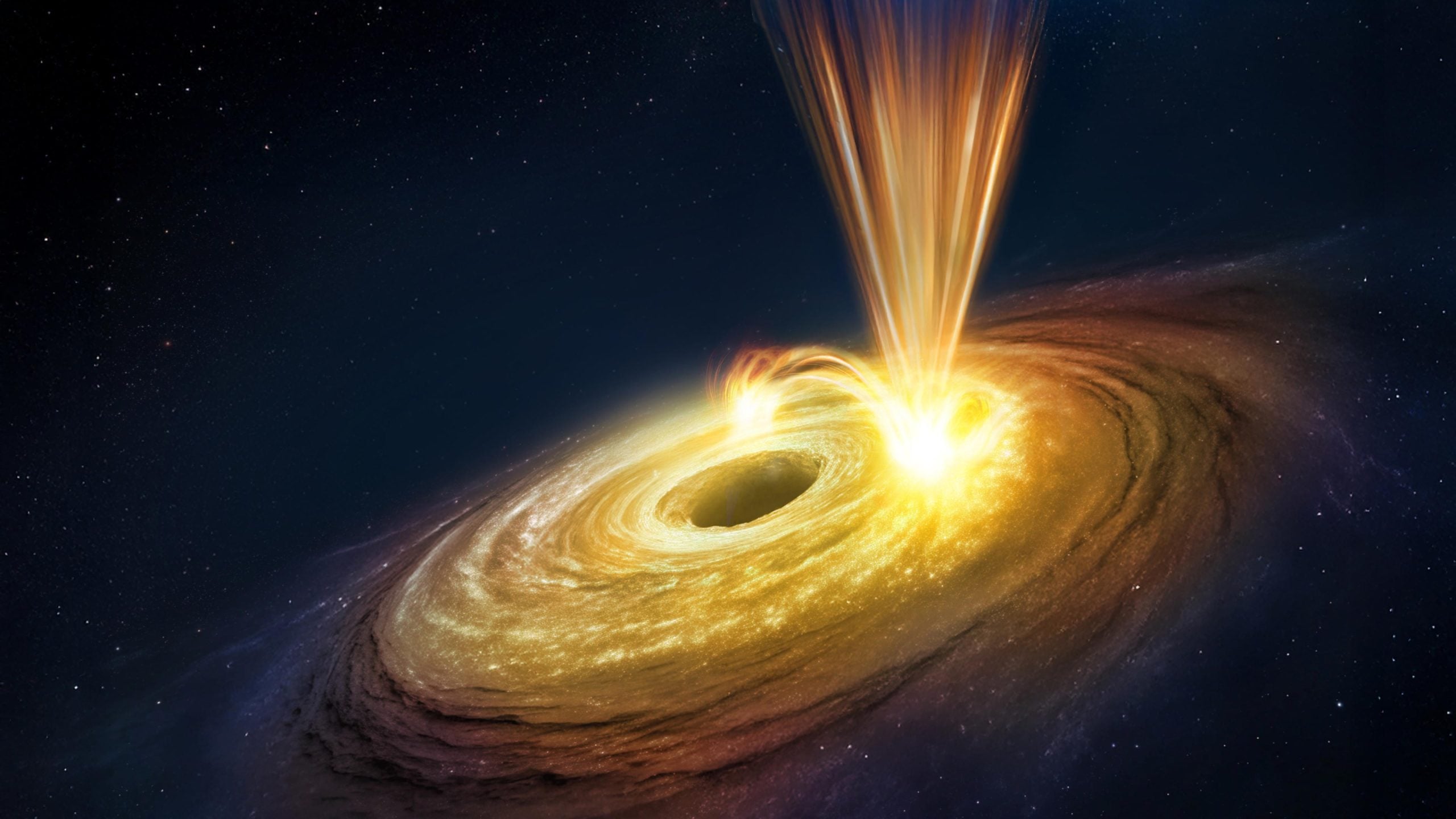
A brief X-ray flare from a supermassive black hole generated ultra fast winds in less than a day. The discovery links black hole activity with solar-style magnetic eruptions and sheds light on galactic evolution.
An international group of scientists used the European Space Agency’s XMM-Newton and XRISM, a JAXA-led mission with ESA participation, to detect and analyze an unprecedented outburst from a supermassive black hole. This enormous object generated intense winds that hurled material outward at nearly 60,000 km per second. Credit: European Space Agency (ESA)
Leading X-ray space telescopes XMM-Newton and XRISM have now recorded this remarkable blast in detail. Within only a few hours, the black hole produced powerful winds that pushed gas and dust into space at astonishing speeds of 60,000 km per second (135 million mph).
The supermassive black hole lies inside NGC 3783, a striking spiral galaxy recently photographed by the Hubble Space Telescope. Astronomers observed a sudden flash of X-ray light erupt from the black hole, then fade quickly. As the flare dimmed, extremely fast winds appeared, racing outward at close to one-fifth of the speed of light.
“We’ve not watched a black hole create winds this speedily before,” says lead researcher Liyi Gu at Space Research Organisation Netherlands (SRON). “For the first time, we’ve seen how a rapid burst of X-ray light from a black hole immediately triggers ultra-fast winds, with these winds forming in just a single day.”
Inside the Heart of NGC 3783
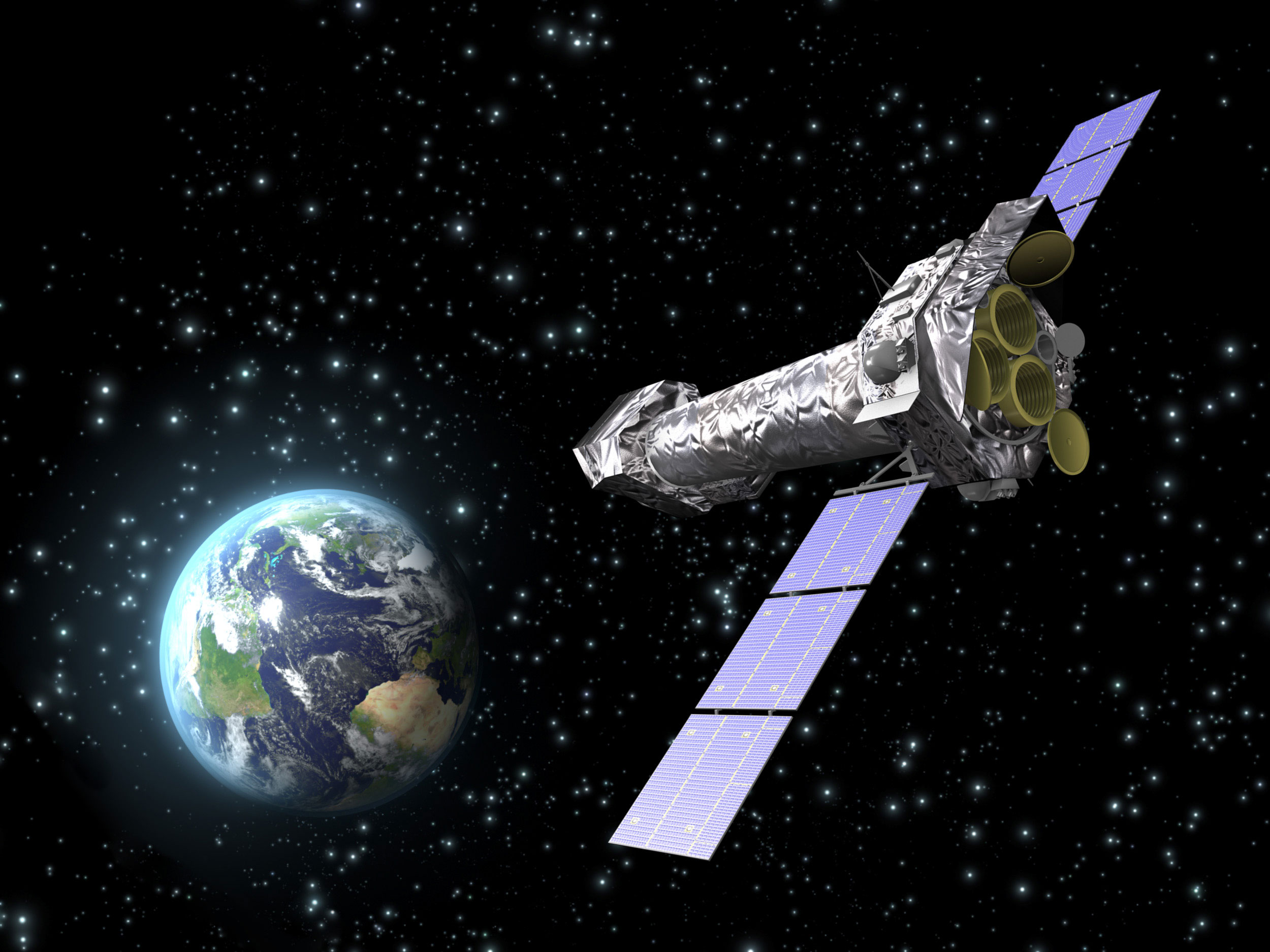
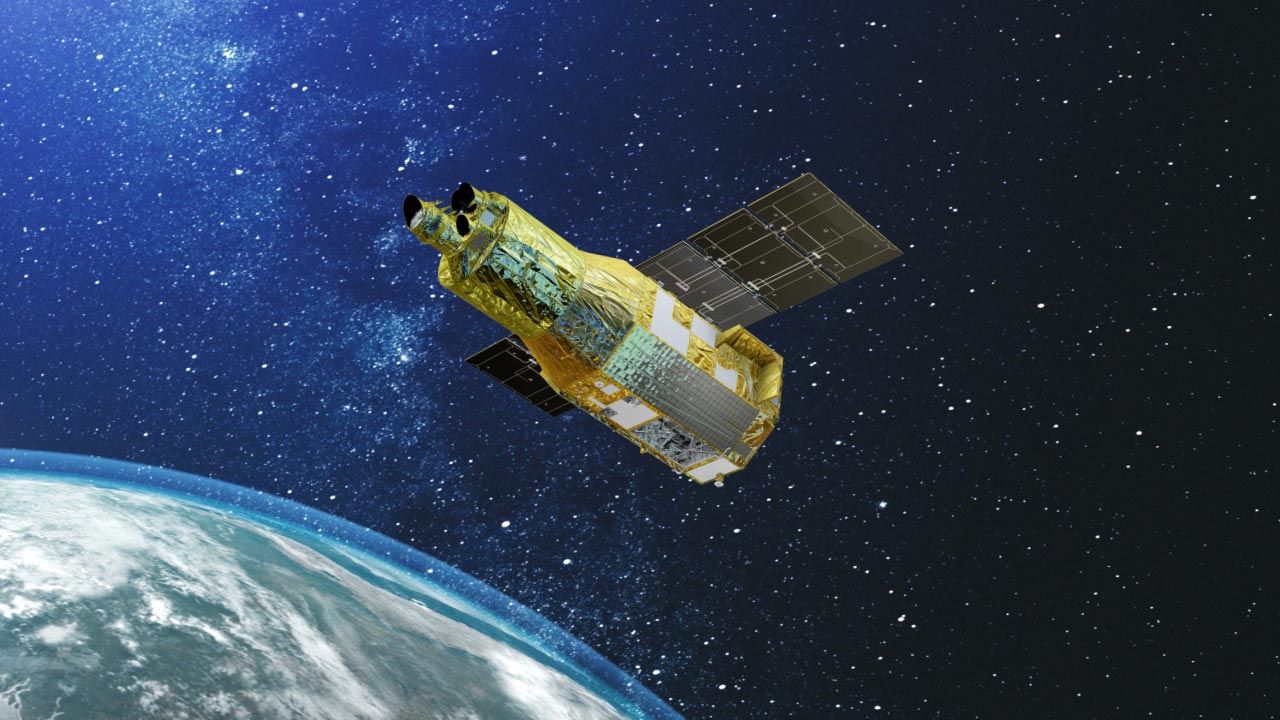
To examine NGC 3783 and its central black hole, Gu and his team used XMM-Newton and the X-Ray Imaging and Spectroscopy Mission (XRISM), a JAXA-led mission with ESA and NASA participation.
The black hole contains about 30 million times the mass of the Sun. As it pulls in surrounding material, it lights up a highly energetic region at the galaxy’s core known as an Active Galactic Nucleus (AGN). AGNs shine brightly across many wavelengths and can produce strong jets and winds that extend far into space.
“AGNs are really fascinating and intense regions, and key targets for both XMM-Newton and XRISM,” adds Matteo Guainazzi, ESA XRISM Project Scientist and co-author of the discovery.
“The winds around this black hole seem to have been created as the AGN’s tangled magnetic field suddenly ‘untwisted’ – similar to the flares that erupt from the Sun, but on a scale almost too big to imagine.”
Black Hole Winds That Echo Solar Explosions
The energetic winds resemble coronal mass ejections from the Sun, enormous bursts of superheated material that stream into space during major solar activity. This comparison suggests that supermassive black holes can sometimes behave in ways that parallel the Sun’s magnetic eruptions, making them feel slightly more familiar than expected.
A recent example occurred on November 11, when a strong solar flare was followed by a coronal mass ejection. The associated solar winds blasted outward at initial speeds of 1500 km per second (3.4 million mph).
“Windy AGNs also play a big role in how their host galaxies evolve over time, and how they form new stars,” adds Camille Diez, a team member and ESA Research Fellow.
“Because they’re so influential, knowing more about the magnetism of AGNs, and how they whip up winds such as these, is key to understanding the history of galaxies throughout the Universe.”
Two Missions Uncover a Fast-Moving Cosmic Event
XMM-Newton has spent more than 25 years studying the hottest and most extreme objects in the Universe. XRISM, launched in September 2023, is focused on unraveling how matter and energy circulate through space.
Working together, these telescopes captured this remarkable black hole flare and the winds that followed. XMM-Newton monitored how the flare changed over time using its Optical Monitor and measured the spread of the winds with its European Photon Imaging Camera (EPIC). XRISM detected the flare and winds with its Resolve instrument, which examined their speed, structure, and the mechanisms that propelled them.
“Their discovery stems from successful collaboration, something that’s a core part of all ESA missions,” says ESA XMM-Newton Project Scientist Erik Kuulkers.
“By zeroing in on an active supermassive black hole, the two telescopes have found something we’ve not seen before: rapid, ultra-fast, flare-triggered winds reminiscent of those that form at the Sun. Excitingly, this suggests that solar and high-energy physics may work in surprisingly familiar ways throughout the Universe.”
Reference: “Delving into the depths of NGC 3783 with XRISM – III. Birth of an ultrafast outflow during a soft flare” by Liyi Gu, Keigo Fukumura, Jelle Kaastra, Megan Eckart, Ralf Ballhausen, Ehud Behar, Camille Diez, Matteo Guainazzi, Timothy Kallman, Erin Kara, Chen Li, Missagh Mehdipour, Misaki Mizumoto, Shoji Ogawa, Christos Panagiotou, Matilde Signorini, Atsushi Tanimoto, Keqin Zhao, Hirofumi Noda, Jon Miller and Satoshi Yamada, 9 December 2025, Astronomy & Astrophysics.
DOI: 10.1051/0004-6361/202557189
Never miss a breakthrough: Join the SciTechDaily newsletter.
Follow us on Google and Google News.