
Close Menu
    Facebook X (Twitter) Instagram
    SciTechDaily
    • Biology
    • Chemistry
    • Earth
    • Health
    • Physics
    • Science
    • Space
    • Technology
    Facebook X (Twitter) Pinterest YouTube RSS
    SciTechDaily
    Home»Space»Purple Haze: XRISM’s Breakthrough Imaging of Galaxy Cluster Abell 2319
    Space

    Purple Haze: XRISM’s Breakthrough Imaging of Galaxy Cluster Abell 2319

    By European Space Agency (ESA)January 17, 2024No Comments3 Mins Read
    Facebook Twitter Pinterest Telegram LinkedIn WhatsApp Email Reddit
    Share
    Facebook Twitter LinkedIn Pinterest Telegram Email Reddit
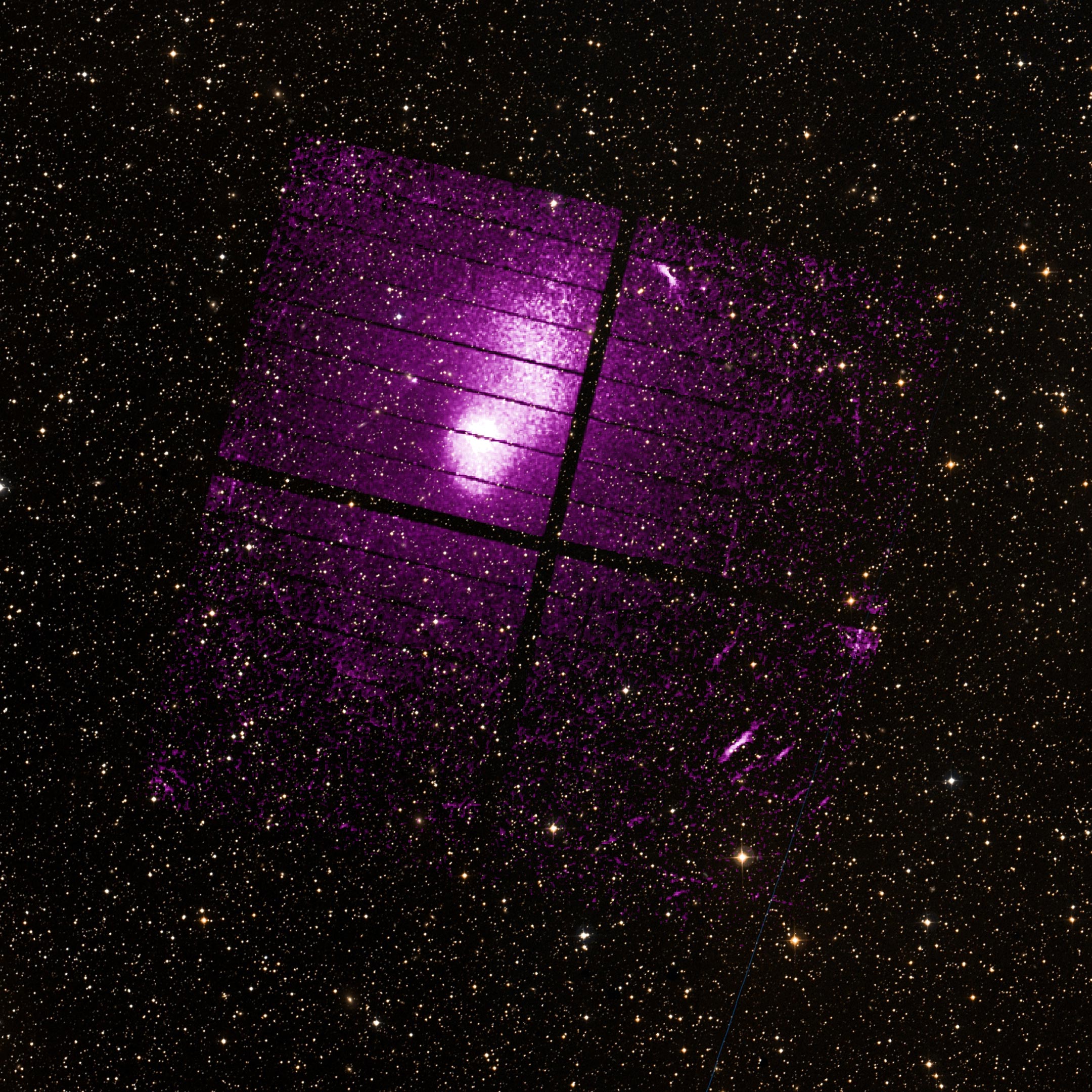
    XRISM Galaxy Cluster Abell 2319
    XRISM’s Xtend instrument captured galaxy cluster Abell 2319 in X-rays, shown here in purple. The background is a ground-based image showing the area in visible light. Credit: JAXA/NASA/XRISM Xtend; background, DSS

    JAXA’s XRISM mission provides a groundbreaking image of the Abell 2319 galaxy cluster, using X-ray and visible light to reveal its intricate structure and dynamics, enhancing our cosmic understanding.

    This pioneering, single-shot image is one of the first from JAXA’s XRISM mission. It shows a nearby cluster of galaxies called Abell 2319, unveiling its detailed structure. In purple we see X-ray light measured by XRISM; this light is emitted by million-degree gas that permeates between the galaxies in the cluster.

    The uneven structure of the purple glow is likely a sign that the gas is being stirred and sloshed over very large scales. The gas cloud is probably also shaped by the past effects of a super-massive black hole that lay at the center of the galaxy cluster. Xtend’s unique ability to capture the entire cluster in a single shot promises a significant step forward in our understanding of the large-scale structure of the Universe.

    The image from XRISM (shown in purple) has been overlaid on a visible-light image from a ground-based telescope. Many of the orange blobs in the visible-light image are galaxies that form part of the cluster.

    The XRISM image was taken with the mission’s Xtend instrument, which uses a CCD camera to image extended X-ray emitting celestial sources and their surroundings. Xtend covers a large field of view, which is key to ensuring that extended structures in the sky such as galaxy clusters, individual galaxies in the nearby Universe, and supernova remnants can be imaged effectively. Xtend images also provide a broader counterpart to the high-resolution spectra gathered by XRISM’s Resolve instrument.

    XRISM (X-Ray Imaging and Spectroscopy Mission) Spacecraft Illustration
    XRISM, shown in this artist’s concept, is an X-ray mission that will study some of the most energetic objects in the universe. Credit: NASA’s Goddard Space Flight Center Conceptual Image Lab

    XRISM (X-Ray Imaging and Spectroscopy Mission) is a collaborative space observatory project between JAXA (Japan Aerospace Exploration Agency) and NASA. Designed to study the universe through X-ray wavelengths, XRISM’s primary goal is to provide unprecedented insight into the energetic processes of the cosmos. It features advanced X-ray spectrometers that allow scientists to observe and analyze phenomena like black holes, neutron stars, and galaxy clusters in more detail than ever before.

    Never miss a breakthrough: Join the SciTechDaily newsletter.
    Follow us on Google and Google News.

    Astronomy Astrophysics European Space Agency XRISM
    Share. Facebook Twitter Pinterest LinkedIn Email Reddit

    Related Articles

    Scientists Watch Black Hole Create Near Light Speed Winds in Hours

    XRISM’s X-Ray Insights Uncover the Hidden Structures of Black Holes and Supernovas

    First Light: How XRISM Is Changing Our X-Ray View of the Cosmos

    Supernova Forensics: Unraveling N132D’s Spectral Mysteries With XRISM

    Unique Planetary System With Rhythmic Orbital Resonance Revealed by Exoplanet Watcher Cheops

    Cosmic Neon Lights: Strange New Type of Star Revealed in X-ray Light

    “Unprecedented” – Unusual Planetary Nebula Fades Mere Decades After It Arrived

    Hubble Captures Unprecedented Fading of Stingray Nebula – “This Is Very, Very Dramatic, and Very Weird”

    To the Milky Way’s Anticenter and Beyond: Gaia’s New Detailed Data From More Than 1.8 Billion Stars

    Leave A Reply Cancel Reply

    • Facebook
    • Twitter
    • Pinterest
    • YouTube

    Don't Miss a Discovery

    Subscribe for the Latest in Science & Tech!

    Trending News

    Collapsing Plasma May Hold the Key to Cosmic Magnetism

    This Breakthrough Solar Panel Generates Power From Both Sunlight and Raindrops

    Scientists Uncover New Metabolic Effects Beyond Weight Loss of Mounjaro

    Scientists Discover Cancer Tumors Are “Addicted” to This Common Antioxidant

    1,800 Miles Down: Scientists Uncover Mysterious Movements at the Edge of Earth’s Core

    Scientists Discover Hidden “Good Fats” in Green Rice That Could Transform Nutrition

    Your Child’s Clothes Could Contain Toxic Lead, Study Finds

    Researchers Break a 150-Year-Old Math Law With a Surprising Donut Discovery

    Follow SciTechDaily
    • Facebook
    • Twitter
    • YouTube
    • Pinterest
    • Newsletter
    • RSS
    SciTech News
    • Biology News
    • Chemistry News
    • Earth News
    • Health News
    • Physics News
    • Science News
    • Space News
    • Technology News
    Recent Posts
    • The Mystery of the Notes: Why No One Knows How This 120-Year-Old Song Should Sound
    • Scientists Discover 132-Million-Year-Old Dinosaur Tracks on South Africa’s Coast
    • Scientists Uncover the Secret Ingredient Behind the Spark That May Have Started Life on Earth
    • Natural Oils vs. Antibiotics: The Swine Study That Could Change Farming
    • The Biggest Volcanic Event in Earth’s History Transformed an Entire Oceanic Plate
    Copyright © 1998 - 2026 SciTechDaily. All Rights Reserved.
    • Science News
    • About
    • Contact
    • Editorial Board
    • Privacy Policy
    • Terms of Use

    Type above and press Enter to search. Press Esc to cancel.