
Close Menu
    Facebook X (Twitter) Instagram
    SciTechDaily
    • Biology
    • Chemistry
    • Earth
    • Health
    • Physics
    • Science
    • Space
    • Technology
    Facebook X (Twitter) Pinterest YouTube RSS
    SciTechDaily
    Home»Earth»How Baobabs Conquered the World From Madagascar
    Earth

    How Baobabs Conquered the World From Madagascar

    By Queen Mary University of LondonMay 18, 2024No Comments4 Mins Read
    Facebook Twitter Pinterest Telegram LinkedIn WhatsApp Email Reddit
    Share
    Facebook Twitter LinkedIn Pinterest Telegram Email Reddit
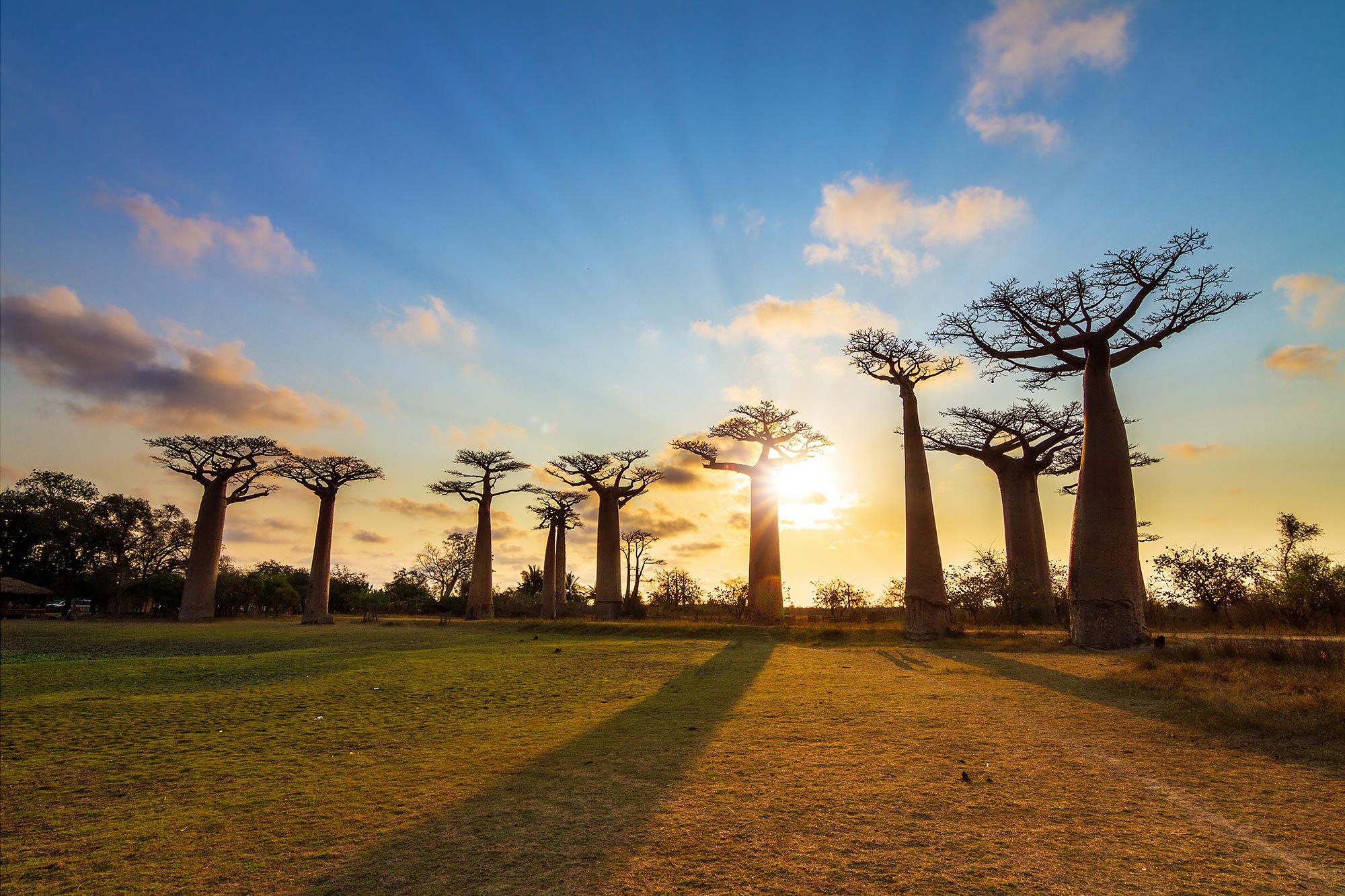
    Baobab Sunburst
    The iconic baobabs, or upside-down trees, are culturally significant and have inspired various arts and traditions. An international research collaboration revealed species radiation in Madagascar, followed by the long-distance dispersal of two species to Africa and Australia. Analyzing genomes, scientists found patterns influenced by climate change over millions of years.

    The mystery behind the origin, evolution, and dispersal around the world of iconic baobabs has been solved by scientists.

    Also known as upside-down trees, or the tree of life, the iconic baobabs have much cultural significance, inspiring innumerable arts, folklore, and traditions. A research paper published in the scientific journal Nature reveals a remarkable example of species radiation in Madagascar followed by long-distance dispersal to Africa and Australia. With speciation, an astonishing divergence of pollination mechanisms evolved, that exploit hawkmoths, bats, and lemurs for a simple nectar reward.
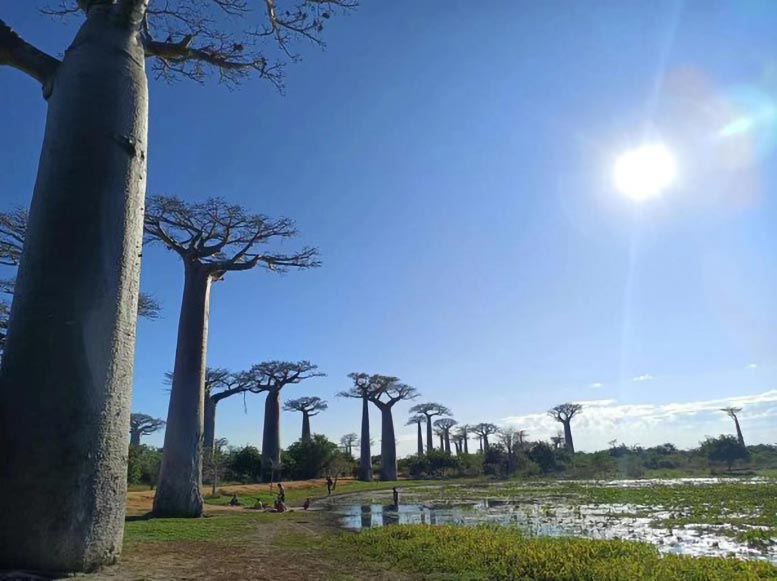
    Baobab Landscape
    Baobab landscape. Credit: Alex Antonelli (Royal Botanic Gardens, Kew)

    The study involved international collaboration between Wuhan Botanical Garden (China), Royal Botanic Gardens (Kew, UK), University of Antananarivo (Madagascar), and Queen Mary University of London (UK).
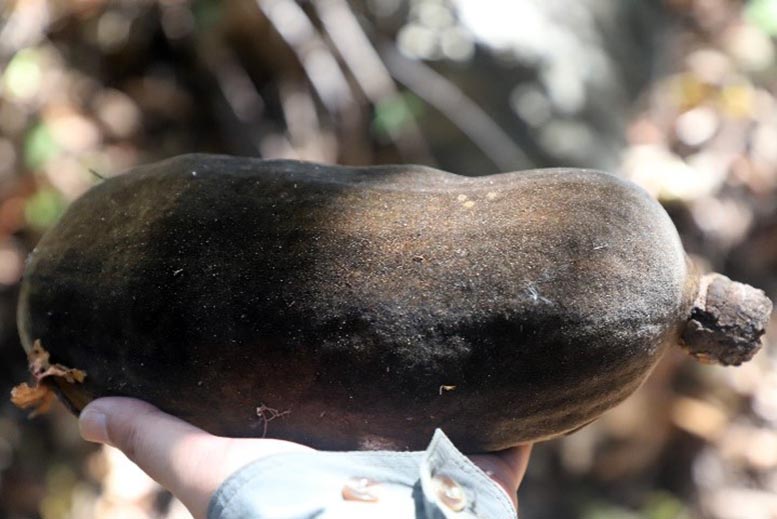
    Baobab Fruit
    Baobab fruit. Credit: Alex Antonelli (Royal Botanic Gardens, Kew)
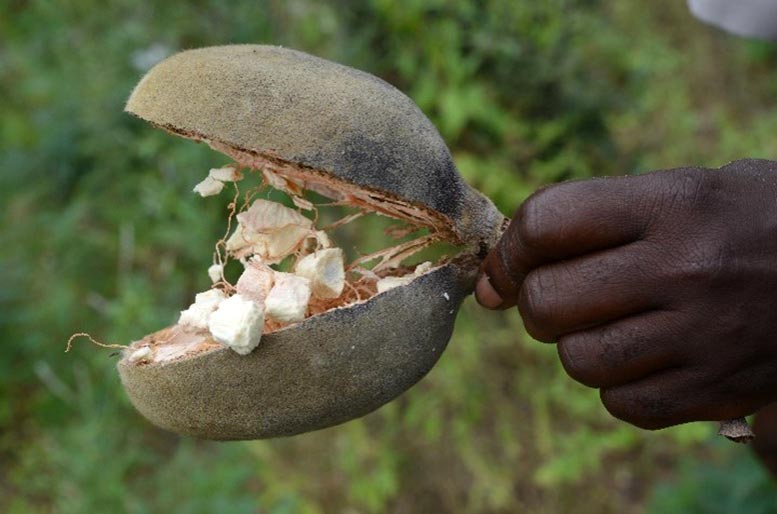
    Baobab Fruit Open
    Baobab fruit. Credit: Alex Antonelli (Royal Botanic Gardens, Kew)

    Baobabs’ Unique Growth and Pollination

    The charismatic baobabs have astonishing growth forms, reaching huge sizes with massive trunks, but apparently diminutive crowns, giving them their iconic appearance as upside-down trees. The team first assembled the genomes of the eight recognized species and worked out their patterns of speciation. They then analyzed the genomes themselves and discovered that the ancestor of all eight species most likely radiated in Madagascar, where they made hybrids, before two species underwent astonishing long-distance travels, one to Africa and another to Australia. In that radiation, the species evolved different flower structures to attract hawkmoths, lemurs, and bats.
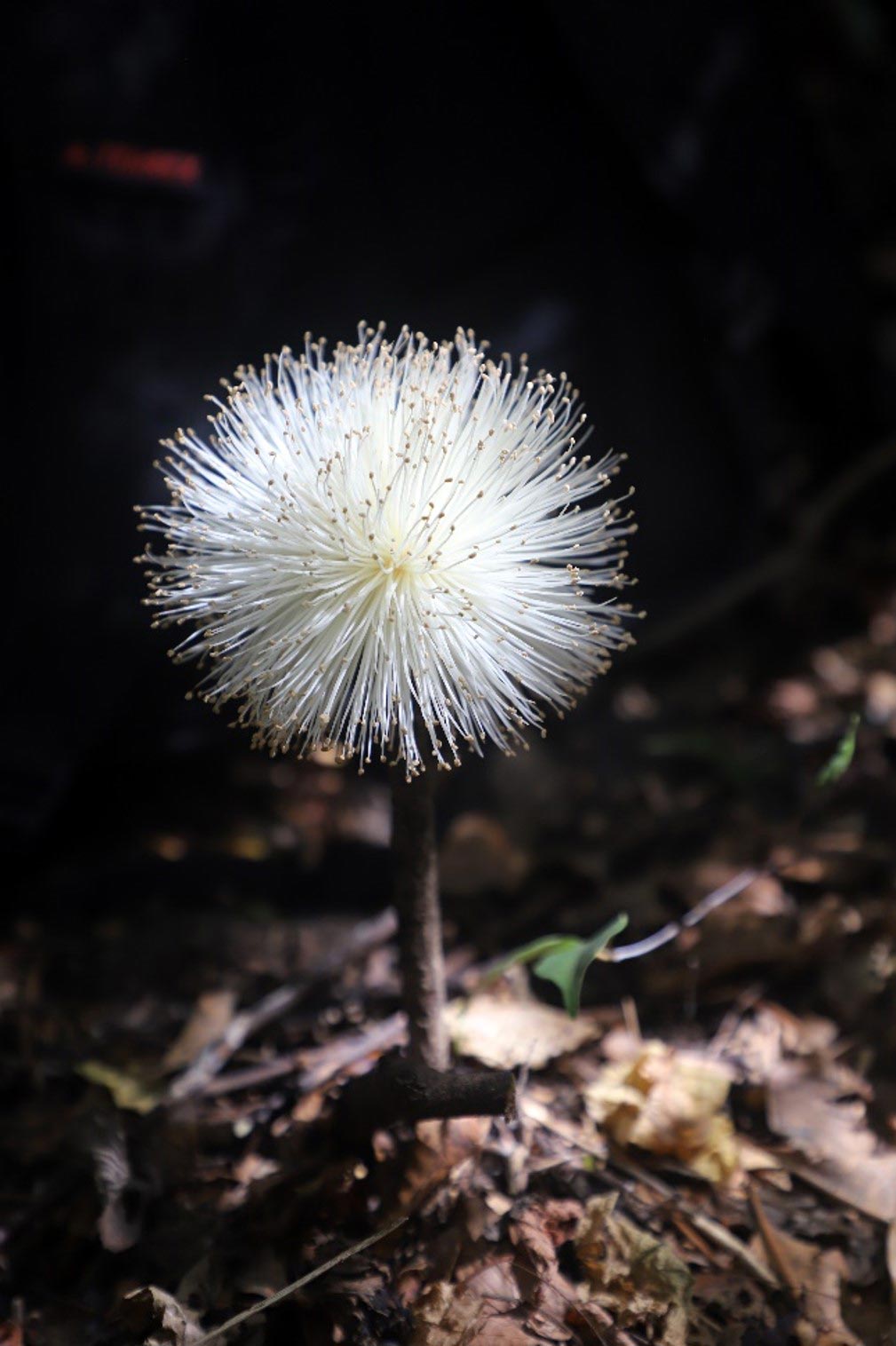
    Baobab Flower
    Baobab flower. Credit: Alex Antonelli (Royal Botanic Gardens, Kew)

    Insights From Leading Researchers

    Professor Andrew Leitch at Queen Mary University of London said, “We were delighted to be involved in this project uncovering patterns of baobab speciation in Madagascar followed by the astonishing long-distance dispersal of two species, one to Africa and another to Australia. This was accompanied by the evolution of some fascinating pollination syndromes involving hawkmoths, lemurs, and bats.”
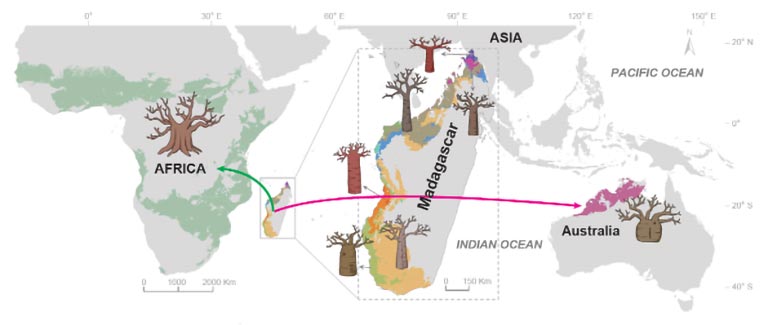
    Baobabs Origin
    Origin of the baobabs. Credit: Queen Mary University of London

    Dr. Ilia Leitch at Royal Botanic Garden Kew said, “This work has uncovered new insights into the patterns of speciation in baobabs and shows how climate change has influenced baobab distribution and speciation patterns over millions of years.”
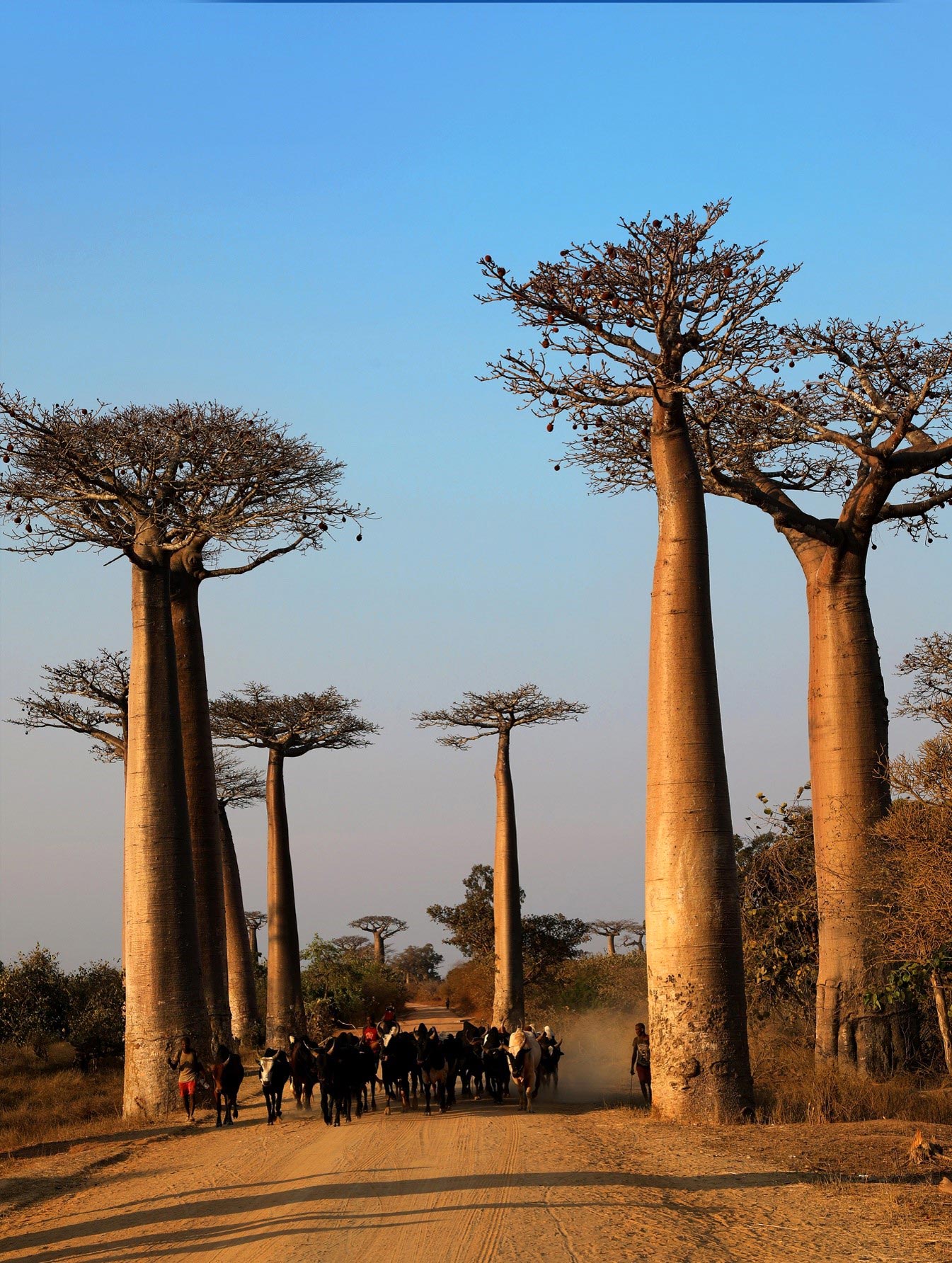
    Tall Baobabs
    Baobabs. Credit: Alex Antonelli (Royal Botanic Gardens, Kew)

    Husband and Wife Research Team

    Husband and wife team Andrew and Ilia Leitch at Queen Mary University of London and Royal Botanic Gardens Kew said. “We were delighted to be involved in this project uncovering patterns of baobab speciation in Madagascar before the astonishing long-distance dispersal of two species, one to Africa and another to Australia. The work also provides new insights into how climate change has influenced baobab distribution and speciation patterns over millions of years.”

    For more on this research, see Decoding the Mysterious Origins of Baobab Trees.

    Reference: “The rise of baobab trees in Madagascar” by Jun-Nan Wan, Sheng-Wei Wang, Andrew R. Leitch, Ilia J. Leitch, Jian-Bo Jian, Zhang-Yan Wu, Hai-Ping Xin, Mijoro Rakotoarinivo, Guy Eric Onjalalaina, Robert Wahiti Gituru, Can Dai, Geoffrey Mwachala, Ming-Zhou Bai, Chen-Xi Zhao, Hong-Qi Wang, Sheng-Lan Du, Neng Wei, Guang-Wan Hu, Si-Chong Chen, Xiao-Ya Chen, Tao Wan and Qing-Feng Wang, 15 May 2024, Nature.
    DOI: 10.1038/s41586-024-07447-4

    Never miss a breakthrough: Join the SciTechDaily newsletter.
    Follow us on Google and Google News.

    Climate Change Conservation Endangered Evolution Queen Mary University of London Trees
    Share. Facebook Twitter Pinterest LinkedIn Email Reddit

    Related Articles

    Decoding the Mysterious Origins of Baobab Trees

    Massive Carbon Storage: Protecting Very Old Trees Can Help Mitigate Climate Change

    Cloud Forest Trees Depend on Fog

    All Coral Reefs May be Dying by 2100

    Data Shows 2010 Amazon Megadrought Caused Serious Devastation

    UK’s 90 Million Ash Trees Are Likely to be Wiped Out

    Study Looks at the Role of Climate Change in Extinction

    Alterations in Seawater Chemistry Linked With Past Climate Change

    Antarctic Ecosystems Threatened by Invasive Alien Species and Climate Change

    Leave A Reply Cancel Reply

    • Facebook
    • Twitter
    • Pinterest
    • YouTube

    Don't Miss a Discovery

    Subscribe for the Latest in Science & Tech!

    Trending News

    Scientists May Have Found the Key to Jupiter and Saturn’s Moon Mystery

    Scientists Uncover Brain Changes That Link Pain to Depression

    Saunas May Do More Than Raise Body Temperature – They Activate Your Immune System

    Exercise in a Pill? Metformin Shows Surprising Effects in Cancer Patients

    Hidden Oceans of Magma Could Be Protecting Alien Life

    New Study Challenges Alzheimer’s Theories: It’s Not Just About Plaques

    Artificial Sweeteners May Harm Future Generations, Study Suggests

    Splashdown! NASA Artemis II Returns From Record-Breaking Moon Mission

    Follow SciTechDaily
    • Facebook
    • Twitter
    • YouTube
    • Pinterest
    • Newsletter
    • RSS
    SciTech News
    • Biology News
    • Chemistry News
    • Earth News
    • Health News
    • Physics News
    • Science News
    • Space News
    • Technology News
    Recent Posts
    • Hidden “Trade Winds” Inside Cells Could Explain Cancer Spread
    • Humans Owe Their Eyes to a Tiny One-Eyed “Cyclops”
    • Researchers Capture Quantum Interference in One of Nature’s Rarest Atoms
    • Ancient DNA Reveals Irish Goats Have a 3,000-Year-Old Lineage Still Alive Today
    • Historians Reveal Secrets of the Strange Hat Wars That Shook Early Modern England
    Copyright © 1998 - 2026 SciTechDaily. All Rights Reserved.
    • Science News
    • About
    • Contact
    • Editorial Board
    • Privacy Policy
    • Terms of Use

    Type above and press Enter to search. Press Esc to cancel.