
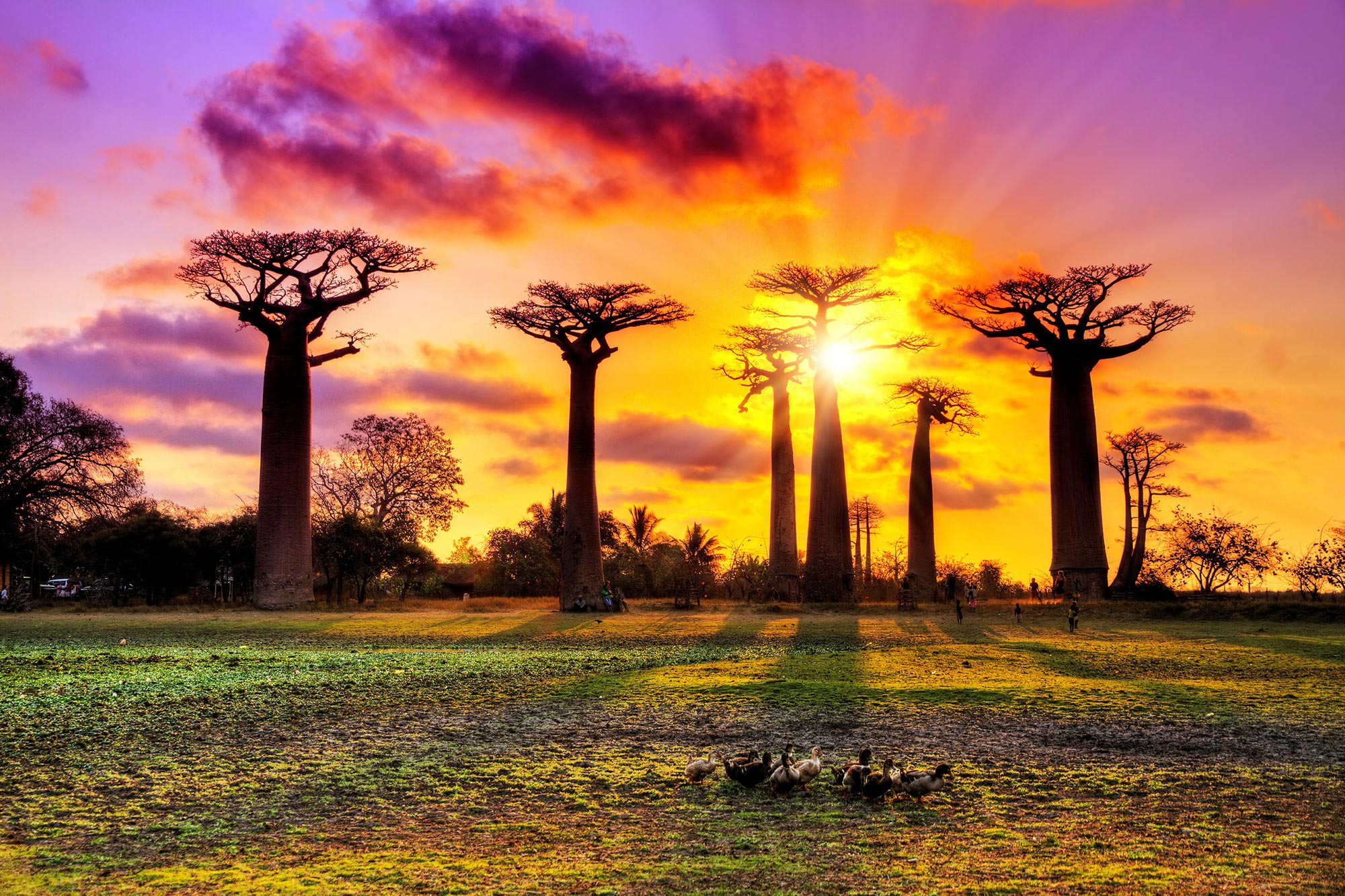
Recent genomic research suggests that baobabs originated in Madagascar and later dispersed to Africa and Australia. Factors like climate and sea level changes influenced their evolution. Rising sea levels threaten their expansion, necessitating urgent conservation. Some species may be reclassified as critically endangered due to significant population declines.
The baobab (Adansonia), also known as the “upside down tree,” is a genus of trees with eight extant (in existence currently) species. With their strange look, they have a long history of humans marveling at them. For as much admiration the baobabs get, there is an equal amount of mystery surrounding their origin.
Genomic and ecological analyses recently done by a global research team led by Sino-Africa Joint Research Center, CAS (hosted by Wuhan Botanical Garden of the Chinese Academy of Sciences), suggest that Madagascar, is the origin from where all other baobab species hail. With a deeper understanding of the baobabs’ genetics, researchers are hoping to uncover some clues on what can be done to aid in the conservation of these phenomenal trees under rapidly changing environments.
Researchers published their results today (May 15) in the scientific journal Nature.
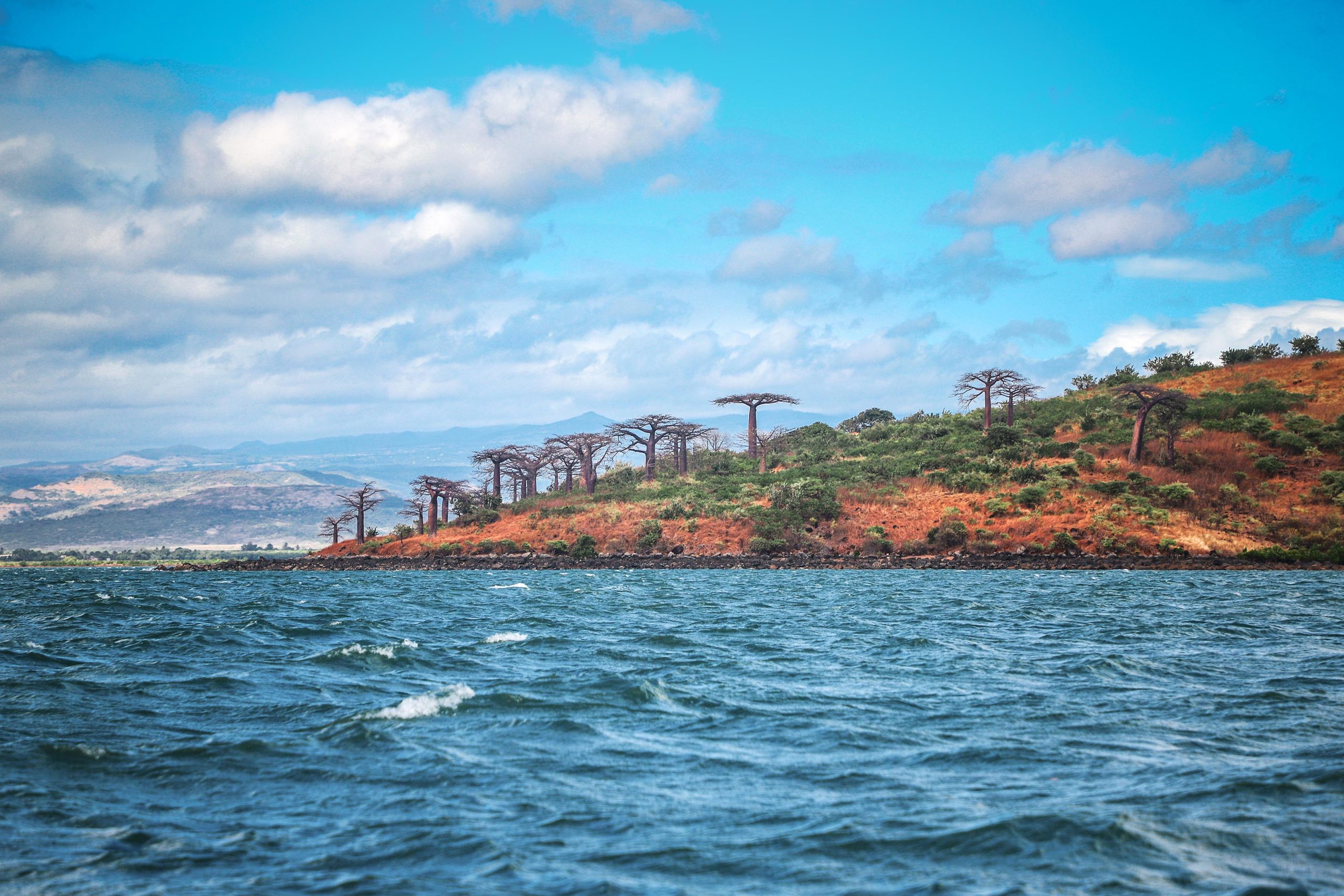
Madagascar’s Unique Flora and Fauna
Madagascar is known for its intriguing and unique flora and fauna, including the wondrous baobab tree. Their fascinating characteristics have led to the trees gaining the monikers “mother of the forest” and “tree of life.” However, despite the cultural significance of the baobabs and their influence, not much is known about their evolutionary history.
Using high-quality genomic data from all eight extant baobab species, the evolutionary history of the baobab lineage has been uncovered and proposed. The data points to baobab origination in Madagascar with later dispersion to Africa and Australia; more specific factors such as climate, animal pollinators, and in particular, local sea level changes, have seemed to shape each species to its environment.
Baobabs’ Genetic Lineage
According to the genomic data regarding baobab lineage, the most likely scenario that is compatible with the exchange of genes throughout baobab species is that all baobabs originated in Madagascar. Of the eight species, six of those baobab species’ range is limited to Madagascar.
“What we see about baobabs in Madagascar today was greatly influenced by both interspecific competition and the geological history of the island, especially changes in local sea levels,” said Dr. WAN Junnan, first author and researcher from WBG.
Having a solid understanding of how sea level, and therefore climate change and subsequent habitat loss, affects the Malagasy baobab can give insight into how the other species of baobabs might fare when faced with similar issues. According to the global mean sea level (GMSL) over the past 10 million years, researchers extrapolated that baobab trees were more likely to disperse and expand when sea levels were lower. If this trend continues to hold up, rising sea levels from a changing climate could hinder the population expansion of baobabs, and already might have had an impact.
Conservation Challenges
The lowered chance of expansion coupled with the distinct ecological niches baobabs occupy is a recipe for a threatened population. Then, adding in habitat loss of the trees themselves along with their pollinators like fruit bats and hawkmoths, and conservation of baobabs becomes a pressing issue.
Researchers have proposed the classification of some baobab species be reconsidered by the IUCN Red List of Threatened Species. This reclassification from endangered to critically endangered requires the cause of the decline to be known and a decline in population of at least 90%, which is the case for some species of baobab trees.
Future Research and Conservation Efforts
The work on the genetic data and history of baobab species is being done to preserve their presence in the ever-changing landscapes of the world. To move towards conservation and draw more attention to its distinctive characteristics, the researchers of this study aim to do more sampling of baobab trees to illuminate the evolutionary history of the Malagasy baobab. In addition to the work being done to clarify mysteries around the Malagasy baobab, other advances in learning about the diversity of flora found in Madagascar should follow suit.
Reference: “The rise of baobab trees in Madagascar” by Jun-Nan Wan, Sheng-Wei Wang, Andrew R. Leitch, Ilia J. Leitch, Jian-Bo Jian, Zhang-Yan Wu, Hai-Ping Xin, Mijoro Rakotoarinivo, Guy Eric Onjalalaina, Robert Wahiti Gituru, Can Dai, Geoffrey Mwachala, Ming-Zhou Bai, Chen-Xi Zhao, Hong-Qi Wang, Sheng-Lan Du, Neng Wei, Guang-Wan Hu, Si-Chong Chen, Xiao-Ya Chen, Tao Wan and Qing-Feng Wang, 15 May 2024, Nature.
DOI: 10.1038/s41586-024-07447-4
The Scientific Research Program of Sino-Africa Joint Research Center and the National Natural Science Foundation of China made this research possible.
Never miss a breakthrough: Join the SciTechDaily newsletter.
Follow us on Google and Google News.
1 Comment
You know, the authors of this article really should have mentioned that baobab trees may have originated in Madagascar…