
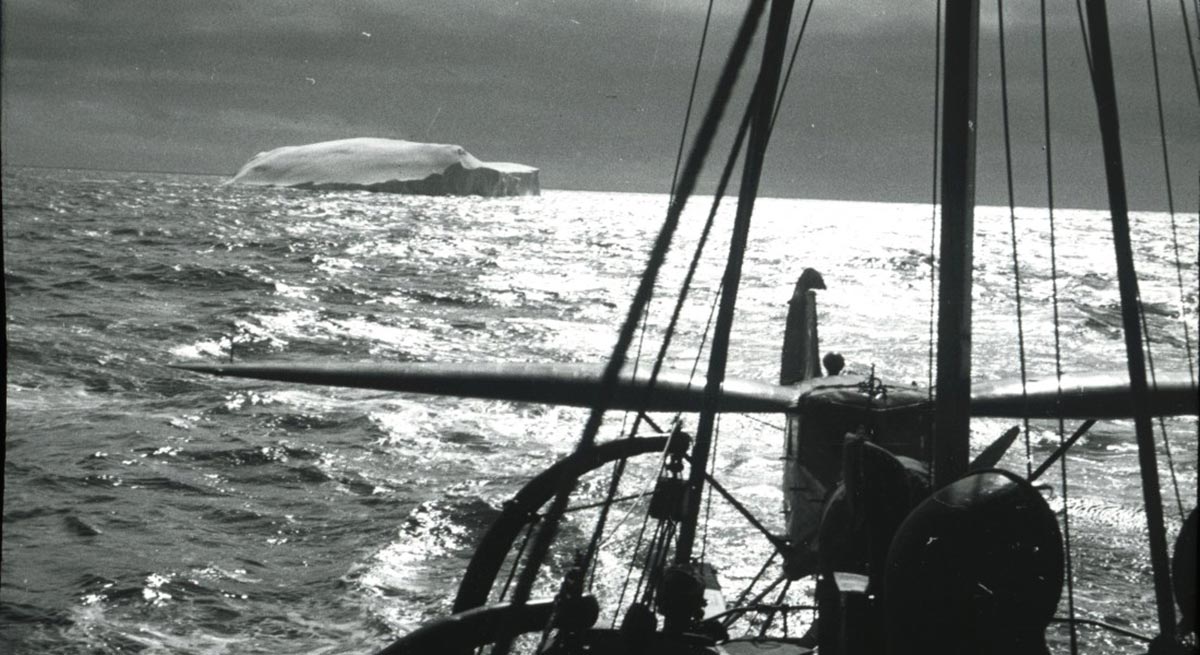
A study using a whaler’s forgotten aerial photos from 1937 shows East Antarctica’s ice has been stable and even grown, despite some early signs of weakening.
Extreme weather, melting glaciers, and rising sea levels are all indicators that the climate and the world’s ice masses are in a critical state. However, a new study from the Department of Geosciences and Natural Resource Management at the University of Copenhagen reveals a positive anomaly.
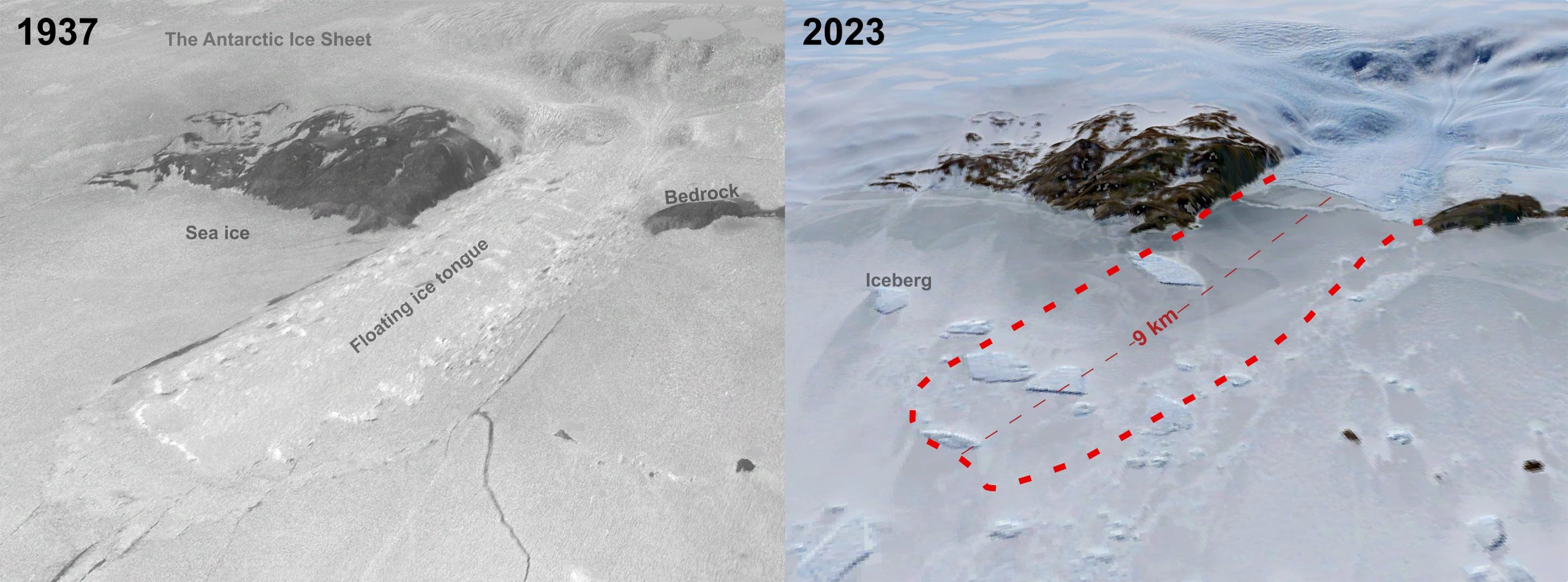
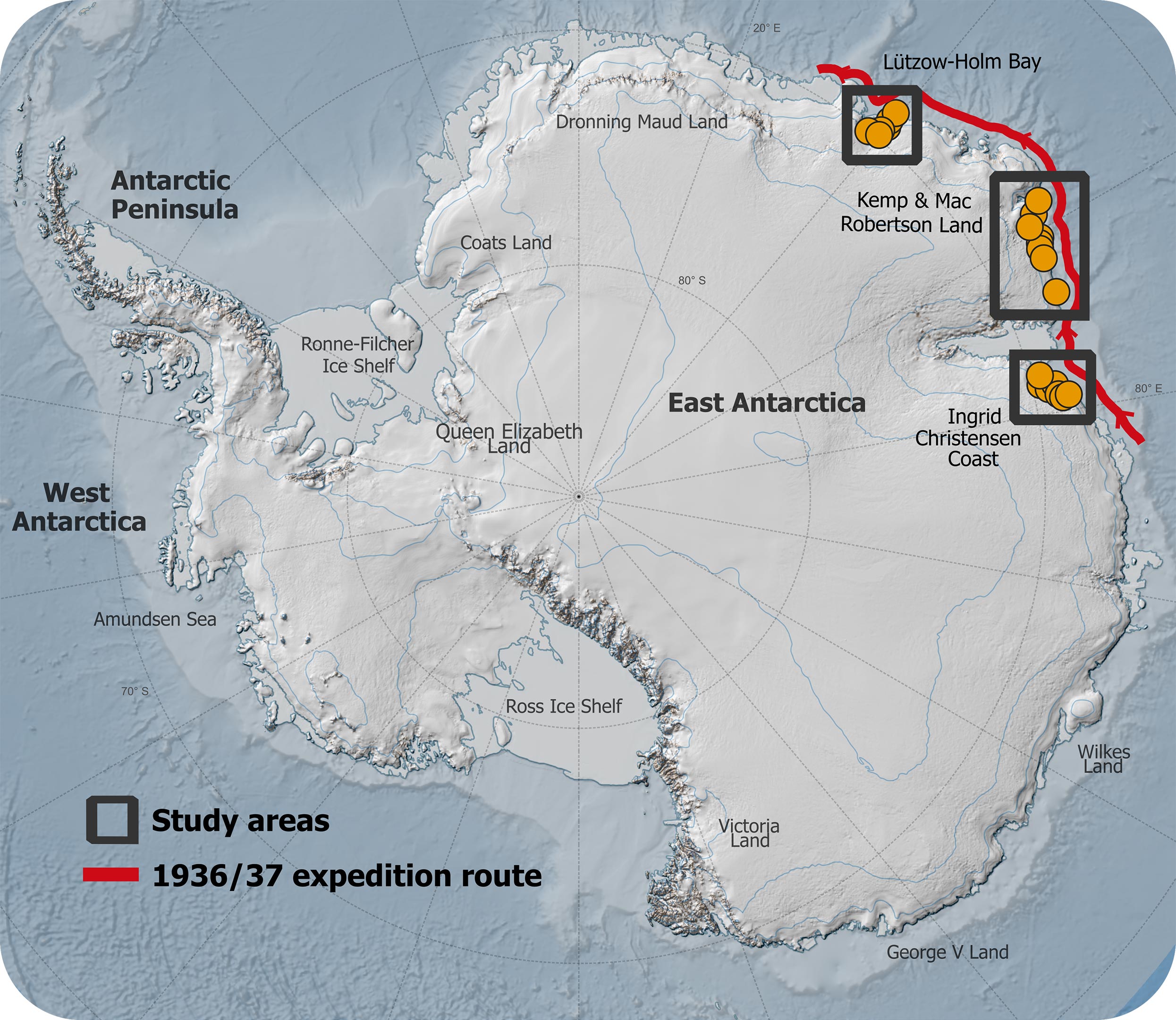
Using hundreds of old aerial photographs dating back to 1937, combined with modern computer technology, researchers have tracked the evolution of glaciers in East Antarctica. This area, which spans approximately 2,000 kilometers of coastline, contains as much ice as the entire Greenland Ice Sheet. By comparing the historical aerial photos with modern satellite data, researchers determined the glaciers’ movement and changes in size, revealing that the ice has not only remained stable but also grown slightly over the last 85 years, partly due to increased snowfall.
“We constantly hear about climate change and new melt records, so it’s refreshing to observe an area of glaciers that has remained stable for almost a century,” says PhD student Mads Dømgaard, the study’s first author.
Early Signs of Change
Despite the overall stability, the research also reveals the first signs of changes in the sea ice surrounding the glaciers, indicating that these stable East Antarctic glaciers might shrink in the future.
“Our results also indicate weakening sea ice conditions, making the glaciers’ floating ice tongues more vulnerable and unable to grow as large as seen in the early aerial images from 1937. We know from other parts of Antarctica that the ocean plays an extremely important role and drives the massive and increasing melt we see in e.g. West Antarctica,” says Dømgaard.
Hidden From the Nazis
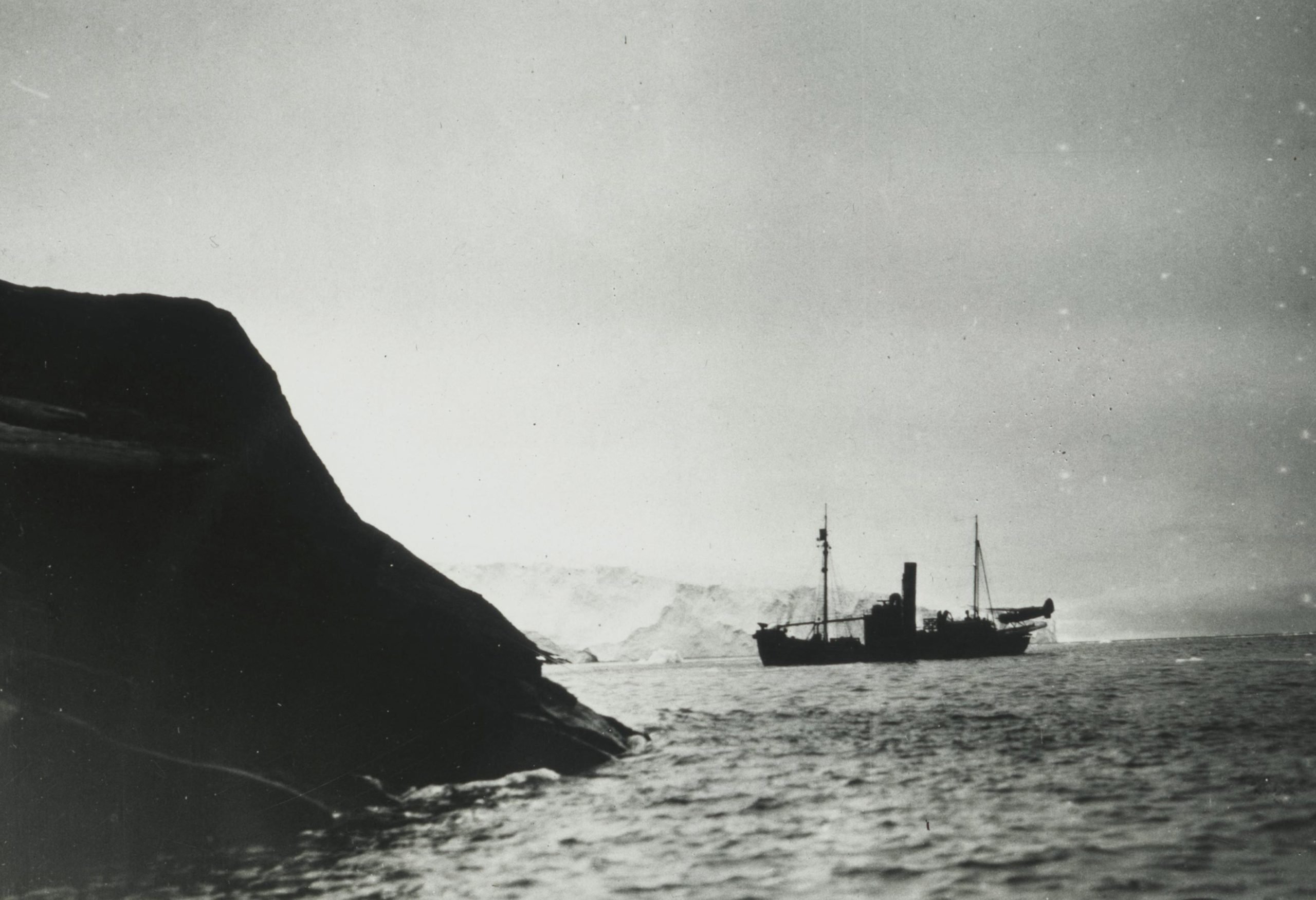
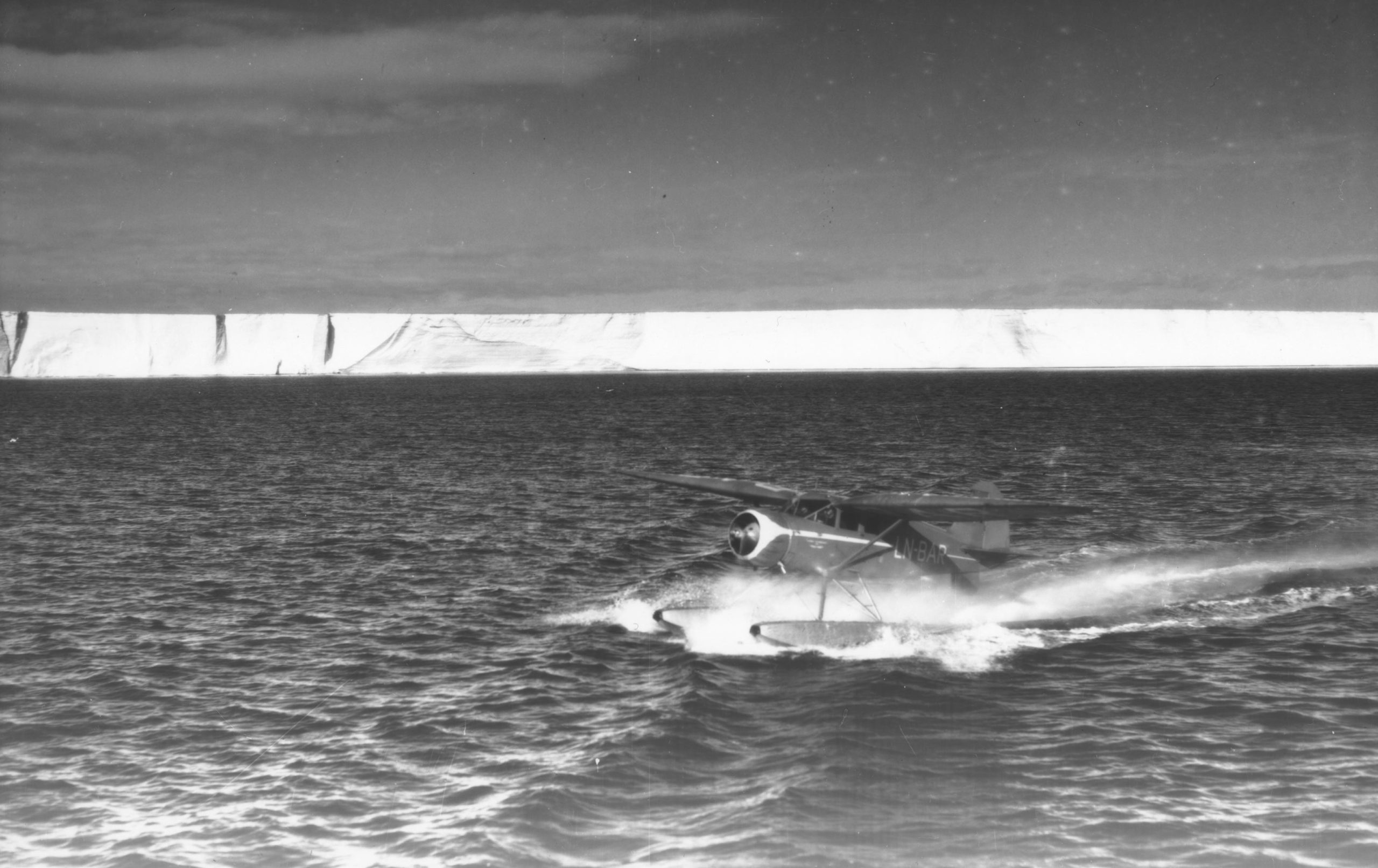
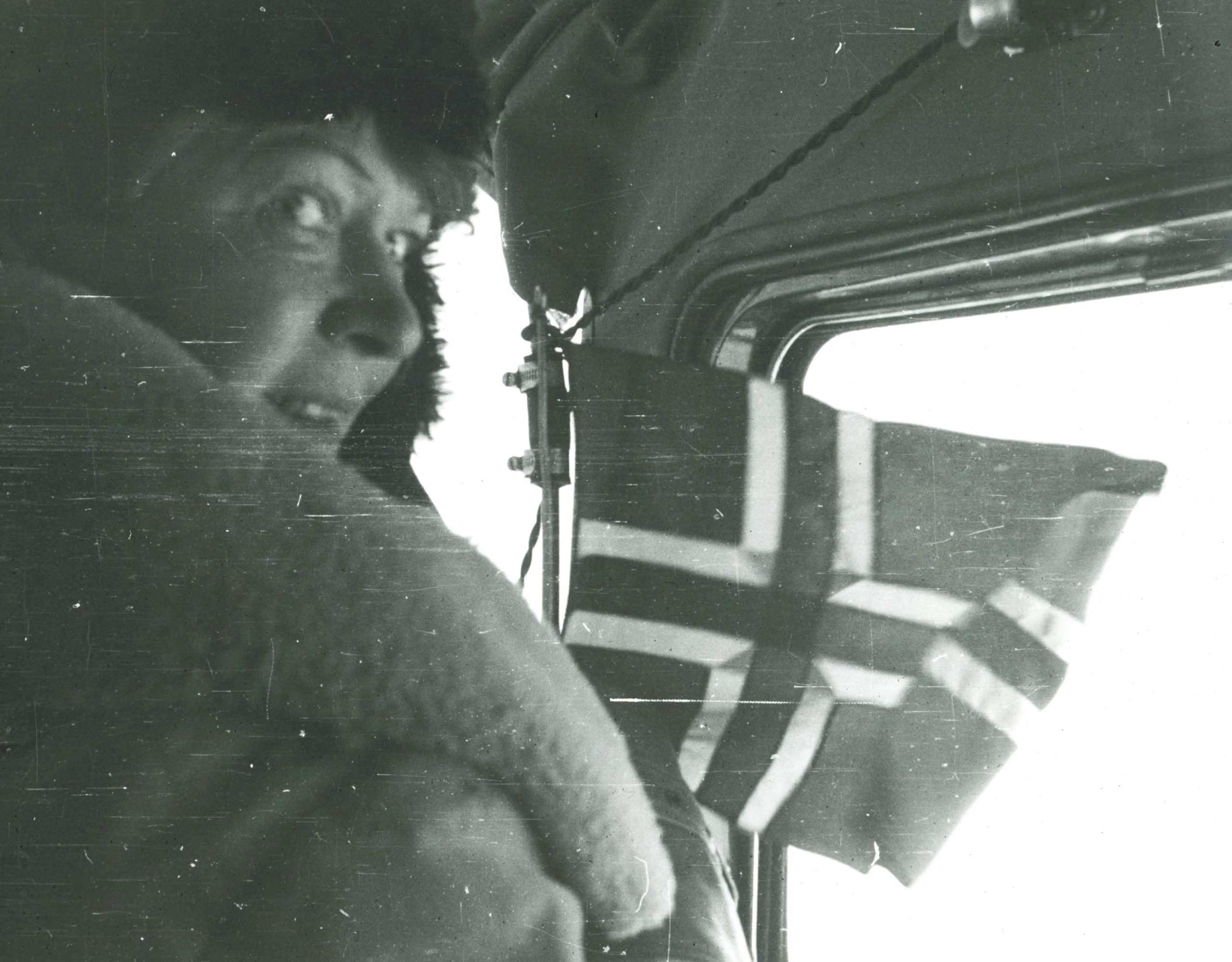
Most of the images used in the study were captured during a 1937 expedition organized and paid for by Norwegian whaler Lars Christensen. The mission aimed to produce the first maps of this part of East Antarctica, but the maps were never published due to the German invasion of Norway. Since then, the images have been stored at the Norwegian Polar Institute in Tromsø and forgotten.
When the researchers from the University of Copenhagen read about the expedition, they realized that valuable images were likely hidden in an archive in Norway. They traveled to Tromsø and reviewed all 2200 images taken during the expedition. They supplemented the Norwegian aerial images with images of the same glaciers from Australian surveys conducted between 1950 and 1974.
“By comparing the historical aerial photos with modern satellite data, we have gained critical knowledge about glaciers that we would not otherwise have had. I think it’s fantastic that these old images can be used to generated new research results almost 100 years after they were taken,” says Assistant Professor Anders Bjørk from the University of Copenhagen, who leads the group working with the historical images.
Potential for Rapid Sea Level Rise
The Antarctic Ice Sheet is receiving increasing attention from researchers, due to its potential for extremely large and rapid sea level rise. Unlike Greenland, very little was known about Antarctica glaciers until the 1990s, when the first good satellite observations became available.
“Early observations of glaciers are extremely valuable as they give us a unique insight into how the ice has evolved through a varying climate and whether current changes in the ice exceed the glaciers’ normal cycle of advance and retreat,” explains Dømgaard.
Enhancing Predictive Models
According to the researcher, solid, long-term data is crucial for producing accurate predictions of future glacier evolutions and sea level rise, and this study provides new insights into a vast area in East Antarctica.
“The long time series of glaciers improves our ability to make more accurate models of future ice changes, as the models are trained on historical observations,” concludes Bjørk.
The findings were recently published in Nature Communications, resulting from a collaborative effort involving researchers from the University of Copenhagen, the Norwegian Polar Institute, the Arctic University of Norway, and the Institute of Environmental Geosciences in France.
More About the Study
- Out of 2200 images photographed from seaplanes in 1937, 130 were selected for the analysis.
- The researchers combined the historical photos with modern satellite data to create 3D reconstructions of the glaciers.
- The Norwegian aerial images were supplemented with 165 aerial images of the same glaciers from Australian surveys conducted between 1950 and 1974. This allowed the researchers to examine the evolution of the glaciers over different periods and calculate historical ice flow speeds for selected glaciers.
- Compared to modern data, the ice flow speeds are unchanged. While some glaciers have thinned over shorter intermediate periods of 10-20 years, they have remained stable or grown slightly in the long term, indicating a system in balance.
Reference: “Early aerial expedition photos reveal 85 years of glacier growth and stability in East Antarctica” by Mads Dømgaard, Anders Schomacker, Elisabeth Isaksson, Romain Millan, Flora Huiban, Amaury Dehecq, Amanda Fleischer, Geir Moholdt, Jonas K. Andersen and Anders A. Bjørk, 25 May 2024, Nature Communications.
DOI: 10.1038/s41467-024-48886-x
The research was funded by the Villum Foundation.
Never miss a breakthrough: Join the SciTechDaily newsletter.
Follow us on Google and Google News.
32 Comments
“Despite the overall stability, the research also reveals the first signs of changes in the sea ice surrounding the glaciers, indicating that these stable East Antarctic glaciers MIGHT shrink in the future.”
That is the way a lawyer talks, not a scientist! Real scientists use numerical measurements and associated uncertainty intervals for measurements and calculations, not unsupported speculation that is little more than arm waving. Just what are the “first signs” referred to? What confidence do we have that any recent changes are actually harbingers of a new trend, rather than natural variations? From the NOAA website [ https://www.climate.gov/news-features/understanding-climate/understanding-climate-antarctic-sea-ice-extent ] “More so than the Arctic, Antarctic sea ice extents are extremely variable, both seasonally and from year to year. In the past decade there have been record and near-record high extents, as well as record and near-record lows. The overall long-term trend (since 1979) is nearly flat.”
It is almost as though the writer of the press release was told to insert something negative to counteract the challenges to the “Modern Climate Narratives.” Oh, yes — I MIGHT win the lottery.
85 years is not historically correct.
Why not 400 years or 2000 years
Roflmao .. seriously.. did you even read more than the headline????
Recourcefulwhaling expedition
Wish I was aboard.
Increased snowfall in one part of the world says nothing about whether the average global temperature is trending upwards. This article looks at one or two trees while ignoring the forest.
Real scientists speculate about possibilities and impossibilities, hence the use of the words “might” and “may”, and also their negatives. Also another word “could” and its negative.
It is often said that mathematics is the language of science. Perhaps you don’t speak the language. Thus, a lot gets lost in the translation. Real scientists don’t speculate about things for which they have no evidence. Evidence is best obtained by measurement.
How would you propose to determine which is more probable, “Antarctic glaciers might shrink in the future,” or “Antarctic glaciers might expand in the future”? Of course, it is also possible (perhaps more probable) that both could be true. However, how does one make a determination of the probability or proportion of the events? The bottom line is that saying something like “X might happen” is of little value because we don’t know the probability (or range of probability) of it happening, or the extent of the impact should it happen. It is like a ‘sucker’s bet,’ claiming that something “might” happen. There is no downside to being wrong and one can excuse the fact that it hasn’t happened by claiming that we just have to wait a little longer. Personally, I’m of the opinion that you really don’t understand how science is supposed to work. However, I ‘could’ be wrong.
As I think about it, I WAS wrong. The experts at using imprecise words are not lawyers. It is fortune tellers who hedge their predictions with words that can have different meanings or interpretations. Now, can you tell me the difference between a fortune teller and someone who charges money for unsupported predictions of the future and calls themselves a scientist? In short, what is the essence of a scientist?
85 years is not historically correct.
Why not 400 years or 2000 years
“Real scientists don’t speculate about things for which they have no evidence.”
Obviously, I have never met a Real Scientist, nor read a Real Scientific Paper. Science is not just error bars and 95% probabilities; it includes (heaven preserve us!) speculation. It includes inventing a crazy idea and then inventing tests of that idea to see if it works, or not. The essence of a scientist is someone who thinks outside the box (despite antagonistic peers) and can organise a grant to test that thinking.
Perhaps you’ve never taken a modern Statistics course. Over the past 20 years or so, a) Study authors are now encouraged to use everyday descriptive words like “could” “might” “probably” “highly probable”, etc. b) Scientists don’t use these words lightly. In this context, the words “might” and “could” indicate that current data analysis suggests a probability of less than one sigma. (“probably” means sigma 1 or slightly higher. “Highly probable” means sigma close to 2.).
Another new product is a ‘plain text’ version of the abstract, without jargon, so that laymen can understand what the research is about. However, in any event, because such words as “could” and “might” don’t have a common, agreed upon numeric meaning, it is incumbent on any scientist that intends to use such words to explicitly define what (s)he means in their use, as with acronyms. I would say that if any author uses a word that does not have a widely accepted exact meaning, and does not provide their definition, they are using the word “lightly.”
The generally accepted definition of “might,” from the American Heritage Dictionary (5th ed.) is:
1. Used to indicate a condition or state contrary to fact.
2. Used to indicate a possibility or probability that is weaker than may:
3. Used to express possibility or probability or permission in the past.
Note that none of those common uses specify a numeric probability. They are, at best, rankings
You said, “In this context, the words ‘might’ and ‘could’ indicate that current data analysis suggests a probability of less than one sigma. (‘probably’ means sigma 1 or slightly higher. ‘Highly probable’ means sigma close to 2.).” What are the poor physicists supposed to use when they commonly report precision to a level of 6-sigma? One of my complaints is that, on the rare occasion that a climatologist actually provides an uncertainty level, it is usually only +/- 1-sigma.
There are worse things than not having taken a ‘modern’ statistics course. Do they use numeric measurements in a ‘modern’ course, or is everything just ranked? Just because something is new does not mean that it is automatically better.
Sorry mate. I use the Oxford English dictionary and 70-odd years experience of speaking English, and neither quantify the word “could”. That lack of quantification allows one to think without being hidebound by error bars.
“Might” as a verb, and if I recall my schooldays correctly, is a subjunctive verb and is “stronger” than “may” which grants permission.
Small boy to the teacher,” Please sir, can I go to the toilet?”.
Teacher,”You can, but may not. And you must stop fidgetting!”.
Small boy, “Sir, if you won’t let me go to the toilet, I might piss my pants”.
Well here is a short history lesson folks. Those of us alive in the late 1960-70’s were told we were headed into another ice age now justa short 40 plus years we are all gonna fry because of global warming.
This information is provided by “scientists” claiming the sky is falling then and now. So which is it? Fire or ice? I put forth “scientists” have their heads up their ashes and in reality have no freaking clue what is going on with the earths climate and for proof i will offer up a few truths.
1. The planet has gone through many periods of ice ages and warmer ages.
2.the earth has a wobble in its axis of spin that has a 35,000 year cycle this natural wobble would have a huge affect on the climate world wide. A mere 5-10,000 years ago the sahara desert was green who or what caused the major shift in the earths temperature? Could this same thing also be the cause of our ” climate change” we are now supposedly experiencing today?
I in my opinion think that these modern crusaders have a serious problem with conflict of interest with political belief and the scientific method. You can take the same data sets and cherry pick them to prove any position.
We have no where near enough data or historical records to make any real informed conclusions. Besides we may as a species go extinct due to war or asteroid impact or gamma ray burst or other unknown event. Rendering homosapiens just another footnote in the planets fossil record.
The real truth is that ” scientists” have no real idea what is going on and with the very limited data of the planets climate history available to them are coming to conclusions that can not be either proved or disproved with any real certainty
You are just making stuff up. It was Newsweek and Time that made a big deal out of just one study. Even in the 1970s, the VAST majority of peer reviewed Climate studies were predicting warming. This is easily verified – why make a claim that is so easily debunked?
“… a big deal out of just one study. … Even in the 1970s, the VAST majority of peer reviewed Climate studies were predicting warming.”
Which was it, one study or a small minority?
Are you suggesting that science is done by democratic voting? That evidence contrary to the current paradigm is to be rightfully ignored? When Einstein proposed his Theory of Relativity, it was not well received. One-hundred scientists authored a paper attacking it; Einstein famously replied, “Why 100 when it would only take one to prove me wrong?”
He’s not just making stuff up. I was in elementary school in the late 60’s/early 70s, and was taught that burning fossil fuels was going to cause a new ice age, beginning sometime in the next decade. I have no idea what role Newsweek, Time or the vast majority of peer reviewed climate studies played in curriculum development, but the ice age business was definitely part of it. That’s a major driver in why older Americans, regardless of where they fall on the political spectrum, are far less concerned about climate change than younger generations are.
More snowfall in the Antarctic is a result of global warming.
Warmer air can hold more humidity leading to more snowfall – simples. Of course in some areas this leads to ice covers increasing, but the majority of glaciers worldwide are rapidly shrinking so don’t put your hopes and ignorance too highm
You are correct that the optimum temperature for snow is higher than what it has been for some time in Antarctica. However, the point is, alarmists are predicting increased melting when the actual evidence leans towards glaciers growing, with the water for the snow coming from the oceans, reducing sea level.
Unmentioned is that the planet is in the Holocene interglacial period, when glaciers SHOULD be shrinking, as they have for 10 or 11 thousand years since the last glaciation.
If glaciers are expanding, which is due to increased snowfall, you are looking at the start of the next glacial period. When warmer air is holding more moisture which condenses over glacial areas as snow, then glaciers grow, leading to… an Ice Age
No matter what consensus of hysterical climate alarmists propose, there are vast and slow cycles in the Earth’s climate that have nothing to with humans or CO2 or mineral fuels.
It is not, cannot be possible to stop the planet’s climate at some “perfect” temperature, because there is no such temperature and it would impossible anyway. The hubris of believing we will stop the next Ice age by banning plastic bags is nearly as astonishing as the fact that these believers seem unconscious of the fact that the whole climate industry is just the biggest grift ever invented.
I have frequently asked alarmists what the ideal temperature is, and why? When they do answer, which is rarely, their usual response is that the optimum was before industrialization, just because.
“asked alarmists'”
That already shows that you have prejudged their response. It is an unscientific. turn of phrase. It was a good enough question without that phrase.
Consider a sphere of rock and a slightly ellipsoidal zero degree C isotherm around it. Should it intersect the sphere at say 60 degree south and 60 degrees north then stuff south and north of those intersections would freeze, assuming it included fresh water. And that slightly ellipsoidal isotherm would intersect certain asperities on the sphere’s surface, which could be called the Himalayas.
So what is being argued about is the behaviour of that slightly ellipsoidal isotherm and, in real life on Earth, that is a very complex situation as the assorted intersections will never remain in the same place at any repeatable period of time.
On balance, CO2 etc being a known greenhouse gas and we H saps having produced a lot of it/them, particularly in the last 80 years, by burning stuff, the odds are that it is going to affect that ideal zero degree C isotherm, by raising its altitude across the equator and extending north and south its intersection points with the Earth’s surface. A complex simple concept , but things are going to get warmer than they were in places where they hadn’t, if you comprehend my unscientific terminology. And that will change how we use those places we use for living in. And H sap being an idiot and uncooperative species as a whole, we could get quite brutal about it.
No, alarmist is a PROPER term for the “scientists” who go on TV predicting doom and destruction and advocating for immediate change, which always means spending untold amounts of money on boondoggle projects that are over promised and under performing. The point is that every 10 years we get a new doomsaying narrative that will kill us all if we don’t change something RIGHT NOW, but invariably each and every one of these narratives fails to stand the test of time.
When I was growing up there was a concerted effort to “save the rainforest” because it was supposedly the “lungs of the planet”, however the science behind this claim was INCREDIBLY FLAWED, and we know now (as we arguably knew back then as well but it was suppressed) that the VAST majority of the worlds oxygen is produced in the oceans by stromatolites and sea algaes. That’s not to say that conservationism is a bad thing, but selling a false doomsday narrative to try and trick people into doing more only hurts your credibility and makes people less receptive to any issues you might bring forward later.
Your presumption that a zero degree isotherm is “ideal” shows your implicit bias. WHY is it better that we remain at the status quo? After all, in the past when we had over 40x the amount of atmospheric carbon we have today was actually a much more productive world biologically. We literally had classifications of Mega Flora and Mega Fauna and bugs the size of dogs because the air was so rich with Oxygen and Carbon. They call it a “greenhouse gas” for a reason, because it helps plants grow quickly and modern greenhouses pump up the CO2 levels to 10-20x atmospheric levels to increase plant biomass production significantly. Heck even NASA has documented the CO2 Fertilization effect and the Greening of the Planet that has occurred from it.
So again, I ask, by what metric do you assert that the ideal situation is to maintain a 0 degree isotherm? THAT is the problem, science is NOT equipped to recommend “ideal” situations because there is always tradeoffs. The moment you start advocating for a particular preference you have stopped arguing science and started down the path of politics.
It seems that no matter what data is gathered or, in this case, discovered, climate “scientists” always decide that the data indicates their preferred outcome, even if the data is the opposite of what they hypothesized was supposed to happen. I am a great respecter of science, but I have no trust whatsoever in “scientists” who, after all, were arguably responsible for more human misery in the last 140 years than any other category of professional save politicians (and, here, they are on the same side); Need I say more than Covid and its response? As for the climate, I think the only rational response to alarmism is “So what?” All the measures proposed by the “masters of the universe” for responding to this “emergency” are poised to cause more direct human suffering and death than anything global warming can ever cause. I would much rather take my chances with whatever nature doles out (which, by the way, is not “in balance” but in a constant state of flux) than anything our “betters” want to impose. Moreover, the high priests and priestesses of climate change do not live as though they believe what they are saying, so why should anyone else?
Why do I ever read the comments to articles relating in any way to “climate change”, the discussion immediately follows the same pattern: The “alarmists”, who have data that there may be a problem, but present it as it is a problem vs the anti-alarmists who push the idea that “may be” is not good enough, so we should wait and see until it is undeniably a problem. The concept of the point of no return is lost on them. The result is that a lot of nit-picking is always a component. Thrown in for good measure is the idea that if heroic effort is exerted to avoid a problem, and the problem is then ameliorated, we didn’t need the effort after all.
The headline on the article is deliberately deceiving.
I believe that it is a deeply disturbing editorial choice to grab eyeballs.
There is nothing in the article that supports “Challenging Modern Climate Narratives:” The author of the paper is qupted : it’s refreshing to observe an area of glaciers that has remained stable for almost a century,” says PhD student Mads Dømgaard, the study’s first author. The article then goes on to note that ice tounge. But also “Our results also indicate weakening sea ice conditions, making the glaciers’ floating ice tongues more vulnerable and unable to grow as large as seen in the early aerial images from 1937.”
This is not a challenge to the current scientific narrative. Repeatedly that consensus has noted that local conditions vary – that global warming is consistent with local cooling as well as local heating. The planet is a really complex air, ocean, wind, solar radiation absorbing, heat rejection effecting system. Retreating to saying that it is a challenge t the loony fringe that all of Antarctica is melting like an ice cube in a deep fat fryer is disingenious.
In short. Shame. The editor responsible should be censured or fired.
To add to that: Manhattan still exists, and the Netherlands still exist. Whatever change might there be in the climate, it doesn’t really impact the sea levels.
The Netherlands is a wealthy country with good flood defences to protect it from storm surges such as the one in 1953 which affected the UK and Belgium as well. Even so the Netherlands has suffered flooding recently due to more extreme precipitation. It is far harder for a low lying country to drain heavy precipitation away.
What does that have to do with anything that is being discussed? The point that was made is that the narrative of catastrophic rising sea levels has been thoroughly debunked. Sea levels are rising at the same rate they have been for over 100 years despite the narratives saying that we can expect this to change from mm’s per year to cm or even m per year…literally no evidence demonstrates an increase in the rate of sea level rise.
Some places have more ice growth and others less growth, some have shrinkage. Some areas are thickening and then others aren’t – and then they change – reversing roles. Such is the true dynamic nature of icy environments that aren’t meant to be as solid and sedentary as stone. The same happens with glacial zones and the Arctic too. The world is coming out of the ‘Little Ice Age’ caused by Year 1257’s massive sulphureous eruption of Mount Samalas. By the way, when enough polar ice melts around the poles then it shuts off the warmer saltier ocean current conveyor systems coming from the equatorial regions – thus creating another period of deep freezing again at and around the poles. This is by default, naturally self regulating and always has been over the past 11,000 years. Remember, life thrived most when there was no ice at all on Earth and it was much warmer, carbon-rich and oxygen-filled everywhere. Even over the past 11,000 years there have been much hotter times across the planet for many centuries.
Oh my! Banning plastic bags and reducing the use of plastics is about the environment and stopping the increasing horror of micro plastics in every part of the planet including living organisms! You have micro plastics in your own body, we all do due our careless over use of plastics and lack of care disposing of them. Also the lack of filtration washing our clothes, releasing the fibres into the food chain via water…
Climate change is down to the increased density of carbon dioxide, methane and other polluting gases reducing the amount of oxygen in the “air.” The mix is now not suitable for the stability of the planets climate. Yes similar has happened in the past but climate change has taken thousands of years as opposed to a few decades!
There is no hubris. The extreme weather events present themselves with increasing regularity almost over the planet.
Snow does not increase the size of an ice shelf unless the temperature is also cold enough to freeze the surrounding ocean first. Without ice snow turns to water when it lands on the ocean…
Glaciers are disappearing the world over.
The fact is we need to change how we live to give those who come after us any chance…