
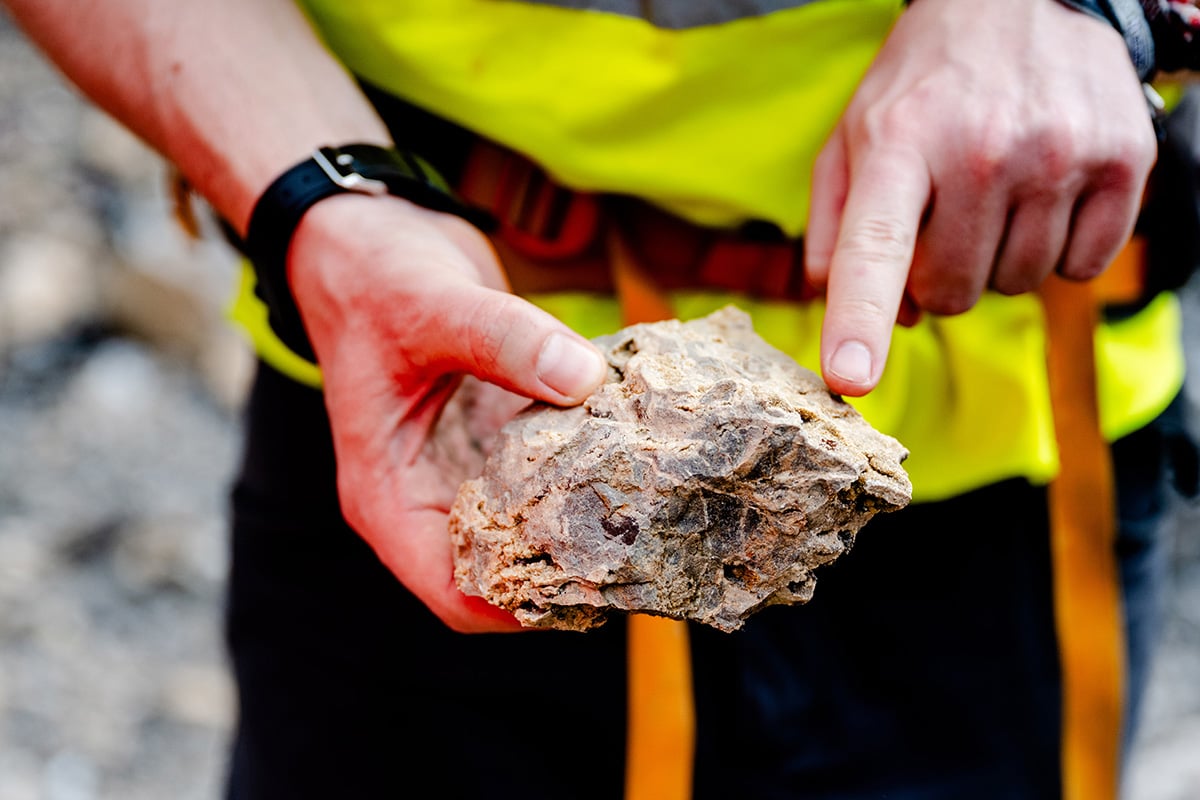
Rocks undergo transformations over millions of years, but they still hold valuable information about the climate during their formation.
Fluids circulating underground gradually alter rocks over time. These processes must be considered when using rocks as climate archives. Dr. Mathias Müller from the Sediment and Isotope Geology research group at Ruhr University Bochum, Germany, along with international colleagues, has detailed which climate information remains preserved in 380-million-year-old limestones from Hagen-Hohenlimburg.
What’s more, his analyses allow him to draw conclusions about how suitable the rock is today for deep geothermal use. The results of his research have been published in the journal Geochimica et Cosmochimica Acta on July 1, 2024.
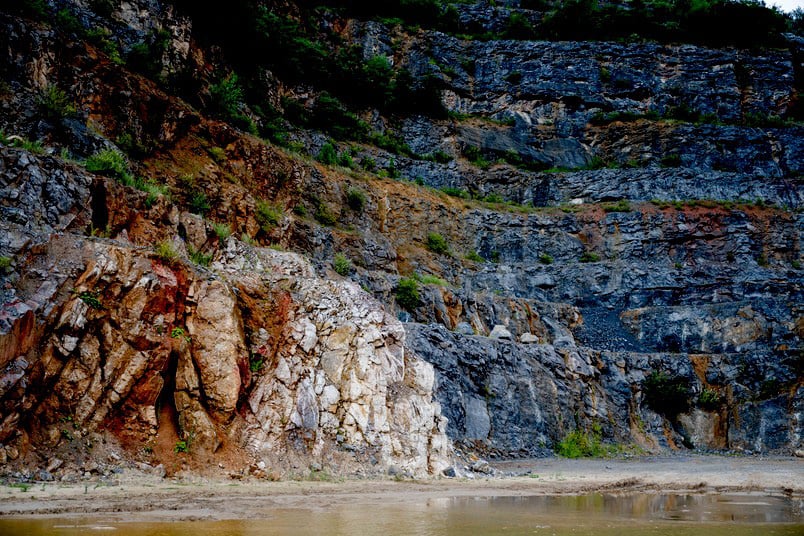
Climate archive in the rock
In order to gain a better understanding of today’s climate, it can help to look into the past. Researchers use so-called proxies for this purpose: indirect indicators of the climate in natural archives such as ice cores, tree rings or dripstones. “If we want to learn anything about the climate several million or even billions of years ago, we examine sedimentary rocks that may even have stored the seawater temperature from hundreds of millions of years ago,” explains Mathias Müller.
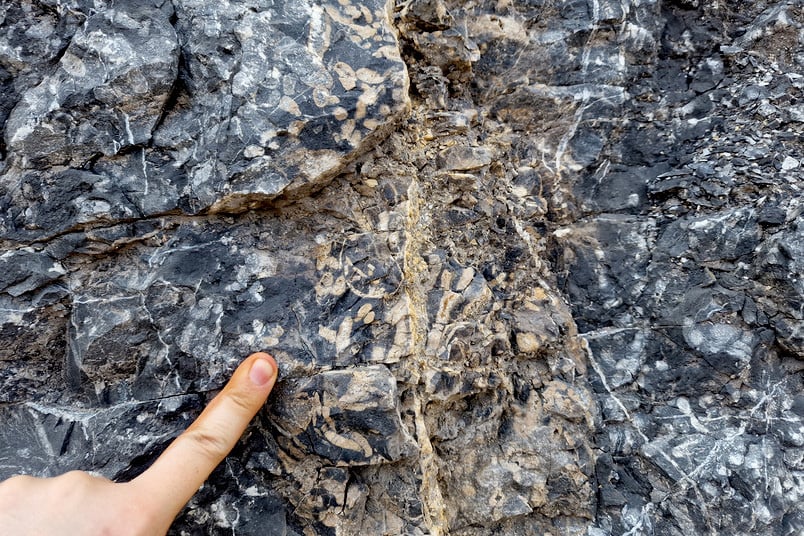
One thing that can make this type of far-reaching climate research considerably more difficult is the subsequent change in the climate signatures stored in these rocks. This process is called diagenesis. It begins shortly after sediment deposition in seawater and can continue to this day. “Very old rocks are usually buried to depths of several kilometers,” says Mathias Müller. “Changes in climate information are then caused by hot fluids circulating at depth.” Where they can penetrate the rock, they often lead to recrystallization or new mineral growth in the rock. In addition, when rocks are lifted from the depths to the earth’s surface, they are affected by the weather. This so-called meteoric diagenesis can also impact old climate information or render it completely useless.
From the shallow sea to the mountains
Together with an international research team, Mathias Müller reconstructed in detail which climate information from the shallow sea during the Devonian period is still stored in the rock in the Hagen-Hohenlimburg area and by which processes and under which conditions it has since been changed. The researchers analyzed numerous systematically collected rock samples from the Steltenberg quarry using petrographic and geochemical methods.
“We were surprised that the changes in the rock enabled us to identify a large number of significant geological events, such as the opening of the North Atlantic in the Jurassic and the onset of the folding and subsequent uplift of the Alps hundreds of kilometers away since the late Cretaceous period,” lists Mathias Müller. He considers radiometric uranium-lead dating to be the key to the chronological classification of the so-called overprinting events stored in the rock. “We were particularly pleased to discover during our research that climate information from the Devonian period can still be found even in heavily overprinted rocks,” stresses the researcher.
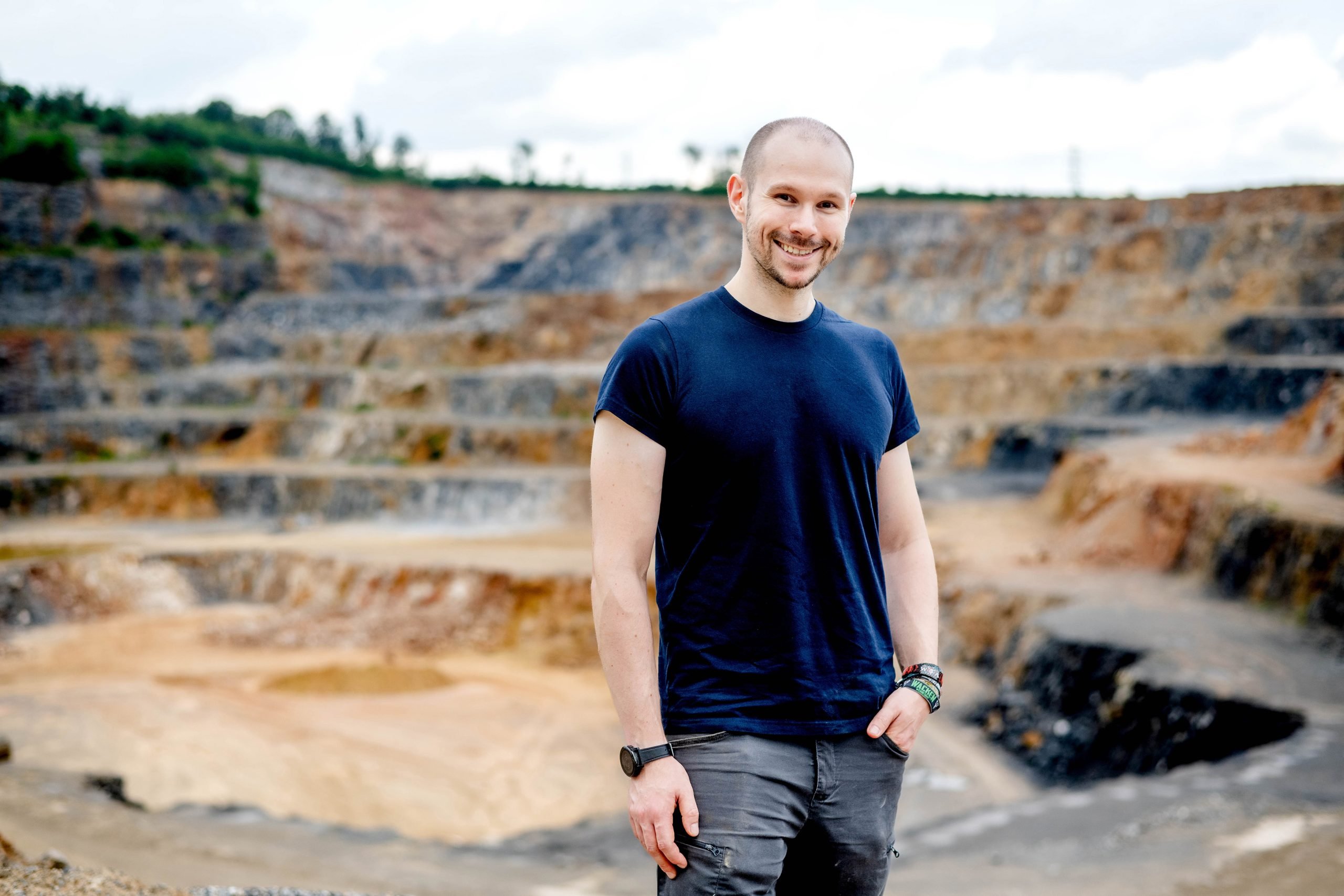
From climate research to geothermal energy
The findings of the study are also of interest when it comes to the exploitation of rocks for deep geothermal energy, which could be a contributing factor to the energy transition. Predicting which conditions will be encountered in which areas of the subsurface has been a major challenge for researchers to date. “Particularly in carbonate rocks, diagenetic overprinting can lead to both precipitation and dissolution phenomena in the rock, which can have a dramatic effect on the potential viability of geothermal energy,” says Mathias Müller.
The results of the current study allow tentative optimistic conclusions that some of the characterized processes in the deeper subsurface may have increased the usability of geothermal energy. Together with researchers from the Fraunhofer Research Institution for Energy Infrastructures and Geothermal Energy IEG and the Geological Survey of North Rhine-Westphalia, Mathias Müller currently aims to find out which implications the findings from the earth’s surface have for the applicability of geothermal energy at depth.
Reference: “Towards a better understanding of the geochemical proxy record of complex carbonate archives” by M. Mueller, B.F. Walter, R.J. Giebel, A. Beranoaguirre, P.K. Swart, C. Lu, S. Riechelmann and A. Immenhauser, 1 May 2024, Geochimica et Cosmochimica Acta.
DOI: 10.1016/j.gca.2024.04.029
Never miss a breakthrough: Join the SciTechDaily newsletter.
Follow us on Google and Google News.