
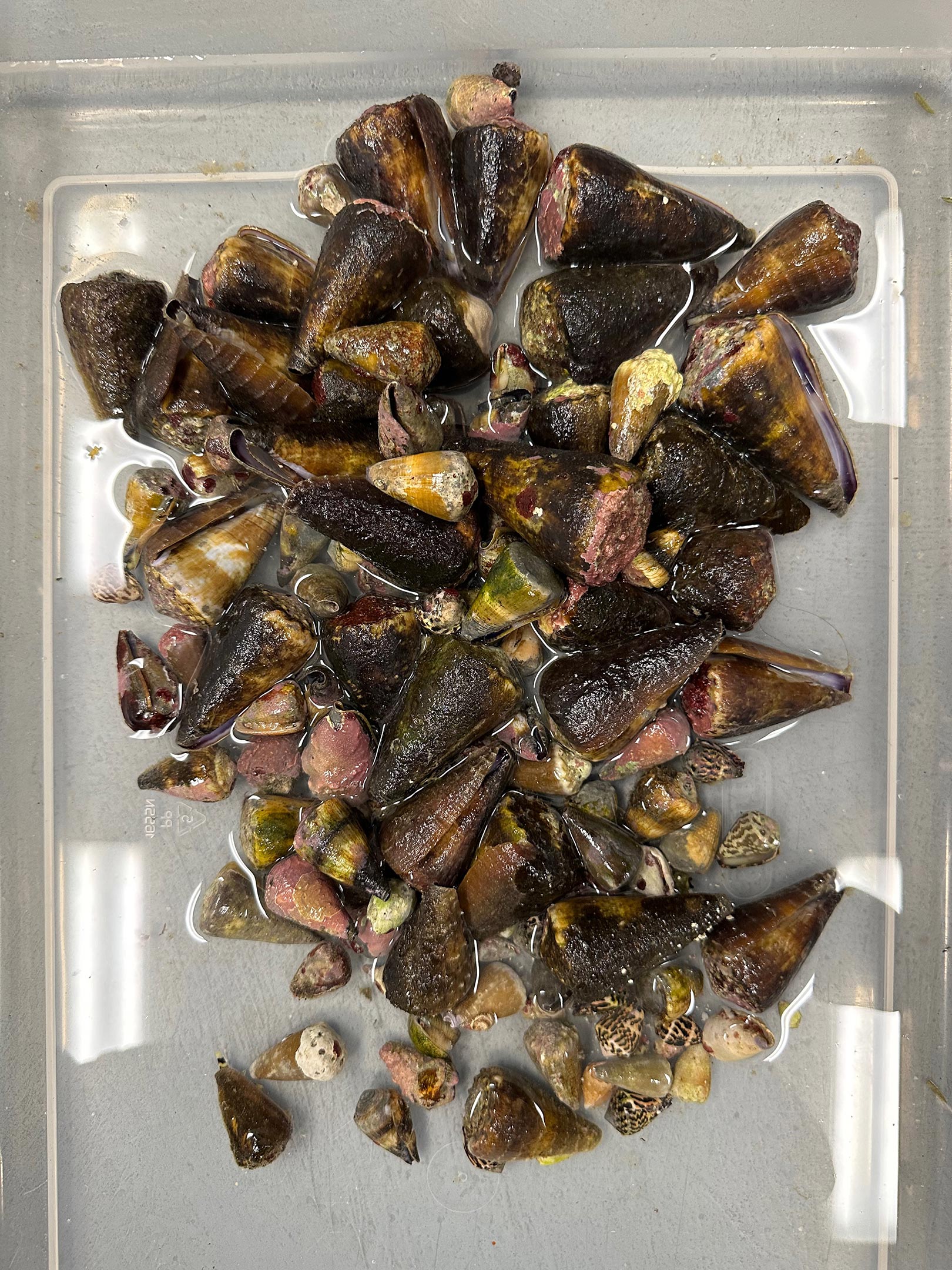
Cone snail venom contains consomatin, a toxin that could lead to better, longer-lasting drugs for diabetes and hormone-related diseases by mimicking somatostatin.
A new study published in Nature Communications reveals the toxin from one of the most venomous animals on the planet may hold the key to improving drugs for diabetes and hormone disorders.
An international team of scientists led by the University of Utah identified a component within the venom of a deadly marine cone snail, the geography cone, that mimics a human hormone called somatostatin, which regulates the levels of blood sugar and various hormones in the body. The hormone-like toxin’s specific, long-lasting effects, which help the snail hunt its prey, could also help scientists design better drugs for hormone disorders and diabetes.
Blueprint for Better Drugs
The somatostatin-like toxin the researchers identified could provide invaluable insights into new medications for diabetes and hormone disorders.
Somatostatin acts like a brake pedal for many processes in the human body, preventing blood sugar, various hormones, and many other important molecules from rising to dangerously high levels. The researchers found the cone snail toxin, called consomatin, works similarly, —but consomatin is more stable and specific than the human hormone, which makes it a promising blueprint for drug design.
By measuring how consomatin interacts with somatostatin’s targets in human cells in a dish, the researchers found that consomatin interacts with one of the same proteins that somatostatin does. But while somatostatin directly interacts with several proteins, consomatin only interacts with one. This fine-tuned targeting means that the cone snail toxin affects hormone levels and blood sugar levels but not the levels of many other molecules.

In fact, the cone snail toxin is more precisely targeted than the most specific synthetic drugs designed to regulate hormone levels, such as drugs that regulate growth hormone. Such drugs are an important therapy for people whose bodies overproduce growth hormones. Consomatin’s effects on blood sugar could make it dangerous to use as a therapeutic, but by studying its structure, researchers could start to design drugs for endocrine disorders that have fewer side effects.
Consomatin is more specific than top-of-the-line synthetic drugs—and it also lasts far longer in the body than the human hormone, thanks to the inclusion of an unusual amino acid that makes it difficult to break down. This is a useful feature for pharmaceutical researchers looking for ways to make drugs that will have long-lasting benefits.
Learning from Cone Snails
Finding better drugs by studying deadly venoms may seem unintuitive, but Helena Safavi, PhD, associate professor of biochemistry in the Spencer Fox Eccles School of Medicine (SFESOM) at the University of Utah and the senior author on the study, explains that the toxins’ lethality is often aided by pinpoint targeting of specific molecules in the victim’s body. That same precision can be extraordinarily useful when treating disease.
“Venomous animals have, through evolution, fine-tuned venom components to hit a particular target in the prey and disrupt it,” Safavi says. “If you take one individual component out of the venom mixture and look at how it disrupts normal physiology, that pathway is often really relevant in disease.” For medicinal chemists, “it’s a bit of a shortcut.”
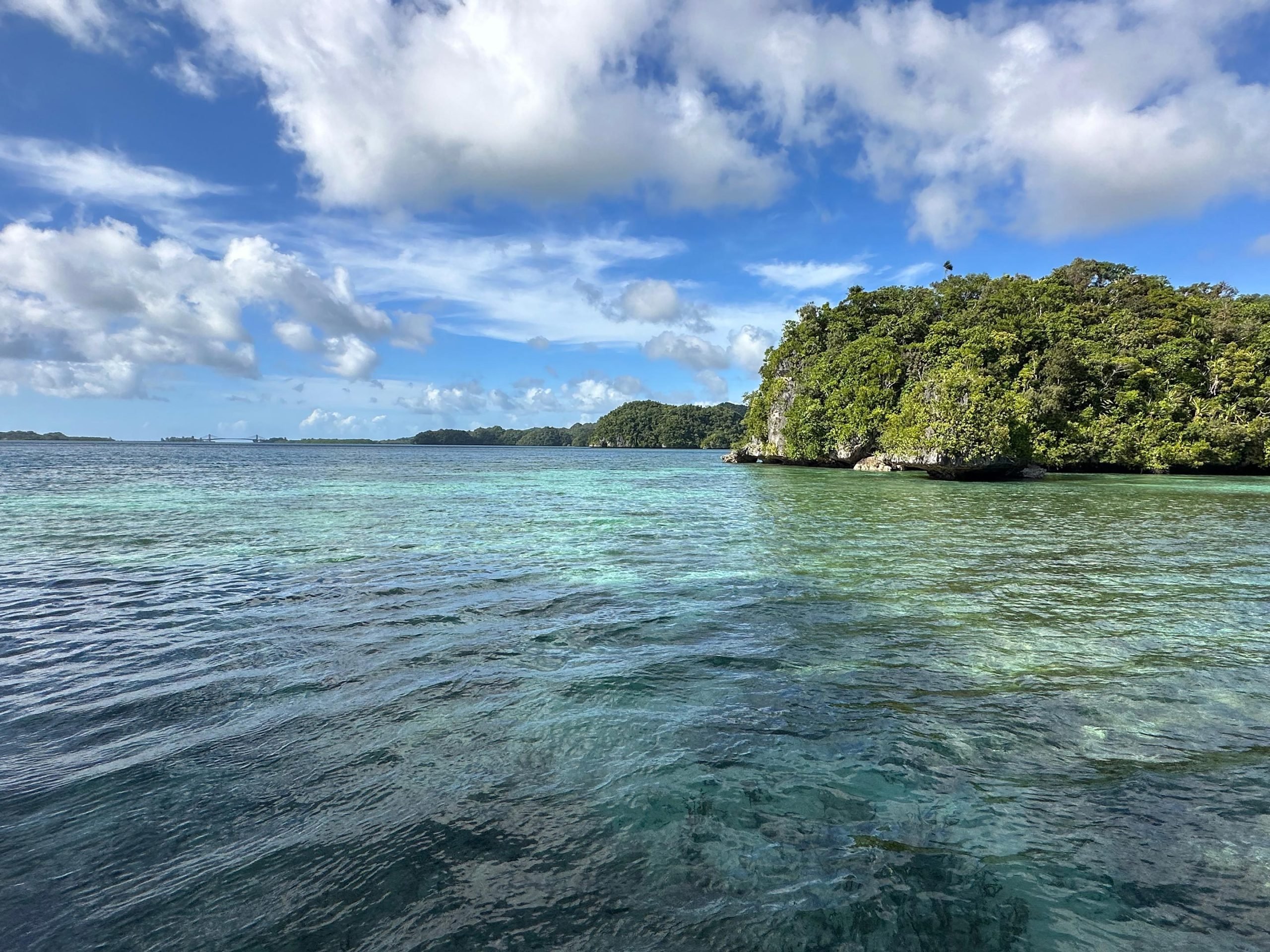
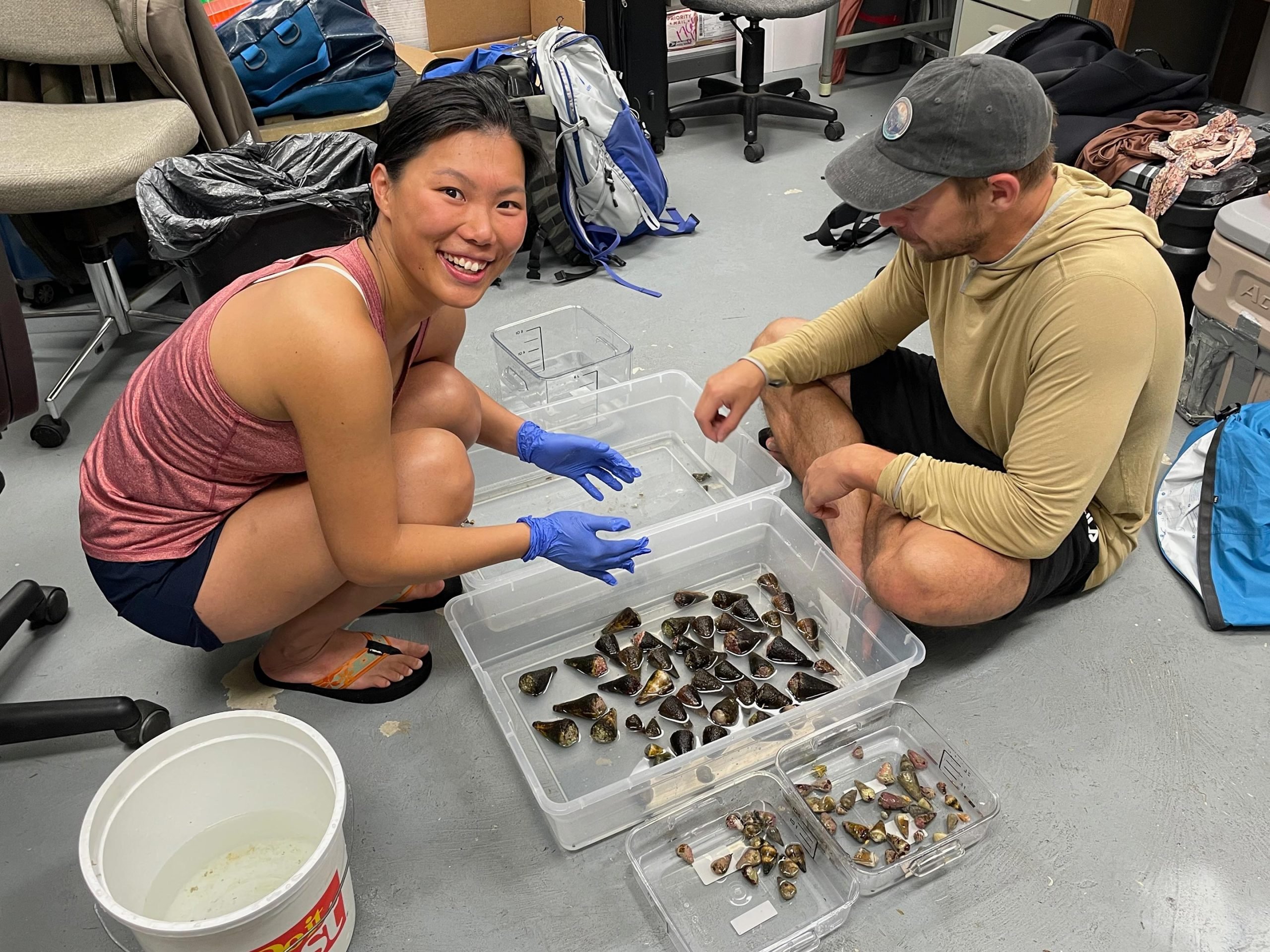
Ho Yan Yeung, PhD, first author on the study, hunts for venomous sea snails in the shallow reefs of Palau. Credit: Safavi Lab
Consomatin shares an evolutionary lineage with somatostatin, but over millions of years of evolution, the cone snail turned its own hormone into a weapon.
For the cone snail’s fishy prey, consomatin’s deadly effects hinge on its ability to prevent blood sugar levels from rising. And importantly, consomatin doesn’t work alone. Safavi’s team had previously found that cone snail venom includes another toxin that resembles insulin, lowering the level of blood sugar so quickly that the cone snail’s prey becomes nonresponsive. Then, consomatin keeps blood sugar levels from recovering.

Evolutionary Insights from Cone Snails
“We think the cone snail developed this highly selective toxin to work together with the insulin-like toxin to bring down blood glucose to a really low level,” says Ho Yan Yeung, PhD, a postdoctoral researcher in biochemistry in SFESOM and the first author on the study.
The fact that multiple parts of the cone snail’s venom target blood sugar regulation hints that the venom could include many other molecules that do similar things. “It means that there might not only be insulin and somatostatin-like toxins in the venom,” Yeung says. “There could potentially be other toxins that have glucose-regulating properties too.” Such toxins could be used to design better diabetes medications.
It may seem surprising that a snail is able to outperform the best human chemists at drug design, but Safavi says that the cone snails have evolutionary time on their side. “We’ve been trying to do medicinal chemistry and drug development for a few hundred years, sometimes badly,” she says. “Cone snails have had a lot of time to do it really well.”
Or, as Yeung puts it, “Cone snails are just really good chemists.”
Reference: “Fish-hunting cone snail disrupts prey’s glucose homeostasis with weaponized mimetics of somatostatin and insulin” by Ho Yan Yeung, Iris Bea L. Ramiro, Daniel B. Andersen, Thomas Lund Koch, Alexander Hamilton, Walden E. Bjørn-Yoshimoto, Samuel Espino, Sergey Y. Vakhrushev, Kasper B. Pedersen, Noortje de Haan, Agnes L. Hipgrave Ederveen, Baldomero M. Olivera, Jakob G. Knudsen, Hans Bräuner-Osborne, Katrine T. Schjoldager, Jens Juul Holst and Helena Safavi-Hemami, 20 August 2024, Nature Communications.
DOI: 10.1038/s41467-024-50470-2
Never miss a breakthrough: Join the SciTechDaily newsletter.
Follow us on Google and Google News.
8 Comments
Apparently, it’s easier and more convenient to try to concoct a medicine out of an exotic poison, than make people change their dietary and lifestyle habits. But it won’t work anyway. Diabetes is a disease of modern way of living.
Ignorance is poison
Boba- That’s not a very empathetic response. Your use of the word ‘make’ is particularly troubling. If we are limiting our discussion to Type 2 Diabetes, I would agree that this is a disease of the modern way of living. But you have to keep in mind that ‘modern living’ is a condition that people are born into, and that they may be inculcated without the benefit of knowledge that would help them avoid its pitfalls. By design, many pieces of ‘modern living’ are addictive, especially low-priced fast-food and sweets that bathe your brain in dopamine. Some people become captives and never find a way out. Not everyone is as smart as you. Not everyone receives adequate education. Poverty is rampant. Offering adjunct therapies is a humane approach to help protect individuals as they struggle to break free from a system the has bound them to unhealthy habits.
“Scientists discover potential diabetes treatment…” No, that’s a bit hyperbolic. This poison is far from being used for diabetes, or for anything other than giving students and researchers something to do. At this stage, they are just researching how it works in a cell culture. Everything is sold as a potential medical breakthrough. That may help with clicks, or in getting more research funding, but it is bad reporting.
I appreciate all the research done for diseases. If not for the researchers I would probably of died and as long as you researchers are out there at least I know your trying to help with things like diabetes. You cant force people to change their lifestyles and improvements in medications is a positive step in the right direction. Thanks researchers you are appreciated more than you will ever know by some of us
Goldman Sachs said it best when they admitted they will never try and cure anything because it’s a bad business model. They need us sick and dying because we’re a constant consumer.
If this was just for type 1 and not to manage diseases instead of completely erase them, I would be hopeful, but it’s not.
If they really cared about type 1’s they would have never cut them off from pig insulin and forced them all onto synthetics.
They would encourage them all to cut carbs completely so they won’t have to inject half as much.
Instead they want us sick and dead as soon as we’re unable to pay for insurance.
We can do better.
IIRC different venoms have been found before to have drug-related value, & not just for antivenin.
Why not just examine how the body actually operates and adjust the figures on how much of each nutrient we actually need instead of ignoring everything we know?
Folks, if you have diabetes, you need more Alpha Lipoic Acid & Vitamin C.
Until that has had time to begin regulating your system, you’ll likely be deficient in the micronutrients that are normally recycled in the presence of sufficient Alpha Lipoic acid.
There are for more than enough studies on this, they simply get buried and lost as folks search for “cures.”
But folks…if all you have is a deficiency, it cant be referred to as a “cure.”
Am I suggesting billion upon billions of folks have basic deficiencies?
Yes, I most certainly am.
All the data and meta-analysis of the data suggests the same.