
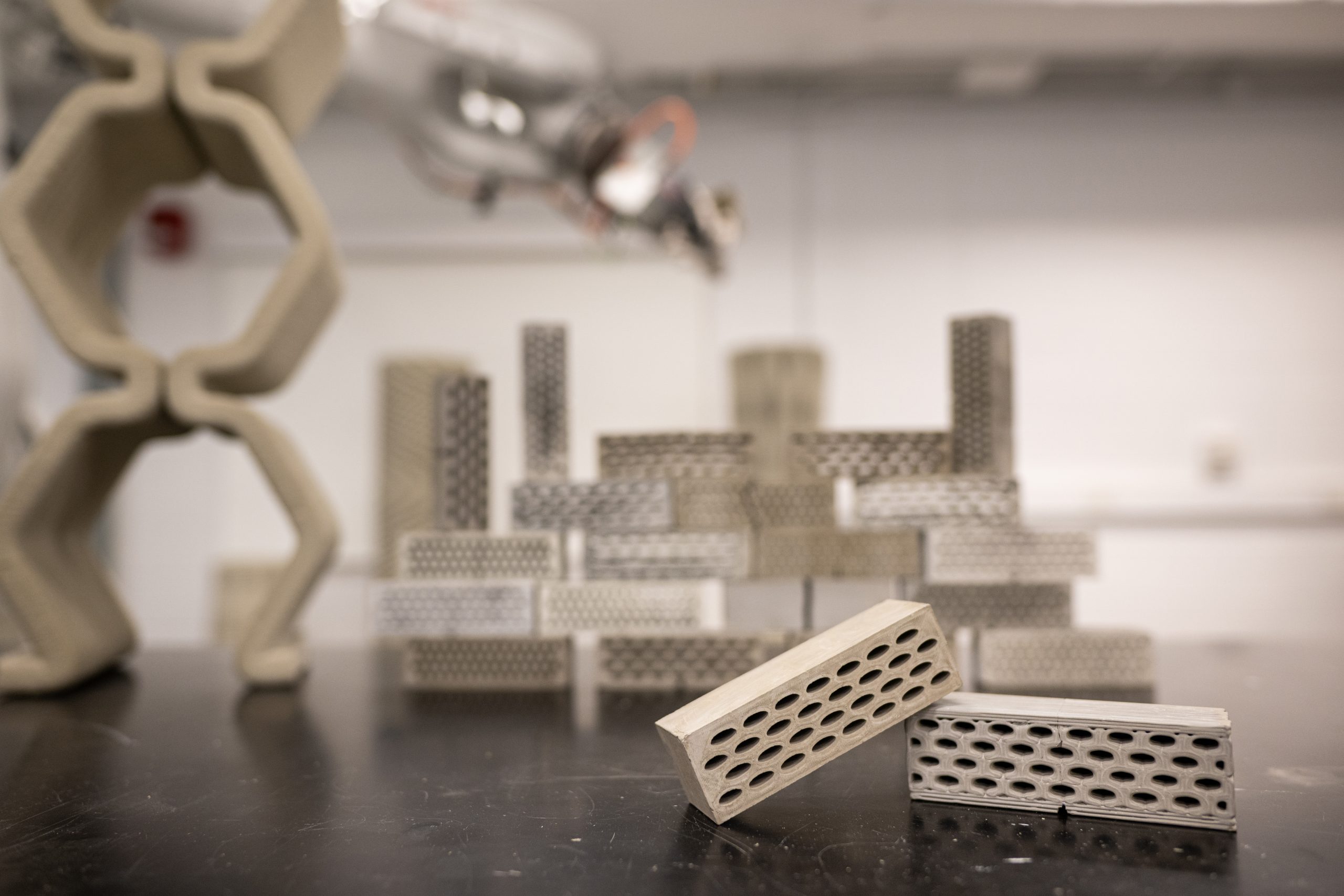
Princeton engineers created a tougher cement-based material by mimicking the structure of human bone. The material uses tubes to control crack propagation, enhancing damage resistance without adding external materials. This innovation could lead to stronger construction materials for civil infrastructure.
Engineers at Princeton have created a cement-based material, drawing inspiration from the tough outer layer of human bone. This bio-inspired design is 5.6 times more resistant to damage than traditional materials, enabling it to better withstand cracking and prevent sudden failure, a common issue with conventional, brittle cement-based options.
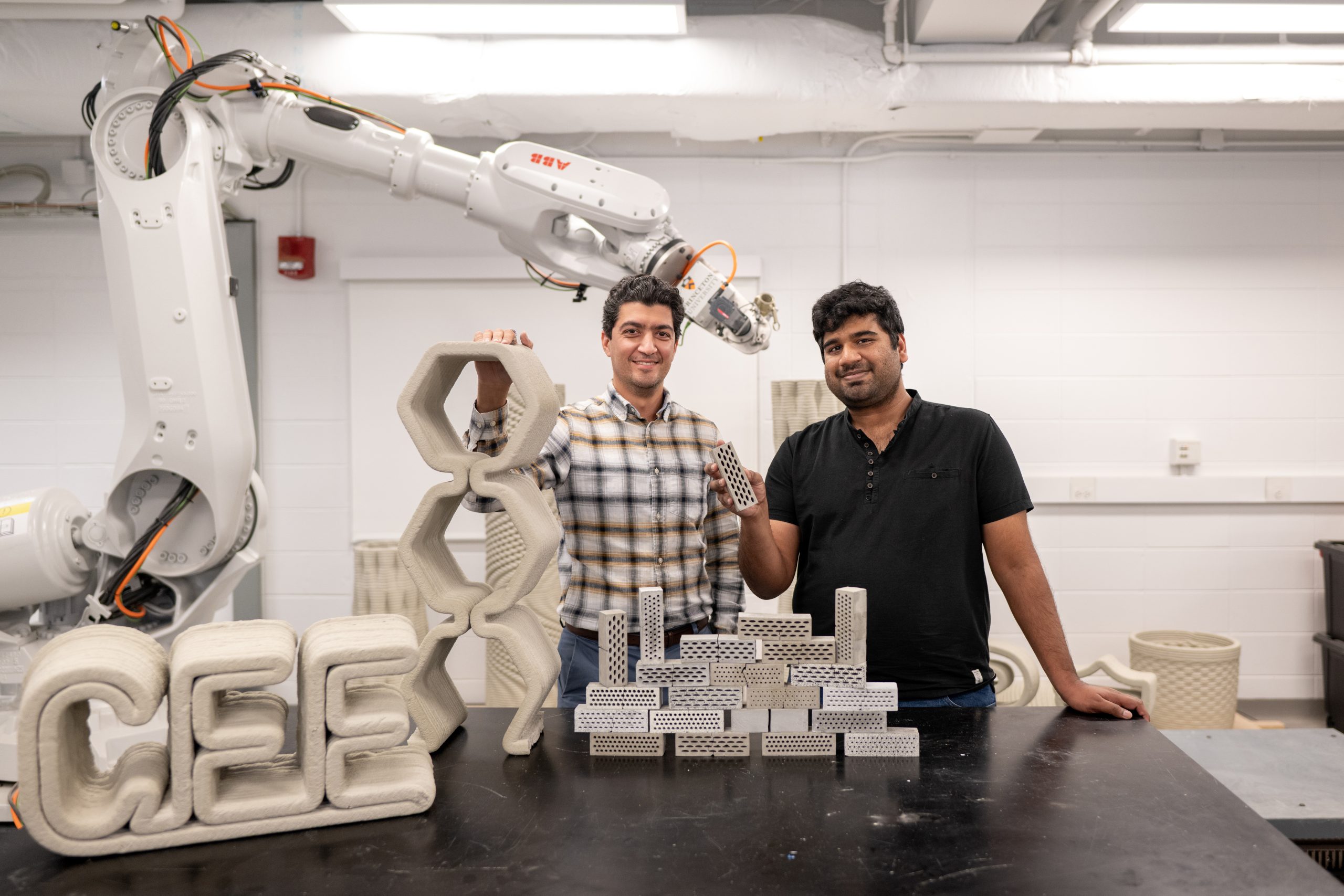
In study recently published in the journal Advanced Materials, the research team led by Reza Moini, an assistant professor of civil and environmental engineering, and Shashank Gupta, a third-year Ph.D. candidate, demonstrate that cement paste deployed with a tube-like architecture can significantly increase resistance to crack propagation and improve the ability to deform without sudden failure.
“One of the challenges in engineering brittle construction materials is that they fail in an abrupt, catastrophic fashion,” Gupta said.
In brittle construction materials used in building and civil infrastructure, strength ensures the ability to sustain loads, while toughness supports resistance to cracking and spread of damage in the structure. The proposed technique tackles those problems by creating a material that is tougher than its conventional counterparts while maintaining strength.
The Importance of Internal Architecture
Moini said the key to the improvement lies in the purposeful design of internal architecture, by balancing the stresses at the crack front with the overall mechanical response.
“We use theoretical principles of fracture mechanics and statistical mechanics to improve materials’ fundamental properties ‘by design’,” he said.
The team was inspired by human cortical bone, the dense outer shell of human femurs that provides strength and resists fracture. Cortical bone consists of elliptical tubular components known as osteons, embedded weakly in an organic matrix. This unique architecture deflects cracks around osteons. This prevents abrupt failure and increases overall resistance to crack propagation, Gupta said.
The team’s bio-inspired design incorporates cylindrical and elliptical tubes within the cement paste that interact with propagating cracks.
Crack-Tube Interaction and Toughening Mechanism
“One expects the material to become less resistant to cracking when hollow tubes are incorporated,” Moini said. “We learned that by taking advantage of the tube geometry, size, shape, and orientation, we can promote crack-tube interaction to enhance one property without sacrificing another.”
The team discovered that such enhanced crack-tube interaction initiates a stepwise toughening mechanism, where the crack is first trapped by the tube and then delayed from propagation, leading to additional energy dissipation at each interaction and step.
“What makes this stepwise mechanism unique is that each crack extension is controlled, preventing sudden, catastrophic failure,” said Gupta. “Instead of breaking all at once, the material withstands progressive damage, making it much tougher.”
Innovative Approach to Toughness and Disorder
Unlike traditional methods that strengthen cement-based materials by adding fibers or plastics, the Princeton team’s approach relies on geometric design. By manipulating the structure of the material itself, they achieve significant improvements in toughness without the need for additional material.
In addition to improving fracture toughness, the researchers introduced a new method to quantify the degree of disorder, an important quantity for design. Based on statistical mechanics, the team introduced parameters to quantify the degree of disorder in architected materials. This allowed the researchers to create a numerical framework reflecting the degree of disorder of the architecture.
The researchers said the new framework provides a more accurate representation of the material’s arrangements, moving towards a spectrum from ordered to random, beyond the simple binary classifications of periodic and non-periodic. Moini said that the study makes a distinction with approaches that confuse irregularity and perturbation with statistical disorder such as Voronoi tessellation and perturbation methods.
“This approach gives us a powerful tool to describe and design materials with a tailored degree of disorder,” Moini said. “Using advanced fabrication methods such as additive manufacturing can further promote the design of more disordered and mechanically favorable structures and allow for scaling up of these tubular designs for civil infrastructure components with concrete.”
The research team has also recently developed techniques allowing for a great deal of precision using robotics and additive manufacturing. By applying them to new architectures, and combinations of hard or soft materials within the tubes, they hope to expand the further the possibilities of applications in construction materials.
“We’ve only begun to explore the possibilities,” Gupta said. “There are many variables to investigate, such as applying the degree of disorder to the size, shape, and orientation of the tubes in the material. These principles could be applied to other brittle materials to engineer more damage-resistant structures.”
Reference: “Tough Cortical Bone-Inspired Tubular Architected Cement-Based Material with Disorder” by Shashank Gupta and Reza Moini, 10 September 2024, Advanced Materials.
DOI: 10.1002/adma.202313904
Funding for the project was provided by the National Science Foundation CAREER Award (2238992) and the CMMI Division Grant (ECI, 2129566).
Never miss a breakthrough: Join the SciTechDaily newsletter.
Follow us on Google and Google News.
1 Comment
And how many decades before commercial application?