
Close Menu
    Facebook X (Twitter) Instagram
    SciTechDaily
    • Biology
    • Chemistry
    • Earth
    • Health
    • Physics
    • Science
    • Space
    • Technology
    Facebook X (Twitter) Pinterest YouTube RSS
    SciTechDaily
    Home»Space»NASA’s Parker Solar Probe Completes Extraordinary Flyby of the Sun – Next Stop: Venus
    Space

    NASA’s Parker Solar Probe Completes Extraordinary Flyby of the Sun – Next Stop: Venus

    By Michael Buckley, Johns Hopkins Applied Physics LaboratoryOctober 4, 2024No Comments2 Mins Read
    Facebook Twitter Pinterest Telegram LinkedIn WhatsApp Email Reddit
    Share
    Facebook Twitter LinkedIn Pinterest Telegram Email Reddit
    Parker Solar Probe Close to Sun
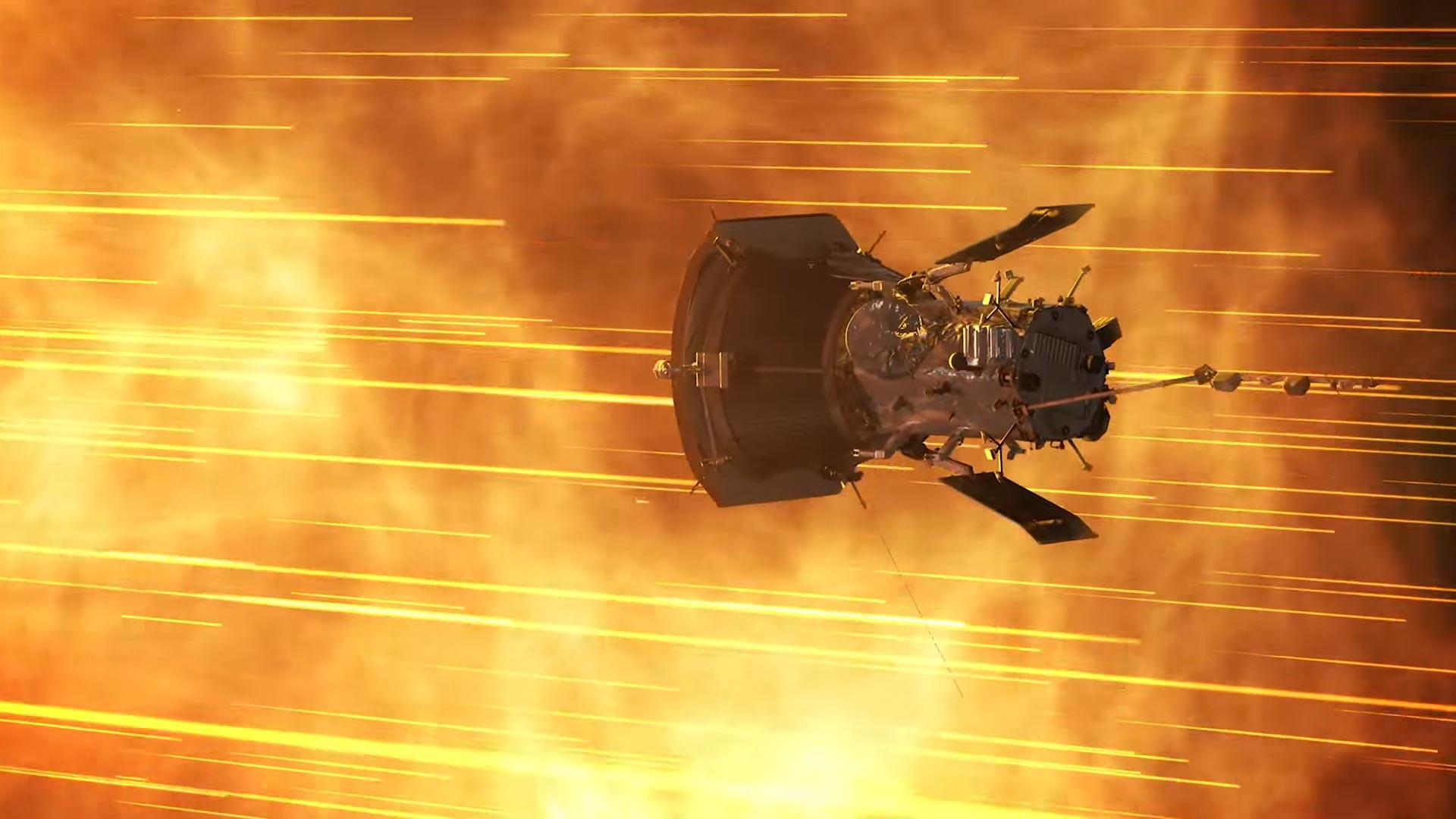
    NASA’s Parker Solar Probe has once again made a record-breaking close approach to the Sun, reaching within 4.51 million miles of the solar surface at speeds of nearly 395,000 miles per hour. Credit: NASA GSFC/CIL/Brian Monroe

    The Parker Solar Probe has matched its own speed and distance records in a recent close encounter with the Sun and is preparing for an even closer approach aided by a Venus flyby.

    On September 30, NASA’s Parker Solar Probe completed its 21st close approach to the Sun, equaling its own distance record by coming within about 4.51 million miles (7.26 million kilometers) of the solar surface.

    The close approach (known as perihelion) occurred at 5:15 UTC — or 12:15 a.m. EDT — with Parker Solar Probe moving 394,700 miles per hour (635,300 kilometers per hour) around the Sun, again matching its own record. The spacecraft checked in on October 3 with mission operators at the Johns Hopkins Applied Physics Laboratory in Laurel, Maryland — where the spacecraft was also designed and built — with a beacon tone indicating it was in good health and all systems were operating normally.

    Parker Solar Probe Solar Encounter 21
    Parker Solar Probe’s 21st orbit included a perihelion that brought the spacecraft within 4.51 million miles of the Sun. Credit: NASA/Johns Hopkins APL/Steve Gribben

    Perihelion marked the midpoint in the mission’s 21st solar encounter, which began September 25 and runs through October 5.

    This week’s close approach marked the last time Parker will fly around the Sun at this distance and speed before it makes the first of its three final, closest approaches of its primary mission on December 24. At that point, with its orbit shaped by the mission’s final Venus gravity assist-flyby on November 6, the spacecraft will zip just 3.8 million miles from the solar surface, moving about 430,000 miles per hour.

    Never miss a breakthrough: Join the SciTechDaily newsletter.
    Follow us on Google and Google News.

    Johns Hopkins APL NASA Parker Solar Probe
    Share. Facebook Twitter Pinterest LinkedIn Email Reddit

    Related Articles

    Parker Solar Probe: For the First Time in History, a Spacecraft Has Touched the Sun

    NASA’s Parker Solar Probe Touches the Sun for the First Time – Bringing New Discoveries

    NASA’s Parker Solar Probe Completes a Record-Setting Swing by the Sun

    NASA’s Parker Solar Probe Discovers Radio Signal in Venus’ Atmosphere

    NASA’s Parker Solar Probe Delivers 1st Complete View of Venus’ Orbital Dust Ring

    Celestial Geometry Posed a Special Opportunity During Parker Solar Probe’s 7th Solar Encounter

    NASA’s Parker Solar Probe Captures Stunning View of Venus

    NASA’s Parker Solar Probe Teams Up With Observatories Around Solar System

    5 Astonishing New Discoveries From NASA’s Parker Solar Probe [Video]

    Leave A Reply Cancel Reply

    • Facebook
    • Twitter
    • Pinterest
    • YouTube

    Don't Miss a Discovery

    Subscribe for the Latest in Science & Tech!

    Trending News

    Scientists May Have Discovered How To Heal Damaged Kidneys

    Interstellar Visitor 3I/ATLAS Is Bursting With an Unexpected Chemical

    Scientists Just Found All 5 Genetic “Letters” of DNA and RNA on an Asteroid

    The 4,000-Year-Old City That Defied History’s Rules on Wealth and Power

    The World’s Biggest Population Fear Has Flipped – and It Could Change Everything

    This “Fake” Pill Improved Memory and Physical Performance in Just 3 Weeks

    Scientists Say Frequent Ejaculation May Improve Sperm Quality and Fertility

    Scientists Have Found “The Heaven Sword” After Years of Looking

    Follow SciTechDaily
    • Facebook
    • Twitter
    • YouTube
    • Pinterest
    • Newsletter
    • RSS
    SciTech News
    • Biology News
    • Chemistry News
    • Earth News
    • Health News
    • Physics News
    • Science News
    • Space News
    • Technology News
    Recent Posts
    • A Giant Scorpion the Size of a Coffee Table Is Forcing Scientists To Rethink Evolution
    • Science Debunks a Common Belief About Pets and Stress
    • The Surprising Reason Sugary Gum Helped Lower Blood Pressure
    • Hidden Virus May Have Infected 9.4 Million People – Scientists Say We’ve Missed Most Cases
    • NASA’s Lucy Uncovers Ancient Water Clues on a Weirdly Wobbling Asteroid
    Copyright © 1998 - 2026 SciTechDaily. All Rights Reserved.
    • Science News
    • About
    • Contact
    • Editorial Board
    • Privacy Policy
    • Terms of Use

    Type above and press Enter to search. Press Esc to cancel.