
Researchers have found microplastic particles in the breath of wild bottlenose dolphins, indicating that inhalation might be a significant exposure path for these animals, alongside ingestion.
This discovery, made by collecting exhaled air from dolphins in Florida and Louisiana, reveals the presence of various types of plastic polymers. While these findings highlight a potential health risk, further studies are needed to understand the implications fully.
Discovery of Microplastics in Dolphin Breath
Researchers in the United States have discovered microplastic particles in the breath of wild bottlenose dolphins, indicating that these animals might be inhaling plastic contaminants, which could be harmful. This finding was reported by Miranda Dziobak and her team from the College of Charleston in South Carolina and published today (October 16, 2024) in the open-access journal PLOS ONE.
Microplastics, tiny plastic particles, are a global environmental issue affecting both humans and wildlife. These particles can cause health problems such as oxidative stress and inflammation when ingested or inhaled. While ingestion through contaminated food is a well-known exposure pathway for both humans and animals, inhaling microplastics is also considered harmful and is an emerging area of concern for human health.
Research Methodology and Findings
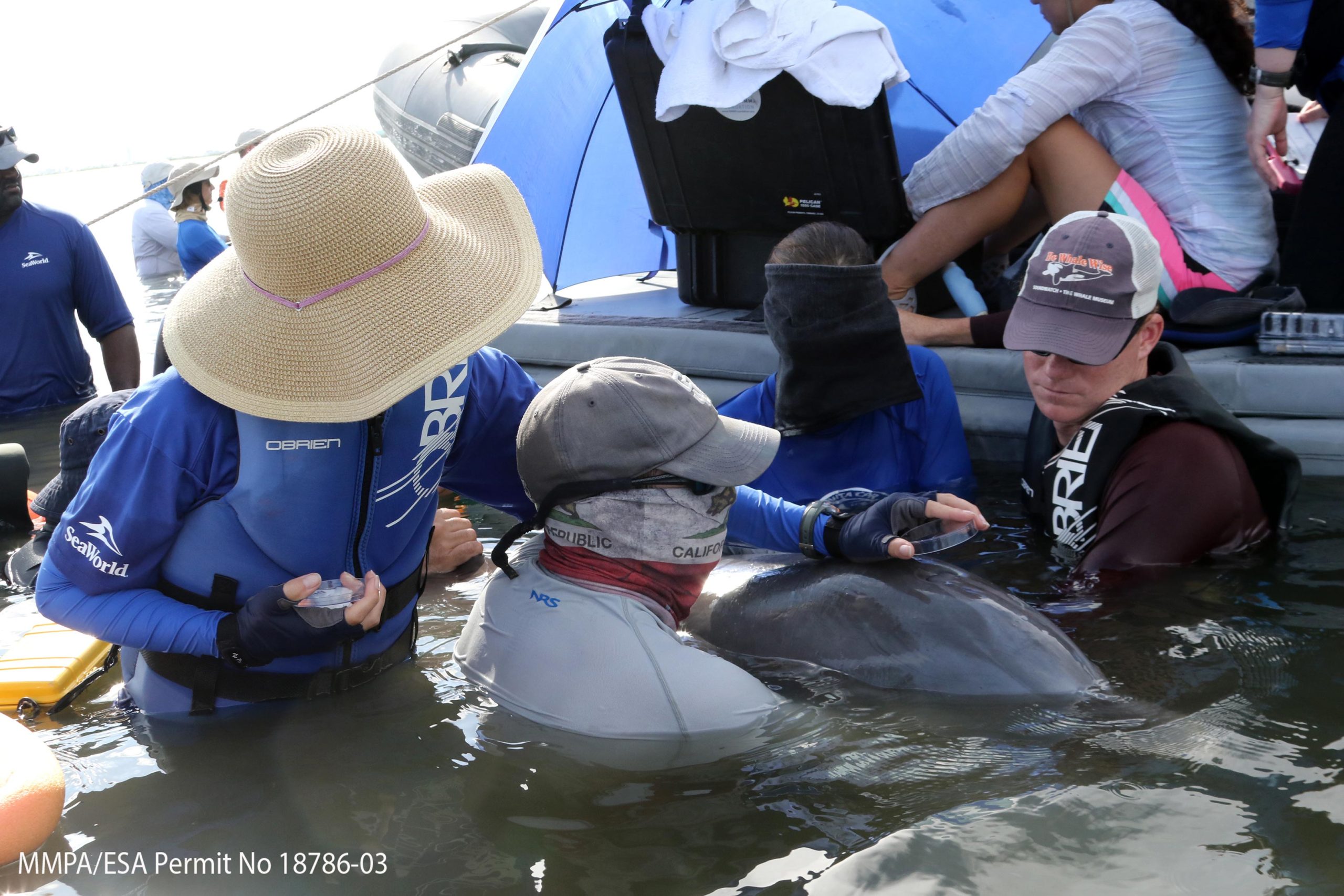
However, few studies have examined inhalation as a potential route of microplastic exposure for wildlife. Now, this research team has collected samples of exhaled air from five bottlenose dolphins in Sarasota Bay, Florida, and six bottlenose dolphins in Barataria Bay, Louisiana during catch-and-release health assessment studies. To capture the air, they held a collection surface over or just above each dolphin’s blowhole as it exhaled.
Analysis of the collected air showed that all 11 dolphins had at least one suspected microplastic particle in their breath. Further analysis of the exhaled microplastic particles showed that they included both fibers and fragments and included several types of plastic polymers, including polyethylene terephthalate (PET), polyester, polyamide, polybutylene terephthalate, and poly(methyl methacrylate), also known as PMMA.
Implications and Concerns
For comparison, the research team also sampled the surrounding air near the dolphins, allowing them to confirm that the detected microplastics were not just airborne near the blowholes but were actually exhaled.
These results support the idea that inhalation could be another key route of microplastic exposure for dolphins, alongside ingestion. However, the authors note that their findings are preliminary, and that further research will be needed to better quantify the degree of inhalation exposure to various types of microplastics among bottlenose dolphins, as well as to determine the potential impacts on dolphins’ health, such as the possibility of lung damage.
The authors add: “We know that microplastics are floating around in the air, so we suspected that we would find microplastics in breath samples. We are concerned by what we are seeing because dolphins have a large lung capacity and take really deep breaths, so we are worried about what these plastics could be doing to their lungs.”
Reference: “First evidence of microplastic inhalation among free-ranging small cetaceans” by Miranda K. Dziobak, Andreas Fahlman, Randall S. Wells, Ryan Takeshita, Cynthia Smith, Austin Gray, John Weinstein and Leslie B. Hart, 16 October 2024, PLOS ONE.
DOI: 10.1371/journal.pone.0309377
Funding: Research reported in this publication was supported by the National Institute of Environmental Health Sciences of the National Institutes of Health under Award Number R15ES034169 [LH]. The content is solely the responsibility of the authors and does not necessarily represent the official views of the National Institutes of Health. Sarasota Bay health assessments were funded primarily by Dolphin Quest, Inc. AF was funded by Fundacion Oceanografic and Global Diving Research SL. Barataria Bay health assessments were funded primarily by a Strategic Environmental Research and Development Program grant (no. RC20-1097), with contributions from the Gulf of Mexico Research Initiative and the National Marine Mammal Foundation [CRS, RT].
Never miss a breakthrough: Join the SciTechDaily newsletter.
Follow us on Google and Google News.