
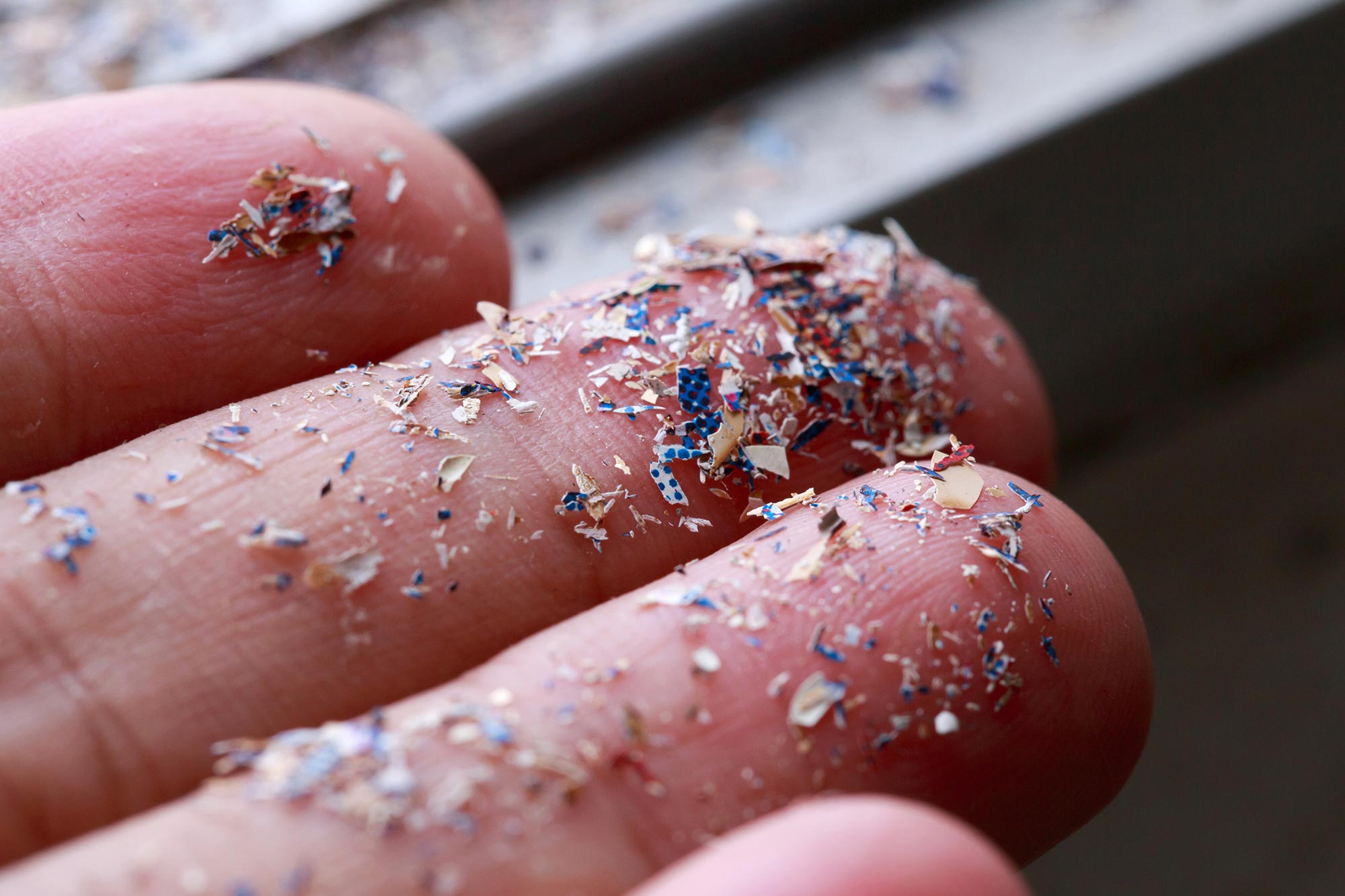
Researchers have discovered microplastics in all components of coral, including its skeleton.
Researchers from Japan and Thailand have discovered microplastics in all three parts of coral anatomy—surface mucus, tissue, and skeleton. This breakthrough was achieved using a newly developed microplastic detection method, which the team applied to coral for the first time.
These findings may also explain the ‘missing plastic problem’ that has puzzled scientists, where about 70% of the plastic litter that has entered the oceans cannot be found. The team hypothesizes that coral may be acting as a ‘sink’ for microplastics by absorbing it from the oceans. Their findings were published in the journal Science of the Total Environment.
Humanity’s dependence on plastics has brought unprecedented convenience to our lives but has caused untold damage to our ecosystem in ways researchers are still beginning to understand. In the oceans alone, it is estimated that 4.8–12.7 million tons of plastics flow into the marine environment annually.

“In Southeast Asia, plastic pollution has become a significant issue. Collectively, nearly 10 million tons of plastic waste are dumped annually, equivalent to 1/3 of the world’s total,” explains Assistant Professor Suppakarn Jandang from Kyushu University’s Research Institute for Applied Mechanics (RIAM) and first author of the study. “Some of this plastic is discharged into the ocean, where it degrades into microplastics.”
To study the plastic pollution problem in Southeast Asia, RIAM partnered with Thailand’s Chulalongkorn University in 2022 to establish the Center for Ocean Plastic Studies. The international institute is led by Professor Atsuhiko Isobe, who also led the research team behind these latest findings.
The team wanted to examine the impact of microplastics on local coral reefs, so they focused their fieldwork on the coast of Si Chang Island in the Gulf of Thailand. The area is known for its small reef flats as well as being a common area for anthropological studies.
Extracting Microplastics from Coral
“Coral has three main anatomical parts: the surface mucus, the outside of the coral body; the tissue, which is the inner parts of the coral; and the skeleton, the hard deposits of calcium carbonate they produce. Our first step was to develop a way to extract and identify microplastics from our coral samples,” continues Jandang. “We put our samples through a series of simple chemical washes designed to break apart each anatomical layer. After each subsequent layer was dissolved, we would filter out the content and then work on the next layer.”

In total, they collected and studied 27 coral samples across four species. 174 microplastic particles were found in their samples, mostly ranging from 101–200 μm in size, close to the width of a human hair. Of the detected microplastics 38% were distributed on the surface mucus, 25% in the tissue, and 37% were found in the skeleton.
As for types of microplastics, the team found that nylon, polyacetylene, and polyethylene terephthalate (PET) were the three most prevalent, accounting for 20.11%, 14.37%, and 9.77%, respectively, of the identified samples.
Corals as a “Sink” for Microplastics
These new findings also indicate that coral may act as a marine plastic ‘sink’, sequestering plastic waste from the ocean, like how trees sequester CO2 from the air.
“The ‘missing plastic problem’ has been troubling scientists who track marine plastic waste, but this evidence suggests that corals could account for that missing plastic,” says Jandang. “Since coral skeletons remain intact after they die, these deposited microplastics can potentially be preserved for hundreds of years. Similar to mosquitos in amber.”
Further study is still necessary to understand the full impact of these findings on coral reefs and the global ecosystem.
“The corals that we studied this time are distributed all around the world. To get a more accurate picture of the situation we must conduct extensive studies globally across an array of coral species,” concludes Isobe. “We also do not know the health effects of microplastics on coral and the larger reef community. There is still much to be done to accurately evaluate the impact of microplastics on our ecosystem.”
Reference: “Possible sink of missing ocean plastic: Accumulation patterns in reef-building corals in the Gulf of Thailand” by Suppakarn Jandang, María Belén Alfonso, Haruka Nakano, Nopphawit Phinchan, Udomsak Darumas, Voranop Viyakarn, Suchana Chavanich and Atsuhiko Isobe, 14 September 2024, Science of The Total Environment.
DOI: 10.1016/j.scitotenv.2024.176210
Funding: Science and Technology Research Partnership for Sustainable Development, Japan Science and Technology Agency, Japan International Cooperation Agency, Kyushu University, Japan Society for the Promotion of Science
Never miss a breakthrough: Join the SciTechDaily newsletter.
Follow us on Google and Google News.
6 Comments
Unprecedented convenience ? How about unprecedented health care and medical achievements and unprecedented food preservation and many other benefits. We don’t even know if inert plastic causes any real harm. Water is filled with many other substance too. Like iron and calcium. We know iron damages the heart. What about the tsunamis that washed all kinds of debris into the oceans, including plastics? Plastic is made from natural products. From the earth it came and to the earth it returns.
Thank you!!! Couldn’t have said it better myself.
Like nuke waste from japan?
So much to learn…felt hopefull about our relationship w mother nature…our children in school must be given the opportunity to follow up on pending works.
Would like to be optimistic, but plastic pollution is long-lived and accumulating in our environment. It goes back to the Earth through us and increasing research is showing it does a lot of damage to the environment and its organisms.
The bottom of the food chain eats small amounts of plastic (P). Next rung on the ladder eats many of the bottom rung. 3rd rung eats many 2nd rung. All rungs eating more and more P. WE EAT LOTS OF LOWER RUNG EATERS. P has been found in all sea life, dirt and even in our brains. Look it up. The more P we eat the less room we have for nutrients. IT IS NOT HARMLESS!!.