
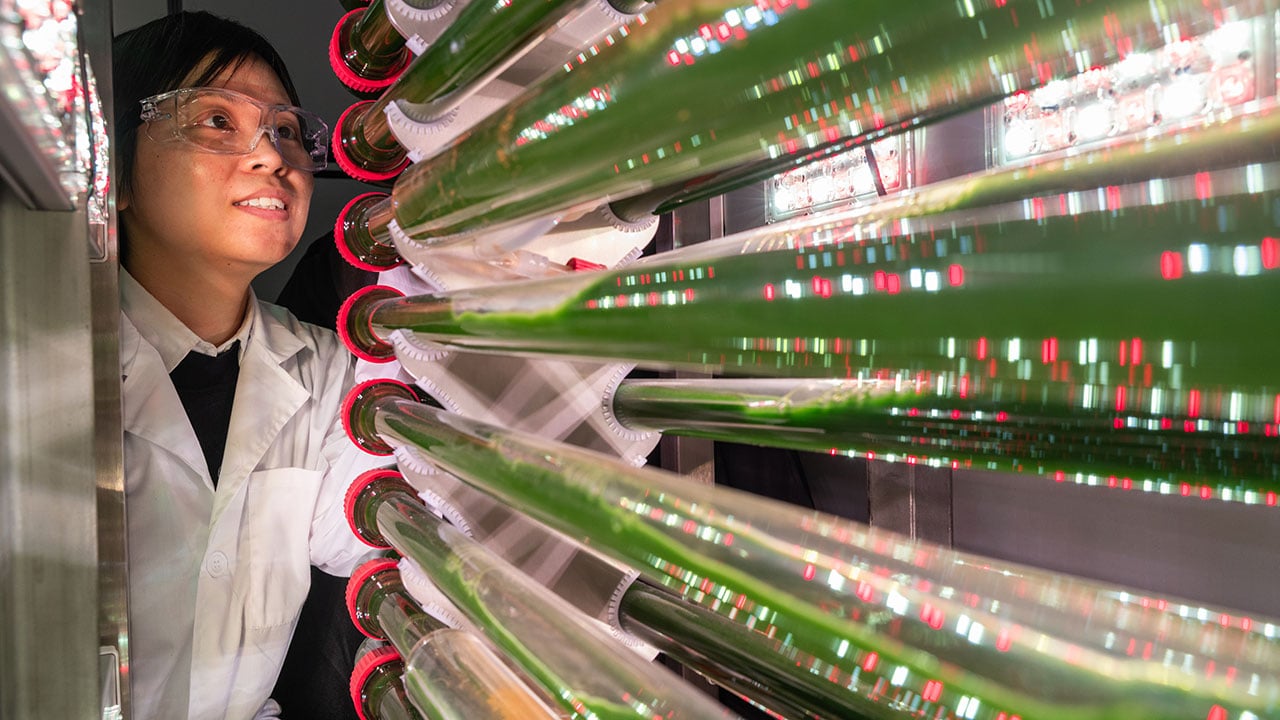
Professor Susie Dai has developed engineered algae that can remove and reuse harmful microplastics from wastewater.
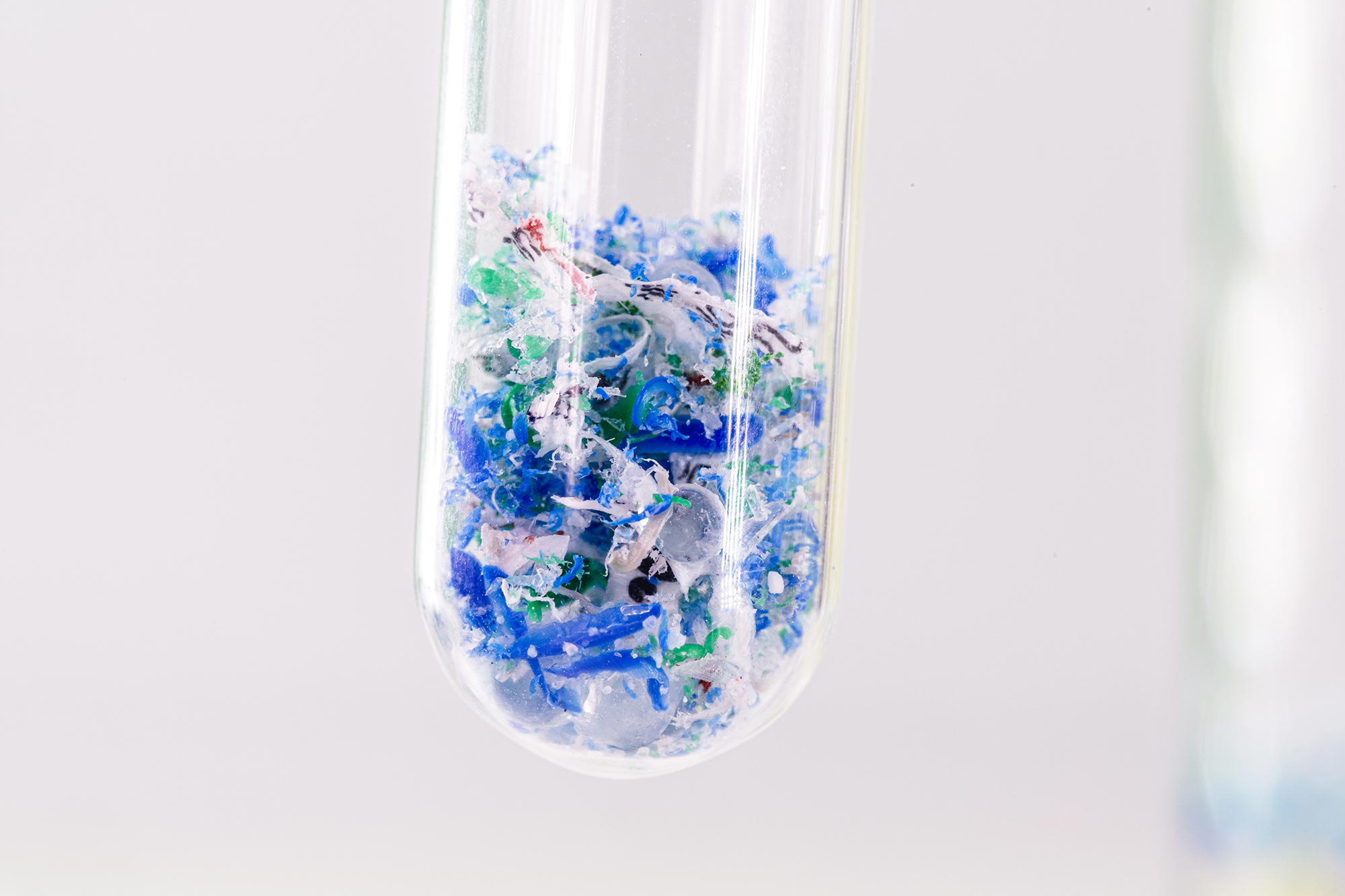
A researcher at the University of Missouri is developing a new approach to tackle one of the most persistent forms of pollution: microscopic plastic particles in water.
Susie Dai of Mizzou has introduced a specially designed strain of algae that can bind to and remove microplastics from contaminated water. Her work is focused not only on reducing pollution but also on turning the collected material into useful products, such as composite bioplastic films.
“Microplastics are pollutants found almost everywhere in the environment, such as in ponds, lakes, rivers, wastewater, and the fish that we consume,” Dai, a professor in the College of Engineering and principal investigator at the Bond Life Sciences Center, said. “Currently, most wastewater treatment plants can only remove large particles of plastic, but microplastics are so small that they slip through and end up in drinking water, polluting the environment and harming ecosystems.”
Chemical design enables particle capture
In her recent study, Dai used genetic modification to create algae that produce limonene, a naturally occurring oil responsible for the scent of oranges.
This compound gives the algae water-repelling properties. Because microplastics share this same characteristic, they readily attach to the algae in water. When this interaction occurs, the particles cluster together, forming larger masses that settle and can be easily separated from the water.
In addition to capturing microplastics, the engineered algae thrive in wastewater environments, where they absorb excess nutrients and contribute to overall water purification as they grow.
“By removing the microplastics, cleaning the wastewater, and eventually using the removed microplastics to create bioplastic products for good, we can tackle three issues with one approach,” Dai said. “While our research is still in the early stages, our eventual goal is to integrate this new process into existing wastewater treatment plants so cities can clean their water more effectively and reduce pollution while creating useful products at the same time.”
Scaling systems for real-world use
Dai’s team cultivates algae in controlled bioreactors designed for large-scale applications. One such system, a 100-liter unit named “Shrek,” is already being used to process industrial flue gas as part of efforts to reduce air pollution.
Looking ahead, Dai plans to expand this technology by building larger versions of these bioreactors. These future systems could be adapted to treat wastewater more efficiently and help remove a wider range of environmental pollutants.
Reference: “Remediation and upcycling of microplastics by algae with wastewater nutrient removal and bioproduction potential” by Bin Long, Qiang Li, Cheng Hu, Yayun Chen, Yining Zeng, Weiwei Li, Sydney Pearson, Mengqiao Liu, Chengcheng Fei, Joshua S. Yuan and Susie Y. Dai, 22 December 2025, Nature Communications.
DOI: 10.1038/s41467-025-67543-5
Never miss a breakthrough: Join the SciTechDaily newsletter.
Follow us on Google and Google News.