
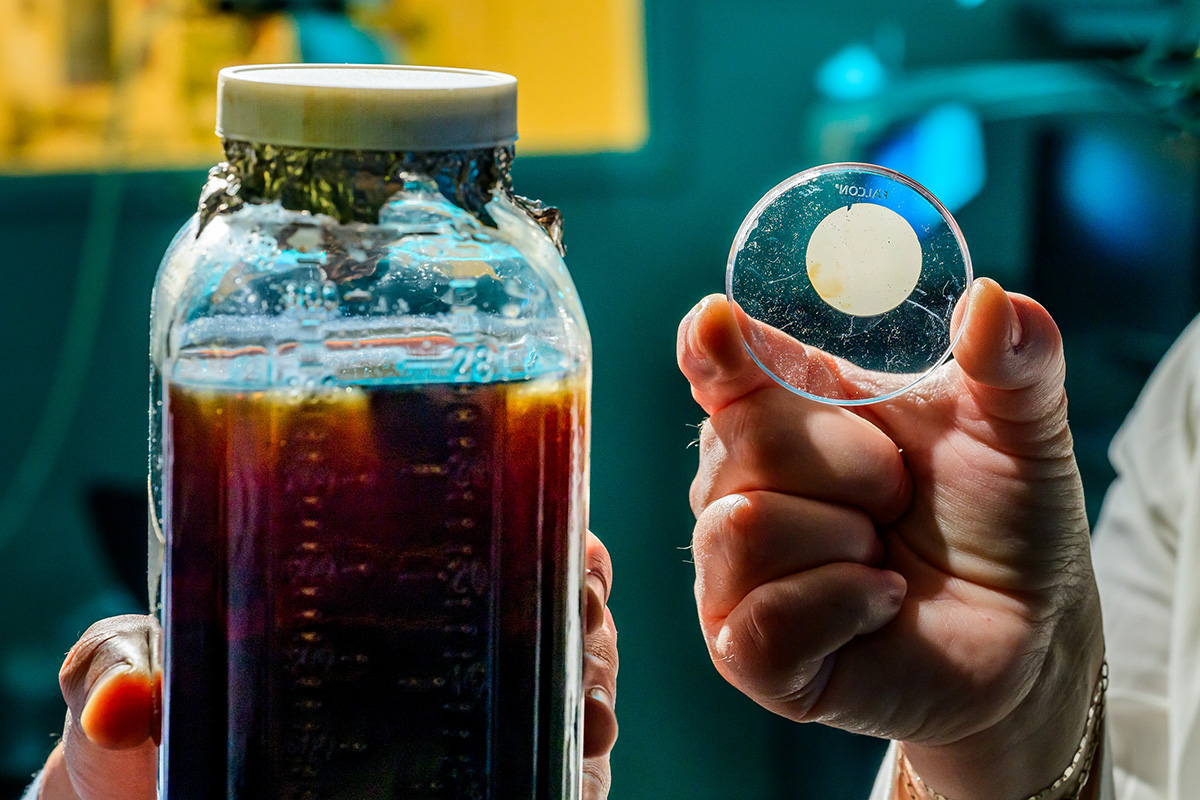
Contaminants accumulate in biosolids, which are then applied to croplands as fertilizer.
Researchers examined the leachate—liquid waste—from four Illinois landfills, as well as the inflows and outflows of the corresponding wastewater treatment plants, to trace the behavior and fate of two contaminants: microplastics and per- and polyfluoroalkyl substances (PFAS).
The good news from the study is that landfills retain most of the plastic waste that is dumped there, and wastewater treatment plants remove 99% of the microplastics and a some of the PFAS from the wastewater and landfill leachate they take in. The bad news is that both microplastics and PFAS accumulate in the biosolids that settle to the bottom of wastewater treatment plants. These biosolids must be disposed of in other ways.
The findings are reported in the journal Science of the Total Environment.
The Fate of Biosolids in Illinois
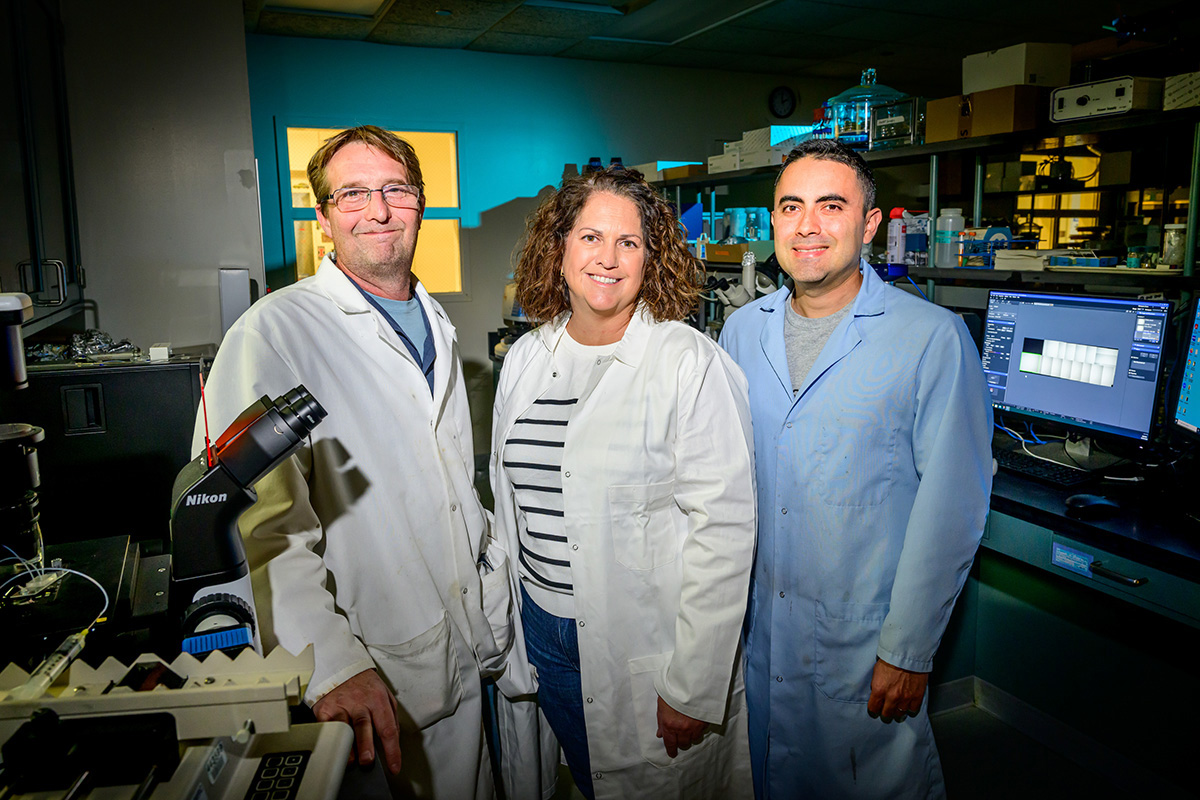
According to the industry-funded National Biosolids Data Project, 70% of the biosolids from Illinois wastewater treatment plants are used as fertilizers on agricultural land, and 30% are buried in landfills. This means that most of the microplastics and PFAS that flow into wastewater treatment plants are going right back into the environment, said John Scott, a research scientist at the Illinois Sustainable Technology Center at the University of Illinois Urbana-Champaign who led the study with fellow ISTC research scientist Andres Prada.
“The wastewater treatment plants are just taking the contaminants from one media and putting it into another,” Scott said.
Several hundred million tons of plastics are produced each year globally, and an estimated 79% of this material ends up in landfills or “becomes fugitive in the environment,” the researchers wrote in their report. Both microplastics and the endocrine-disrupting chemicals known as PFAS are now ubiquitous: detected in soil, water and in the human body, they said.
The new study is unusual in that it calculated the mass of microplastics in landfill leachate and wastewater influent and effluent. Most studies simply count the number of microplastic particles per volume of liquid, an unreliable measure because the particles will keep breaking into smaller bits, Prada said. To get the mass, the team measured the total surface area of the plastic particles and incorporated a standard measure of thickness and density based on the most common microplastic waste types: polyethylene and polypropylene.
Interconnected Systems and Surprising Findings
“Landfills and wastewater treatment plants are usually studied separately, but in reality, those are combined systems,” Prada said. “Regulations require that landfills send their liquid waste to the treatment plants.”
And many studies look at only one contaminant at a time, he said.
“We wanted to put everything together, look at both systems, and give results for both contaminants,” Prada said.
The analysis revealed that while landfills do a good job of retaining microplastics, their leachate contains high levels of PFAS.
“We were surprised how high the PFAS levels were in landfill leachate, while the microplastics were lower than expected,” Prada said.
While plastics degrade more slowly in landfills due to the compression of waste and the lack of solar radiation once they’re buried, the plastics will continue to break down into smaller particles, which will eventually flow out with the leachate, Scott said.
Wastewater treatment plants are designed to take in thousands of gallons of wastewater from sanitary and storm sewer systems, and that water also carries a significant load of microplastics and PFAS. While the concentration of PFAS in water flowing through these systems is lower than that found in landfill leachate, the massive volume of water coming in from sewers brings in a higher overall load of both contaminants, the team reported.
Wastewater treatment plants can take in 10,000 gallons of wastewater per minute but only about 30,000 gallons of landfill leachate per day, Prada said.
The problem of microplastics and PFAS in biosolids is not easy to solve, the researchers said. Spreading PFAS and microplastics across cropland is not a good practice, Scott said. “But what else are we to do with it? If we landfill it, we’re just going around and around in the circle of moving it from landfill to wastewater treatment plant and back to the landfill.”
Trying to treat the biosolids before disposal is a very expensive prospect, Scott said. The best practice would be to prevent the problem of plastic and PFAS pollution further upstream, he said.
“It’s time to tell people to start moving away from these things, stop producing these things,” Scott said. “Let’s turn them off at the tap before this gets any worse.”
Reference: “Microplastics and per- and polyfluoroalkyl substances (PFAS) in landfill-wastewater treatment systems: A field study” by Andres F. Prada, John W. Scott, Lee Green and Timothy J. Hoellein, 6 October 2024, Science of The Total Environment.
DOI: 10.1016/j.scitotenv.2024.176751
This research was funded by the Hazardous Waste Research Fund, which is administered by the ISTC, a part of the Prairie Research Institute at the U. of I.
Never miss a breakthrough: Join the SciTechDaily newsletter.
Follow us on Google and Google News.
3 Comments
Well, what are people really expecting?
You can’t celebrate technical progress like it’s a sacred cow and preserve a pristine environment at the same time. And you can’t go on searching for technological solutions to fix technological problems, because eventually you only end up with more problems down the road.
The worst part of it all is: there is no turning back. We’re stuck with technology and we can’t survive without it. Or, as it happens, with it, either.
Sadly, I have to agree. Once campaigned actively to have environmental degradation recognised as a genuine production cost in the delivery of products & services. Not viable because that would eliminate ‘profit’. There are many more people in the world since that time & more ‘developed’ nations, too.
“Let’s turn them off at the tap before this gets any worse.”
As one of the bakelite-glass bottle-string bag and bicycle generation you are too late! However, we did have DDT.