
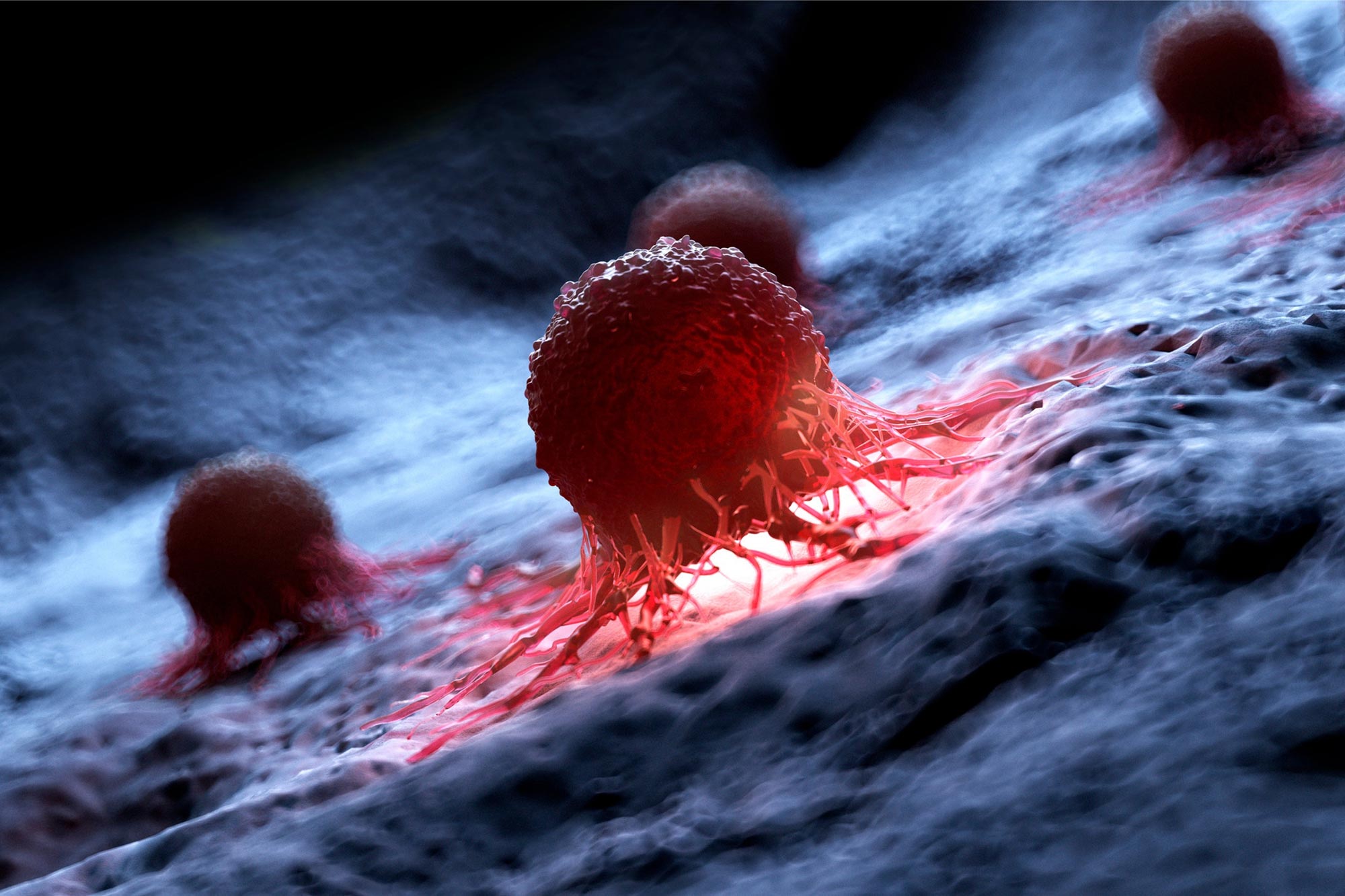
A yeast survival mechanism during starvation could inspire new cancer treatments by targeting cancer cells’ ability to go dormant.
The discovery of an unexpected survival mechanism yeast uses during beer brewing could lead to new advancements in cancer treatments.
The discovery, from University of Virginia School of Medicine scientists and their collaborators at EMBL in Germany, reveals a never-before-seen adaptation that helps yeast cells go dormant when nutrients are scarce. This ability to hibernate during stress mirrors cancer’s ability to survive nutrient shortages that accompany the cancer cells’ unchecked growth.
The unexpected findings could lead to new strategies for making cancer cells more vulnerable to starvation and easier to treat, said researcher Ahmad Jomaa, PhD, of the School of Medicine’s Department of Molecular Physiology and Biological Physics.
“Cells can take a break when things get tough by going into deep sleep in order to stay alive, then at a later point they seemingly just come back,” said Jomaa, part of UVA’s Center for Membrane and Cell Physiology. “That’s why we need to understand the basics of adaptation to starvation and how these cells become dormant to stay alive and avoid death.”
Surviving Stress
S. pombe is a species of yeast that has been used for centuries to brew beer. But it’s also an invaluable research tool for scientists because of its similarity to human cells. By better understanding S. pombe, we can better understand fundamental cellular processes in both healthy cells and cancerous ones.
Working with Simone Mattei, PhD, and colleagues at EMBL, Jomaa and his team discovered that when the yeast cells’ batteries go into hibernation to avoid stress, they wrap themselves in an unexpected blanket. The surfaces of these batteries, called mitochondria, become coated with deactivated ribosomes, cellular machinery that normally make proteins.
It remains a mystery why these inactive ribosomes attach themselves to the mitochondria. “There could be different explanations,” Mattei said. “A starved cell will eventually start digesting itself, so the ribosomes might be coating the mitochondria to protect them. They might also attach to trigger a signaling cascade inside the mitochondria.”

The researchers were able to visualize how the ribosomes attach to the mitochondria down to the molecular level using astonishingly powerful single-particle cryo-electron microscopy and cryo-electron tomography. They were surprised to discover that the ribosomes had attached themselves “upside down,” using a small subunit of their anatomy. This type of interaction had never been seen before and could help decipher the secret of how cells enter and wake up from dormancy. “We knew that cells will try to save energy and shut down their ribosomes, but we were not expecting them to attach in an up-side state on the mitochondria,” said Maciej Gluc, a graduate student in Jomaa’s lab and co-first author of a new scientific paper describing the discovery.
The new findings could have important implications for our understanding of cancer. Cancer cells face perpetual nutrient shortages because of their unchecked growth, and they often slip into dormancy, or “quiescence,” to survive and escape detection by our immune systems. Understanding how they do this could lead to new ways to target the cancer cells to improve patient outcomes and prevent relapses.
“For the next steps, we aim to understand not only how cells regulate entry into dormancy but also how they awaken from this deep sleep. For now, we will use yeast because it is much easier to manipulate. We are now also investigating this in cultured cancer cells, which is not an easy task,” Jomaa said. “Ultimately, I hope that my group’s research will lay the foundation for discovering new markers to track dormant cancer cells. These cells are not easily detected in diagnostic settings, but we are hopeful that our research will generate more interest in helping us reach our goal.”
Reference: “Ribosomes hibernate on mitochondria during cellular stress” by Olivier Gemin, Maciej Gluc, Higor Rosa, Michael Purdy, Moritz Niemann, Yelena Peskova, Simone Mattei and Ahmad Jomaa, 8 October 2024, Nature Communications.
DOI: 10.1038/s41467-024-52911-4
The research was supported by the Searle Scholars Program, the American Cancer Society, UVA’s Department of Molecular Physiology and Biological Physics and the European Molecular Biology Laboratory.
Never miss a breakthrough: Join the SciTechDaily newsletter.
Follow us on Google and Google News.