
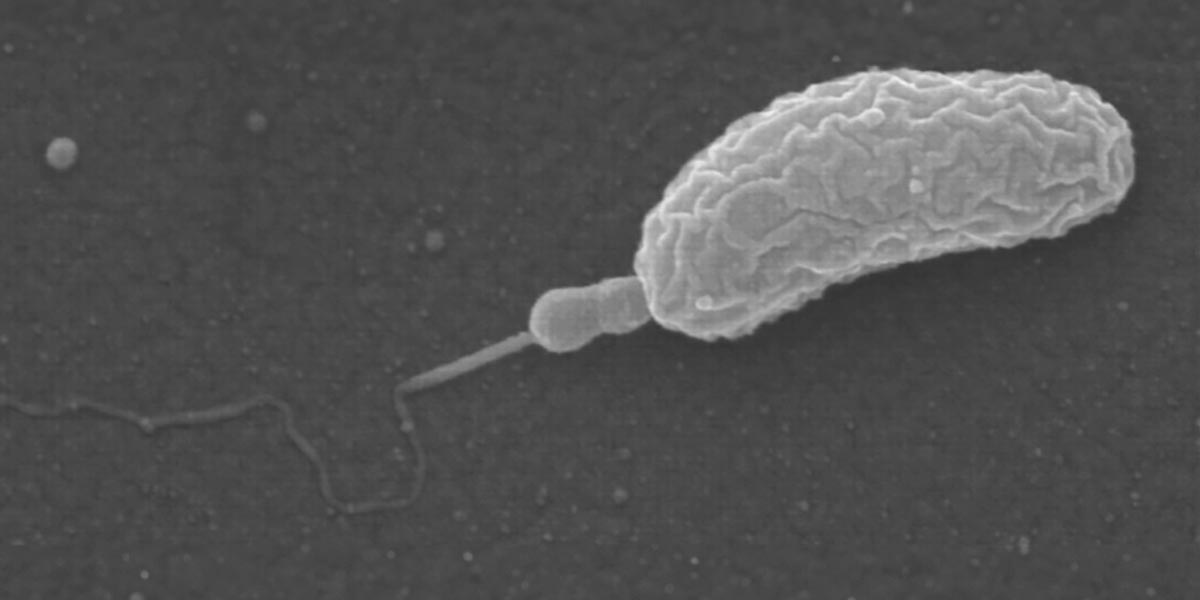
Predatory bacteria, known as BALOs, are microscopic yet formidable hunters of other microbes, pivotal in both environmental and health applications.
Researchers are studying their role in marine ecosystems, their potential to reshape microbial ecology, and their effectiveness against pathogenic bacteria, with potential uses ranging from treating infections to maintaining ecological balance.
Predatory Bacteria
When you think of predators in the natural world, you might picture a lion, a grizzly bear, a shark, or a crocodile. Yet one of the most lethal predators is far smaller — just a hundredth the size of a grain of sand: predatory bacteria that hunt other microbes.
At the National High Magnetic Field Laboratory, researchers are exploring these tiny-but-mighty predators to understand how they hunt, kill, and reproduce, as well as the roles they may play, from impacting the carbon cycle in our oceans to fighting infectious diseases.
“Even today, I’m still amazed at this bacteria,” said MagLab research faculty Dr. Huan Chen.

The Role and Behavior of BALOs
For nearly 20 years, Chen has studied BALOs, a class of predatory bacteria known as Bdellovibrio and like organisms. She moved to Tallahassee to collaborate with Florida A&M professor Henry N. Williams, a leading BALOs expert, and later joined the MagLab to advance her work.
“I’m just fascinated by this bacteria’s unique lifestyle,” Chen said, calling BALOs the world’s smallest hunter.
BALOs are considerably smaller than most bacteria but make up for that size disadvantage by moving fast, swimming 100 times their body length in a second. They search out prey such as E. coli, Salmonella, or other potential pathogens and attack them with what Chen describes as a kiss of death.
“They mount a fierce attack, penetrate the outer membrane, then use the prey’s cellular materials to feed themselves and produce new cells,” she explained.

Research and Impact of BALOs
After reproducing, the new BALOs cells burst free from the host and search for more prey.
“So overall, they make their living by attacking and devouring other bacteria for their own propagation,” Chen said.
Chen’s current BALOs research is funded by a U.S. National Science Foundation grant. Her collaborators include Professor Williams’ team at Florida A&M University, Drs. Michael Stuke and Sven Kranz at Florida State University, and Dr. Ahkinyala Cobb-Abdullah at Virginia Union University.
The multidisciplinary team is analyzing the impact of these predator bacteria on marine ecosystems. BALOs are part of what’s called the microbial loop—a micro-organism food chain that recycles nutrients in the ocean. Viruses and other micropredators, such as protists, are also in the loop, feeding on marine bacteria. Chen and Willliams are focused on the dynamic impact of all three micro-predators (BALO, Viruses, Protists) on the ecological balance. In a study to be published this summer, they highlight the previously underestimated role of predatory bacteria in microbial ecology, revealing their significant impact.

“We’re rethinking how the bacteria recycle the carbons. We think the predator bacteria are involved in that recycling process,” Chen said. “It would result in a concept shift in microbial ecology.”
“Future studies on the players that drive the cyclic processes and functions within the microbial loop and the cycling of nutrients must consider the BALOs,” said Williams. “Dr. Chen and I have developed a new conceptual model that includes a more accurate depiction of predator-prey dynamics in the microbial loop.”
The MagLab is uniquely suited to study the process using its 21-tesla Fourier-Transform Ion Cyclotron Resonance system, the highest resolution mass spectrometer in the world. When bacteria are killed, the high-resolution instrument can spot the molecular fingerprints, showing which predator is the perpetrator.
“Each type of predator releases a different mix of organic materials when eating the bacteria,” Chen explained. “With the 21 T, we can detect those metabolic markers.”
BALOs’ Potential in Healthcare
In addition to improving the health of the planet, BALOs promise to improve people’s health by targeting bacterial pathogens. Harmful bacteria lead to illness and death for millions of people around the globe each year, from E. coli infections to Salmonella poisoning to drug-resistant “superbugs.”
Laboratory studies have already shown that BALOs can effectively treat pathogenic bacteria in animals, seafood, oral pathogens, and drug-resistant infections. And because BALOs only attack other bacteria, scientists believe they should be safe for use in people.
Chen is studying the possibility of using BALOs in conjunction with viruses to fight pathogens. Her prior research revealed the first evidence of a virus and BALOs attacking a single pathogen cell at the same time, shifting the paradigm for possible ways to combat dangerous bacterial infections.
With so many questions still unanswered about BALOs, Chen says she is lucky to be at the MagLab, with access to its world-class instrumentation, studying this amazing organism.
“This is a really fascinating thing to study. I’m excited at the chance to showcase this bacteria to the world,” said Chen.
Never miss a breakthrough: Join the SciTechDaily newsletter.
Follow us on Google and Google News.