

Concentrations as high as those found near a busy road highlight the critical need for effective solutions.
Indoor climbing is often viewed as a healthy physical activity, but recent research reveals a hidden risk. A study conducted by scientists from the University of Vienna and EPFL Lausanne has found that climbing shoes release potentially harmful chemicals into the air through the abrasion of their rubber soles.
These substances, which include compounds also found in car tires, can become airborne in indoor bouldering gyms and be inhaled by climbers. In some cases, the concentration of these chemicals was even higher than levels typically measured on busy city streets. The findings were published in Environmental Science & Technology Air.
Bouldering gyms are often characterized by a distinct set of smells: sweat, chalk, and the faint scent of rubber. Researchers led by environmental scientist Thilo Hofmann at the University of Vienna have now confirmed that the rubber particles contributing to this smell are more than just a sensory nuisance, they pose a health concern.
The team discovered that the rubber used in climbing shoes contains various chemical additives, some of which are suspected to have negative effects on human health and the environment. As the soles wear down during use, these substances are released into the air, where they can be inhaled by athletes during intense physical activity.
“The soles of climbing shoes are high performance products, just like car tires,” explains Anya Sherman, first author of the study and an environmental scientist at the Centre for Microbiology and Environmental Systems Science (CeMESS) at the University of Vienna. Additives are specific chemicals that make these materials more resilient and durable; they are essential for their function.
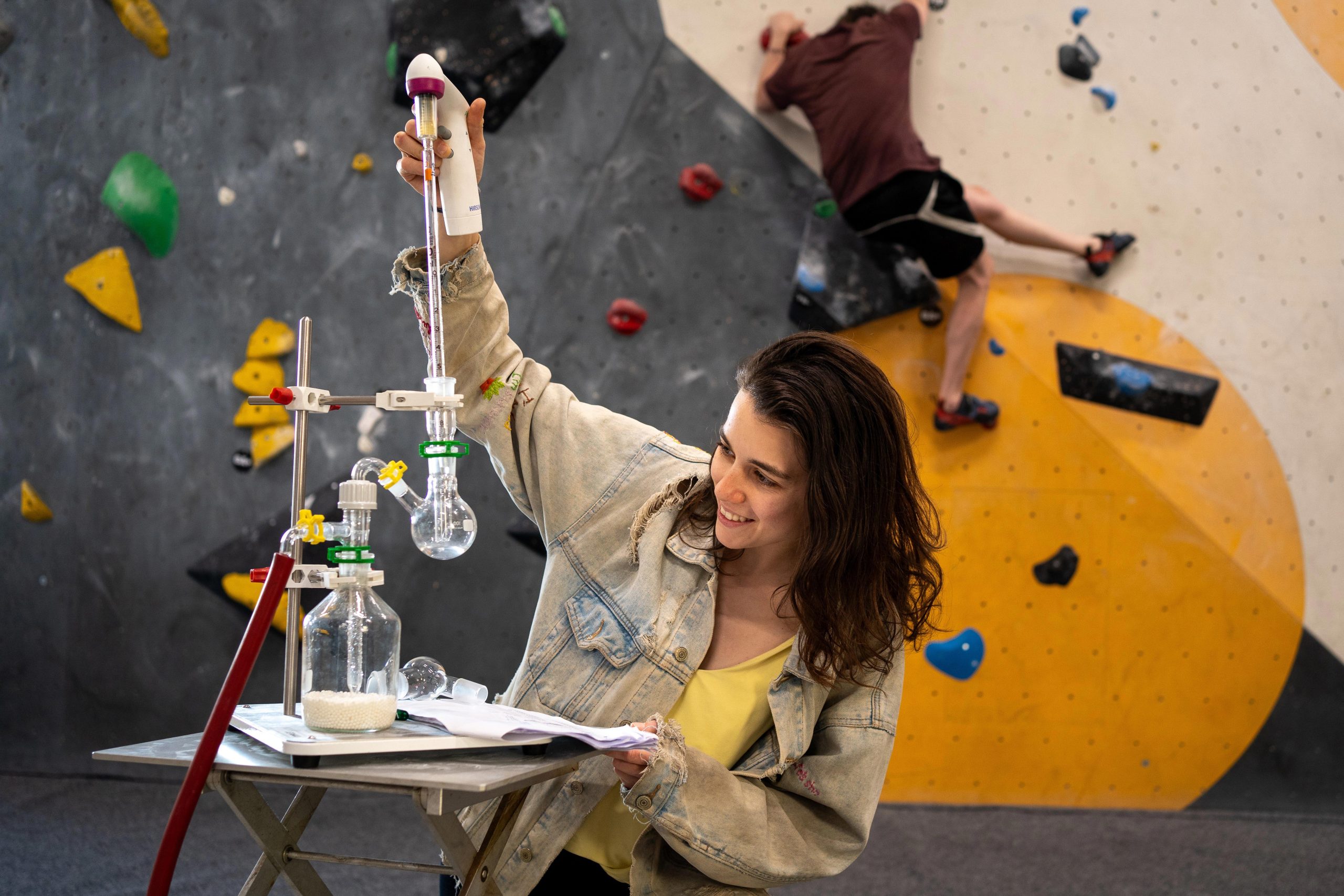
Climbing Meets Chemistry
Sherman enjoys climbing herself – as a balance to her work in the lab and on the computer. At a conference, she met Thibault Masset from the École Polytechnique Fédérale de Lausanne (EPFL), who researches similar topics and also enjoys climbing. The two researchers and equal first authors of the study came up with the idea of testing the rubber from their own climbing shoes using the same scientific methods they use to analyze car tires.
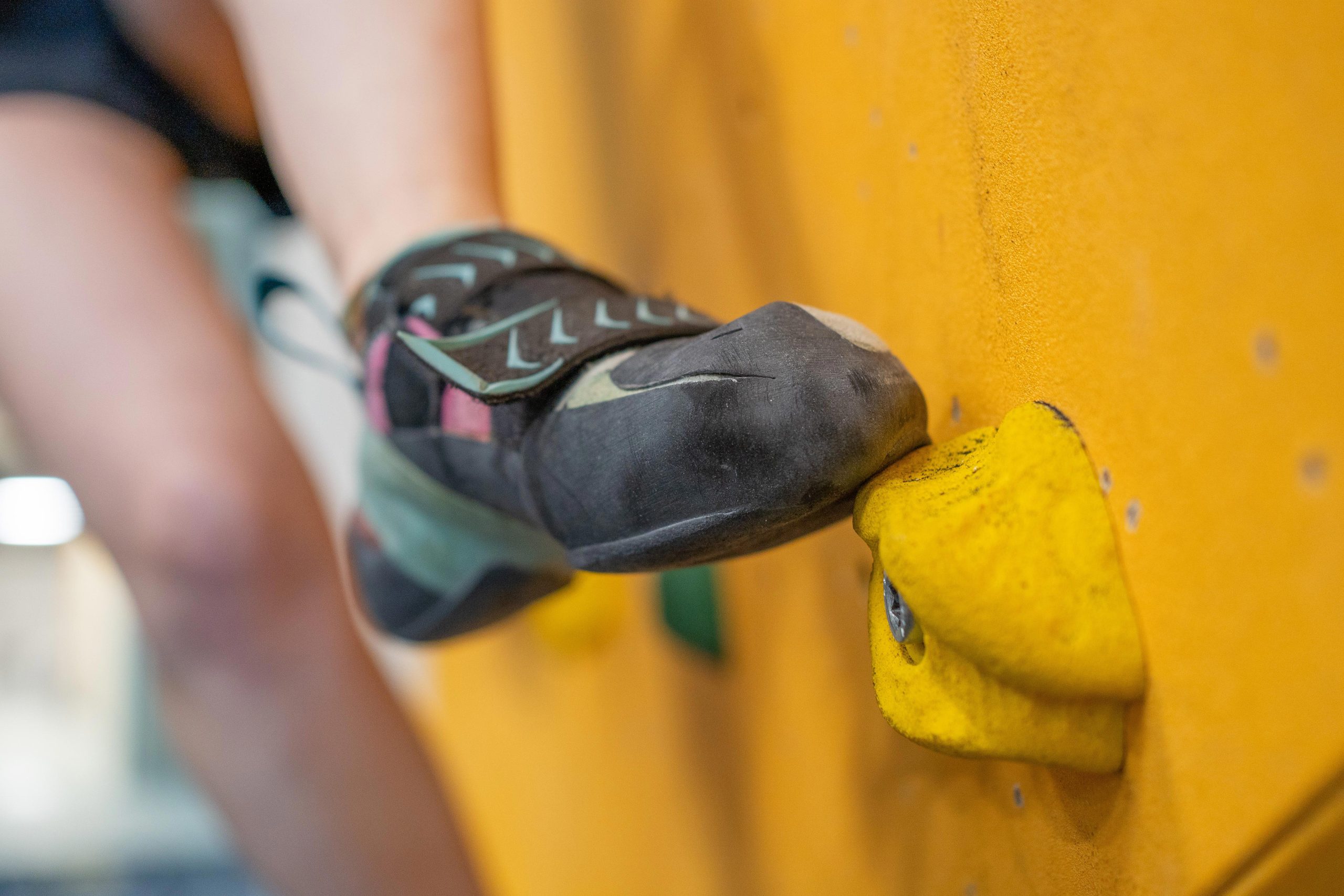
“We were familiar with the black residue on the holds in climbing gyms, the abrasion from the soles of our shoes. Climbers wipe it off to get a better grip, and it gets kicked up into the air,” adds Sherman.
Equipped with an impinger, a particle-measuring device that mimics the human respiratory tract, Sherman, in collaboration with Professor Lea Ann Daily’s research group, collected air samples in five bouldering gyms in Vienna. The impinger draws in air at a rate of 60 liters per minute and separates particles in the same way as they would enter the human lungs. Other dust samples for the study were collected in collaboration with the EPFL Lausanne from bouldering gyms in France, Spain, and Switzerland.
“Air pollution in the bouldering gyms was higher than we expected,” says corresponding author Thilo Hofmann. What was striking was that the concentration of rubber additives was particularly high where many people were climbing in a confined space. Hofmann concludes: “The levels we measured are among the highest ever documented worldwide, comparable to multi-lane roads in megacities.”
Tire Chemicals on Your Feet
In 30 pairs of shoes tested, the team found some of the same pollutants as in car tires: among the 15 rubber additives found was 6PPD, a rubber stabilizer whose transformation product has been linked to salmon kills in rivers.
What this means for human health is still unclear. But Hofmann stresses: “These substances do not belong in the air we breathe. It makes sense to act before we know all the details about the risks, especially with regard to sensitive groups such as children.”
Sherman also points out that the operators of the studied bouldering gyms were very cooperative and showed a high level of interest in improving the air quality in their gyms. “This constructive cooperation should lead to the creation of the healthiest possible climbing hall environment, for example, through better ventilation, cleaning, avoiding peak times, and designing climbing shoes with fewer additives.”
“It is essential to switch to sole materials with fewer harmful substances,” says Hofmann. He says manufacturers are currently not sufficiently aware of the problem. The rubber they buy for their soles contains a cocktail of undesirable chemicals. More research is needed to understand how these substances affect the human body. Anya Sherman remains motivated: “I will continue to climb, and I am confident that our research will contribute to better conditions in climbing gyms.”
Reference: “The Invisible Footprint of Climbing Shoes: High Exposure to Rubber Additives in Indoor Facilities” by Anya Sherman, Thibault Masset, Lukas Wimmer, Leah K. Maruschka, Lea Ann Dailey, Thorsten Hüffer, Florian Breider and Thilo Hofmann, 24 April 2025, ACS ES&T Air.
DOI: 10.1021/acsestair.5c00017
Never miss a breakthrough: Join the SciTechDaily newsletter.
Follow us on Google and Google News.
1 Comment
Ban indoor climbing, there’s no other way.