
Close Menu
    Facebook X (Twitter) Instagram
    SciTechDaily
    • Biology
    • Chemistry
    • Earth
    • Health
    • Physics
    • Science
    • Space
    • Technology
    Facebook X (Twitter) Pinterest YouTube RSS
    SciTechDaily
    Home»Science»Nanostructure Increases Solar-to-Hydrogen Conversion Efficiency by a Factor of Eleven
    Science

    Nanostructure Increases Solar-to-Hydrogen Conversion Efficiency by a Factor of Eleven

    By Antonia Roetger, Helmholtz-Zentrum BerlinFebruary 28, 2018No Comments3 Mins Read
    Facebook Twitter Pinterest Telegram LinkedIn WhatsApp Email Reddit
    Share
    Facebook Twitter LinkedIn Pinterest Telegram Email Reddit
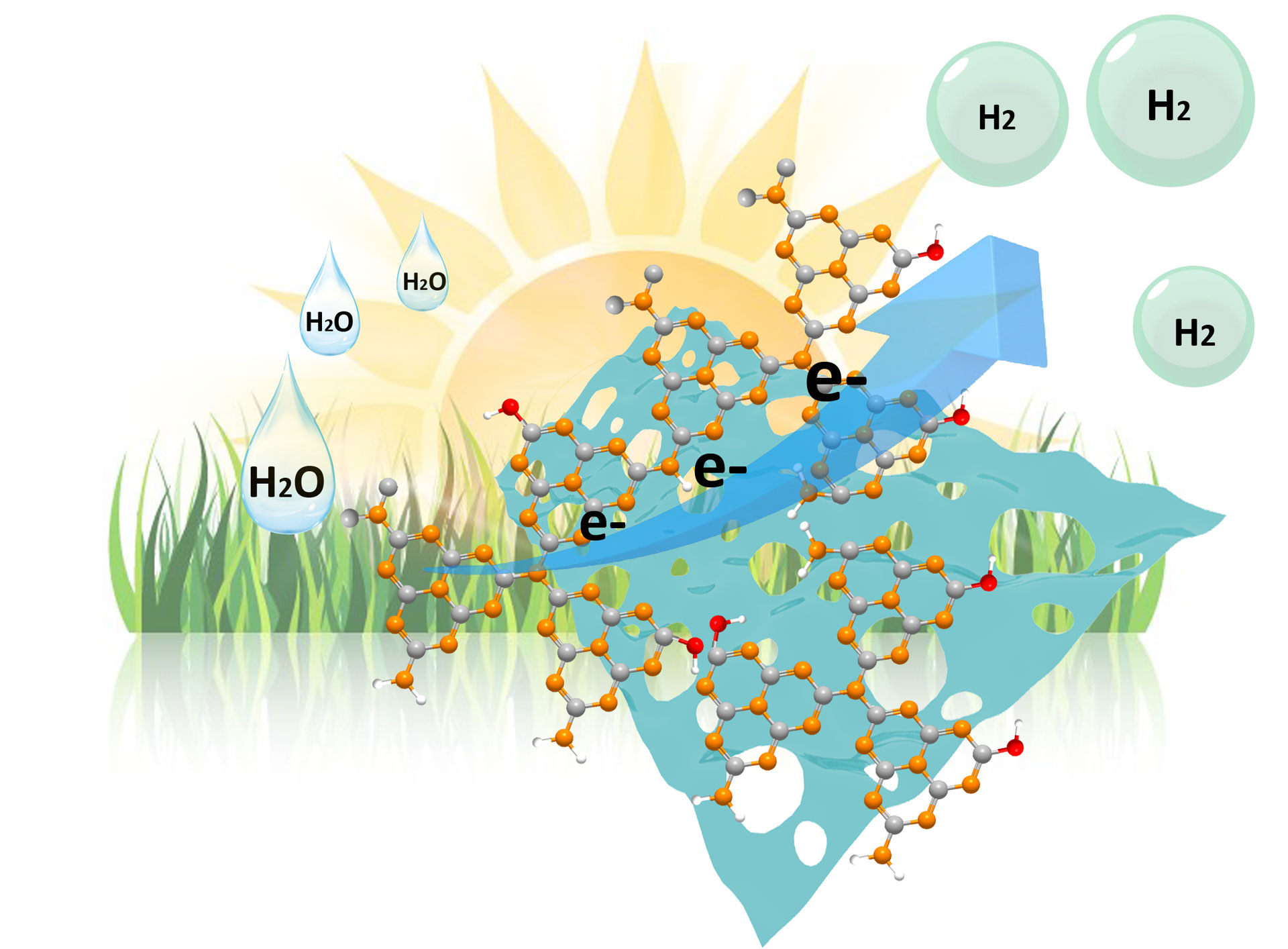
    Solar-to-Hydrogen Catalytic Efficiency Increased By A Factor Of Eleven
    PCN nanolayers under sunlight can split water. Image: Nannan Meng /Tianjin University

    Polymeric carbon nitrides exhibit a catalytic effect in sunlight that can be used for the production of hydrogen from solar energy. However, the efficiency of these metal-free catalysts is extremely low. A team at the Tianjin University in China, in collaboration with a group at the Helmholtz-Zentrum Berlin, has increased the catalytic efficiency of these polymeric carbon nitrides by a factor of eleven through a simple process resulting in a larger surface area. The paper was published in the journal Energy & Environmental Science.

    One of the major challenges of the energy transition is to supply energy even when the sun is not shining. Hydrogen production by splitting water with the help of sunlight could offer a solution. Hydrogen is a good energy storage medium and can be used in many ways. However, water does not simply split by itself. Catalysts are needed, for instance, Platinum, which is rare and expensive. Research teams the world over are looking for more economical alternatives. Now a team headed by Dr. Tristan Petit from the HZB, together with colleagues led by Prof. Bin Zhang from Tianjin University, Tianjin, China, has made important progress using a well-known class of metal-free photocatalysts.

    Nanolayers with large pores

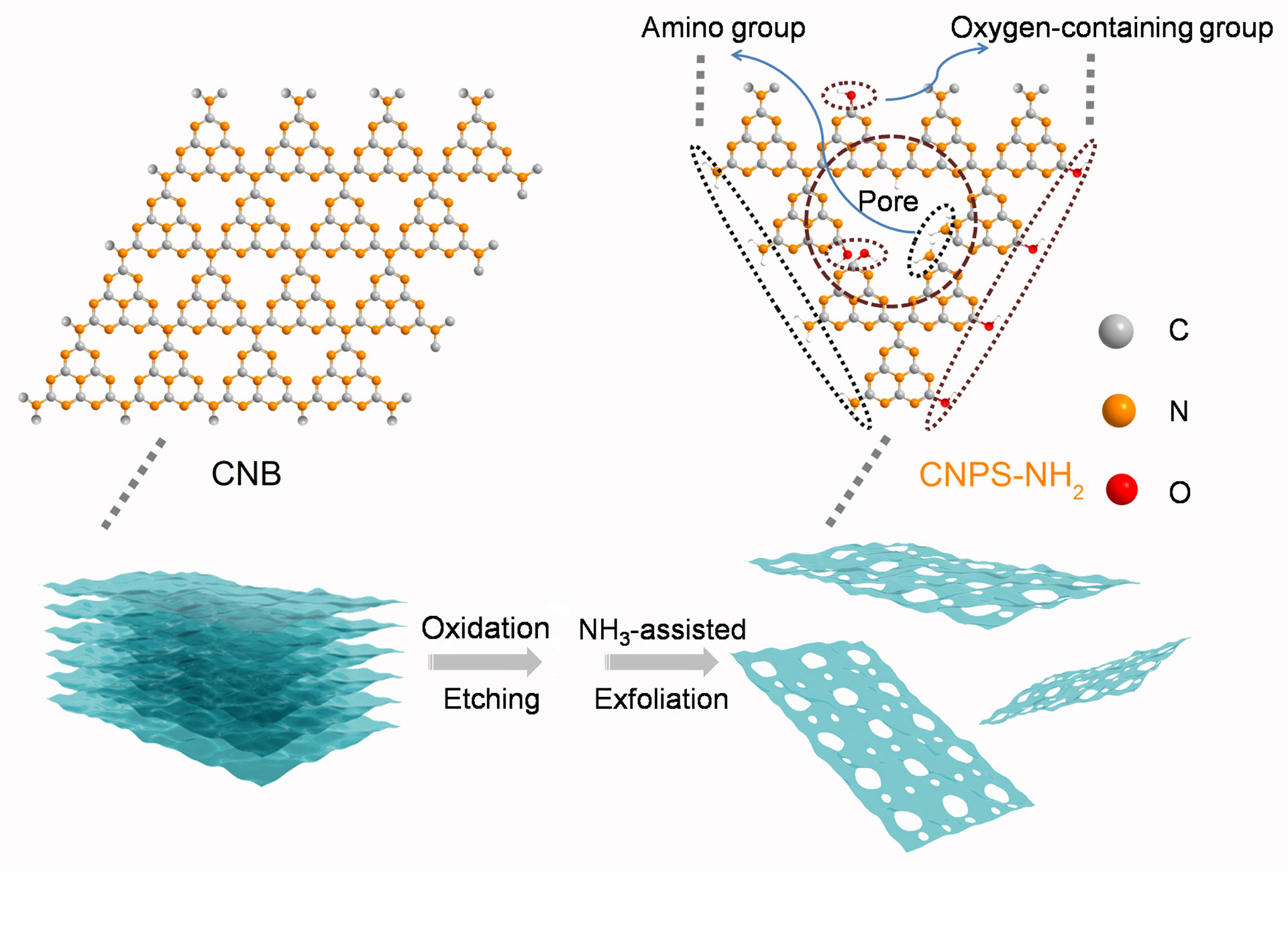
    Bin Zhang and his team specialize in the synthesis of polymeric carbon nitrides (PCN) that is considered a good candidate as a catalyst for hydrogen production. The PCN molecules form a structure that can be compared to thin layers of filo pastry dough: sheets of this material lie on top of each other tightly packed together. The Chinese chemists have now succeeded by means of a relatively simple two-step heat treatment in separating the individual sheets from each other – the same way that puff pastry separates into individual crispy layers in the oven. The heat treatment produced samples consisting of individual nanolayers with large pores containing different amino groups with specific functionalities.
    Researchers Increase Solar-to-Hydrogen Catalytic Efficiency By A Factor Of Eleven
    A heat treatment produced samples consisting of individual nanolayers with large pores containing different amino groups with specific functionalities. Image: Nannan Meng /Tianjin University

    Amino- and oxygenated groups analyzed at BESSY II

    Petit and his team investigated a series of these PCN samples at BESSY II. “We were able to determine which amino and oxygenated groups had been deposited in the pores”, PhD-student Jian Ren and co-first author of the publication explains. They could analyze how specific amino groups pull electrons to themselves, a particularly favorable property for splitting water, and how new oxygen-based defects were formed.

    Efficiency increased by factor eleven

    When combined with nickel as a co-catalyst, those samples of nanostructured PCN actually exhibited record-breaking efficiency, eleven times that of normal PCN under visible light irradiation.

    Photocatalytic processes at BESSY II unraveled

    “This demonstrates that PCN is an interesting potential catalyst for solar-to-hydrogen production, approaching the efficiency of inorganic catalysts,” explains Petit, who is a Volkswagen Foundation Freigeist Fellow. “Furthermore, this work also shows that soft X-ray spectroscopies are essential tools to unravel possible catalytically active sites on photocatalysts.”

    Reference: “Engineering oxygen-containing and amino groups into two-dimensional atomically-thin porous polymeric carbon nitrogen for enhanced photocatalytic hydrogen production” by Nannan Meng, Jian Ren, Yang Liu, Yi Huang, Tristan Petit and Bin Zhang, 22 January 2018, Energy & Environmental Science.
    DOI: 10.1039/C7EE03592F

    Never miss a breakthrough: Join the SciTechDaily newsletter.
    Follow us on Google and Google News.

    Energy Environmental Science Green Technology Helmholtz-Zentrum Berlin Solar Power Sustainability
    Share. Facebook Twitter Pinterest LinkedIn Email Reddit

    Related Articles

    Wind and Solar Power Could Generate Most But Not All of the Electricity in the USA

    The Diverse Causes Behind Frequency Fluctuations in Power Grids

    NREL Develops Switchable Photovoltaic Windows

    MIT-Developed Technique Turns Emissions Into Fuel

    Energy-Efficient Construction is Key to Lowering Urban Emissions

    Scientists Demonstrate Efficient, Light-Powered Production of Fuel via Artificial Photosynthesis

    Scientists Achieve Solar Hydrogen Production Breakthrough

    Graphite Foam Could Harness Energy from Temperature Gradient in Oceans

    Nature’s Sunflower May Help Increase Solar Efficiency in CSP Plants

    Leave A Reply Cancel Reply

    • Facebook
    • Twitter
    • Pinterest
    • YouTube

    Don't Miss a Discovery

    Subscribe for the Latest in Science & Tech!

    Trending News

    Scientists Uncover Potential Brain Risks of Popular Fish Oil Supplements

    Scientists Discover a Surprising Way To Make Bread Healthier and More Nutritious

    After 60 Years, Scientists Uncover Unexpected Brain Effects of Popular Diabetes Drug Metformin

    New Research Uncovers Hidden Side Effects of Popular Weight-Loss Drugs

    Scientists Rethink Extreme Warming After Surprising Ocean Discovery

    Landmark Study Links Never Marrying to Significantly Higher Cancer Risk

    Researchers Discover Unknown Beetle Species Just Steps From Their Lab

    Largest-Ever Study Finds Medicinal Cannabis Ineffective for Anxiety, Depression, PTSD

    Follow SciTechDaily
    • Facebook
    • Twitter
    • YouTube
    • Pinterest
    • Newsletter
    • RSS
    SciTech News
    • Biology News
    • Chemistry News
    • Earth News
    • Health News
    • Physics News
    • Science News
    • Space News
    • Technology News
    Recent Posts
    • “Like Liquid Metal”: Scientists Create Strange Shape-Shifting Material
    • Early Warning Signals of Esophageal Cancer May Be Hiding in Plain Sight
    • Researchers Have Discovered a THC-Free Cannabis Compound That May Replace Opioids
    • Common Blood Pressure Drug Shows Surprising Power Against Deadly Antibiotic-Resistant Superbug
    • Students Build Dark Matter Detector and Set New Experimental Limits
    Copyright © 1998 - 2026 SciTechDaily. All Rights Reserved.
    • Science News
    • About
    • Contact
    • Editorial Board
    • Privacy Policy
    • Terms of Use

    Type above and press Enter to search. Press Esc to cancel.