
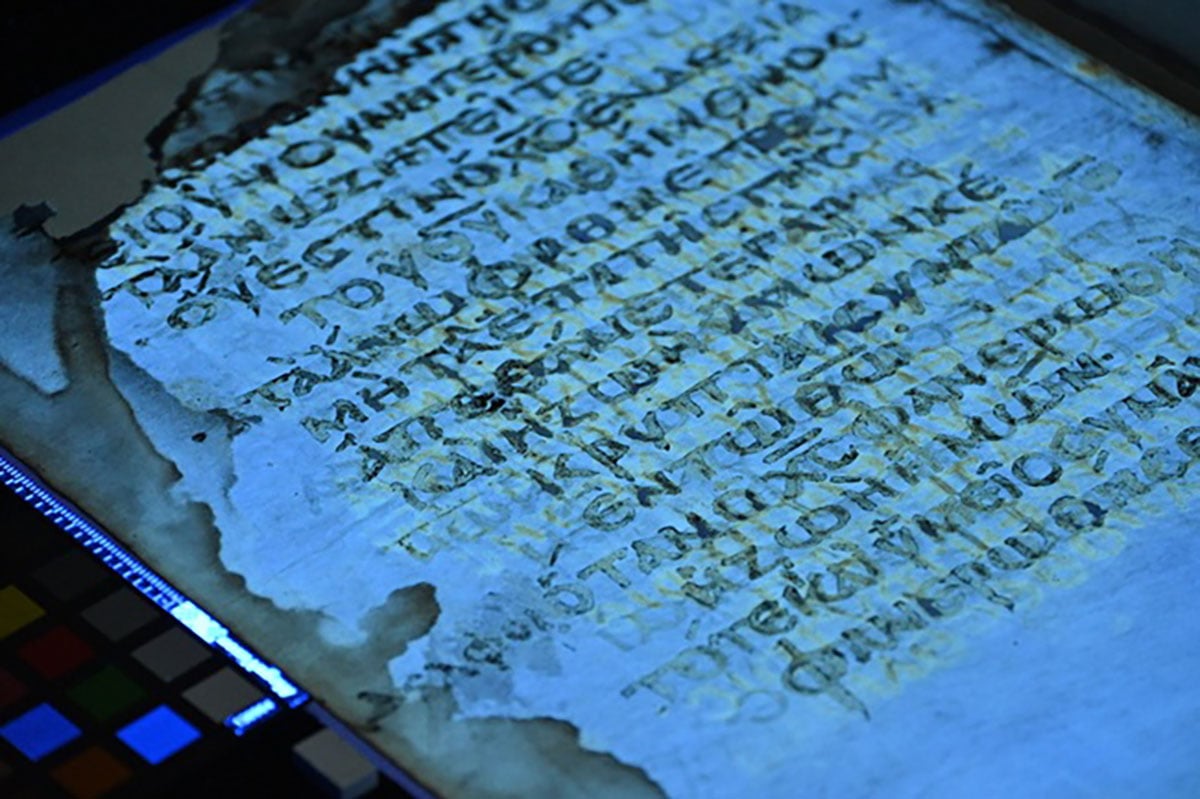
A team led by Professor Garrick Allen has recovered hidden text from 42 lost pages of Codex H, offering a rare glimpse into one of the most important early New Testament manuscripts.
An academic team led by Professor Garrick Allen at the University of Glasgow has recovered 42 missing pages from Codex H, one of the most significant early New Testament manuscripts known to scholars.
Codex H is a 6th-century manuscript containing the Letters of St Paul. It disappeared from view after being taken apart in the 13th century at the Great Lavra Monastery on Mount Athos in Greece. Its pages were re-inked, then repurposed as binding material and flyleaves in several other manuscripts. The surviving pieces are now held in collections across Italy, Greece, Russia, Ukraine, and France.
Hidden traces restore lost text
Professor Garrick Allen explains the process that led to the discovery: “The breakthrough came from an important starting point: we knew that at one point, the manuscript was re-inked. The chemicals in the new ink caused ‘offset’ damage to facing pages, essentially creating a mirror image of the text on the opposite leaf—sometimes leaving traces several pages deep, barely visible to the naked eye but very clear with latest imaging techniques.
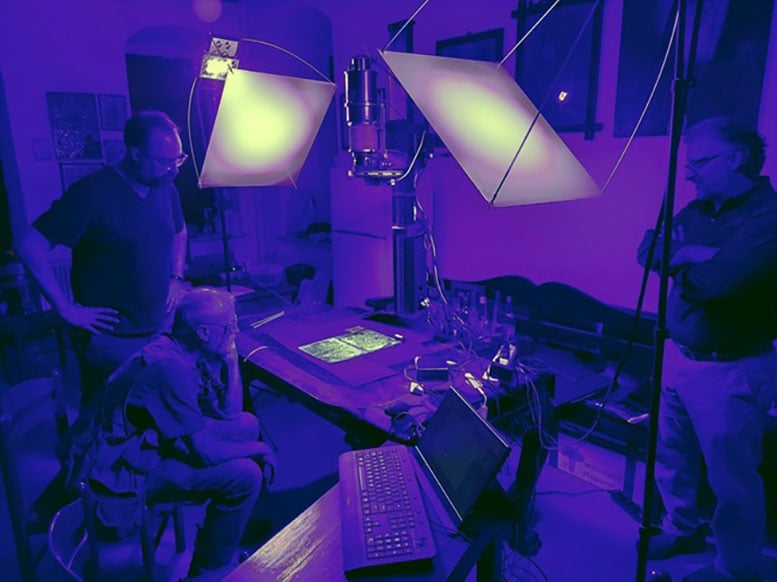
“In partnership with the Early Manuscripts Electronic Library (EMEL), researchers used multispectral imaging to process images of the extant pages, in order to recover ‘ghost’ text that no longer physically exists, effectively retrieving multiple pages of information from every single physical page. To ensure historical accuracy, the team also collaborated with experts in Paris to perform radiocarbon dating, confirming the parchment’s 6th-century origin.”
A manuscript’s wider meaning
Although the newly recovered material includes already known sections of Paul’s Letters, the find provides an unusual window into the long history of the New Testament and the ways it was read, copied, preserved, and understood over time. It also reveals more about the people who produced and used Codex H, how communities engaged with sacred texts, and what happened to books after they became worn or damaged.
Professor Allen continues: “Given that Codex H is such an important witness to our understanding of Christian scripture, to have discovered any new evidence—let alone this quantity – of what it originally looked like is nothing short of monumental.”
Key findings include:
- Early chapter lists: The pages include the oldest known chapter lists for Paul’s Letters, showing divisions that are very different from the system used today.
- Scribal insights: The fragments reveal how sixth-century scribes corrected, annotated, and engaged directly with sacred writings.
- Medieval recycling: The manuscript’s physical condition shows how sacred books were reused and given new purposes after they became damaged.
This project was made possible through funding from Templeton Religion Trust and the Arts and Humanities Research Council (UK), with the cooperation of the Great Lavra Monastery.
Disclosure: A new print edition of Codex H is forthcoming and a digital edition is freely available at https://codexh.arts.gla.ac.uk/, making these recovered pages available to the public and scholars for the first time in centuries.
Never miss a breakthrough: Join the SciTechDaily newsletter.
Follow us on Google and Google News.